اندیشهفلسفهخردگفتگوحکمتمعناپرسشفرهنگ
Religion
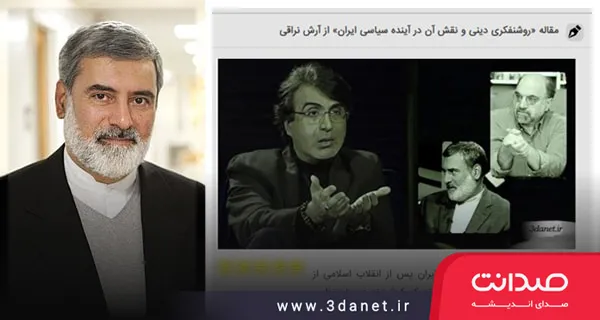
Untold Stories of Arash Naraghi from the Kiyan Circle
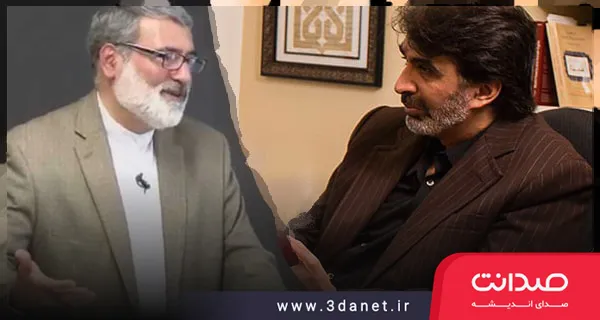
Arash Naraghi recounts how he became involved with the religious intellectualism movement and Kiyan magazine. He describes the structure of the Kiyan circle's meetings and its members, including associates of Khatami and Montazeri, up to the spiritual role of Dr. Soroush in the gatherings that led to the 2nd of Khordad.
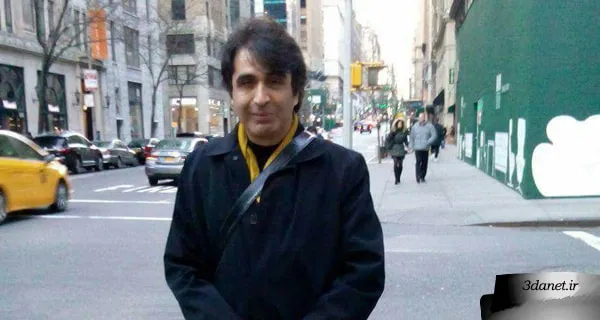
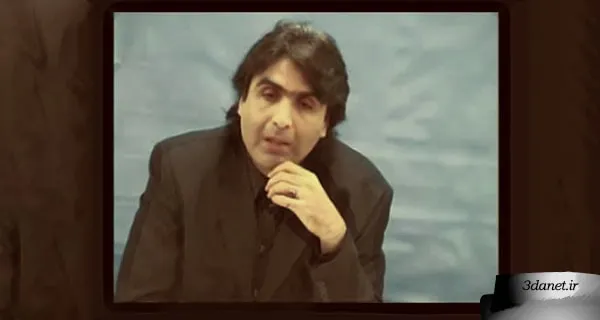
Dr. Arash Naraghi was born in 1966 in Tehran. During his childhood and adolescence, due to his father's work assignment, he spent several years in the provinces of Fars and Semnan. He entered the Faculty of Pharmacy at the University of Tehran in 1984 and obtained his degree in 1990. In 2008, he graduated from the University of California, Santa Barbara in the field of philosophy, and he is currently an Associate Professor of Philosophy and Religion at Moravian College in the state of Pennsylvania, USA. The University of Tehran's Bashir journal conducted an interview with him. Q) Dr. Naraghi, where did your acquaintance with the religious intellectualism movement begin? A) The benefactor of this connection was a very good friend of mine, Dr. Ebrahim Soltani. As far as I recall, during the war, he took a trip to Mashhad and bought a book at Ferdowsi University that contained, among other things, an article by Dr. Soroush regarding the late Shariati. I read that article and liked it very much. Of course, I had previously heard Dr. Soroush's name on television, but the rationalism he defended in that article was very appealing to me. Around the same time, we learned that he was holding weekly meetings at a mosque in the Aghdasiyeh neighborhood. Dr. Soltani and I decided to attend these meetings together. There, I became acquainted with Dr. Soroush, and this was the beginning of my connection with the religious intellectualism movement. Some time later, I wrote an article on the master-disciple relationship in mysticism, which Dr. Soroush also read and apparently liked. We sent that article to Kiyan magazine through a friend. I remember that the first issue of Kiyan had just been published at that time. The Kiyan team liked my article and invited Dr. Soltani and me to their office. This was the beginning of our collaboration and friendship with those involved in Kiyan magazine. At that time, Mr. Mashallah Shamsolvaezin was the editor-in-chief, Mr. Reza Tehrani was the managing director, and Mr. Mostafa Rokhsefat was the license holder. Kiyan had a turbulent start. In the first issue of the magazine, an article by Dr. Soroush titled "Imitation and Inquiry in Student Conduct" was published, which provoked sharp reactions. Of course, Dr. Soltani and I were not political people at that time and had not grown up in political families. Our interest was more in the realm of culture and Soroush's discussions than in politics. The magazine's team decided to publish my master-disciple article in the second issue of Kiyan. The theme of this article, which was a critique of master-disciple relationships within the context of mystical culture, had parallels with the theme of Soroush's controversial article in the first issue—parallels that were lost on me. After the publication of the second issue of Kiyan, apparently, in some circles, the impression arose that the master-disciple article was, in fact, a response to the harsh criticisms leveled by certain high-ranking officials against Soroush's article. Whereas I, personally, was completely unaware of any such connection. In any case, my joining the circle of Kiyan friends and the wider network of people associated with Kiyan began from here, and it wasn't long before the Kiyan team invited Mr. Soltani and me to join the magazine's advisory board.
Q) Was it from that time that Kiyan became a circle? A) Of course, the term "circle" was coined later. The Kiyan team were individuals who had previously worked at Keyhan-e Farhangi magazine and were dismissed from there after certain developments occurred at the Keyhan newspaper. Gradually, the comings and goings of people to this group became more extensive. The common ground among the individuals who frequented Kiyan was religious and political concerns. A part of this group consisted of political individuals who had joined this circle due to the closed political atmosphere.
Q) Did Mr. Khatami also attend the circle's meetings? A) Mr. Khatami himself, no, but his friends would come occasionally. Mr. Khatami had fallen out of favor at that time and, after resigning from the Ministry of Culture and Islamic Guidance, had gone to the National Library along with Mr. Arab-Sorkhi. The people who frequented Kiyan were from several groups. The first group were the Kiyan people themselves: Messrs. Shams al-Vaezin, Ghazian, Ganji, Tehrani, Kashi, Panahandeh, for a time Mr. Mardiha, and so on. Another group were members of the Presidential Strategic Research Office, such as Mr. Hajjarian, Abdi, Alavitabar, and Kadivar. Yet others were close associates of Mr. Montazeri, like Mr. Emad Baghi and Fazel Meybodi. Some were close to Mr. Khatami, such as Mr. Issa Saharkhiz, Mr. Arab-Sorkhi, the late Bourghani, and Mr. Tajzadeh. For a long time, Mr. Tajzadeh was an active participant in Kiyan's scientific and cultural discussions. Mr. Aminzadeh, who later became Deputy Foreign Minister in Mr. Khatami's government, would also occasionally come to Kiyan.
Q) How were the circle's meetings conducted? Did they have a specific mechanism?
A) We had several types of meetings. One of the meetings was related to the journal itself, in which Messrs. Soltani, Ganji, Panahandeh, Kashi, Ghazian, Tehrani, Shams al-Vaezin, and I participated. This group determined the journal's policy and the content of its articles. Mr. Rokhsefat, who held the journal's license, left for Canada from the second issue onward. We also had other meetings that were held on Wednesdays. These meetings were more in the nature of chats and conversations. This second group had more people in attendance, and the meeting was more devoted to scientific discussions and intellectual exchanges of views, and Mr. Tajzadeh managed these meetings. I remember it was in these very meetings that, for a time, Dr. Soroush spoke about jurisprudence, Mr. Hajjarian about issues of political philosophy, Messrs. Hadian and Samti about John Locke, and so on. We also had other meetings held on the last Wednesday of every month. A much wider and more diverse spectrum of people participated in these meetings, of course. At these meetings, we friends would have dinner together and mostly exchange news. These end-of-month gatherings became one of the circles that later contributed to the formation of the 2nd of Khordad [movement].
Q) Did students also come to the circle at that time? A) The circle was closed. Only occasionally, when Dr. Soroush had discussions, his son Soroush Dabbagh and two of his friends would attend, and these were the only students in this gathering.
Q) Were Dr. Soroush's lectures at universities reviewed beforehand in the circle, or did he go to universities independently and deliver his lectures? A) Dr. Soroush's programs were independent. Of course, he always consulted with friends. In any case, he held the spiritual centrality of Kiyan. But he had his own independent programs. Dr. Soroush, of course, was not always present at the Wednesday meetings. As far as I remember, he also never participated in the end-of-month meetings. His connection with that gathering was more of a spiritual connection.
Q) What was the story of the conciliation with Engineer Bazargan?
A) As far as I know, the members of Kiyan never had bad relations with Engineer Bazargan. Of course, there were some intellectual and political differences of opinion. In any case, the reality was that great injustice was done to the late Bazargan. For example, some people abducted this respected, patriotic man from the city, took him to the deserts, and beat him. But Bazargan was a very noble man and never stooped from the position of a compassionate critic. In any case, at one point it was raised among the Kiyan friends that Bazargan was one of the most important figures of religious reform thought and it was not right that he had been marginalized in this way. For this reason, it was decided to conduct an interview with him on religious issues. After the interview was conducted, Mr. Shams al-Vaezin placed a note at the beginning of that interview and wrote there that a generation of revolutionaries who had wronged Bazargan should ask for his forgiveness. The initiative for this conciliation was Shams al-Vaezin's.
Q) When Engineer Bazargan wrote the article “The Hereafter, the Goal of the Prophetic Mission,” what reactions did it provoke? A) He gave a speech at the Islamic Association of Engineers on the occasion of the Prophet’s (PBUH) mission. There he put forward the gist of this argument and drew criticism from many of his friends, both in that meeting and afterwards. In any case, the Freedom Movement was founded on the assumption that one of the missions of the Prophet of Islam was attention to and involvement in political affairs. Many believed that our religion is identical to our politics and our politics is identical to our religion. Therefore, Bazargan’s speech was seen as a kind of critique of the theoretical and ideological foundation of the Movement. Of course, Bazargan was a very organizational man who believed in collective work. For this reason, after observing these objections, he made some changes to the text but retained his main claim. Then, as far as I know, he sent copies of his article to various individuals, including Ayatollah Montazeri and Dr. Soroush. Ayatollah Montazeri apparently wrote some points to him critiquing the content of the article. But Soroush agreed in principle with the substance of Bazargan’s remarks and defended it. At the memorial service for the late Bazargan, Soroush also gave a speech that was later published in Kiyan magazine under the title “He Who Was Bazargan in Name, Not in Attribute.” As far as I know, Soroush’s speech at that ceremony was not very well received by members of the Freedom Movement. It seems they were not very keen for this aspect of Bazargan’s intellectual legacy to be overly highlighted.
Q) Was your first written work that treatise on the study of religion (Din Shenakht)? A) In book form, yes. The origin of this book stemmed from Kiyan’s Wednesday meetings. In those meetings, there were differences of opinion between Mr. Hajjarian and Mr. Kadivar regarding religion. Mr. Hajjarian’s view was postmodern and Mr. Kadivar’s view was traditional. I decided to propose a third position that would neither lead to postmodern relativism nor be more critical than the traditional view. I discussed the idea for this book with Dr. Soltani, and with his encouragement and consultation, I wrote the book, which was published by Tarh-e No Publications.
Q) When Dr. Soroush, under the pressures exerted on the intellectual movement, wrote a letter to Mr. Hashemi, what were the reactions?
A) As far as I recall, he wrote several letters to Mr. Hashemi. He would also share some of those letters with a few close friends for consultation before sending them. Of course, those letters yielded no results. Mr. Hashemi’s focus was on economic issues and he paid no attention to the cultural sphere. I believe he thought that if he got involved in cultural conflicts, his economic project would be left by the wayside. Of course, Mr. Hashemi later made some changes, but at that time he had little regard for the difficulties of cultural figures.
Q) In your opinion, was Mr. Hashemi culturally and mentally a liberal himself at that time but refrained from intervening, or was he himself sympathetic to the cultural positions of the conservatives? A) Mr. Hashemi preferred to expend his energy and power on areas other than the cultural sphere. He was apparently not very familiar with categories like “political development” either. Before the events of the Second of Khordad, it seems Mr. Hajjarian and a few other members of the Presidential Center for Strategic Research went to him to encourage him to become the standard-bearer of a political development program. He had asked the group whether they had modeled the idea of political development on the analogy of his economic development idea. That is, apparently at that time he was completely unfamiliar with the literature related to these fields. Or, for example, as it is said, a meeting was held regarding cultural issues and one of the high-ranking officials of the country expressed concern about Dr. Soroush’s articles on Contraction and Expansion, considering them an instance of cultural invasion. In that meeting, Mr. Hashemi asked Mr. Khatami what the matter was about. Mr. Khatami told him that Dr. Soroush had recently published the Contraction and Expansion articles and these concerns were because of that. This shows that Mr. Hashemi was basically unaware of what was happening.
Q) One of the criticisms that fundamentalists level at the Kiyan Circle is that those who were part of the leftist movement in the 1980s and claimed to follow the Imam's line, how is it that they now speak of concepts like tolerance and forbearance? Was this a change in thought or a tactical one? A) After the death of the leader of the revolution, the leftist movement lost its greatest supporter and was marginalized, and many of them were removed from government jobs and positions. For this reason, a group of them began studying and reading books. Of course, figures like Dr. Bashiriyeh had a very effective intellectual and scholarly influence on this group. Mr. Hajjarian and Mr. Tajzadeh were students of Dr. Bashiriyeh at the University of Tehran. This reading had a great impact on these individuals. Of course, the leftist movement was not monolithic. Many members of the Mojahedin of the Islamic Revolution Organization were not as astute as Tajzadeh and Hajjarian. Or many members of the Association of Combatant Clerics remained traditional or changed little and late. Mr. Khatami, however, was an exception in the Association. In any case, that part of the leftist reformists whom I know and who played a role in the formation of the 2nd of Khordad movement were generally sincere individuals.
Q) What led to the dissolution of the Kiyan Circle? A) The dissolution of Kiyan was inevitable. Kiyan was formed under conditions where political activity and the expression of ideas were limited. Individuals whose main work was often political were forced to turn to the cultural sphere. When the space opened up after the 2nd of Khordad, the possibility arose for people to pursue the work they were interested in. After the 2nd of Khordad, at least three currents emerged from within Kiyan. Individuals like Mr. Shams al-Vaezin, Sazegara, and Jalaeipour launched the Jame'eh newspaper. Mr. Ganji, Tehrani, and Hajjarian founded the Sobh-e Emrooz newspaper. People like me, Dr. Soltani, or Mr. Hooman Panahandeh, who were less inclined toward political discussions, remained at Kiyan. Mr. Soltani officially became the editor-in-chief of Kiyan some time later, replacing Mr. Shams al-Vaezin.
Q) Could it be said that the conditions were such that individuals considered Mr. Khatami's victory as the realization of one of Kiyan's main goals, and thus their motivation for being in Kiyan had disappeared? A) Perhaps from the perspective of some members of Kiyan, that was indeed the case. Some friends took up positions in Mr. Khatami's government. For example, Tajzadeh became Deputy Minister of Interior, Bourghani became Deputy Minister of Culture and Islamic Guidance, and Aminzadeh became Deputy Minister of Foreign Affairs. In my view, one of the reasons for the appeal of the religious intellectualism movement was its political dimensions. In a situation where the political arena was closed and individuals could not express their critical stances openly in the public sphere, they articulated their views in cultural forms, and the alternative religious discourse that Soroush proposed had the capacity to also serve as a vehicle for expressing political dissent. This is why some considered Soroush and Kiyan not merely an individual or a publication, but a political movement.
Q) If you agree, let us continue the conversation regarding religious intellectualism. If you were to provide a definition of religious intellectualism, what would you say? A) In my view, the essence of intellectualism is a commitment to critique. This critique includes reason itself. The main project of intellectualism, in one sense, is the expansion and development of modernity. And if religion plays a prominent and important role in the political and social life of a society, then intellectuals are consequently compelled to address the matter of religion as well. Religious intellectuals are those who strive to offer a reading of religion that does not pose an obstacle to the expansion and development of modernity.
Q) One of the important questions that arises is: where is the boundary between religious rulings and texts that are limited to the conditions of time and place, and those parts that are trans-temporal and trans-spatial? What index do we have to say that a certain hadith narrated from the Prophet (PBUH) is limited to time and place, and another hadith is not? Of course, we are aware that many esteemed jurists also accept this. In the interpretation of the verse "And prepare against them whatever you are able of power," most scholars say that the meaning of this verse is strengthening the country's foundation, and the horse and spear here are not the essence of the verse. A) Religious intellectualism is part of a broader project in the Islamic world. A project we can refer to as religious new-thinking. The current of religious new-thinking in our society, as I have elaborated elsewhere, includes three sub-currents: reform of religious thought, reconstruction of religion, and extra-religious spiritualism. Fazlur Rahman is one of the prominent figures of the reform of religious thought in the Islamic world. In Iran, figures like Mr. Kadivar or Fanaei can also be considered in this group. Soroush after "The Expansion of the Prophetic Experience" and Shabestari after "A Prophetic Reading of the World" are among the figures of the reconstruction of religion. And Malekian can be considered the prominent figure of extra-religious spiritualism in Iran. Each of these currents has a different approach to religious sources and texts. For example, Fazlur Rahman believes that the legal rulings and rules of religion were each established to secure a specific expediency, but it is entirely possible that the economic, political, and historical conditions of the time change so much that the letter of the law does not preserve its spirit, meaning the intended expediency. In that case, we must change the outward form of the law in such a way that the spirit of the law is preserved, and to understand the spirit or the original expediency of the law, we must place that ruling or law in its historical and cultural context and understand it. A process called contextualization. For example, it is stated in the Quran that men can take up to four wives. In the first step, to understand the original meaning of this ruling, we must see it in its historical context. In the patriarchal Arab society of that time, men were the guardians of the family's security and livelihood, and a woman who lost her man, along with her children, faced serious dangers. And since many women lost their husbands in wars, the expectation was that the remaining men would take on the guardianship of more than one family, and the tradition of polygamy was a response to this social need. But of course, men abused this situation and took an unlimited number of wives for their own pleasure. The Quranic ruling, while approving the principle of this practice under those conditions, placed two important constraints on the prevailing practice in that society: first, that the number of wives should not exceed four; and second, that even in those cases, a man is only permitted to have multiple wives if he can treat them justly. Therefore, this ruling, which was for the protection of unaccompanied women and children, seemed just at that time. But in our day, when women are no longer dependent on men for their security and livelihood, this ruling no longer secures that original expediency, and the letter of the law contradicts the spirit of the law. And it is for this reason that Fazlur Rahman considers the ruling on polygamy to be obsolete in our time.
Q) Can this be generalized to acts of worship? A) Yes. Even today, these legal discussions are ongoing about many rulings on acts of worship. For example, the discussions about the hours of fasting on long summer days in some parts of the world, or the sacrifice in the Hajj rituals, and the like, show that rulings on acts of worship can also be subject to change or reform. Of course, because the parties involved in acts of worship like prayer are very limited, the need for change in these rulings occurs much later than in the social rulings of religion, and the depth and scope of the necessary changes are also far more limited.
Q) Some people argue that a certain ruling has a philosophy of which we are unaware. Therefore, since we are unaware of it, we cannot make any changes. On the other hand, some believe that human reason can discover the intention of the Lawgiver. In your opinion, what should be done about this disagreement? A) Historically, many religious rulings existed before Islam and were merely endorsed by the Lawgiver. These so-called confirmatory rulings are the product and outcome of the lived experiences of a people over centuries. Therefore, the most reasonable interpretation of their endorsement and confirmation by the Lawgiver is that the Lawgiver considers human reason, in principle, valid in managing human life, and as long as those rulings adequately secure the interests and benefits of society, their continued observance is unobjectionable from the Lawgiver's perspective. This is why, in the Islamic legal system, 'custom' (urf) is considered one of the most important sources of rulings. The truth is that Islamic jurisprudential schools and denominations were formed from the late second and early third centuries AH in close and continuous dialogue with the exigencies of people's lives at that time. Of course, because the pace of change in life in the pre-modern world was very slow, the Muslim legal system did not have much need for fundamental transformations. However, in the modern era, and especially in recent decades, the pace of fundamental changes in human life and living is so rapid and extensive that legal systems have fallen far behind these developments, and therefore, updating these legal systems sometimes requires submitting to very radical and profound transformations. Something that was not necessary for our predecessors for many centuries.
Q) We come to Dr. Soroush's views on revelation. One of the criticisms that friends level at Dr. Soroush's statements is that Dr. Soroush does not provide an argument to prove the theory of the prophetic dream. What is your assessment of Dr. Soroush's view, and how do you evaluate revelation fundamentally? A) I have presented my view on revelation in the book 'Treatise on Religious Understanding' and also in my recent lecture titled 'Consciousness, Revelatory Experience, and the Narrative of the Dream.' And I refer you to those sources. In my opinion, from one perspective, the issue can be framed as whether we consider a realist conception of revelation defensible or not. The classical conception of revelation, which I defend, is realist, meaning it is based on the assumption that the Prophet actually enters into a kind of linguistic relationship with the source of revelation, which is a transcendental divinity, which we call revelation. However, it appears from Mr. Soroush's recent statements that he has leaned more towards a kind of anti-realist interpretation of revelation. Of course, his statements have not yet gone beyond non-technical and taste-based remarks. Therefore, for a more precise critique of his views, we must wait for him to present a scholarly and precise formulation of his claims so that a measured judgment about the core claim and his arguments becomes possible.
Q) Have you met with him recently? A) Yes, I recently saw him at a conference at the University of Dayton in Ohio, and we had a very warm and cordial meeting and conversation.
We are very grateful for the time you gave to Bashir magazine.
.
.
Untold Stories of Arash Naraghi from the Kiyan Circle
Source: Bashir Magazine
.
.
Discussion0 comments
No comments yet; let yours be the first voice.