اندیشهفلسفهخردگفتگوحکمتمعناپرسشفرهنگ
Philosophy
What Can the West Learn from the Rest of the World?
The globalization of ideas has yet to be realized, and the West can use concepts like Ubuntu and Confucian ethics to re-examine its own assumptions about impartiality and law, so that globalization does not become Westernization: a conversation with Julian Baggini.
Sometimes we forget just how strange and peculiar we are—we who belong to the (strange) educated, industrialized, wealthy, and democratic world of the West.
More than three-quarters of the world's population lives in Asia and Africa, and over 70 percent of the world's people subsist on a daily income of $10 or less. That is another world, not only outside the echo chamber of our media but beyond the traditional national boundaries of European and Western discourse.
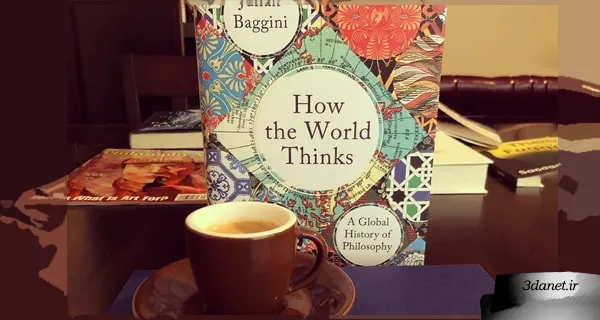
Julian Baggini, philosopher and author, in his latest work, How the World Thinks: A Global History of Philosophy (Granta), wants to remind us of the fact that although globalization has increased the movement of goods and people, it has achieved little in transferring ideas across borders.
He says: "It is a glaring error of the globalization process that today we are more familiar with the cuisines of nations than with their ideas. People today are more familiar with korma (a type of Indian dish) than with the true concept of karma."
Following the argument that "borrowing foreign ideas can enrich and deepen our thinking," Baggini cites Ubuntu as an example, a concept from South Africa concerning social solidarity.
Ubuntu "is a profoundly difficult concept for the Western mindset because the West holds the rule of law sacred, but much can be learned from Ubuntu."
"First, why circumventing laws, which is common in Africa, is not typically considered corruption. Generally, this concept is rooted in a commitment to deep moral principles, according to which the inflexibility of laws should not be allowed to prevent finding a fair and peaceful solution to problems. The second characteristic of societies that value Ubuntu is that, at their best, important decisions are made by collective consensus... Democracy itself needs the spirit of Ubuntu. Otherwise, winner takes all and the majority tramples the priorities of the minority."
Baggini, this week's guest on the program Unthinkable, says the lessons that can be drawn from non-Western philosophy do not end there.
You say that one of the benefits of having a global perspective on philosophy is that it "makes us realize that among the things we have always taken for granted, there are unusual ones." Can you give an example?
Baggini replies: "Consider the value of impartiality. As Jeremy Bentham put it, 'Everybody to count for one, nobody for more than one.' This might seem self-evident to us because morality depends on it. But in many parts of the world, this way of thinking—that we should come and see everyone equally—is meaningless."
"In Confucianism, the responsibilities of fathers and sons, husbands and wives, rulers and subjects differ. The renowned scholar of Chinese philosophy, Roger Ames, sees Confucianism as a role-based ethics because he says your obligations change according to your role in society. Many societies adopt such a broad approach."
"When comparing various global philosophies, we must be careful that not exaggerating their differences is just as important as not ignoring them. You rarely find an idea in one culture that is completely alien to others. The difference is more in the degree of emphasis. As Tom Kasulis, a specialist in Japanese philosophy, says: 'What is central in one culture may be marginal in another.'"
«Observing how Confucian ethics emphasizes role-based morality draws our attention to two points: first, how unusual our commitment to impartiality is, and second, that impartiality is, at the same time, not as clear and distinct as it seems. In practice, people believe they should treat their family differently from strangers. Many consider themselves more committed to the citizens of their own country than to other nations.»
«The reason for recent political conflicts over immigration is that many governments have forgotten this and have tried to create a system based on universal idealistic values that was more impartial than people were ready to accept.»
Are there right and wrong ways to confront other belief systems?
«If we want to globalize ideas, we must avoid the most egregious mistakes we have made in globalization. An increasingly interconnected world must be integrated in a way that allows for greater diversity and treats various nations and cultures equally.»
«The free circulation of ideas should be the driving force of globalization, not the driving force of domination. In practice, globalization has turned into the Westernization of the world: there is a McDonald's in Red Square, a Starbucks on the Champs-Élysées, and Coca-Cola almost everywhere. Globalization in the realm of ideas follows a similar pattern. Western ideas are studied more in Chinese and Japanese universities than Eastern ideas are in Europe and North America.»
But are the differences of opinion really that great? Isn't there a danger that by sanctifying plurality we contribute to the growth of relativism?
«I myself do not sanctify plurality merely for its own sake. You must distinguish between relativism and pluralism. Relativism means 'everything is correct,' and that cannot be true.»
«The pluralistic view means that although some ways of life are definitely wrong, the list of methods that likely foster human flourishing and create a healthy society includes more than one item.»
«My book is more about the spirit of pluralism than relativism. For this reason, although I try to keep an open mind, I am not afraid to critique certain ideas in various traditions, including our own. It is interesting to me that many people are not inclined toward such two-sided philosophical doubt. They either ignore other cultures and defend their own, or believe we should not critique other cultures and also treat their own culture with indulgence.»
In many cases, the debate between different beliefs and philosophical traditions becomes very unpleasant. If you think someone's beliefs are foolish, evil, or unjustified, should you challenge them or seek to change them?
«It is very important how harmful these wrong ideas are. If someone believes the devil lives on the moon, well, the discussion can be raised gently, but if someone comes along and says it is fine to behead infidels, perhaps debate is futile and we might be forced to resort to violence.»
«Generally speaking, if we do not understand why people believe something, we have little chance of changing their minds. Assuming they are crazy and foolish, we can ignore them, and they, in turn, will consider us ignorant and prejudiced and will have nothing to do with us.»
«In any case, sometimes trying to change people's minds by 180 degrees is not wise. In order to live together, we do not need to agree on everything. We only need enough to be able to live alongside one another in peace and goodwill.»
«وقتی به سایر سنتها نگاه میکنیم، میبینیم که در بطن خود مایههایی دارند که بعضی به افراطگرایی میانجامد و بعضی به آزادی اندیشه. برای مثال، اسلام در طول تاریخ خود هم جوامعی بسیار دموکراتیک را به وجود آورده و هم جوامعی بهشدت متعصب را. بهترین راه برای اجتناب از "برخورد تمدنها" این نیست که بخواهیم جهان اسلام دینش را کنار بگذارد یا نوعی روشنگری غربی را از سربگذراند بلکه این است که سنتهای خود در عرصهی تکثرگرایی و مدارا را بازسازی کند.»
.
.
جو هامفریز دستیار دبیر بخش خبر روزنامهی آیریش تایمز است. آنچه خواندید برگردان این نوشته با عنوان اصلی زیر است:
Jo Humphreys, ‘What can the West learn from the rest?’, Irish Times, 13 November 2018.
برگردان: شهاب بیضایی
.
.




Discussion1 comments
برای مثال، اسلام در طول تاریخ خود هم جوامعی بسیار دموکراتیک را به وجود آورده و هم جوامعی بهشدت متعصب را. در جمله فوق . آیا می توانید در اثبات ادعای خود مثالی بیآورید .در کجا و در چه زمان ؟