اندیشهفلسفهخردگفتگوحکمتمعناپرسشفرهنگ
Philosophy
Who Is Responsible? Examining Free Will from the Perspective of Neuroscience
Michael Gazzaniga, by examining the brain and its interpreter module, shows how consciousness emerges from the interaction of neural circuits. Rejecting determinism, he argues that accepting a role for consciousness beyond brain physics opens the way for free will and human responsibility.
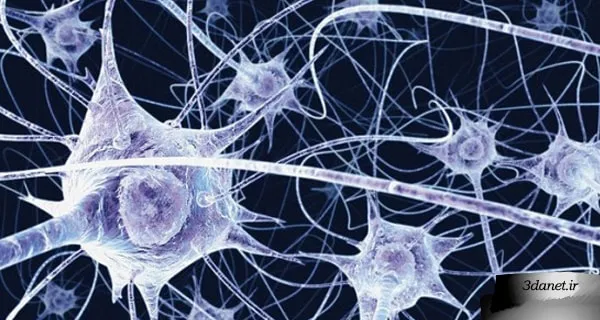
Michael Gazzaniga, a distinguished researcher and professor at the University of California, Santa Barbara, is considered the father of “cognitive neuroscience.” In this book, Professor Gazzaniga examines the emergence of consciousness in the human evolutionary path and attempts to study free will through a scientific approach.
It is often thought that the brain somehow influences consciousness and will, but how does the human brain actually work? Although the brain has been recognized as a vehicle for consciousness for thousands of years, only recently have scientists gained a clearer understanding of the brain’s mechanism of operation. For example, in the 16th century, the common belief was that a tiny homunculus lived inside the human head, controlling the brain’s functions.
Even until recent years, scientists imagined that if any part of the brain were damaged, another part would take over its function and replace it. However, by studying patients who suffer paralysis of the limbs after a brain lesion (quadriplegia), we now know that this substitution does not simply occur in all cases. If it did, these patients should be able to regain control of their limbs.
Although many misconceptions and erroneous assumptions about brain function have existed, recent decades have witnessed a great many new discoveries. In the past half-century, scientists have found that, contrary to previous belief, the brain is composed of various circuits that, in ultimate coordination with one another, each perform their own function. Furthermore, we know that each part of the brain is specialized for a specific function.
The human brain consists of the right and left hemispheres and the brain stem. Each hemisphere is responsible for controlling specific parts of the body and performing certain activities that the other hemisphere cannot do. At the same time, each part, such as the area related to language, is constantly in communication with other parts, exchanging information so that a person can act, make decisions, and learn.
Although scientists are still at the beginning of the path to uncovering the brain’s complex mysteries, we are closer today than ever before to understanding the functioning of the human brain.
The human brain is composed of various parts, each of which plays an essential role in carrying out a part of human function. Given all these events occurring simultaneously in different parts of the brain, how does each individual perceive themselves as a unified, continuous conscious being and not as a collection of different inner voices competing for attention?
In the brains of all humans, there is a special module for interpreting information. This part is responsible for making comprehensible all the various pieces of information we receive every moment from the external and internal world. In short, this specific module of the human brain collects and categorizes all information, and even if some of this information is incomplete or inconsistent with the rest, it creates an overall conception or a story so that everything appears orderly and coherent.
For example, in Capgras syndrome (Capgras), the patient mistakenly identifies a familiar person as a stranger with a similar face. For instance, a person might see their father, but because a disorder in a specific part of their brain prevents them from feeling the normal emotional arousal when seeing their father, they imagine that the person is a stranger with a face similar to their father's. In this state, the interpreting part of the brain, due to not receiving the emotional information that arises upon seeing the father, creates an understandable story based on the information it has at hand.
By studying the things we do unconsciously, we can better observe the function of this interpreting part. Suppose you are walking in a meadow with very tall grass. Suddenly, the grass in front of you moves strangely. At that moment, you unconsciously jump back to escape from what you suspected might be a snake (and later you find out it was just the wind).
This jump-and-flee reaction, which happens immediately, requires no conscious thought. In fact, unconscious behaviors are always fast because they were essential for the survival of human ancestors in the wild. However, the interpreter part of our brain tries to produce a believable conscious explanation even for this unconscious behavior. For example, in the scenario of walking through the grass, it might construct a story about venomous snakes and the need to go to a safe place to justify our reaction. But in reality, the brain had decided to flee before any conscious thought.
Accepting the absence of free will entails many problems. Yet, considering the function of the brain's interpreter, one might perhaps reach such a conclusion. Or should we not rush?
A very simple notion is to say that the function of brain circuits leads to a behavior, and then the interpreter part of the brain produces an explanation for it. But in that case, we must ask: what truly holds the primary responsibility in our brain?
Theories with deterministic approaches and free will have been in conflict since ancient times. The brain is a physical object and consequently follows the fundamental laws of physics. Determinists argue with this logic that we bear no responsibility for our actions, and if we have sufficient tools and knowledge, we can even predict the future behaviors of humans and explain all past behaviors.
On the other hand, proponents of free will say that humans possess consciousness and can therefore influence their behaviors and decisions.
In order to decide which viewpoint is correct, we must consider the brain and consciousness as two elements that interact with each other. Therefore, instead of trying to reduce will, through a bottom-up logic, to the function of a physical object governed by the deterministic laws of physics, a better approach is to find a top-down explanation for how consciousness operates.
Although our free will is also influenced by the unconscious parts of the brain, conscious thoughts can simultaneously influence the unconscious. This means that there is always a feedback loop at the conscious and unconscious levels of the brain, and in other words, free will is possible. Therefore, accepting that consciousness is more than the sum of interactions between different parts of the brain opens the way for holding humans responsible for their actions and speech.
.
.
Zahra Fayyaz / M.Sc. in Physics / Member of the Science and Religion Working Group
A summary of the first four chapters of the book:
Who's in Charge?: Free Will and the Science of the Brain M.Gazzaniga
.
.




Discussion2 comments
علت بسته بودن کامنت برای پست آخرتان درباره گزارش زلزله آذربایجان شرقی چیست؟
سلام و درود ایراد فنی بود، برطرف شد.