Religion
The Problem of Determinism and Free Will from Rumi's Perspective, by Dr. Ebrahimi Dinani
The problem of free will and determinism is among the most intricate issues in philosophy and theology, one that Rumi dissects with immense verve in the Masnavi and the Divan-e Shams. Though he finds no clear answer, he fares better than the theologians; the difference between predestination and delegation in Rumi's thought.
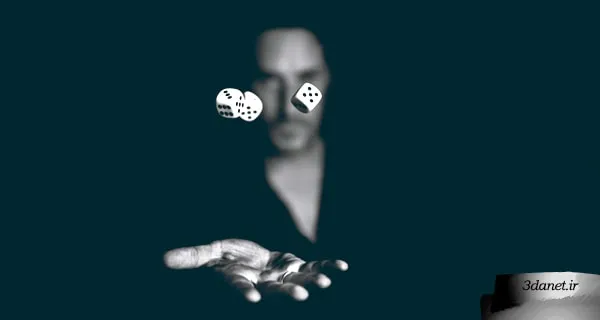
One of the most complex philosophical and theological problems is the issue of determinism and free will. This problem becomes even more intricate when intertwined with other issues such as "predestination and delegation," "good and evil," "right and duty," and the like. In the course of the Masnavi and the Divan-e Shams-e Tabrizi, Rumi dissects this abstruse problem with the flavor of his resourceful thought and abundant taste, and although he has not found a clear answer for it, he has nonetheless appeared better than any theologian in this highly contested arena. This article is a glance at and a passage through this problem, with regard to the perspective of Mawlana Jalal al-Din Mohammad Balkhi.
Determinism and free will is a doctrinal, religious, theological, philosophical, and scientific problem. All human beings, from the young to the old and from East to West, from the beginning to the end of the world, are somehow involved with this problem. All of them, whether irreligious or devout, have spoken about this issue. The question of whether "I" have brought "nature" into existence, or "nature" takes possession of "me," whether "I" make history, or history makes me, is raised for all nations and individuals of humanity. Thus, how can a reasonable middle ground be created between predestination and delegation?! Before this, we must know what difference there is between "predestination and delegation" and "determinism and free will." In theological discussions, "predestination and delegation" is spoken of; the opposite of predestination is free will. That is, an action that I can perform and also can refrain from performing, but what is delegation? Theologians have spoken much on this subject, yet they have not been able to resolve it, whereas this problem has been resolved for the mystics, and they have essentially not even sought to pose it. Theologians believe that "man has free will, but God has delegated this free will to him, and he is not independently free." Now, if free will is given to man, to what extent is he free? This problem has a heavy frequency and is raised for everyone...

Discussion1 comments
عالی بود