Economic Sciences
Why Do We Make Irrational Decisions?
The assumption of human rationality in neoclassical economics was challenged by Simon ('bounded rationality') and Kahneman. This critique paved the way for behavioral economics and 'nudge' theory, which is applied in public policy to correct irrational decisions.
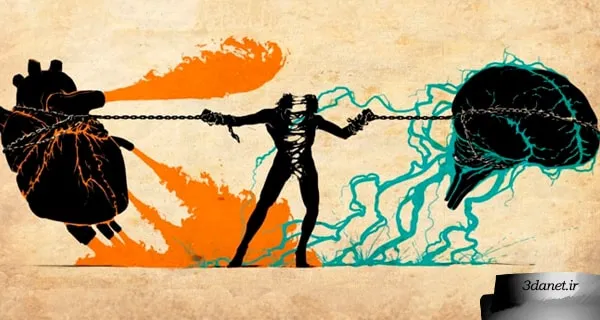
Neoclassical economics is one of the most important economic currents, emphasizing several core assumptions: humans are perfectly rational beings, have an unlimited capacity for processing information, and always seek to maximize their own profit. In this definition, the economic human is considered a rational totality. This definition was first challenged by Herbert Simon (winner of the Nobel Prize in Economics in 1978). In Simon's view, the picture presented by traditional economists faced serious shortcomings. Simon emphasized the limited information processing in humans and introduced it to the scientific community as "bounded rationality."
However, the course of change in this definition was once again seriously criticized and examined in the 1970s by two psychologists named Daniel Kahneman and Amos Tversky. Kahneman, along with his colleague Amos, believed that the assumptions presented by traditional economists had fundamental flaws, such that the concept of rationality was not correctly defined in this framework, and therefore it was not an accurate picture of external reality. These two prominent psychologists, by emphasizing psychological dimensions, tried to employ factors related to emotions and society in the analysis of understanding markets and economic agents. For their efforts in completing and correcting economic views, they won the Nobel Prize in Economics in 2002 (unfortunately, Tversky had passed away by then, and for this reason, the Nobel Prize was awarded to Kahneman and Vernon Smith). In his endeavor to advance behavioral knowledge, Kahneman drew heavily on psychology, pointed out systematic errors in thinking, and then tested them in numerous populations. He believed that since these errors are systematic, they are therefore predictable. In the next section, we will try to explain some of them.
Systematic Errors
Kahneman believed that humans have two systems of thinking: System One and System Two. System One is an automatic system that generally operates unconsciously, has unlimited capacity, and is very fast. In contrast, System Two is a slow and sluggish system that operates voluntarily and consciously and has limited capacity. Humans' use of System One, although it allows them to make faster decisions, exposes them to cognitive errors that prevent correct and optimal decisions. For example, someone might ask you, "In what year did Gandhi die?" and then add, "Was it before or after the age of 140?" This point will likely become an anchor for you, upon which you will base your final estimate. In fact, although it is quite obvious that reaching such an age is impossible for an ordinary human, a study has shown that participants' estimates of this number were heavily influenced by this unusual figure.
This is one of the most common errors, which we call the "anchoring error." An error that unconsciously affects us and causes our estimated figure to be influenced by the suggested number. As another example, recall moments when you ordered expensive food and, despite having no room left, finished it entirely. If you finished that meal because you had paid a hefty sum for it, then you have fallen prey to the "sunk cost" fallacy. Sunk cost refers to a cost you have incurred that cannot be recovered, yet your new choice is influenced by it. Or, in another example, remember a time you spent two weeks preparing for a trip, but upon entering the highway, you encounter heavy traffic that doubles your travel time and practically minimizes the enjoyment of your trip. However, because you had made arrangements for this trip over the past two weeks, you endure the heavy traffic and continue on your way. While the sunk cost fallacy clearly demonstrates the impact of irrational thinking on decisions and behavior, it serves as a reminder that when facing such situations, you might be entangled in fallacies that prevent you from realizing that the best choice is one that brings you a better experience in the future, rather than one that neutralizes and eliminates the feeling of past loss.
Understanding systematic errors and changing them is one of the most important areas of focus in behavioral economics. The core concepts in this field paved the way for its entry into the realm of public policy, which we will explain below.
Behavioral Economics and Public Policy
Alongside the growth and advancement of this emerging discipline, Richard Thaler, one of the founders of behavioral economics, together with Cass Sunstein, published a book in 2008 titled Nudge: Improving Decisions About Health, Wealth, and Happiness, in which they introduced a concept called "nudge." "This concept is a synthesis of behavioral science and political and economic theories that, by offering positive reinforcements and indirect suggestions, emphasizes achieving non-coercive compliance and influencing the motives and decisions of individuals and groups." This theory claims that if nudge theory is not more effective than education, legislation, and direct pressure, it is certainly as effective. Thaler and Sunstein write in a section of the book:
"A nudge, as we use the term, is any aspect of the choice architecture that alters people's behavior in a predictable way without forbidding any options or significantly changing their economic incentives."
This perspective quickly attracted the attention of British and American policymakers and provided the groundwork for establishing centers colloquially known as "nudge units." The Behavioural Insights Team (known as the Nudge Unit) was established by order of David Cameron in the UK Cabinet in 2010 to improve public services and save costs. The second nudge unit was created in the United States, followed by others in developed and developing countries around the world, including Guatemala, France, Greece, Pakistan, Moldova, Ukraine, Qatar, and more. Although the bulk of these units' activities consists of work done for the government, the scope of their activities is nonetheless very broad, such that they carry out many projects for foreign governments, the World Bank, and the United Nations.
Halpern, a social psychologist at the University of Cambridge who has led the Behavioural Insights Team from the beginning, has been able to create major changes in various areas of public policy such as health, energy, education, charity, and more during this time, so much so that The Guardian wrote in praise of him: Who is it that has committed 100,000 more donors to organ donation in one year? Who is it that has persuaded 20 percent more people to switch their energy suppliers? Who is it that has doubled the number of army applicants?
Most of the changes implemented by these units are very small. For example, a text message, changing the wording of a letter, or sending a personalized email. One of the team's long-term and simultaneously successful projects was to reduce tax fraud and debt. The unit had previously claimed that by sending messages reminding recipients that their neighbors had paid their taxes, it also requested that they pay their income tax.
In fact, they were trying to encourage people to pay their debts through social comparison, but these letters had little effect on only one to five percent of the people who owed the most tax. Nevertheless, the Behavioural Insights Team was able to discover the message that had the greatest impact on this group: "Not paying tax means we all lose vital public services like our health service, roads, and schools." This message implicitly emphasizes that tax payment by this group can make a distinct, significant difference to these kinds of public services.
According to Halpern, out of every 10 experiments conducted to change a behavior,
One or two experiments fail. Although criticisms such as short-term effects have been leveled at this approach, it nonetheless seems that, given the low cost of these interventions, employing them not only brings economic savings for governments, but their effects are also large and significant.
Although the domain of policymaking is one of the most important dimensions of the political system, the issue of political choice gains great importance before that. So much so that electing a competent politician can smooth the path of policymaking and have widespread effects on society.
.
.
Why Do We Make Irrational Decisions?
Nazanin Mousavi (PhD student in Psychology at the University of Tabriz, researcher in the field of behavioral economics)
Source: Taadol
.
.





Discussion0 comments
No comments yet; let yours be the first voice.