Sociology
Women for an “Other” Politics: A Sociological Look at Women’s Participation in Urban Management
Women's presence in politics is a double-edged sword: if merely performative, it leads to regression, but when it carries a 'feminine perspective and approach,' it pushes back authoritarianism and strengthens democracy. The transition requires serious will and realistic modeling.
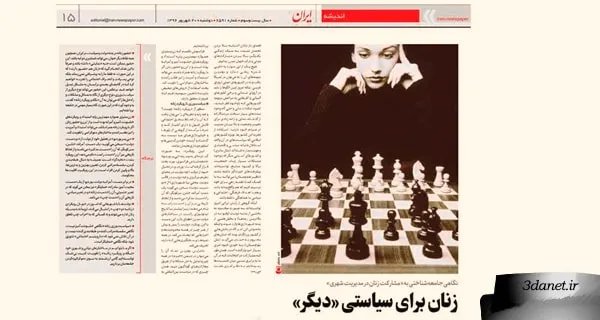
The presence of women in the body of the state and politics, in Iran, as in all other parts of the world, can be a double-edged sword; this presence may have a “ceremonial” aspect and be carried out merely with the aim of showing that “women are also present,” in which case, not only does it not bring us any progress, but we will experience a kind of social regression and deviation that will become a problem for us in subsequent steps. Conversely, this presence can give rise to another kind of politics, another kind of view of issues, problems, and solutions, which can be called a “feminine perspective and approach,” in which case we will have taken a very important step in society.
Misogyny has always been the most important foundation of despotism and violent, authoritarian approaches, and therefore, the presence of women, if accompanied by a feminine approach, can push back despotism and authoritarianism and strengthen the structures of democracy.
“Pierre Bourdieu,” in his analysis of the state, speaks of the “two hands of the state”; one hand is authoritarian, violent, repressive, which he calls the “masculine hand” and historically also refers to as the “right hand”; this approach is intensely “elitist”: it is always seeking to classify, create hierarchies, determine the best and the worst, and elevate and lower individuals. In this approach, minorities are condemned.
In contrast to the authoritarian hand of the state, Bourdieu also speaks of a “benevolent, maternal, protective hand,” which, in gendered terms, he calls the “feminine hand” and, in political-historical terms, the “left hand.”
States or cities in the world today that pursue a “feminine” and “left” approach are not necessarily run by women, nor by those belonging to leftist parties. “Feminine politics” is not a violent outlook, nor a hierarchical and classifying one, and it does not seek to encourage “social Darwinism”; rather, it is a protective outlook.
If we can strengthen the “feminine perspective and approach” in our state and urban structures, we have undoubtedly taken a valuable step toward democratizing our society.
The transition from a socio-political and cultural terrain that has been dominated for several hundred years by intensely authoritarian, patriarchal, and misogynistic systems to a democracy and a free, civil thought and a system in which there are relatively suitable capacities for freedom, social equality, solidarity, altruism, civility, respect for each other’s rights, and respect for the rights of weaker individuals and minorities is a long-term process that, in addition to intelligence, strategy, political conditions, and the will of the people, requires practice and continuous actions. This transition also requires a correct diagnosis of our situation relative to other comparable terrains, a rational assessment of our capabilities and shortcomings, and logical, non-exaggerated goal-setting. For us, as for any system that wishes to take action in this regard, the problem begins when it either underestimates itself and doubts its abilities, or conversely, for subjective and irrational reasons, imagines itself to have an imaginary capacity and seeks to lie to itself and others, consciously or unconsciously.
If we set aside the ancient and pre-industrial processes and mechanisms that linked women to politics and always gave them the ability to pursue specific strategies for protecting themselves (and their children) in misogynistic and authoritarian societies, so that we may discuss, in this short note, “modern female participation in the political sphere” and specifically in the “urban” sphere, we must say: our situation is undoubtedly not comparable to that of developed countries where women’s entry into the political and urban arena dates back to the nineteenth century (the first female mayor in America, Kansas, 1887), and today women are not only at the helm in some major cities (Paris, Houston), but also hold the position of managing director in powerful countries such as Britain and Germany, and in large international organizations like the International Monetary Fund. But even compared to third-world countries, we do not necessarily have the best situation; for example, in Morocco, Fatima Zahra Mansouri was the mayor of the million-strong city of Marrakech for 6 years (2009 to 2015), or the high proportion of thirty to forty percent of women in the legislative assemblies of countries such as Bolivia, Cuba, Senegal, Rwanda, South Africa, and so on.
Therefore, we must abandon our fantasies about a “golden past” (whether during the Pahlavi era or before it) and consider achieving a better situation in the future to be entirely conditional upon a strong will and the creation of public welfare, greater freedoms, education and upbringing, better general and legal conditions for women and minorities, an open space for the exchange of ideas, raising tolerance for one another’s lifestyles, increasing civic participation, and understanding the modern world.
None of these matters are related to “Westernization,” and the best examples of them can be found neither in America nor in the main countries of Western Europe. Rather, today we must seek these models in Northern Europe and certain Asian and African countries; countries that, despite severe poverty, lack of financial resources, and even sometimes the existence of very rigid patriarchal traditions from the past, have a great desire and will to change the situation and raise civility among their people. Drawing on the experience of these countries, especially Islamic countries that have simultaneously pursued politically and economically independent and identity-oriented policies (like Malaysia), and other Asian countries that, despite numerous problems, large populations, and lack of resources, have been able to make astonishing progress (such as India), can help us chart a roadmap for ourselves that is both realistic and aligned with our cultural, social, and political goals.
The fact that a group of Iranian women today have been able to enter, in a limited way, a part of the government body (albeit not at the highest levels) and parts of the municipal bodies, and that this has sometimes been more prominent in parts of the country considered deprived provinces (such as Balochistan), is in itself very promising. Just as participation in elections, where we have reached relative equality between the genders, seems to be a positive matter.
Women’s Presence in Politics: A Double-Edged Sword
The female presence in the body of government and politics, in Iran, as everywhere else in the world, can be a double-edged sword, and one must be aware of this: this presence may have a “tokenistic” aspect and be carried out solely with the aim of showing that “women are also present,” in which case, not only will it not lead us to progress, but we will experience a kind of social regression and deviation that will become a problem for us in subsequent steps. Conversely, this presence can give rise to another type of politics, another type of perspective on issues, problems, and solutions, which can be called a “feminine perspective and approach,” in which case we will have taken a very important step in society. Let us not forget that misogyny has always been the most important foundation of despotism and violent, authoritarian approaches, and therefore, the presence of women, if accompanied by a feminine approach, can also push back despotism and authoritarianism and strengthen democratic structures. The discussion of using “positive discrimination methods” (setting quotas) is, of course, an absolute necessity.
Politics with a Feminine Approach
What is meant by a “feminine approach”? And what basis or theory can be found that renders it acceptable and credible in terms of social logic, and not merely the product of a set of our beliefs and fantasies about the past and future, our self-aggrandizements and myth-making?
This approach has been extensively discussed by the French sociologist “Pierre Bourdieu”: in his analysis of the state (whether the state in the sense of the central system or the state in the form of local government or municipality), Bourdieu speaks of the “two hands of the state”; a commanding, violent, repressive hand, which he calls the “masculine hand” and, historically, also refers to as the “right hand”; because it corresponds more closely with the history of right-wing ideology in the structures of the modern state. This hand, or this approach, defines the state above all and before everything else by all the limitations and constraints it creates, by all its punishments and severities.
Thus, its best symbol can be seen in the perception of “crime” in everything and the tendency to solve problems through various punishments. The very thing we call a “militaristic approach” in international politics. This approach is, at the same time, a fiercely “elitist” one: it is always seeking to classify, to create hierarchies, to determine the best and the worst, to elevate and demote individuals, and so on, and therefore has a “natural” inclination to apply policies of social Darwinism, that is, dividing society into “winners” and “losers,” fueling and encouraging competition, and viewing society as a market (a jungle) where the powerful survive and the weak perish. In this approach, minorities are condemned because they are minorities, weak individuals are condemned because they are weak, and so on.
But in contrast to this commanding hand, Bourdieu also speaks of a kind, maternal, protective hand, which in gendered terms he calls the “feminine hand” and in political-historical terms the “left hand.” A hand and an approach whose state examples we have seen in some welfare and justice-seeking state systems (and not necessarily communist or socialist ones), and of course, it must be noted that neither in the first case nor in this one does speaking of “right” and “left” refer to the historical examples that have called themselves by these names but have had a clear rupture from their own discourses.
Today, in the world, states or cities that pursue a “feminine” and “left” approach are not necessarily run by women, nor by those belonging to leftist parties. Here we are faced with an allegory. But an allegory that has roots in reality, especially in terms of gender. The feminine gaze, generally, due to the inherent characteristics of women, is not a violent gaze, but rather, like a mother’s gaze upon her children, is a “protective gaze”; the feminine gaze is not a hierarchizing and classifying gaze, and it does not seek to encourage “social Darwinism.” This can often be observed in the family structure as well: the mother does not try to pay more attention to the stronger children and marginalize her weaker children, but rather tries to employ the stronger children so that the weaker children may find a better situation. If we can strengthen this gaze and this approach in our state and urban structures, we have undoubtedly taken a valuable step toward democratizing our society.
.
.
A Sociological Look at “Women’s Participation in Urban Management”
Women for an “Other” Politics
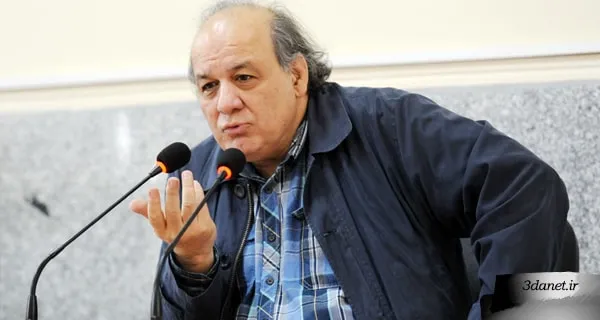
Author: Dr. Nasser Fakouhi - Director of the Institute of Anthropology and Culture, Professor of Anthropology, University of Tehran
Source: Iran Newspaper
.
.

Discussion1 comments
بله واقعا همینطور است ..ودر این مقاله چقدر عالی وتیزبینانه به این موضوع پرداخته شده .که زنان بواسطه دارا بودن خصوصیات و ویژگیهای خاصشان ، با رویکرد ونگاهی کاملا متفاوت از مردان می توانند با مشکلات ومعضلات جامعه روبرو شده ودر تحلیل آن قدم های موثرتری بردارند .به امید آنکه که در جامعه ایرانمان شاهد حضوری پررنگ تراز آنها باشیم .