Philosophy
A Conversation with Dr. Najafgholi Habibi on Avicenna
Avicenna is a world-historical figure; removing his thought from Islamic philosophy would destroy a large part of it. His influence on Islam and the West, his intellectual relationship with al-Farabi and Aristotle, and the reason Iran's National Doctors' Day is named after him are reviewed.
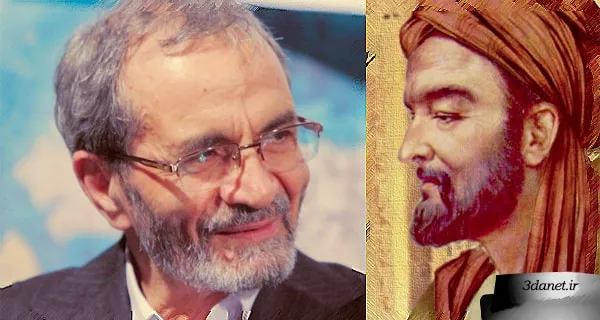
Dr. Najafgholi Habibi, stating that if we were to remove Avicenna’s name and thought from the books of Islamic philosophy, hardly anything of substance would remain, said: Avicenna has had a profoundly deep influence on Islamic philosophy and is a very great and important figure not only for Iran, but for Islam and, in some respects, for human history.
Dr. Habibi! To begin, please tell us what Avicenna’s place is in Islamic philosophy and what role and influence he has in Western philosophy?
Before addressing this question, it is necessary to honor Avicenna’s commemoration day, and we are pleased that a day in our country has been named after Avicenna, because Avicenna is a very great and important figure not only for Iran, but for Islam and, in some respects, for human history, as he is among the thinkers who have influenced the cultural and scientific complex of the world. Therefore, Avicenna is a global figure for all of history.
In answer to your question, I must say that even now, if we were to remove Avicenna’s name and thought from our philosophy books—which are our philosophical texts and have been taught over the years—hardly anything of substance would remain from them. That is, Avicenna had a deep influence on the philosophers after him. Fakhr al-Din al-Razi, who wrote many books on philosophy and is influential, especially with the commentary he wrote on al-Isharat that caused an uproar. Khwaja Nasir al-Din al-Tusi, who is one of the influential philosophers, as the commentator on al-Isharat, holds international and global prestige in philosophy and is, in a way, a spokesperson for Avicenna. Suhrawardi, as an innovative philosopher who left behind a philosophical foundation, all of his polemics are with Avicenna, some of which he accepted or opposed. Ultimately, it is Avicenna who is present in Suhrawardi’s polemics. Likewise, there are Dabiran Katibi, Abhari, and others who are engaged with Avicenna’s ideas, right up to the contemporary period.
Mulla Sadra is one of these turning points in the history of Islamic philosophy. You are aware that after Mulla Sadra flourishes in philosophy and reaches his peak, in the later part of his life he writes a commentary on Avicenna’s Theology of the Shifa, which is famous as Mulla Sadra’s Glosses on the Shifa. These attentions show Avicenna’s presence, and on the whole, it can be said that he has had a very, very profound influence on Islamic philosophy. Sometimes these influences are positive, meaning they explain and elaborate on Avicenna’s theory, but sometimes they also have oppositional influences. For example, suppose Avicenna raises the issue of substantial motion and rejects it, but Mulla Sadra, as an innovative and creative philosopher, proves the issue Avicenna raised. The topics are such that Avicenna’s grappling hand is present in all of them. With the entry of Islamic philosophy into the West, Avicenna’s influence on the West is also observable. If you read Dante’s Divine Comedy, Avicenna’s presence there is clear. Avicenna’s ideas entered Western culture through Scholastic philosophy and the Schoolmen. Avicenna’s presence is prominent in philosophy at least until the seventeenth and eighteenth centuries. His role in medicine has its own special place, but in philosophy, too, he was influential up to this era. In short, Avicenna has had a profoundly deep influence on Islamic philosophy after him up to our time.
*You mentioned Avicenna’s commemoration day, but this day is known as Doctors’ Day. I wanted to know your view on this matter: is it necessary for a day to be named Avicenna Day to honor his philosophical standing?
A day has been named after Avicenna, and the physicians took the initiative and claimed it for themselves; this is, of course, due to the profound influence Avicenna has had on world medicine. The synthesis of medicine in Iran at that time was shaped and given an identity by Avicenna, and it was transmitted to Europe, where universities of medicine were then being established, and the development of medicine, medical terminology and culture, and even specialized medical knowledge entered various countries through Avicenna. Avicenna therefore had a great impact in the field of medicine. It was necessary that Doctors’ Day be named after Avicenna. Perhaps the philosophers were a little slow to move to substitute Avicenna’s philosophy for his medicine. I doubt that another day could be successfully established in honor of Avicenna’s philosophical standing. Unless a day is named after philosophy, in which case Avicenna, as a philosopher and philosophical pioneer, holds a special place in this regard. It seems to me that, although the physicians have taken the lead, honoring Avicenna’s philosophical standing would be interesting and could gain currency. Avicenna’s philosophical standing could be celebrated on World Philosophy Day.
*Which philosopher before him influenced Avicenna the most?
These discussions in the history of philosophy are contentious and difficult. There is no doubt that Avicenna was influenced by philosophers before him, and he was probably greatly influenced by al-Farabi, and in two or three places in the Shifa he writes: “This statement is the theory of one who does not speak in vain,” and everyone believes that Avicenna means al-Farabi by this person. Avicenna does not mention anyone by name but says a scholar who does not speak in vain has said such-and-such, and experts believe he is referring to al-Farabi.
It is also written in the history of philosophy that Avicenna said he did not understand Aristotle’s Metaphysics; after he insistently bought a book from a peddler, he understood the aims of Aristotle’s Metaphysics, which is a work by al-Farabi, and by reading this book his problems were solved. This shows that Avicenna’s correct understanding of Aristotelian philosophy began with al-Farabi, and this is an important point. The fact that Avicenna, with all his fame and ability, relates this whole story in his own life without wanting to conceal his past is a significant matter. Usually, when people become prominent figures, they forget to acknowledge others, and Avicenna, for all his greatness, as I mentioned, says several times in the text of the Shifa that this is the statement of one who does not speak in vain, by which he means al-Farabi, and he also mentions this story in his autobiography, that al-Farabi’s “The Aims of Aristotle’s Metaphysics” helped him understand the Metaphysics.
*In your opinion, why did Avicenna, as the genius of the East, not understand Aristotle’s Metaphysics?
The subject of Aristotle’s Metaphysics was complex, and the translations from Greek into Arabic were problematic and difficult. It was a subject that had not reached Avicenna’s ears; in this situation, it was hard to understand what they were discussing in the Metaphysics. It was enough for someone to provide a spark and explain what they were discussing.
The translated text of Aristotle’s Metaphysics at that time probably had complexities and an enigmatic quality that prevented Avicenna from understanding what the subject of discussion was. The translation was probably bad, not that the material was so difficult that Avicenna could not understand it. When the translation is not good, one cannot understand. Even now, some young translators who are not very proficient in translation render a book so poorly, deleting the parts they do not know and truncating sentences and ruining their beginning and end, that as a result one cannot understand what the author intended.
I suspect that Avicenna’s lack of understanding resulted from the erroneous translations that reached him. Also, because books were in manuscript form at that time, reading handwritten texts was very difficult. Since I edit manuscripts, I realize how much bad handwriting causes errors in understanding phrases.
*The Aims of the Metaphysics is a small book, no more than a few pages. It cannot be called Farabi's commentary on the Metaphysics. In your opinion, how was it nonetheless able to solve Avicenna's problem?!
It is enough that it opens up some points and shows what the subject of discussion is. Once Avicenna grasped these points, he understood the rest on his own.
*That is exactly what I mean: by looking at the Aims, one can strongly guess where the problem lay. Also, Farabi had predicted that someone among the seekers of knowledge in the land of Iran or among Arabic speakers who want to read the Metaphysics would encounter this problem in understanding. So he untied the knot and solved the problem?
Yes! Farabi made this prediction and brought a summary of his discussions. Therefore, by writing the book, he illuminated the reader's mind so they could reach the correct path. Indeed, the very title "Aims" for this book is for this reason. By stating Aristotle's aim, Farabi solved the problem, and because Avicenna had read the book thoroughly, he understood the whole matter at once.
*Some experts believe that by reading the Metaphysics forty times, Avicenna reached a kind of philosophical dead end or weariness with philosophy. Had he not seen the Aims, he would not have turned to philosophy again!
I do not accept this view. Because Avicenna says, "I read Aristotle's Metaphysics forty times." So if Avicenna had wanted to despair, he would not have continued. If he had wanted to despair, he would have abandoned it after reading it a few times and not understanding it. Such a thing is simply impossible; Avicenna was a sharp-witted scholar who advanced discussions easily. When Avicenna shows such persistence as to say he read the book forty times—though perhaps stating this number is an exaggeration, meaning he wanted to say he read this book a great deal—whatever the case, he had such perseverance that he did not stop reading.
I do not think that if Avicenna had not seen the Aims of Aristotle's Metaphysics, he would have given up on this task. If he had wanted to despair, he would have despaired after reading it a few times, but he continued in order to understand. Avicenna possessed a curious philosophical mind; because he was curious, he wanted to see what these people were saying. Therefore, I do not accept this view at all. Avicenna was not at all frustrated or tired by not understanding the Metaphysics; he absolutely wanted to understand. Anyone who strives will surely find. Avicenna's character was not such that he would give up, and his curious philosophical mind stimulated him to understand what they were saying.
*What is Avicenna's place in medicine, and to what extent was his role and influence on medicine in the West?
In medicine, Avicenna was influenced by Zakariya Razi and the Iranian physicians who had come from Jundishapur to Baghdad and were renowned. Also by the physicians who had translated the works of Hippocrates and Galen and were themselves great physicians, such as Hunayn ibn Ishaq, Ishaq ibn Hunayn, and others... who were mostly translators of Greek works. However, they played a significant role in Avicenna's entry into medical issues. But in any case, in the realm of philosophy at this time, there are al-Kindi and... others. In any case, the number of philosophers at that time is small, but Avicenna intelligently takes the material and develops it.
*In Avicenna's biography, Juzjani attributes certain things to Avicenna that some do not accept and others confirm. What is your opinion on this matter?
What has been transmitted from Juzjani is not verifiable, because a corrected text of Juzjani does not yet exist. Juzjani's original text is not available. Given the political and cultural opposition to Avicenna, it is not at all unlikely that Juzjani's original manuscripts were tampered with, because in other places there are reports that contradict Juzjani's words.
Avicenna is a highly contested figure. On the one hand, the dignitaries of that period all sought to bring Avicenna to their courts, as he lent them prestige and honor, and they took pride in having a person like Avicenna reside at their court. Ibn Abi Usaybi'a, in his book *Uyun al-Anba'*, which is the most important book of that period on the history of physicians (*Tabaqat al-Atibba'*), says: Abd al-Latif al-Baghdadi, who was a very prominent scholar in philosophy and medicine, greatly reviled Avicenna. He writes in this book: one of the reasons for Abd al-Latif al-Baghdadi's opposition to and revilement of Avicenna is that he was ill-disposed toward Iranians. On the other hand, there were also sanctimonious zealots who could not tolerate individuals like Avicenna. Thus, the accusations against Avicenna could escalate. Therefore, it is not at all unlikely that al-Juzjani's writing has been tampered with, since no reliable manuscript of al-Juzjani is yet available. The manuscripts are numerous, but we are not certain whether these accounts are correct or not.
Al-Juzjani says that we would gather at Avicenna's place at night, and one person would read from the *Shifa* while Avicenna explained it. When we grew tired, he would call for drinks to be brought and for musicians to come, and after the fatigue passed, we would sit again and resume reading. Firstly, how could they discuss philosophy and medicine again while intoxicated and...? Nizami Aruzi, in *Chahar Maqala*, quotes a scholar who said: "I, Bakalijar, along with several others, would go to Avicenna before dawn to study. By the time we arrived, Avicenna had already written a portion of his books. Then we would study until the morning prayer. We would perform the congregational prayer with the Shaykh. Since Avicenna was a vizier, near sunrise, dignitaries and notables would come so they could go to the ministry together, and then we would go out." These accounts are closer and more accurate to the tradition of scholars, which is still customary today, where scholars rise before dawn and teach.
Al-Juzjani's account is confused, and the reason for this is that we lack clear chains of transmission from al-Juzjani. Especially since there are also many people who are enemies of Avicenna. Furthermore, there are many reports contradicting this; for example, Avicenna says that when he encountered a scientific problem, he would go to the mosque and perform two rak'ahs of prayer. Or, for instance, there are reports that a person encountered a philosophical problem, wrote it down, and sent it to Avicenna. Avicenna sent for al-Juzjani before dawn to dispatch someone to deliver the reply. The narrator says that when we went, Avicenna was seated on his prayer mat, and on the prayer mat he had written the reply, which was a philosophical treatise. There are complex reports like this as well; why should we not accept these reports and accept those other narrations? Also, the mystical discussions in *al-Isharat* are very fascinating, and no one has yet been able to write a treatise on mysticism with such beauty. Such a person must be a person of piety.
One of the reasons Avicenna was declared an infidel was that he wrote treatises on divine unity with rhymed prose, and they used the pretext that because these contained so much rhymed prose, he must have intended to challenge and rival the Quran, and for this reason they declared him an infidel. On the whole, it can be said that such a person had implacable enemies. Both from the politicians who pursued him to draw him to their courts, and he refused to go, and from scholars in various fields whose envy was provoked.
*In your opinion, if *Hikmat al-Mashriqiyyin* and *al-Insaf* were extant, what kind of Avicenna would we be facing now, and how different would he be from the current Avicenna?
Many of Avicenna's works have been lost. *Al-Mahsul* is lost, which was perhaps even more voluminous than the *Shifa*. *Al-Insaf* and *Hikmat al-Mashriqiyyin* were also important works. The logic section of *Hikmat al-Mashriqiyyin* has been published; its physics section is currently being edited by a Turkish student under my supervision, and the work must be completed to see what differences it has with the physics of the *Shifa*. No manuscript of the theology section of *Hikmat al-Mashriqiyyin* has yet been found, which we hope will be found, just as some other works of our scholars have been found.
*From what remains, what is your impression? What truly was the philosophy he intended to convey to the elite?
Avicenna says we wish to expound a particular philosophy for the Orientals. The crux of the matter is what is meant by Orientals, that is, an Oriental wisdom or a wisdom that is from the East, not the West. Avicenna was in conflict with the scholars of Baghdad. In Hamadan, a man debated with Avicenna. Avicenna realized that he understood nothing, and then said to him: From whom did you learn these strange and bizarre ideas? From a letter Avicenna wrote to the scholars of Baghdad, it can be understood that he said, I learned these from the scholars of Baghdad. I sense that Avicenna also wanted, as the saying goes, to humor the scholars of Baghdad, that these are the trained students of your school! It is possible that by the West, Avicenna meant the scholars of Baghdad, who were part of the western lands of the Islamic world, since Avicenna never traveled to those regions, and perhaps Avicenna's meaning had an Illuminationist aspect. Europeans collected Avicenna's small treatises and called them the Oriental Treatises, which is incorrect.
*Did Suhrawardi or the philosophers close to Avicenna also not see these works?
Suhrawardi says: a few folios (leaves) of the treatise "al-Insaf" came into my hands, though he says there was nothing specific in it regarding Oriental wisdom. The original manuscript of the "Canon," which was taught years before Suhrawardi and was accessible to people, and in Baghdad and elsewhere Avicenna's indirect students were teaching it, was not found. Avicenna was not in the habit of keeping the manuscripts he wrote for himself or giving them to a scribe to copy from, so they were lost.
.
.
A Conversation with Dr. Najafgholi Habibi on Avicenna
Interview by Seyyed Hossein Emami | Mehr News Agency | Saturday, 24 August 2013
.
.


Discussion0 comments
No comments yet; let yours be the first voice.