Philosophy
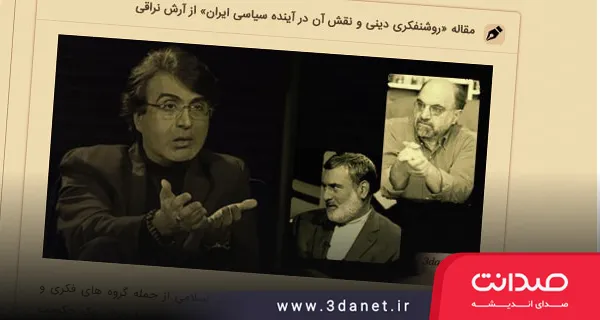
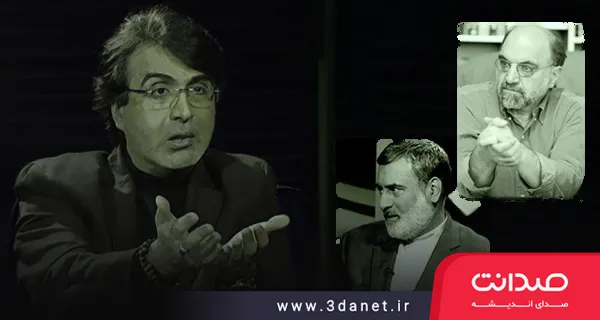
A Debate on Euthanasia (Mercy Killing) Between Arash Naraghi and Mohsen Kadivar
Mohsen Kadivar and Arash Naraghi took opposing positions in a debate on euthanasia: Kadivar opposes it on religious grounds, while Naraghi justifies it through 'rational suicide' and human dignity.
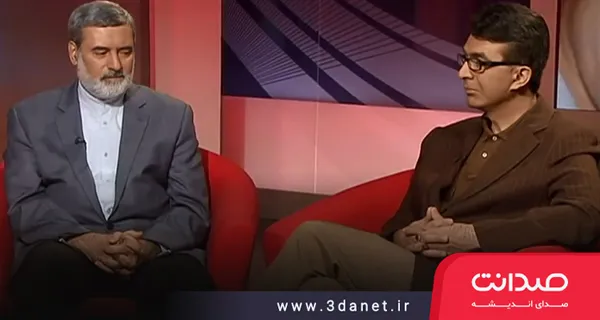
Host (Dariush Karimi): If the person closest to you asked you to assist in their suicide to escape the pain, suffering, and terminal illness leading to death, would you respond positively to this request? Euthanasia is a term that in recent years has been used in Persian for mercy killing—assisting in a death that delivers a person from pain, suffering, or a vegetative life. Can an individual's request for complicity in their death be granted by appealing to ethics, religion, or philosophy? Should human societies legalize euthanasia? If so, shouldn't we consider the possibility of its misuse? Especially in countries where neither ethics nor law rest on firm pillars? Shouldn't we distinguish between types of euthanasia? Shouldn't a distinction be made between withdrawing a patient's medication and prescribing a drug that leads to their suicide? What is the connection between euthanasia and human dignity? Does human dignity require us to respect a person's right to end their life? Or is human dignity in conflict with taking a life? We will discuss this topic with this week's guests: Mohsen Kadivar, Islamic scholar and [visiting] professor at Duke University in the United States; Arash Naraghi, professor of philosophy and religion at Moravian College in Pennsylvania, USA; Arezoo Safaei and Kowsar Gohari, both students. Mr. Kadivar, what would you do if you were in such a situation?
Mohsen Kadivar: It is a very difficult situation. God grant that no one ever finds themselves in such a situation. If, perchance, such a question were asked of me—that is, if someone, out of the pain and suffering they are enduring, asked me to provide the means for their suicide—I would certainly not do such a thing, and I would invite them to endurance and patience. I would tell them that although you are suffering now—and it is excruciating suffering, you have immense pain—consider that your life is not confined to this worldly life of, say, a hundred years. You have an eternal life ahead of you. Think of the ease there, and consider that this suffering you are enduring is not in vain or futile. It may yield a benefit or expediency that you will see in the other abode. You are suffering in the presence of God; perhaps these sufferings you endure will bring about your forgiveness, will elevate your station in the hereafter. And perhaps it is a test for you, and if you emerge from this test with your head held high, you will attain a lasting pleasure, a permanent tranquility, an everlasting peace. It seems that belief in God and belief in the afterlife help us to endure such a situation. On the other hand, if we know that both suicide and homicide—in other words, both taking one's own life and taking another's, even out of mercy—are not permissible, and [accepting it] is difficult, we must have a very, very strong reason.
Host: Not permissible, do you mean from a religious perspective?
Kadivar: We can look at this issue from several perspectives: the ethical perspective, the religious perspective, the philosophical perspective, and the legal perspective. And it is interesting to know that euthanasia is now legally permitted in three places in the world: two European countries and one state in America. There are also a few countries that provide for reduced sentences or somehow overlook it—in other words, they do not enforce this punishment. Therefore, I began with a religious expression. This expression can also be an ethical one, that is, by positing a permanent, aware observer of the human condition and believing that life is not just this short worldly life, and that suffering can be followed by an eternal tranquility, peace, and serenity, and if we think about that, we may be able to endure this suffering. Furthermore, some of these sufferings [are alleviated] by spiritual matters; the very feeling that if I emerge from the test with my head held high, a great benefit and abundant good may come my way.
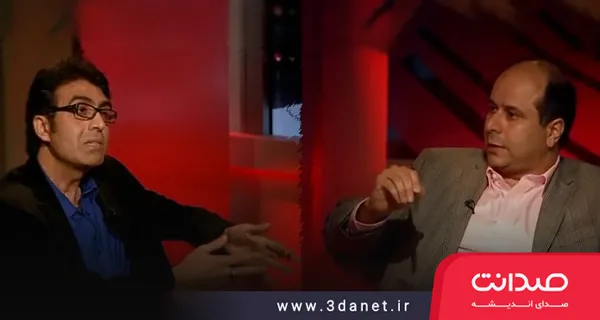
Arash Naraghi: I would like first to explain my own conception of the phenomenon of euthanasia and then state my position on it. In my view, the phenomenon of euthanasia consists of our causing someone's death or not preventing someone's death—provided that [1] that individual is suffering from an agonizing and incurable illness; [2] their death is in their best interest, and [3] they themselves have repeatedly, consciously, and voluntarily requested death, and [4] the person who is to assist in the process of their death has no intention or purpose other than the benefit and good of that ill individual. In my opinion, under these conditions, the phenomenon of euthanasia can certainly be justified. The basis of my argument is the concept of "rational suicide": in my view, under certain conditions, the right to die can be recognized for individuals, that is, as I said, when a person's life is filled with agonizing and irremediable pain and suffering arising from an incurable disease, it seems that at least in some cases, the individual's death is in their best interest and for their benefit and good. Under these circumstances, if the person themselves decides to end their life, their suicide can be an instance of "rational suicide," provided that their death does not violate the rights of others and that their death is in their best interest. Here, the right to die for the individual is established. In circumstances where the right to die or the "right to rational suicide" is established for the individual, if the person cannot exercise this right themselves, then others [for example, a qualified physician] can assist in their death so that they may leave the world with greater peace, tranquility, dignity, and honor [and this phenomenon is euthanasia].
Moderator: Allow me to ask, what question is on the minds of your audience?
Kowsar Gohari: My question is that, in fact, all the disputes begin from the point of who can determine what is in that individual's best interest? In theory, this might be acceptable, but when it wants to become a law and provide a criterion for people to implement, that is where disagreements begin. Is the determination made by the patient? By the patient's relatives? Or, in your view, let's say, should several phases be defined, such that first they are encouraged to be patient and, for example, go through ten steps, and finally, after the doctor's decision... In any case, that determination of best interest seems like a very vague concept.
Naraghi: A distinction must be made between two levels of discussion: one level of discussion concerns the principle of whether such an act is justifiable. If you come to the conclusion that this act is unjustifiable in principle, then the questions you raised essentially become irrelevant. But if you can demonstrate that this act is justifiable in principle, then we arrive at the second level of discussion and must explain what the conditions for the implementation and realization of this matter are. This second level is, of course, a very important discussion that must be addressed in its proper place. My point now, however, pertains more to the first level, that is, can this behavior be considered morally justifiable in principle or not? According to the argument I presented, the answer to this question is affirmative. I would also like to add that, in my opinion, belief in God in no way obligates us to suffer needlessly in this world. If it were otherwise, we would have to shut down medical science! We would have to belittle human reason, which works to reduce our suffering and pain in this world! We would have to reject all instances in which an individual, to preserve their dignity and honor, is willing to sacrifice their life! In my view, an individual's belief in God is in no way incompatible with the individual reaching the conclusion that the continuation of needless suffering and affliction is unnecessary; an individual can, under specific conditions, even end their life to preserve their dignity and honor.
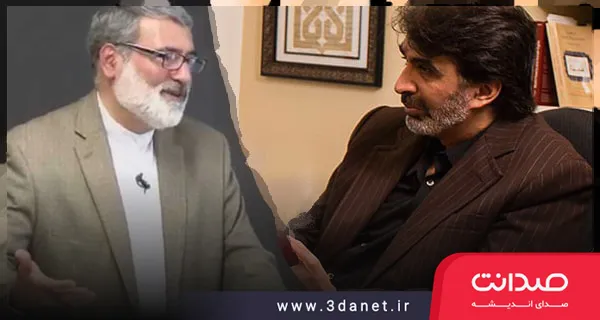
Kadivar: In fact, euthanasia is deemed permissible—whether ethically, religiously, or legally—only if we say that just as a person owns their property, they also own their life. No one has the right to ask me, “Are you wasting your property or using it properly?” The same applies to my life; no one has the right to ask whether I want to keep my life or waste it. It is my life, and now, for this reason, under these agonizing conditions I find myself in, I want to be delivered from it. That is one philosophy. And the other philosophy is that this life is a trust with me, and the owner of this life is someone else. He gave it to me, and whenever He deems fit, and He sees it expedient, He will take it from me. As for suffering, we are not supposed to endure every suffering. In principle, God also demands, has permitted us, and even commanded us to provide the means of our own comfort. But now, my suffering has come into conflict with another matter, and we must see which is more important: enduring suffering or suicide? If we accept that human beings possess dignity by virtue of being human, that human life is sacred and this soul is inviolable, then if I want—whether myself or through another—to take this life, in exchange for enduring [excruciating] suffering, well, [in that case] I am violating that more important principle, which is the sanctity of my soul. I do not have such permission.
Host: The person whose photo is on the television screen now, Tony Nicklinson, with whom I began the program, in response to this very argument put forward by the judge, said: Look at me and my life; my existence bears no sign of human dignity.
Kadivar: Well, that’s interesting. What does dignity mean? That I, for example, cannot now properly perform my basic daily functions—is this a violation of dignity? We shift the words and assume that this is not a dignified life, not a life with dignity. Why? If I am to find eternal peace after that [suffering], is that not dignity and honor? But the fact that I am, for example, for a few days, a week [more or less], facing difficulty with nutrition, excretion, and the like—is this a negation of dignity?
Host: It will be like this for the duration of his life, a life that is going to lead to death.
Kadivar: Yes, suppose the patient has been told that they have only a few days left to live and is suffering [excruciatingly], and they want to be delivered from this suffering in the meantime. It might even be [months or] years [of this suffering]. Whether this person has permission to commit suicide or not—neither ethics nor religion, as far as I know, my ethical and religious approach does not grant them such permission, nor does it allow another to do it [for them]. It seems this is precisely an interference in God’s affair.
Arezoo Safaee: My question is for Mr. Kadivar, as an Islamic scholar and religious researcher. You referred to human dignity. My question, as an ordinary person—something that might occur to anyone—is this: If religion and faith uphold human dignity, if they deem the mere existence of a person on this earth as inviolable, how can they take away the right to choose between being and non-being from an individual who, in any case, like Mr. Nicklinson, was once a respected person, was someone to themselves and those around them, was useful, but now, due to incurable diseases and the resulting pain, or due to permanent disability, no longer has that former respect, no longer considers themselves useful to those around them—in a word, has lost their human dignity? How can you justify [this] contradiction to me, an ordinary person?
Kadivar: That's a good question. Why should we solve the problem from this side [the patient's suicide]? Let's solve the other side of the problem, tell others that this individual has dignity, this individual has respect, respect them. We want to erase the problem, because this individual is now in an unsuitable situation, so we say let's allow them to be eliminated, or let others eliminate them. Look, what I understand from euthanasia is that [proponents of euthanasia assume] a sick person is not a person with dignity, a terminally ill patient with excruciating pain has no dignity, therefore we equate the human being with the healthy, able-bodied human being. [But in my opinion,] a sick person is also a human being and has dignity. Let us cultivate this ethic within ourselves and respect them. Our religious ethics make this obligatory: go visit such individuals, honor them, respect them.
Safaei: The issue isn't the people around them; the issue is the feeling that the sick person has about themselves. When they feel like a burden, when they feel a sense of futility, how can this be justified?
Kadivar: Interestingly, I read a field study on euthanasia. Most patients who requested mercy killing were not necessarily those with cancer or such incurable diseases; they were people who were not being taken care of by those around them, or the patient – as you said – had reached the conclusion that they were a useless, vain, and futile individual who no longer had a place in this world. However, those who feel, with a stronger religious conscience, that we can be effective, and that now we are either under God's trial or that this suffering we endure might be a prelude to abundant good [in the hereafter], these individuals did not request euthanasia.
Host: Mr. Naraghi, there was a point in Mr. Kadivar's remarks that I think we should pause on; it's an important point. An individual who is sick might consider themselves a burden to others and, alongside their physical illness, be in an unsuitable emotional and psychological state. If such an individual requests euthanasia, would you really, as the closest person to them, not hesitate about the decision they have made? What kind of decision is this? Is it made out of free will, or is it a result of the conditions the person is truly in? These conditions might persist for another year, and the person's decision could change as they become accustomed to these conditions. Especially if, as Mr. Kadivar says, others tell them, 'Your human dignity is preserved with us, and you remain respected by us,' if this person's decision—to come to me and say, 'Help me be killed'—changes tomorrow, then you, who provided the help, will regret it forever.
Naraghi: I would first like to return to some of Mr. Kadivar's remarks, and then I will address the question you raised as well. Firstly, I believe the issue of God's ownership over human souls needs to be examined more closely, and its meaning clarified. I doubt that, in any precise sense, we can apply the attribute "owned" to a human being whom God has granted free will. But even if we consider the human being as "owned" by God, we have no reason to assume that the owner's ownership grants him the license to approve of any kind of suffering for his property. Suppose I own a horse. My ownership of that horse does not permit me to subject it to every kind of suffering, torment, and calamity. In these circumstances, it is true that an individual can consider God as his owner, but from the fact that God is my owner, it does not follow that I, the owned, must endure every futile suffering lest the owner's ownership be compromised. It is like saying, my horse [despite the suffering it endures, for example, due to a broken leg] should not kill itself or be killed, lest my interests [i.e., my right of ownership over it] be harmed. Secondly, preserving human dignity is not necessarily always concomitant with the continuation of life. In some cases, on the contrary, respect for the inviolable soul requires that we help the individual end their life. For example, one of the signs of respect for an individual's dignity is respect for their informed and autonomous decision regarding the future of their life. Let me give an example: In our religious culture, the concept of "martyrdom" is a recognized concept. What does "martyrdom" mean? It means that in some cases, when the conditions of an individual's life have become so difficult that it has lost its value for living, and the continuation of life violates their honor and dignity, that individual chooses death over the continuation of life so as not to submit to the deplorable conditions imposed upon them, or to protest against them.
Host: Let us see if Mr. Kadivar accepts this concept of martyrdom, where a life truly lacks ultimate value and the individual chooses death?
Kadivar: We must establish a rule here, and that is that human dignity necessitates the preservation of human life, insofar as it is human; from this preservation of life, which in our religious culture we call the sanctity of the inviolable soul...
Host: Under any circumstances?
Kadivar: It is absolute. The instances are that the only place where it is rightful to take this life is, [first case] suppose I am engaged in honorable self-defense, an individual attacks me, and I [in the course of defending myself] kill him; well, this is legally justified, or the person himself is killed. [Second case] The concept of martyrdom that Dr. Naraghi referred to, that I go to war or am killed confronting someone who has waged war against me; well, we know that when a person goes to the battlefield, they either kill or are killed...
Host: And this is not because life is worthless.
Kadivar: No, this is because the value that exists there [on the battlefield] is a supreme value; therefore, [being killed on the battlefield or] martyrdom is [justified] in this matter. The third case that can be addressed is legal punishment; the court sentences individuals to death, for instance, when they commit a reprehensible act according to the law. These three cases are among those that are legally justified in the world, but euthanasia is the fourth case; we must discuss the fourth exception [to the sanctity of killing an inviolable soul].
Host: Of course, this opens up the discussion of execution, which we will leave for another program. Can we conclude that you agree with the death penalty, or that it can be justified?
Kadivar: Under very, very restrictive conditions.
Host: We will leave that for another program, and we do not want it to become mixed with this discussion.
Gohari: As I understand it, euthanasia has been widely abused throughout history. I hope you can explain to me how, in many societies, this has been closely tied to the notion of ridding ourselves of people who are a burden on society. The history of its abuse is still fresh in our memory. My fear, as an ordinary person, is that while we speak of human dignity and its high value, there is another value competing with it: the effort of those around the person to make them interested in living. My fear is that when we open this door, these things look good in theory, but in practice, those around the person might not make an effort to convince them. This sense of human dignity, the feeling of being cherished, is related to who is around a person and how they convince them to stay or go. This concept is so relative that I am worried both about abuse and about human dignity being defined—as Dr. Kadivar mentioned—the way Nazi Germany defined it, saying this race with these characteristics is good and the rest must be eliminated, and killing disabled children. It might not directly lead to that, but don't you think it opens the door to it?
Naraghi: I am completely sympathetic to your concern, and I believe that if euthanasia is to be legalized, we must certainly ensure, first, that it is the real, informed, and voluntary wish of the patient; and second, whether it is truly in the patient's best interest. These are matters we must be certain about. The solution is not to deprive the patient of the right to die with dignity; the solution is to devise mechanisms to ensure that the patient's real interests are preserved and respected in this process. For example, a committee could be formed, consisting of a group of ethics experts, physicians, some family members who are trusted and well-wishers of the patient, and even, in some cases, a judge, to decide whether the patient's right to euthanasia should be recognized in that specific case. This committee could be convened after the patient has repeatedly, and under different circumstances, made their request consciously and voluntarily, and then examine the patient's request to ensure, first, whether this request stems from their genuine intention, and second, whether it is truly in their interest and for their good—that is, whether the patient is genuinely in a situation where their life has irreversibly lost its value for living. This is an important point, because the individual might be suffering from very severe depression and, in principle, not be in a condition [despite their own insistence and emphasis] to realistically assess future horizons. It is quite possible that in the future, conditions might arise where their life regains its value for living, [but due to the severity of depression, they are unable to see those horizons.] Therefore, your concern is valid, but I do not believe that the correct conclusion from that premise is that we should ignore the principle of the right. Let us not forget that your concern applies in other areas as well; that is, the abuse of a right is not unique to this case. For example, in "self-defense," it is entirely possible for someone to kill another person unjustly under the pretext of self-defense. Regarding euthanasia, I believe the appropriate solution is that if you carry out euthanasia, you must always be prepared, if a lawsuit is filed against you in court, to present court-admissible reasons to the jury and the judge demonstrating, first, that the patient's request was completely informed and voluntary; and second, that this action was entirely in the individual's best interest.
Gohari: How practical do you see this? Is it truly executable in the way you describe?
Naraghi: Yes, just like other cases where rights are subject to violation or abuse. In these cases, you do not suspend the right; rather, you try to devise mechanisms to prevent the abuse of the right. That is, your resolve as a jurist is to respect the right as much as possible and block the channels of its abuse.
Host: In the U.S. state of Oregon, where euthanasia has been legalized, a study was conducted a few years after its legalization and it was determined that no instances of abuse of euthanasia were found, meaning its legalization did not lead to abuse, though of course there are many ifs and buts, meaning this study may not have truly been able to see, in each and every case, under what conditions the families did this, under what conditions each of the patients made this decision, but if we accept the result of that study, which was in recent years, at least in the U.S. state of Oregon there was no abuse, and of course this does not mean it will not happen in other societies.
Safaei: My question is for both gentlemen. In your remarks, you referred to martyrdom and execution. A paradox arose for me here: how is it that martyrdom, which we know is sacred from the perspective of some religions, and we also know there is a stage where a person, for doctrinal, religious, political, or even patriotic reasons, places themselves in a situation where their death is certain, how is this not considered suicide? Or execution, is it not the taking of a life? From your perspective, these are not problematic, but euthanasia, where in any case each person decides for themselves and this decision is usually made under the worst conditions, at the peak of pain and suffering that we cannot imagine unless we are in that person's place, [is the taking of a life?]
Kadivar: Regarding punishment, the sciences of law, jurisprudence, ethics, and religion say that a person who commits certain acts has forfeited the sanctity of their own life. For example, suppose in Iran, Khashab-e Shab [a notorious criminal], or for instance, Hitler or Saddam, meaning those who have committed crimes against humanity. After committing these crimes and atrocities, does their life still have sanctity or not? The legislator also determines this [punishment], or the religious authorities, or the ethicists. These individuals, in fact, through these atrocities, sins, and anti-ethical actions they have committed, have forfeited the sanctity of their own life; therefore, they have automatically fallen outside the scope of this title [inviolable life]. We cannot take an inviolable life, but the lives of these individuals have lost their sanctity because of the atrocities they have committed. [The forfeiture of the sanctity of an inviolable life] regarding punishment is both in the text of the Quran, accepted by the authorities of the Abrahamic religions, and affirmed by scholars of ethics and law. But regarding martyrdom, the discussion of martyrdom enters another paradigm, meaning the paradigm of war. When you enter a war, whether you are religious or not, even if you are not religious, you know that upon entering the battlefield, the reasonable probability of your being killed is very high, and the probability that you will kill, with these weapons you carry, is also high. The human conscience permits both matters, provided that the goals for which you have engaged in war [were justified], for example, for the honorable defense of your country. Well, this is considered reasonable; therefore, this [being killed on the battlefield] also falls outside that category [the prohibition of taking an inviolable life]. In my opinion, there is no contradiction, neither in religious culture nor in non-religious culture. But our problem with euthanasia is that the life of the [terminally] ill patient is inviolable. The mere fact that they are suffering does not cause their sanctity to be forfeited. This [the inviolability of the terminally ill patient's life] is our fundamental problem [with euthanasia]; therefore, the analogy [of euthanasia] with martyrdom and with [execution] punishment is a false analogy.
Safaei: Excuse me, what is the duty of a person who does not believe in the afterlife regarding euthanasia?
Kadivar: Regarding euthanasia, if a person does not believe in the afterlife, I cannot, from a religious standpoint, tell them not to do such a thing [commit suicide]. If I am a physician, I have no right, and my religious beliefs do not permit me to participate in this euthanasia and grant their request. If we live in a society where the majority are religious, this becomes law, and they will not agree to the legalization of such an act. Ultimately, if we want to go along with Dr. Naraghi, if this individual wants to exercise their right [to suicide], they can go to another society [where euthanasia is permitted]. I would reproach them, meaning I believe they are making a mistake, but as for forcibly preventing them, like anyone else who wants to commit a sin, who am I to forcibly stop them? They can do their own thing [euthanasia].
Host: But as a legislator, you would try to prevent them.
Kadivar: Yes, as a legislator in the parliament of that society, I would argue that this act is wrong; if I fail to win the vote, very well! There will be nothing more I can do.
Naraghi: In this discussion, I think there is a hidden presupposition that is indefensible. That presupposition is that the sign of respect for the inherent dignity and worth of a human being is to prolong the individual's life as much as we can [and at any cost]. In my view, this is not correct; in some cases, the sign of our respect for the individual is to respect their decision, and in circumstances where their life has lost its value for living and their dignity and honor have been compromised as a result, to help them leave the world with dignity.
Host: Mr. Naraghi, you place great emphasis on that person's decision. Suppose this personal decision, the decision of an autonomous human being, conflicts with the physician's opinion—that is, the physician says this person should not commit euthanasia and no one should assist them in euthanasia, but the person themselves says, 'I am autonomous, and I feel this life should not be continued, and I ask you to help me carry out euthanasia.' In such a situation, if you rely so heavily on the individual's own decision, what should be done in the event of a conflict with the physician's opinion?
Naraghi: As I mentioned in my initial definition of euthanasia, what you are describing is not an instance of euthanasia; it is an instance of suicide.
Kadivar: It becomes rational suicide, in your terms?
Naraghi: My emphasis was that "rational suicide" can serve as a basis for euthanasia. Of course, "rational suicide" also has conditions that we must be sure are met. But my discussion here pertains to euthanasia, not "rational suicide." The assumption of "rational suicide" can provide grounds for the permissibility of active euthanasia. But the point I want to make is that in euthanasia, we must be certain that the individual's interests and welfare truly align with their decision. [In the literature on the ethics of killing] three main reasons have been offered for the moral wrongness of killing. That is, we all believe that killing an innocent person is a wrong act, but if you ask why, three types of reasons are usually given to justify the wrongness of this act: The first reason is that when you kill an individual, you deprive them of the benefits they could have enjoyed as a result of continuing to live. The second reason is that killing that individual conflicts with their right to decide and their autonomy, and their right to life. That is, by killing them, you have ignored the individual's desire to continue their life and violated their right to life. And the third reason is that, regardless of what I think about my own life and whether my life has value for me or not, life itself possesses intrinsic value in and of itself. Therefore, I agree with Dr. Kadivar's statement that there is a kind of inherent dignity in human life.
Kadivar: Are these the only three reasons?
Naraghi: In any case, these are the three main reasons that have been predominantly articulated.
Kadivar: Meaning, if someone proposes a fourth reason, that could then change the course of the discussion.
Naraghi: It is possible! But in any case, based on these reasons, which I believe are sufficiently important, we can make a judgment. Of course, if a fourth reason were also present, we could discuss it. In my view, regarding euthanasia, we can imagine conditions in which none of these three reasons apply. That is, we can imagine conditions in which the individual has autonomously and consciously decided to end their life, and their welfare genuinely requires that they not continue living—meaning the quality of their life has declined so much that their life has become irremediably in complete conflict with their fundamental values in life and with the image they hold of their own identity (an individual's welfare is also of two kinds: one is their welfare at this specific moment, and the other is their welfare considering the entirety of their life, which is a so-called objective matter). Under these conditions, all those reasons that make the act of killing morally unjustified are negated.
Kadivar: If you allow me, I would like to refer to the fourth reason. I think the crux of our dispute, theoretically and in terms of discussion, lies in this—as I mentioned earlier and you contested—
Gohari: The “how” questions you are asking are the right ones, but again, in my view, experience has at least shown that the individual does not have full awareness of all aspects to make a decision about themselves. Incidentally, I looked at that same survey conducted in the state of Oregon. I don’t know how abuse is defined, but most of them were over seventy, had cancer, and many of them were people who could not control themselves, and it was clear that this issue was very heavy for them and they felt like a burden. And again, it seems that this was a decision imposed on them by circumstances. Around us, there are many people and many examples where, again, because of the resources they had, they redefined their dignity and decided to stay alive, like Mr. Jean-Dominique Bauby – if I’m not mistaken – who was the famous editor of one of the French fashion magazines, whose only functioning part was his left eyelid, and he wrote a book by blinking. He was 42 when he had a stroke and published his book. I don’t think there could be a more horrific life than that, but because of the people around him and the cooperation they gave him, I want to say that law, if it believes in euthanasia, doesn’t change much. Whether we legalize it or not, the individual’s view doesn’t change, but by having such a law, do we want to weaken the system’s effort to push the individual to this point?
Naraghi: There are two points here. First, I completely agree with you that in some cases, individuals make mistakes in recognizing their own best interests and assessing the situation they are in. The second point is that sometimes individuals do not make mistakes in recognizing these matters, but they make mistakes in assessing their ability to adapt to new conditions. All of this is true. However, one cannot conclude from this that if someone correctly recognizes the situation, and their assessment of their ability to adapt to the conditions is realistic and correct, and after conscious reflection, in full lucidity, seeks their own death, we should deprive them of the right to die with dignity. We are not making euthanasia compulsory. We recognize this right for the person who has reached this decision consciously and freely. If the individual comes to the conclusion that, contrary to their expectation, the new conditions of life are bearable for them, well, they will continue their life…
Gohari: Sorry to interrupt you, but law shapes culture. It’s true that an anti-racism law doesn’t change a racist person overnight, but over many years, when this law is implemented, it gradually affects the culture of society.
Naraghi: This law, in fact, recognizes a culture of sensitivity towards human suffering and the quality of human life. And that is not a bad thing!
Gohari: How can that be when, in a society, a free-market economy says these people are a burden on society, let’s not provide insurance… and they constantly whisper these things even to healthy people? How, exactly? I don’t see this as very feasible.
Naraghi: Like any case of abuse of other rights, you must devise measures to close off these avenues of abuse. And in my opinion, there are effective practical ways for this.
Host: Don’t you have too much trust in the mechanisms of societies that, in any case, leave the way open for abuse?
Naraghi: I don’t deny this. But your point is that because a right is abused, we must therefore suspend the right. Aren’t other rights abused? If that were the case, you would have to suspend all rights, because as soon as we recognize any right, the door to its abuse is also opened.
Kadivar: I take issue with the notion that dying is a right. I consider living to be a right, and I believe this ethical, religious, and philosophical approach of mine regards life as a right. Why are you surprised that I have not recognized [dying] as a right? I have not recognized [the solitary judgment of] human reason here. We are reaching a point where a human being eliminates their own rationality; that is, by accepting suicide or requesting suicide, they provide the means by which they are no longer human, they can no longer make decisions. Is this decision correct? Let me give an example: in political philosophy, they ask whether one can democratically allow anti-democratic forces to enter the arena. That is, we create conditions that would abolish democracy altogether. You are now creating conditions where you rationally permit the patient to negate the subject, to eliminate the subject, meaning that no human being would exist anymore. My philosophy of ethics and philosophy of religion do not grant me such permission. The analogy with the right to self-defense is also incorrect, because in that case there is a conflict of two rights; that is, that individual wants to eliminate my life, I do not allow it, and since my life is not possible except by eliminating his life, there is no priority for him to exist and me not to, when I have been attacked. Therefore, I found none of your arguments philosophically and ethically justified.
Naraghi: I do not believe that we are issuing a decree by reason to eliminate reason. For example, I can judge today that this illness I am suffering from may reach a point where, for instance, the higher parts of my brain cease to function—that is, the parts related to rational processes, reflection, thought, and consciousness in general—but my brain stem, which is responsible for the body's automatic functions, continues to work. Under these conditions, if I make a living will in advance stating that in such circumstances you have the right to kill me in a less painful way, I have not negated my own reason. In fact, I have found myself in a condition where the part that gives me identity as a human “person,” and not as a living organism, has already been obliterated.
Safaei: I wanted to ask Mr. Kadivar whether religion makes a distinction between types of euthanasia? We know there are several types; two very well-known ones are voluntary or active euthanasia and passive euthanasia. Might religion make a distinction between these two?
Kadivar: That is a good question. Perhaps we should have started from here from the beginning, rather than discussing euthanasia as a whole. There are at least three types of euthanasia: voluntary, non-voluntary, and finally, involuntary. There is no doubt about the prohibition of involuntary euthanasia, both ethically and religiously. Non-voluntary euthanasia can also have two instances or two branches: one is when the patient goes into a coma and is reduced to a vegetative state, and their brain no longer functions; only the heart beats with the [help of] a machine, and they breathe artificially. Under these conditions, which may last for years, not just a day or two, well, should this be endured or not? That is, should the work of this machine continue or not? This is perhaps the only case [that is distinct from other instances of euthanasia], because this individual has, in terms of the subject, already departed from the sanctity of human life. Truly, is this person now alive or dead? This goes back to our definition of life…
Host: So, of these three types, you [consider permissible] one type, which is non-voluntary, under certain conditions. Kadivar: Non-voluntary, and even then under certain conditions, and even then there is a difference between its active and passive [forms]. One can come to terms with passive [non-voluntary euthanasia]; passive means that we do not do what we should do for this individual—for example, we should operate on them or give them a medication, and we do not give it. We do not cut anything [the machine's power cord], but rather we do not give the medication. If we were to give medication [at a high dose] or disconnect that [artificial respirator], then it becomes active. Not continuing to administer medication—this is the only case where it can be said [to be ethically and religiously permissible]. Let me also mention that this is technically outside the scope, in the sense that this discussion is no longer euthanasia at all, because the individual [in question, due to brain death,] is not a living human being.
Host: Mr. Naraghi, in summary, regarding the three types Mr. Kadivar mentioned—voluntary, which you agree with; non-voluntary, which he said he agrees with under certain conditions; and compulsory, which is a separate discussion and could be considered murder—you agree in the area of voluntary euthanasia, but what is your view on non-voluntary?
Naraghi: Non-voluntary euthanasia is actually when the patient is not in a condition to make a judgment on this matter, either negatively or affirmatively, and therefore, we do not know the patient's view or decision. As I mentioned earlier, there are two determining factors for judging the permissibility or impermissibility of euthanasia: one is the patient's autonomy and decision, and the other is their interests. Here, we have no information about the patient's autonomy and decision, so we must base the decision on the second factor, namely the patient's good and best interests. In these circumstances, in my opinion, a committee consisting of family members, the medical team, and some other individuals should decide whether ending this person's life is in their best interest or not. I should also add that I do not see a morally meaningful distinction between active and passive euthanasia. What matters here is "causation." We sometimes play a causal role by performing an action, and sometimes by refraining from an action. What is important in terms of moral responsibility is "causation"…
Host: Or through giving medication or withholding medication.
Naraghi: It makes no difference. Ultimately, it is our action or inaction that is the cause of death. In any case, in a situation where the patient themselves can no longer make a decision about their condition, we are ultimately compelled to decide based on their interests and best interests. In this case, if our judgment is that the patient's best interest (and nothing else) requires that their life be ended, then in my opinion, non-voluntary euthanasia can be permissible.
Host: We have reached the end of this week's episode of Pargar. Thank you to you and to the program's guests, Mohsen Kadivar, Arash Naraghi, Arezoo Safaei, and Kosar Gohari.
.
.
Audio of the Debate Between Arash Naraghi and Mohsen Kadivar on Euthanasia:
Download audio from Server One | Server Two
Watch the Debate Between Arash Naraghi and Mohsen Kadivar on Euthanasia on YouTube
.
.
Debate Between Arash Naraghi and Mohsen Kadivar on Euthanasia (Mercy Killing)
BBC Persian's Pargar Program - December 3, 2012
.
.

Discussion2 comments
Me before you این فیلم جدید نیز در در همین رابطه ساخته شده با بازی امیلیا کلارک
سلام ويديو اين مناظره را از كجا ميتوان دانلود كرد ؟ در يوتيوب و سايت bbc نبود !