Philosophy
A Lecture by Mostafa Malekian Titled “Dialogue”
Eliminating dialogue from society replaces it with deception and violence; dialogue is speech aimed at solving a shared problem across the three domains of fact, value, and obligation, protecting human beings from moral and expedient harm. A lecture by Mostafa Malekian.
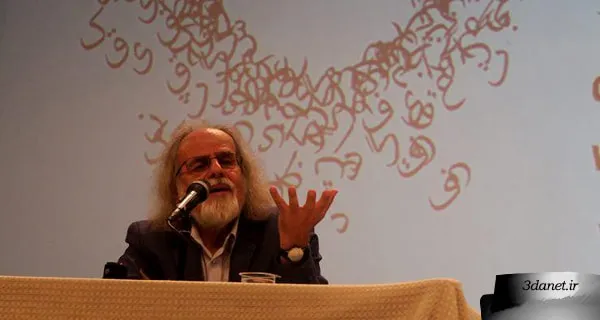
The subject is dialogue, and what will be presented in this session about dialogue are my own views and opinions. On a global scale, much has been said about dialogue, and numerous books, articles, and treatises have been published, and the volume of this material is so vast that even providing a report on them is a very difficult task.
If dialogue is eliminated from a society, two things will take its place, which are truly catastrophic:
* Deception
* Violence
At both the micro and macro levels of society, the existence of dialogue is essential. The elimination of dialogue among human beings leads to violence and deception at the level of individual and social relations.
At the macro level, it is plainly evident how the masses of people can be deceived. But there is a minority in society who possess more knowledge, power of thought, depth of understanding, and experience than other people, and deceiving them is an exceedingly difficult task. To silence or eliminate this vigilant minority, it is violence that plays the role.
In reality, there are three ways to live:
* Dialogue
* Deception
* Violence
From a psychosocial perspective, we must believe that if dialogue is cut off, nothing but deception and violence will take its place, and our lived experience also confirms this. For 150 years, social psychologists have emphasized that if the door to dialogue is closed, it is the malevolent and ill-intentioned who benefit, and the benevolent will be marginalized.
Therefore, if we recognize the alternatives and rivals to dialogue (deception and violence), we easily realize that the value of dialogue is so high that perhaps there is no need to overly emphasize the importance of its existence.
A person of dialogue, from both an ethical and a prudential standpoint, will be in a more appropriate state. Ethically, a person of dialogue does not fall into the trap of deception and violence and is safe from the dangers of these two. Prudentially, society also needs to avoid deception and violence.
What is Dialogue?
Two groups or individuals can converse with one another in various and diverse ways. Dialogue can be in the form of an argument, or proving one's superiority, or for discrediting, or for killing time. These kinds of dialogues are not what is intended.
The meaning of dialogue that is the subject of discussion is speaking with another to solve a theoretical issue or resolve a practical problem that is common to both parties. The dialogue discussed by Socrates, Kierkegaard, Martin Buber (the 20th-century Jewish philosopher and mystic), and Habermas (the contemporary German philosopher of dialogue) abroad, and by Dr. Shayegan, Mr. Khatami, and Mr. Khaniki within the country, is of this kind.
I use the word "issue" for theoretical matters and the word "problem" for practical matters.
Dialogue may or may not lead to success in solving the common issue or problem.
The issues and problems for which we engage in dialogue to solve, in a broad classification, are divided into three categories:
1) Dialogue about fact
2) Dialogue about value
3) Dialogue about obligation
A person may arrive at a belief about the population of a city or the existence or non-existence of God. They share this belief with others to know their views as well, in order to reduce the probability of error in themselves. These facts (in the broadest sense of the word) can belong to branches such as logic, mathematics, philosophy, empirical natural sciences, empirical human sciences, history, mysticism, everyday life, and so on.
Sometimes the subject of discussion is values. The human being refers to the universe and discovers realities. All these realities are, in themselves, equal. For example, the two realities of the existence of God and the population of a city, in terms of their being realities, are no different from one another. But human beings, due to their psychological structure, cannot place these realities side by side and rank some of these realities higher and others lower.
For example, when a person hears news about the continuation of weather conditions over the next three days, and physicists' views on the non-existence of antimatter, they might say that the latter is interesting news. And this means the second piece of news, which speaks of the non-existence of antimatter, holds more importance for me. In fact, the human being assigns importance to the world, and this assignment of importance is valuation.
Realities are those things that are, and values are the importance that human beings attach to these realities. Human beings cannot look at realities with a cold, indifferent, and equal gaze; they always evaluate them.
Human beings have self-love; they love themselves. The offspring of this self-love is self-preservation. The result of this self-preservation is the attraction of benefit and the repulsion of harm. It is this attraction of benefit and repulsion of harm that does not allow human beings to place realities alongside one another for themselves.
People can engage in dialogue with one another about the valuation of realities and examine and question each other's criteria for placing one reality above another.
These valuations may be carried out in legal, moral, customary and social, religious, aesthetic, expediential, logical or epistemological terms, and so on.
A painting can be valued both in economic terms (the price of the commodity) and in aesthetic terms.
If a system of valuation does not exist for the human being, they cannot do a single thing. The smallest and largest tasks we perform are backed by the system of valuation we have carried out. In fact, human actions are preceded by valuation.
The third category of subjects for dialogue relates to duties. That is, what is our duty to act? Which action should we perform and which should we not?
Now, based on this threefold division and the definitions provided for issue and problem, certain results emerge.
When the human being speaks about realities, the discussion concerns an issue (it is theoretical), and when the talk is of duty, it is a problem that is under consideration. Regarding values, it must be said that the human being is situated in a limbo between issue and problem. The station of values is a boundary between the station of theory (issue) and the station of practice (problem). First, a reality must be discovered, and then it must be valued. Therefore, value is contingent upon the discovery of reality. Also, for the human being to be able to undertake an action, they are compelled to carry out a valuation in order to act based upon it. Hence, values are a boundary between realities and duties.
Human beings need dialogue about realities, values, and duties.
For example, suppose the issue of water is discussed in Iran. What we discuss regarding the country's water capacity and the rate of increase or decrease in rainfall is a dialogue about realities. Is what we know in accordance with reality or not?
We can also engage in dialogue about the value of the water issue. Is the water issue the country's primary issue? Is there an issue more important than water in the country or not? By forming a value system about an issue, we prepare ourselves to determine a duty for confronting the issue.
Ultimately, we must answer this question: after recognizing the issue and realizing its degree of importance, what should we do in relation to this issue?
Dialogue is an activity carried out through language or anything that substitutes for language (such as writing), in order to resolve a theoretical issue or remove a practical problem.
A person who enters into dialogue has presuppositions. It is the existence of these presuppositions that encourages a person to enter into dialogue with other human beings.
A person who is given to dialogue:
- Holds to the theory of the non-obviousness of truth.
- Believes in the possibility of compound ignorance within themselves.
- Considers it possible that the other knows something more than they do.
- Subscribes to perspectivism.
The first presupposition of dialogue is the theory of the non-obviousness of truth. One enters into dialogue with others who does not consider truth to be clear, obvious, and manifest. If a person, epistemologically speaking, holds to the obviousness of truth, they will not enter into dialogue with anyone. If a person considers propositions such as "God exists," or "life is valuable and meaningful," or "there is life after death," or "men are superior to women" to be obvious and manifest, what need do they have to enter into dialogue?
We must believe with our whole being in the theory of the non-obviousness of truth and know that truth is a non-obvious matter. Numerous human beings, by spending much time and energy, can approach the truth bit by bit.
The theory of the non-obviousness of truth states that no truth is obvious and clear; rather, to reach or approach any truth, one must expend considerable time, talent, and energy.
Human beings who are intellectually humble are given to dialogue.
The degree of the non-obviousness of truth differs across the seven domains of the human sciences and knowledge.
The second presupposition is that the individual may suffer from compound ignorance (double ignorance). Compound ignorance is the existence of two ignorances: that a person does not know a fact, and, in addition, is ignorant of this not-knowing (ignorance) of theirs. Therefore, every individual must believe that they may possess compound ignorance. If an individual admits the possibility of their own affliction with compound ignorance, they will enter into dialogue with others so as not to fall into a cycle of ignorance.
The third presupposition is that the person considers it possible that the other knows something more than they do. If an individual wants to enter into dialogue, they must consider it possible that others have an epistemic superiority over them.
The fourth presupposition is subscribing to perspectivism from an epistemological standpoint. Perspectivism has been the view of many mystics across various cultures and civilizations of the world, and among recent philosophers, Nietzsche was one of its proponents.
Perspectivism states that every object has various aspects, and furthermore, each aspect is viewed by observers from different perspectives. The multiplication of the different aspects of an object by the number of perspectives of the individuals looking at it creates an immense plurality.
What a person obtains from an object is the result of the marriage of two things:
* The aspect of the object that has been looked at.
* The perspective from which the observer (subject) looks at the object.
For example, a book that is in the shape of a rectangular cuboid has six faces (in philosophical language, six aspects). When an observer looks at this book, they can examine it from six faces. Therefore, for a single observer of this book, there are six faces. Likewise, if the number of observers increases, each face of this book can be examined from various perspectives, equal to the number of observers. Now, if we multiply the number of observers by the six faces of this cuboid, the total number of possible viewpoints regarding this rectangular cuboid book is obtained.
The resulting conclusion is that human beings need dialogue in order to become acquainted with other viewpoints on every subject.
The presence of these four presuppositions in an individual means that he is not an ideological thinker. In other words, if a person is not an ideological thinker, he will be open to dialogue. Ideological thinking possesses none of the four presuppositions required for being open to dialogue. Furthermore, ideological thinking has no connection to being religious or irreligious. A member of Al-Qaeda does not engage in dialogue with others because he is an ideological thinker, not because he is a Muslim. For Rumi is also a Muslim, yet he is by no means an ideological thinker.
Conditions for Successful Dialogue
The question that arises is: when does dialogue lead to success?
There are several points whose observance is necessary for a successful dialogue.
* If egotism exists in a dialogue, the dialogue will not succeed. The egotism that mystics and some philosophers have addressed is the same thing referred to in psychology today as a large ego.
If a person thinks that something is superior to other things merely because it belongs to him, he possesses egotism. In other words, a person with egotism considers the scale of superiority or inferiority of matters to be the degree of their belonging or not belonging to him. For example, a person considers his own father superior to other fathers, solely and exclusively because they are not his father. This person possesses egotism. A person can have egotism towards his own nation, such that he considers his nation superior to other nations, merely because they are his nation! Nationalism in this sense is a major instance of egotism. The parties to a dialogue must be able to look at each other's beliefs as they look at their own, so that no egotism is at play and the conditions for a successful dialogue are met.
In other words, the identity papers of beliefs must be annulled during dialogue so that one can converse free from egotism. John Rawls, the American philosopher of justice, considers the greatest condition for having a just social foundation to be people entering the veil of ignorance. For instance, when members of parliament want to pass a just law, they must forget their gender, ethnicity, place of residence, social status, and so on, and then proceed to pass the law so that the law is not discriminatory.
* A person who enters into dialogue must know that his success does not depend on the failure of the other party, but rather depends on the success of the other party.
One of the exercises done in the West to teach cooperation for success is to place two child-friendly play balls behind a door, and two children must try to open the door so that each can get a ball. This door cannot be opened by the strength of one child, and in this way, the two children learn to help each other and enter a win-win game so that ultimately each gets a ball.
When a medical commission is formed to treat a patient suffering from an incurable disease, the success of each individual doctor in the commission lies in the final prescription they all collectively devise for the patient being effective; individual success within the commission is meaningless.
When a dialogue is conducted to solve a problem or resolve an issue, success in the dialogue means solving or resolving that problem or issue. Otherwise, there will be no success. In dialogue, the outcome is either win-win or lose-lose.
Even if a dialogue leads to failure, it will have secondary results, two of which are very important:
1) Dialogue brings the parties emotionally closer to one another (even if it fails).
Working jointly with others fosters greater empathy and brings hearts closer together.
2) In dialogue, a person feels their mental need for others not just mentally, but existentially. All human beings know mentally that they will die one day, but the final days of their lives are different from the other days of their lives, because they have felt death with their very existence.
Tolstoy addresses this theme in his important book "The Death of Ivan Ilyich." The character Ivan Ilyich, toward the end of his life in the novel, refers to the example from high school logic textbooks. "Socrates is a man. And every man is mortal, therefore Socrates is mortal." Ivan Ilyich says that he accepted that every man is mortal, but now that he sees himself nearing death, he feels death with his entire being.
Most people mentally acknowledge that human beings need one another. But in dialogue, they understand this need for each other with their entire being.
These two subsidiary positive effects of a dialogue show that even if a dialogue is not successful, it will still have these two positive effects.
The points raised were the benefits pertaining to the individual persons engaged in dialogue. But a society of dialogue also possesses specific characteristics.
A society of dialogue is a society in which nothing is so impure or so pure and sacred that it cannot be spoken about. Therefore, in societies where totems and taboos (in a specific sense of totem and taboo) exist, there will be no dialogue.
Taboo refers to things so vile, impure, and filthy that individuals do not approach them, and naturally, no dialogue takes place about them either. Taboos are prohibitions that are considered so impure that speaking of them is forbidden. The argument of proponents of this type of prohibition is that "falsehood dies by abandoning its mention," meaning, leave that which is false alone so that it may perish.
A totem is something considered so pure and sacred that one cannot speak about it.
Societies of dialogue have no totems or taboos and are ready to engage in dialogue about everything, even if discussing it initially meets with reluctance. A society of dialogue believes that it is only after dialogue that matters can be determined, not that a verdict is issued before any dialogue takes place.
Tribal and clan-based societies, because of the totems and taboos they possessed, could not engage in dialogue with one another.
Dialogue has three very important benefits for a society:
1) In a society of dialogue, the strength of a person's speech determines their position, not that their position determines the strength of their speech!
In a society that does not engage in dialogue, some people ascend to the top, and then whatever they say must be considered supreme. Unfortunately, in our societies, it is the person's position that determines the strength of their speech. When a specific person's name is attached to a statement, that statement becomes powerful because the speaker holds a particular position.
In societies where dialogue does not exist, every individual must first find a position for themselves; then, whatever nonsense they utter is accepted.
2) In societies that engage in dialogue, there are no unwarranted enmities.
During the era of Mosaddegh and Kashani (regardless of the rightness or wrongness of either), an immense social force was destroyed over two decades. This was because the followers of each side considered all the words of their leader to be correct and the words of the opposing side to be entirely incorrect. Whereas, if these two factions had been people of dialogue, social consensus and coexistence would have been in a better condition. If the two sides of this dispute had engaged in dialogue with one another, the followers of each faction would have adopted a softer stance toward the opposing side, and overall, a much more favorable situation would have been created.
In the last hundred years, many conflicts have occurred in our country for which the absence of dialogue has been the cause.
3) The prevalence of dialogue in society makes human beings realize that they all share a common nature and common destiny, and consequently, they develop compassion for one another. When human beings realize that no one other than themselves will come to their aid, they become kind to one another. If a problem arises, all members of this society strive to resolve it, because they consider it their own problem.
In our country, none of the benefits mentioned exist, because the atmosphere is simply not one of dialogue. Individuals, relying on the position they hold, say whatever they wish. There is no solidarity or sense of a shared fate among the people, and each person tries to save their own skin.
.
.
Audio of Mostafa Malekian's Lecture Titled Dialogue
PDF File of Mostafa Malekian's Lecture Titled Dialogue
.
.
A Discussion on the Nature, Presuppositions, and Benefits of Dialogue
Mostafa Malekian
Organized by the



Discussion5 comments
چه خوب بود آقای ملکیان نگاهی سازگار با محتوای سخنش به دیگران داشت. در ایران هیچ کس گفتگو نمی کند؟ چقدر کرسی فلسفه انسان را مغرور می کند!
این نظر ناشی از عدم شناخت از زندگی ارزشمدار و روحیات و منش ایشان است. توصیه میکنم برای اظهار نظر در خصوص بزرگان و اندیشمندان و ارزشداوری در مورد مشی و منش آنان ابتدا مطالعه و تحقیق عمیقی در این باب داشته باشیم...
عالی بود با دید گاه بسیار جدیدی آشناشدم
چرا گفته اند « آشکارگی / نا آشکارگی حقیقت » و نه « آشکاری / نا آشکاری حقیقت » ؟!
عالی بود.متشکرم و چقدر ما انسانها غافل هستیم از آداب گفتگو..