Religion
A Look at the General and Jurisprudential Foundations of Grand Ayatollah Sanei
Ayatollah Sanei's courage in revising his jurisprudential views has placed him among the foremost scholars of the seminary. Understanding his jurisprudential outlook and foundations, more than his distinctive fatwas, is the essential criterion for evaluating his perspectives and a necessity for the efficacy of seminary jurisprudence.
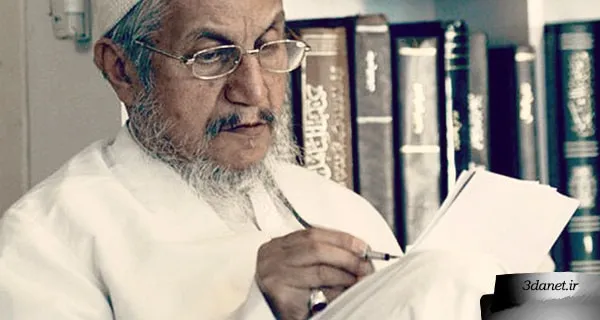
The eminent jurist and revered master, His Eminence Grand Ayatollah Sanei (may his shadow endure), is one of the most distinguished students of Imam Khomeini (may his soul be sanctified) and among the foremost in the jurisprudential school of that peerless jurist. What redoubles this distinction is not only Imam Khomeini's particular regard for the scholarly standing of this diligent student, nor merely his scholarly and jurisprudential prowess; rather, one reason is his courage in bringing his scholarly and jurisprudential abilities to bear upon the evaluation of existing jurisprudential opinions, the re-examination of foundations and proofs within the framework of Shi‘i jurisprudential standards, and his endeavor to preserve those jurisprudential standards.
The author, who has had the privilege of attending His Eminence's classes and possesses some familiarity with his jurisprudential views, even if, by the custom of the seminary, he cannot concur with certain jurisprudential opinions of this revered master, is nonetheless confident that his jurisprudential views, just as they have drawn attention in society and among the elite and have become the criterion for the fulfillment of religious duty by his followers, have also been influential in jurisprudential circles and will, in the future, especially at the level of his general foundations and approaches, receive even greater attention and utilization.
If the veil of "contemporaneity" and also certain "unkindnesses" and even certain "self-regarding attitudes" now deprive some of this attention and benefit, yet the necessity of the seminaries' jurisprudential movement towards an ever more efficient and responsive jurisprudence will leave no path but to attend to and value such perspectives. At the very least, these perspectives and similar cases have been, and will continue to be, posed as serious questions before the jurisprudential seminaries. In any case, from a seminarian and jurisprudential perspective, what is more worthy of attention and benefit than the distinctive fatwas of Grand Ayatollah Sanei, and what constitutes a fundamental criterion for the overall evaluation of his jurisprudential views, is an understanding of His Eminence's general approach to jurisprudence, his overarching orientations, and the jurisprudential foundations of this esteemed jurist. This itself requires a broader opportunity and a more specialized forum. What is recounted in this opportunity and forum, without detailed documentation—which generally lies beyond the public's patience—is a cursory glance at a portion of these foundations, and even this brief glance has grown lengthy.
Introduction
Fiqh, from a lexicological perspective, is that very understanding, or a particular kind of understanding, which, according to Zamakhshari, is linked to splitting and opening, for its root carries this very meaning. As some, like Raghib al-Isfahani, have, from this same perspective, considered fiqh to be something more specific than knowledge and awareness in their general sense, and have deemed it the uncovering of hidden awareness through manifest awareness. There is no doubt that in those parts of religious teachings where "tafaqquh" (deep understanding) in religion is emphasized, as in verse 122 of Surah al-Tawbah, what is intended is this very general and lexical meaning of the word fiqh. This itself caused fiqh to be used in a more specific meaning and scope, and, as mentioned in some lexicographical sources, "fiqh" was introduced as meaning "knowledge of religion." But we know that subsequently, the domain of application and even the semantic domain of the word fiqh became even more specific than this meaning, and as a "technical term," it came to be used solely within the bounds of a portion of religious and Islamic teachings. Thus it is that for over a thousand years now, the technical term fiqh has been used to refer to and describe one of the Islamic sciences.
Fiqh is the science that seeks to understand practical duties and etiquettes and to shape that part of individual and social human life which pertains to the realm of his conduct; the part referred to as "shar‘i" (religious) rulings, which, alongside "doctrinal" teachings and in conjunction with "ethical" teachings, forms the three main pillars of Islam. Hence, the science of fiqh has the closest connection to the individual and social life of Muslims, and this characteristic, on the one hand, has become a source of its vastness and immense importance, and on the other, has rendered the role of jurists in the religious life of Muslims a distinguished one.
The discipline of jurisprudence (fiqh), like other sciences, possesses its own specific “method,” “sources,” and “foundations.” It is also closely linked with several sciences as prerequisites or tools of jurisprudence; sciences some of which, such as “the principles of jurisprudence” (uṣūl al-fiqh), essentially took shape in the shadow of and as a prerequisite to jurisprudence, while others, such as the study of transmitters (rijāl) and the study of traditions (ḥadīth), expanded in the shadow of jurisprudence. What has been called “ijtihād” from the past up to the present day is, in fact, the principal method and approach in the discipline of jurisprudence for arriving at legal rulings, which can be described as an extensive and profound “art” (fann); bearing in mind, of course, that some of our jurists have referred to it as a “sacred faculty” (quwwa qudsiyya) and, in addition to the characteristics of its sources and outcomes—which constitute a part of the important matter of religion—have considered its scholarly and axiological origin to be a matter beyond a mere art and a scientific and professional capability on par with other arts.
The close connection of the aforementioned sciences with jurisprudence, and the role they play in the manner of ijtihād and consequently in the understanding of legal rulings, compels the jurist to acquire specialized knowledge of those sciences, and this is an unavoidable matter in a portion of the issues that have a direct role in ijtihād and the manner of deduction. Thus, even if a jurist is not an authority on all the issues of the sciences upon which jurisprudence depends, he is nonetheless compelled to have a specific opinion and foundation on the influential issues and principles. This need is evident in the field of tradition and transmitter studies, and in the field of “the principles of jurisprudence”—whose very raison d'être is the discipline of jurisprudence, and which, from a broader perspective, is even considered a part of the discipline of jurisprudence—it is a very clear matter, and a jurist cannot engage in ijtihād in the realm of sources and legal rulings without possessing the capability of ijtihād and without recognizing and defining his own foundational principles (uṣūlī). This is why jurists, from the past, have not only engaged in discussing and teaching issues of the principles of jurisprudence alongside jurisprudence, but many of them have also produced independent writings on this subject; and some, in their jurisprudential writings, have first addressed it in the form of an introduction with the aim of explaining their foundational principles and frameworks, and in this way, an independent discipline has taken shape alongside other Islamic sciences.
The discipline of the principles of jurisprudence, from which some other sciences, such as exegesis (tafsīr), also benefit, has expanded remarkably in the last two centuries and has become one of the general requirements in the seminaries at various levels of study, scholarship, and ijtihād. It is thus, in brief, that the jurist's possession of clear and defensible “foundational principles” (mabānī-yi uṣūlī) is always considered a necessity and a constant principle, and is regarded as a turning point in understanding his jurisprudential approach, his capacity for ijtihād, and in analyzing his legal opinions (fatāwā). The exalted jurist and esteemed teacher, Grand Ayatollah Sanei (may his shadow endure), who has discussed and taught in the field of the principles of jurisprudence for many years and has demonstrated in his jurisprudential discussions, holds specific foundations in its issues, especially in some of those that play a significant role in the manner of deduction, which can be pursued on another occasion.
However, alongside the aforementioned requirements, which are correctly and conventionally presented in the definition of the discipline of jurisprudence, ijtihād, and its prerequisites, what the jurist needs from a more general perspective and a higher horizon for a more precise and comprehensive understanding and for enhancing the efficacy of his jurisprudential achievements, and which plays an important, indeed irreplaceable, role in his ijtihād and the formation of his “jurisprudential foundations” (mabānī-yi fiqhī), are certain understandings and general, overarching “views” in the domain of religion, the Sacred Law (sharīʿa), and Islamic ijtihād. What this writer has found in the view of Grand Ayatollah Sanei from this perspective, during years of being blessed with close benefit from his presence, are several general points and foundational principles, a list of some of which is pointed out before explaining some of his eminence’s jurisprudential foundations, while their elaboration is left for another occasion:
1- Emphasis on the comprehensiveness of Islam and its responsiveness to needs; 2- Emphasis on the role of ijtihād in the life of Islam; 3- Emphasis on the authenticity of Jawāhirī ijtihād; 4- Emphasis on the continuous vitality of jurisprudence and the freedom of ijtihād; 5- Attention to the criterion of the efficacy of jurisprudence as a standard in ijtihād; 6- Attention to the understanding of the subject matter and realism in ijtihād; 7- Emphasis on the necessity of paying attention to the role of time and place in ijtihād; 8- Attention to the role of customary understanding (ʿurf) of verbal proofs in ijtihād, especially the cancellation of particularity; 9- Emphasis on the soundness of the logic and the solidity of Shīʿī ijtihād; 10- Attention to the capability and expansion of jurisprudence in the arena of social relations.
Some Jurisprudential Foundations of the Esteemed Teacher (May His Shadow Endure)
We know that all jurisprudential rulings (fatwas) must be based on sufficient evidence and proofs. In terms of volume, the main part of the evidence consists of the verses and narrations that exist in the various chapters and issues of jurisprudence. Another part of the evidence is a collection of general jurisprudential rules, where the scope of each rule, depending on its content, covers a portion of the issues, and the rules are not uniform in this regard; some apply within a specific domain, and some, like the rule of negation of harm (nafy-e ḍarar) and negation of hardship (nafy-e ḥaraj), apply across various jurisprudential chapters. However, alongside or beyond jurisprudential rules, every jurist, depending on their level and approach to ijtihad, may have inferred more general jurisprudential foundations from the totality of the Sharia and the available evidence, which even cast a shadow over the manner of invoking jurisprudential rules.
His Eminence Ayatollah Sanei, within the framework of the standards of ijtihad, which, following his great teacher, His Eminence Imam Khomeini (may his soul be sanctified), he has repeatedly referred to as "Jawāhirī Ijtihad," has arrived at or emphasizes distinct jurisprudential foundations. What, from a scholarly and ijtihadi perspective, is more and before anything else worthy of attention and academic analysis than His Eminence's distinct fatwas, is this set of foundations, some of which are, at the same time, also considered jurisprudential rulings. For instance, what this esteemed jurist has asserted in emphasizing the necessity of humane relations among all human beings, regardless of their type of thought and belief, has been shaped in the shadow of a part of these foundations. Some of these foundations are pointed out here, and for each foundation, only a portion of his fatwas is mentioned.
1. The Inherent Sanctity and Dignity of the Human Being
All human beings, by virtue of being human and in their essence, possess sanctity and dignity and enjoy human value and rights. No one can consider their own beliefs as a license to violate the rights of others or to interfere in their material, spiritual, individual, or social affairs. Therefore, His Eminence Ayatollah Sanei emphasizes that the life, property, honor, reputation, freedom, and human rights of all human beings must remain inviolate, and the exceptions, which are the consequence of accidental and external factors, are not specific to a particular group, and beliefs play no role in them. For example, just as backbiting and speaking ill of a Shia is not permissible, it is also not permissible regarding others, Muslim or non-Muslim, and if it is permissible in some cases, it applies to everyone. In the establishment of the ḥadd punishment for qadhf (false accusation of unchastity), there is also no difference between a Muslim and a non-Muslim person who has been subjected to it. In his view, qiṣāṣ (retaliation), full blood money (dīya), and even the obligation of kaffāra (expiation) for committing murder are not exclusive to the killing of a Muslim and also include non-Muslims, even if they are a ḥarbī (belligerent) unbeliever but are "muʿāhad" (bound by a treaty), and the status of being muʿāhad is also realized through accepting and acceding to general international treaties. Just as mere beliefs, even if incorrect from an Islamic perspective, cannot be a cause for a person's impurity, and therefore, all non-Muslims, whether People of the Book (theists) or non-People of the Book (atheists), are legally pure. The same criterion also applies regarding marriage. Of course, the account of the third group, who are "obstinate unbelievers" (kuffār muʿānid), is separate.
This approach, in the view of the Grand Teacher, is based, among other things—as he recently pointed out to the author during a meeting—on the logic and method of the Holy Qur'an, which has made its general and primary audience "mankind" (al-nās) and "human beings" (al-insān). Although the Qur'an is "a guidance for mankind" [al-Baqarah/185] and has come to guide all human beings, and the Prophet of Islam (peace and blessings be upon him and his family) is also a "bearer of glad tidings" and a "warner" [Saba'/28] as well as a source of "mercy" for all people [al-Anbiyā'/107], it is not the case that if a portion of humanity, for any reason, could not hear the message of Islam up close and believe in it, or even if they could not perceive the existence of the One and Unique Creator, God Almighty, and believe in this absolute truth, this inability would cause them to forfeit all their human existential value and lose all their human rights. Thus, for instance, one should not assume that the noble verse (O mankind, indeed We have created you from male and female and made you peoples and tribes that you may know one another. Indeed, the most noble of you in the sight of Allah is the most righteous of you) (al-Ḥujurāt/13) is specific to "Muslims" or even "monotheists." Therefore, "taqwā" (righteousness/God-consciousness), which is the general criterion in this verse for evaluating human beings, should not be interpreted and understood solely within the framework of adherence to Islamic teachings, or even monotheistic and Abrahamic faiths. He even considers endowment (waqf) and bequest (waṣiyyah) for the benefit of non-Muslims, even if, for example, it is for the repair of a church or synagogue, to be permissible and valid. Just as he considers one of the cases permitting dry ablution (tayammum) to be using the water of ablution (wuḍūʾ) to quench the thirst of an unbeliever (kāfir), even if a combatant (ḥarbī); because the human soul and life, regardless of incidental matters, possess sanctity (ḥurmah). It is clear that this does not mean actually endorsing all beliefs, values, and practices existing in different societies and accepting them; rather, it emphasizes the truth that, after accepting the general distinction between the "incapacitated human being" (insān-i qāṣir), whatever their belief, and the "culpable unbeliever" (kāfir-i muqaṣṣir), the incapacity of people in recognizing the true religion or denomination does not cause the deprivation of human and public rights, which arise from their human sanctity and dignity. This is why, in his view, "kufr" (unbelief) has a specific meaning, and as we have brought forth, the title "kāfir" does not include every non-Muslim.
The concern for human sanctity and dignity in the view of His Eminence Ayatollah Sanei is not limited to what has been mentioned in the realm of beliefs. This approach has also been influential in other parts of jurisprudence, some examples of which can be analyzed from this perspective in the following. As he has pointed out regarding the ruling on the reprehensibility (karāhah) of turning away the needy, this ruling applies provided that helping them does not cause them to become a burden on society; otherwise, turning them away would be obligatory (wājib).
2- The Distinction Between Unbeliever (Kāfir) and Non-Muslim
We know that, from a philosophical and theological perspective, unbelievers, or in other words, non-Muslims, are divided into two categories: "incapacitated" (qāṣir) and "culpable" (muqaṣṣir). The incapacitated, who, according to Imam Khomeini (may his soul be sanctified), constitute the vast majority of unbelievers, are excused in their beliefs and actions, and from this perspective, not only can they not be considered people of Hell merely for their beliefs and the actions arising from them, but according to the martyred Ayatollah Motahhari, the virtuous among them are people of Paradise. However, from a legal (sharʿī) perspective, which considers the conventional and jurisprudential distinctions between Muslim and non-Muslim in various issues and rulings, our jurists have either seen no difference between the types of unbelief, or have seen the difference based on the criterion of being or not being "People of the Book" (Ahl al-Kitāb) or "People of the Covenant" (Ahl al-Dhimmah). For example, in discussing the ruling on backbiting (ghībah), they have made no distinction between types of non-Muslims, and in the ruling on purity (ṭahārah) and impurity (najāsah), if they have made a distinction, they have seen it as dependent on being People of the Book or not.
However, one of the general jurisprudential foundations of His Eminence Ayatollah Sanei, which is considered the ijtihādī origin of numerous fatwas from him in regulating human relations between Muslims and non-Muslims, is that non-Muslims are not only divided theologically and philosophically into the two categories of incapacitated and culpable, but by this same criterion, they must also be divided into two categories from a jurisprudential and legal (sharʿī) perspective:
۱- «کافر مُعانِد»، که قرآن کريم با تعبير (وَ جَحَدوا بِها وَ اسْتَيْقَنَتْها أَنْفُسُهُمْ ظُلْماً وَ عُلُوّاً) (نمل/۱۴) به آنان اشاره کرده است و آنان را کسانی شمرده که در عين شناخت درونی آيات حق، از سر ستم و سرکشی، آن را انکار می کنند؛ نيز مقصّرانی که در شناخت حق، به رغم امکان و توانايی، کوتاهی می کنند؛
۲- «غير مسلمان معذور»، اعم از اهل کتاب و غير اهل کتاب. اينان، گر چه مسلمان نيستند، امّا نبايد آنان را کافر شمرد.
کافر کسی است که، دانسته، حق را ناديده می گيرد و پنهان می سازد. به بيان شهيد آيت الله مطهّری، نسبت ميان «اسلام» و «کفر»، نسبت «تضادّ» است، نه «تباين». از اين رو، چنين نيست که هر کسی مسلمان نبود، کافر است؛ بلکه در صنف سومی قرار می گيرد که حضرت آيت الله صانعی از آن به «غير مسلمان» نام می برند. و از همين منظر است که ايشان در مسائلی مانند حکم نجاست و پاکی، حرمت نبش قبر، دادن زکات فطره، ذبح شرعی، ازدواج، ولايت بر فرزند، ارث، کفايت و عدم کفايت آزادی برده ی نامسلمان و حتّی تکليف کفّار به احکام شرعی (فروع دين)، ميان اين دو دسته فرق می گذارند؛ و نه مسلمان و غير مسلمان يا کافر اهل کتاب و غير اهل کتاب. استاد معظّم، حتّی «کافر حربی» را کسانی می دانند که با مسلمانان به دليل مسلمان بودن آنان در حال جنگ هستند و نه هر جنگی. چنان که ايشان تحقّق ارتداد را به صرف شک يا برگشت اعتقادی شخص نمی دانند؛ بلکه در نگاه ايشان کسی مرتد است و احکام آن بر وی جاری می شود که ارتداد او در واقع به بی احترامی و هتک و تکذيب پيامبر اکرم (صلّی الله علیه و آله و سلّم) و متّهم ساختن مسلمانان برگردد يا اهانت به مقدّسات جامعه ی اسلامی، مانند -نعوذ بالله- سوزاندن قرآن کريم، باشد. ايشان در برشماری شرايط شاهد نيز صرف وثاقت و اعتدال را کافی ديده و «ايمان» و حتّی «اسلام» را نيز شرط ندانسته اند.
۳- عدم دخالت جنسیّت در جایگاه انسانی و حقوق اساسی و اجتماعی
زن و مرد، از نظر گوهر و «نوع» انسانی، يک حقيقت به شمار می روند و هر تعريفی که از اين منظر و در اين سطح برای حقيقت انسان وجود دارد، تعريفی مشترک ميان آن دو است. از سوی ديگر، ترديدی نيست [که] ميان زن و مرد، به عنوان دو جنس و «صنف» انسانی، برخی فرق ها هست که هيچ مکتب و نهاد حقوقی [ای] که توجّه درست و پايبندی کافی به واقعيّات تکوينی و مصالح واقعی زندگی انسانی دارد، نمی تواند آن را ناديده بگيرد؛ فرق هايی که نتيجه ی طبيعی آن، پديد آمدن برخی موقعيّت های متفاوت در زندگی طبيعی و اجتماعی زن و مرد است. تشريع اسلامی نيز، که فلسفه ی وجودی آن، «انسان» است و از مصدر وحی الهی شکل گرفته و بر پايه ی واقعيّات وجودی انسان و به هدف سعادت جاودانه ی وی صادر شده، اين فرق ها را ناديده نگرفته است و قهراً هيچ فقيهی نمی تواند، در چارچوب منابع اسلامی و فقهی، آن را ناديده بگيرد. امّا در قلمرو شناخت فرق ها، يک اصل مبنايی و مسلّم اجتهادی اين است که اصل، در حقوق و تکاليف، که از آن به «احکام شرعی» نام می بريم، «اشتراک» ميان زن و مرد است و نه «اختلاف». به عبارت ديگر، يکسانی ميان زن و مرد در احکام، نياز به دليل خاص ندارد؛ بلکه اختلاف، نيازمند دليل کافی است و در موارد شک، بايد جانب اشتراک را گرفت.
What has given the ijtihad and jurisprudence of the esteemed master, Grand Ayatollah Sanei, a distinctive character in this regard is not the disregard of the principle of differentiation between men and women, as he has repeatedly emphasized the general difference between the inheritance of men and women, which the Qur'an has explicitly stated; rather, it stems from the fact that, on the one hand, he holds a thoroughly humanistic view of both sexes, male and female, and from this perspective sees no difference between the two; on the other hand, he attaches special importance to the primary principle of commonality, and does not abandon this principle unless an accepted and convincing reason that can restrict or specify the generalities and universalities is at hand; and on the third hand, he has made a special effort to re-examine and revise certain existing jurisprudential views and re-evaluate their evidence, reaching distinctive conclusions. What he has opined regarding the lack of difference between men and women in matters such as marja'iyya, leadership of society, judgeship, testimony, blood money, retribution, leading congregational and Friday prayers even for men, the emphasis on the lack of difference between husband and wife regarding fraud in marriage, the wife's inheritance, the equality of priority of husband and wife to one another after death until burial, the non-preferability of praying at home for women, the mother's guardianship over the child and its precedence over the grandfather's guardianship, the non-retribution of the mother like the father, the non-application of the hadd for qadhf on the mother like the father, and the non-application of the hadd for theft on the mother for stealing from her child's home like the father, has arisen from this very approach and effort. Just as some other jurists, both past and present, have held or hold a view identical to that of the esteemed master on some of these issues, and many, especially among past jurists, have differentiated; but what is important is that these fatwas have been issued based on the aforementioned approach to women, and within the framework of general principles of ijtihad, and this very fact is sufficient to necessitate attention to them; even if one does not subscribe to their conclusion.
4. The Governance of Rational and Reasonable Doctrines
Acceptance of divine rulings and adherence to them, within the scope where there is no direct involvement of reason or reasonable people, is a foundational and doctrinal principle, the support and origin of which is, of course, the acceptance and general judgment of reason itself. However, this principle never prevents benefiting from the cognition and judgment of reason and reasonable principles. The very basis of accepting the principle of religion and its doctrinal pillars rests upon the judgment and ruling of reason, and one of the repeated teachings and emphases of the Qur'an and Sunnah is attention to this great divine source, which in the words of the Ahl al-Bayt (peace be upon them) is referred to as the "inner" prophet, alongside the "outer" prophets. A major part of non-devotional rulings are those that have emerged and existed among other nations and societies, including in the Age of Ignorance, based on existing needs, by reasonable people and elites or even common custom, and the Wise Lawgiver has concurred with them, and they are known as confirmatory rulings.
In the view of the esteemed master, utilizing rational and reasonable achievements in ijtihad is considered a principle, and what we clearly know from him is that the outcome of no ijtihad can be incompatible with a definitive rational judgment. Opposition to the established practice and settled understanding of reasonable people is also only possible if there is a completely firm proof at hand, which, in terms of its issuance and indication, can withstand confrontation with it. It is evident that no jurist can believe otherwise; but the distinguishing feature of His Eminence lies in his attention to this principle, in recognizing its instances and the scope of its governance.
The scope of utilizing this basis in the view of the esteemed master extends to the point where he has considered one proof for the equality of men and women in testimony to be the established practice of reasonable people, and has canceled the particularity from the proofs of male testimony; and has limited the condition of the judge being a Shi'a to adjudication among Shi'as, and in arguing for the absence of this condition in judging among others, in addition to the necessity of observing justice and establishing security among them, he has cited rational, and indeed reasonable, concomitance as evidence for it. He has even, considering the totality of the proofs in the chapter on judgment, not considered the permissibility of adjudication among Shi'as by a non-Shi'a or even non-Muslim judge who is trustworthy and meets the other conditions to be an extravagant and unfounded statement. Just as in the ruling on usury, on the one hand, he has limited its prohibition to "consumptive usury," which leads to the destitution and ruin of the borrower and is considered "injustice," and has permitted "productive usury," which is a source of growth and progress for both parties; and on the other hand, he has not deemed any kind of legal stratagem permissible in forbidden usury.
As alluded to, following his great teacher, Imam Khomeini (may his soul be sanctified), he emphasizes that if the Wise Lawgiver wishes to legislate a ruling contrary to the established practice and settled understanding of rational people, He must repeat it many times and emphasize it so that it gains acceptance among the people. Therefore, if, regarding a ruling contrary to the established practice and settled understanding of rational people, we do not witness the Lawgiver's emphasis and the issuance of multiple narrations, we cannot rely on and argue from the one or two existing hadiths.
If the esteemed master has, from the past, paid special attention to the jurisprudence of the revered Muhaqqiq Ardabili and has for years devoted part of his energy and time to writing his argumentative glosses on the book Majma' al-Fa'idah wa al-Burhan by that pious and saintly jurist, this stems, among other things, from the clear-sightedness and depth of insight that Muhaqqiq Ardabili possessed, based on his attention to and regard for rational considerations and judgments. His Eminence's repeated emphasis that if it were possible to properly introduce Islam and the Sharia, and in his specific words: "If I had a discussion chair at the crossroads of humanity to introduce the truths of Islam and the Sharia, as they are and as I have come to know them, all people would accept Islam," arises, among other things, from this very foundation and principle that Islamic and Sharia teachings are in line with rational and rationally-derived data and are not incompatible with what falls within the realm of humanity's settled rational understandings and what is the achievement of the general knowledge and understanding of humankind. The aforementioned statement, even if it involves some hyperbole, nonetheless demonstrates the depth of the esteemed master's insight that noble Islam, even in the domain of jurisprudence, which is among the conventional sciences, speaks within the framework of pure human primordial nature and does not deviate from rational standards and general, rationally-approved approaches. One example is the special attention the honorable master pays to the foundational principle of "Justice," which is discussed in the next section. Alongside his special regard for the established practices and settled understandings of rational people, his particular attention to "common understanding" ('Urf) in comprehending the import of the verbal proofs of the Quran and Sunnah, especially the topic of "cancellation of particularity" (ilgha' al-khususiyyah), and the extensive use he has made of it in his legal reasoning and fatwas, as a principle and foundation in his jurisprudence, requires separate attention and examination, and there is no opportunity to address it now.
5. The Governance and Scope of Justice
Justice, from a theological and philosophical perspective, is considered a principle in knowing God Almighty. Just as God created and established the world of creation based on justice, and in the arena of the Resurrection, no punishment falls outside this universal standard, His legislation and law-giving are also founded upon it. As the martyred master Ayatollah Morteza Motahhari emphasized, this principle is one of the criteria of Islam and is situated in the chain of causes for rulings. That is, all divine rulings, in their issuance, pass through the channel of the principle of justice, and therefore, no Sharia ruling can be in conflict with it.
It is from this origin that, in the view of Grand Ayatollah Sanei, justice is a governing principle and a universal, all-encompassing value, and beliefs, gender, and ethnicity have no bearing on it and cannot restrict or limit it. Thus, if, in the jurist's view, the import of a proof, generally or in a part of its signification, is in definite conflict with the principle of justice, that jurist cannot issue a fatwa based on that proof while ignoring this governing principle. One example of this is His Eminence's fatwa on the equality of blood money (diyah) for men and women, and for Muslims and non-Muslims, which in his view, and even regardless of the insufficiency of the proofs, the inequality of blood money is incompatible with the principle of justice. Likewise, based on this same principle, among others, he considers a judge showing greater respect to a Muslim over a non-Muslim, which jurists have permitted, to be incorrect and forbidden.
6. The Extensive Governance of the Principle of Negating Hardship and Constriction
The core meaning of the rule of negation of hardship (nafy-e 'usr wa haraj), which is based on Quranic texts and narrations, is considered a definitive ruling among Islamic jurists and there is no doubt about it. However, the way this rule is viewed, along with its semantic and subject-related scope, is something in which one should not expect everyone to share the same perspective. The main point in the view of the Grand Master, which the author has repeatedly witnessed him citing and emphasizing, is that if, as is evident from the proofs of the rule, on the one hand, the foundation of divine legislation is based on the negation of hardship, difficulty, and distress in religion (except in matters whose nature, such as jihad and defense, is intertwined with difficulty), and on the other hand, hardship and difficulty are like other customary concepts for which the Sharia has not provided a specific definition, then its criterion will also be custom; unless the Wise Lawgiver intervenes in a particular case and expresses a different intention on a case-by-case basis, whether in expanding the ruling or restricting it. Therefore, in understanding the meaning of hardship, from a general and jurisprudential (ijtihadi) perspective, one must refer to custom. Furthermore, His Eminence Ayatollah Sanei did not see the scope of the negation of hardship as limited to lifting a ruling and, in some cases, has relied on it for establishing a ruling as well. For example, on the one hand, he considered the "prohibition" of permanent intercourse with a wife after ifda' (a condition causing incontinence), which jurists have ruled, as a cause of hardship and did not accept it; and on the other hand, he considered the non-obligation of intercourse in less than four months as a cause of hardship and a reprehensible matter, and in conditions where the wife has a need, he ruled for its "obligation."
This is while, in addition to the position of deducing and recognizing the principle of a ruling, we all know that in recognizing external instances and in the position of fulfilling obligations, recognizing whether a subject involves hardship or not, like any subject-related determination, falls within the domain of the "duty-bound person" (mukallaf) and not the "jurist." What His Eminence the Master (may his shadow endure) stated regarding the non-necessity of applying the rulings of non-mahram to an adopted child, in case it causes hardship, is based on this very view that, firstly, the understanding of the meaning of hardship, like other subjects not crafted by the Wise Lawgiver, is with custom, and secondly, the identification of its instances is also the responsibility of the duty-bound person and not the jurist. The statement of permissibility is also based on the assumption of the realization of hardship, which is mentioned in the text of the follower's question, stating that deprivation of a child is a major problem in life, and the daily interactions and socializing of those around with the person who has been adopted, in the manner of behavior with other non-mahrams, also causes hardship and difficulty for both parties. It is clear that if someone does not consider such interaction as a matter of hardship, they must naturally observe the rulings of hijab; however, the determination of this very matter falls within the domain of the duty-bound person and not the jurist and source of emulation.
7. Ease in the Sharia
What is considered in the negation of hardship is the negative aspect of the rule; however, alongside it, the subject of "ease in the Sharia" is also a criterion in ijtihad. The fact that it is narrated in some traditions from the Holy Prophet (peace and blessings be upon him and his family) that he pointed out: "I was sent based on a Sharia of expansiveness and ease" and Imam Baqir (peace be upon him) used to say: "The Kharijites, out of ignorance, made things difficult for themselves; the religion is far more expansive than that" and, quoting Ali (peace be upon him), added that he used to say: "Our Shia are in an expansiveness greater than the distance between the sky and the earth", shows that in divine legislation, not only is there no place for hardship, but the foundation of legislation is also positively established on the basis of ease and tolerance. This is a point that our jurists have, to a greater or lesser extent, paid attention to in the past, and even Sheikh Saduq, in the conflict between two narrations, saw ease as one of the preferences and, based on it, took the side of the content of the narration that is easier for the duty-bound person to act upon. But what we know of His Eminence the Master in this regard is his special diligence in applying this principle in his ijtihad and his emphasis on it in the guidance he has provided and continues to provide to the believers and followers. On the other hand, since he has seen in the ruling of the prayer and fasting of the traveler a kind of concession in line with ease in religion, in the case of frequent travel, which makes travel habitual and requires one to perform the prayer in full and fast, he has not seen a difference between occupational and non-occupational travel, and for example, if a driver goes on a pilgrimage trip, the ruling of frequent travel applies to him.
8. The Centrality of the Rights of People and Society
We know that what is generally referred to as "right" (ḥaqq) in jurisprudence and legal rulings is broadly categorized into two sections: "the right of God" (ḥaqq Allāh) and "the right of people" (ḥaqq al-nās). Of course, this division does not preclude some rulings from possessing both characteristics; such as the "right of custody" (ḥaqq al-ḥiḍāna), which is at the same time considered a divine duty towards the child. What is discussed in jurisprudence as "right" (ḥaqq) and "ruling" (ḥukm) and the difference between the two also pertains, in brief, to this very categorization.
One of the noteworthy points in the jurisprudential perspective of His Eminence Ayatollah Sanei, which constitutes a general approach in his juristic practice and ijtihād—and we have repeatedly witnessed his emphasis on it and seen its role in various fatwas, especially on social and political issues—is his special concern for safeguarding the "rights of people" (ḥuqūq al-nās) in jurisprudence and identifying its scope and instances in various domains; rights that are not exclusive to a particular class or group of people and encompass "the human being," as a "human being," of any race, religion, denomination, gender, or movement, in any country or society. This approach has a broad and profound impact on many domestic and foreign social and political issues. The pivotal point of this approach in the view of the Grand Master, which we have witnessed him repeatedly citing and emphasizing the content of, is this fundamental and vital teaching of Imam al-Ṣādiq (peace be upon him) that "the right of the people reverts to the people themselves," and the Imam or the government, without the people's will, has no right to interfere in it. As the Imam (peace be upon him), in this same noble narration, while distinguishing between dealing with the crime of adultery and theft, pointed out that the punishment for adultery is not contingent upon anyone's request; whereas regarding theft, the Imam's only duty is to prevent the thief's act, and its punishment is carried out only at the request of the right-holder, who are the people (the owners of property) themselves: "Because if the right belongs to God, it is obligatory upon the Imam to establish it, and if it belongs to the people, then it is for the people."
All the emphasis that this enlightened jurist places in his guidance and also in his fatwas on dozens of issues, such as the right to freedom, the principle of the sovereignty of individual will, the rights of ethnic groups and minorities, attention to the people's will, observance of equality and justice, opposition to special privileges, negation of violence, limiting the legitimacy of government to the people's will and based on rational frameworks, the necessity of adherence to laws arising from the people's will and their true representatives, and even emphasis on the rights of the dead, traces back, among other things, to this same central principle. Just as he even considers the Infallible Imam's (peace be upon him) performance of the funeral prayer over a body, without the consent of the deceased's guardians, as impermissible and a usurpation of their right. And this is based on this very principle and with citation to this reliable narration that "When a sultan from among God's sultans attends a funeral, he is more entitled to pray over it if the guardian gives him precedence; otherwise, he is a usurper." Whereas some jurists, such as the esteemed author of al-Jawāhir, have not considered the consent of the deceased's guardian a condition regarding the Imam (peace be upon him). Just as the Grand Master considers the congregational leadership of someone whom the worshippers dislike, contrary to other jurists, including his own teacher, His Eminence Imam Khomeini (may his soul be sanctified), who deemed it reprehensible (makrūh), to be forbidden (ḥarām) and a cause for falling from justice, and consequently, a reason for the prohibition of following such an imam. He introduces this view, which he considers to arise from existing narrational evidence, as being in line with the sovereignty of the will and desire of individuals and as evidence for the existence of a high level of freedom and democracy in Islam.
9- Special Scope during the Period of Occultation
One of the important questions in jurisprudence, in response to which we witness serious disagreement, is whether the implementation of specific penal punishments (ḥudūd), such as the punishment for theft and adultery, is among the exclusive authorities and responsibilities of the Infallible Imam (peace be upon him), or is not limited to him, and can and should the rulers and judges who assume governance or part of it during the period of Occultation and lack of access to the Imam (peace be upon him) also implement them?
Of course, this question goes back to a more general question: whether, during the period of Occultation, anyone or any persons have been introduced as successors to the Imam (peace be upon him)? And if so, have all the governmental affairs and authorities of the Imam (peace be upon him) been transferred to them?
From the past to the present, a group of jurists have considered the existing evidence insufficient to establish the aforementioned authority and responsibility for others, including jurists, during the period of Occultation. Hence, they have viewed the implementation of ḥudūd during the Occultation as problematic or have clearly indicated that they do not consider it executable. Among the opponents of implementing ḥudūd during the Occultation, one can cite, from the predecessors, Ibn Idrīs and Muḥaqqiq al-Ḥillī, and from the later scholars, Mīrzā-yi Qummī, and from contemporaries, the late Ayatollah Sayyid Aḥmad Khwānsārī. Of course, there are also some detailed distinctions that need not be mentioned. His Eminence Ayatollah Ṣāneʿī (may his shadow endure) has also, for many years, shown his inclination toward this basis and has recently adopted it; with the difference that, unlike other jurists who have not spoken of an alternative punishment, he emphasizes that a taʿzīrī punishment, which encompasses a wide range of penal methods and is accompanied by expert opinion, must replace it. It goes without saying that what he means by ḥudūd in this discussion are those ḥudūd considered solely the right of God, and cases such as qiṣāṣ, which is the right of the people, fall outside this discussion and are applicable during the Occultation as well. Just as the non-implementation does not include sexual assault; a matter which, in his eminence's view, its proof does not depend on the testimony of four witnesses and is established by two witnesses. Of course, the ḥadd for theft also falls into the first category in this division; although we know that, assuming its implementation is permissible, it requires a private complainant.
10. The Origin of Governmental Legitimacy
The existence of government, even if it is not a primordial and innate need for humanity, there is no doubt that the history of human life, as far as it is available, shows that humans, at least in their social life, require it. But from what does the legitimacy of government arise? As we know, this is a question with a very long history in human life, and just as human societies have so far experienced very diverse forms of state and government, various theories have also emerged in the analysis of the philosophy and rationale of government and the foundations of its legitimacy. In one classification, all existing theories analyzing legitimacy and its foundations typically revert to two bases: divine and non-divine legitimacy, and in a stereotypical and conventional view, it is presented as if these two bases are always incompatible with each other and each existing theory necessarily falls into one of these two branches; two branches that have no affinity with one another, as if the divine will is always opposed to the people's will. Whereas, there is also a third way in explaining the legitimacy of government, and that is that God, considering the philosophy and nature of government and its changing essence in different times and places, has left the manner of fulfilling this need, like many other individual and social needs, to the people themselves, and has not legislated a specific method or form for the formation of government and the political system. What the Lawgiver has intended is merely the requirement of certain criteria and standards, which are typically the same rational criteria that humanity, especially the elites of human societies, have attained based on their innate cognition and instinctive understanding, through numerous experiences. In other words, God Almighty has delegated the manner of government formation to the people and human societies themselves, and in any society, whatever the people choose within the framework of their collective wisdom and based on reliance upon rational principles, and upon which they base their expediency, is also pleasing to God, the Wise, and this very thing constitutes the basis of legitimacy, and this principle is not exclusive to Islamic societies. The legitimacy of government in other societies is also formed on this same basis and is interpreted within this framework.
His Eminence Ayatollah Sanei (may his shadow endure) has for years been analyzing and evaluating the issue of governance with such an approach; however, in recent years, he has emphasized it more clearly. On this basis and in his view, mere “jurisprudence” (fiqāhat) neither brings about political “guardianship” (wilāyat) and the “legitimacy” of government, nor is it the case that during the Occultation, only a jurist can and must always assume governance; unless the people, or the elites as representatives of collective wisdom and public will, even if based on the criterion of majority and minority, see their public interest in entrusting affairs to one or several jurists. Of course, he rightly separates, regarding Islamic society, the period of the Imamate of the Infallibles (peace be upon them), which, based on its own exigencies, required the introduction and appointment of specific and limited individuals by God Almighty, from this general rule, and emphasizes that the time of the presence of the Infallible Imam (peace be upon him) must be considered separately from other times and other societies. At the same time, he has repeatedly emphasized that despite the fact that the guardianship and legitimacy of the Imamate and governance of the Infallible Imam (peace be upon him) is from God Almighty, possesses the characteristic of “infallibility” (‘iṣmat), and opposition to him is a sin, the Imam (peace be upon him) also, as stated in some narrations, cannot and should not assume governance without public consent. In addition, he must act in a way that attracts the affection and love of the people towards him and remains “beloved of hearts.” On the other hand, the esteemed master considers the prohibition of accepting guardianship and responsibility from unjust rulers to be limited to those rulers who, like the Umayyads and Abbasids, claimed succession to the Noble Prophet (may God bless him and his family and grant them peace) and sought to obliterate the rulings of religion and the sect, and not every ruler in every government. Hence, cooperation with other governments and leaders who serve the security of society and the defense of people’s rights is permissible; of course, he emphasizes that there is no doubt about the prohibition of aiding the oppression and violation of rights by this group of leaders.
In conclusion and as a general summation, he notes that it is natural for every jurist, by virtue of his own understanding and independent reasoning (ijtihād) on any jurisprudential issue, to have a distinct “opinion” and fatwa from other jurists, and on the whole, this yields a multitude of differences in jurisprudential fatwas and dicta. Just as it is possible for any jurist, on a more limited scale, to be the “originator” or “adopter” of foundations and “theories” that are considered “turning points” in his jurisprudence. The esteemed master, Ayatollah Sanei, as observed, also possesses his own specific fatwas and foundations. However, beyond these two levels of ijtihādic work, namely issuing “opinions” and formulating “theories,” from a more holistic perspective, sometimes the “jurisprudence” of certain jurists, considering the totality of their views in the realm of methods, foundations, theories, and even fatwas, acquires general characteristics that form a jurisprudential school and, in the common expression among us, a “jurisprudential school” (maktab-e fiqhī); as, for example, one speaks of the “Jurisprudential School of Sayyid Murtaḍā,” or the “Jurisprudential School of Muḥaqqiq Ardabīlī,” or the “Jurisprudential School of Imam Khomeini.” Or one speaks of the “Jurisprudential School of Samarra,” which is defined around the jurisprudence of Mirza Shirazi and his companions in the seminary of Samarra. If we consider a jurisprudential school to be a collection of distinct general methods, foundations, theories, and approaches of a jurist or a jurisprudential seminary, it is no exaggeration to consider His Eminence Ayatollah Sanei (may his shadow endure) from this perspective as possessing a specific “jurisprudential school” and to evaluate and analyze his jurisprudential views within the framework of this school. At the very least, his jurisprudence, especially from the perspective of general foundations and approaches, is worthy of study as to whether it can be defined and presented at the level of a distinct jurisprudential school or not. In the author’s opinion, such a capacity exists in his eminence’s jurisprudence and requires the recognition and introduction of its general characteristics and frameworks. We beseech God Almighty for the health and long life of this esteemed jurist and for success in recognizing and compiling his jurisprudential school.
.
.
Resāleh-ye Towẓīḥ al-Masāʾil (Practical Treatise on Clarification of Rulings)
Muntakhab al-Ahkam - Persian
Marginal Gloss on Tahrir al-Wasilah (Vol. 1 - Vol. 2)
.
Fiqh and Life 1 to 10
11- Enjoining Good and Forbidding Evil
12- Ghina and Music
13- Sufficiency of Ritual Baths over Ablution
14- Inheritance of the Wife
15- Blood Money on the Aqilah
.
Ayeneh-ye Nazar
Faqih-e Nowandish
.
.
A Look at the General and Jurisprudential Foundations of Grand Ayatollah Sanei Author: Seyyed Zia Mortazavi Reprinted from: "Ayeneh-ye Nazar" (Grand Ayatollah Sanei from the Perspective of Others), First Edition, Fall 2015, Fiqh al-Thaqalayn Publications, pp. 56 - 83
.
.


Discussion0 comments
No comments yet; let yours be the first voice.