Philosophy
A Meaningful Life, Peter Singer
The death of animal rights activist Henry Spira passed largely unnoticed, yet his life demonstrates how a single individual can have a profound impact on the world. Singer argues that one can lead a meaningful life without religion and work to alleviate animal suffering.
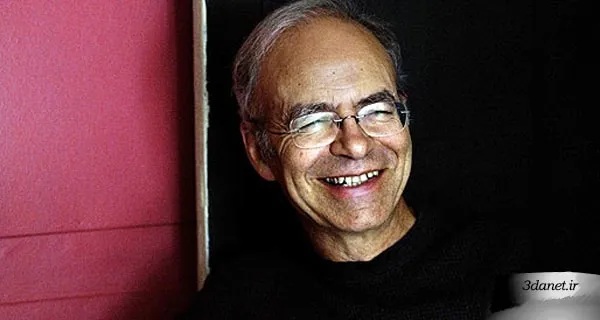
The death of one of the most important and influential figures working in the field of animal rights could once again have drawn attention to numerous issues and attracted notice, yet on September 13, 1998, when he—that is, Henry Spira—died, his passing unfortunately received no attention whatsoever and attracted no notice, and we only saw a brief three-column obituary devoted to him in the "New York Times." But Henry Spira's life alerts us all to a very important point, one that is not confined to the modern animal rights movement, and draws our attention to the fact that any individual, even alone, can bring about tremendous effects in the world, even in this modern era. It also reminds us that one can believe in no religion at all and yet find meaning in one's life and make life meaningful.
.
A Meaningful Life
Peter Singer
Note
The main focus of the present writing is directed at the very important and foundational topic of the meaning of life, which is one of the principal subjects raised in the philosophy of religion, moral philosophy, and religions. One of the most enduring statements made in this regard belongs to Nietzsche, who says: He who has a why to live can bear almost any how. In this article, Peter Singer attempts, by referring to the way of life of one of the activists in the field of animal protection, namely Henry Spira, to express some points about the meaningfulness of life and uses it as a prelude to speak about one of his books, "Ethics into Action: Henry Spira and the Animal Rights Movement", which he wrote in tribute to Henry Spira. The bibliographic details of the present writing are as follows:
A meaningful life. By Peter singer. "Ethics into Action". Oxford. 1998, pp: 192-196.
The death of one of the most important and influential figures working in the field of animal rights could once again have drawn attention to numerous issues and attracted notice, yet on September 13, 1998, when he—that is, Henry Spira—died, his passing unfortunately received no attention whatsoever and attracted no notice, and we only saw a brief three-column obituary devoted to him in the "New York Times." But Henry Spira's life alerts us all to a very important point, one that is not confined to the modern animal rights movement, and draws our attention to the fact that any individual, even alone, can bring about tremendous effects in the world, even in this modern era. It also reminds us that one can believe in no religion at all and yet find meaning in one's life and make life meaningful.
The first time I saw Henry was in 1973, when I was teaching special adult education courses in New York. At that time, I suggested he research and write about "animal liberation," as I was also gathering material for a book on the same subject. When I raised the topic in class, 20 students eagerly volunteered to participate—most of them, of course, had already been active in this area. For a while, we were engaged in discussion and gathering material, and in the process, we got to know one another. Among them was an individual who had drawn all of our attention. His clothes were wrinkled, his hair was always disheveled, his manner seemed very lowbrow, and his demeanor was earthy; whenever I spoke with him, I felt like I was talking to a character from a gangster movie. But this did not hinder my fondness for him, nor indeed anyone else's. His way of behaving and his way of thinking were very pleasant. I later learned that his mannerisms were influenced by his time working among the sailors of the merchant ships that flourished in the McCarthy era; they had leftist leanings and were later dismantled by the federal government. This man had worked for these commercial companies in New Jersey, and when the civil rights protests peaked, he had moved to the South, and had even gone to Cuba at the height of Fidel Castro's power.
Now, many years had passed since that period, and he had become occupied with teaching and education for slum dwellers and religious minorities. Well, what was this individual—I mean Henry—doing in those classes, and what was he teaching? He had read my article on animal liberation, was deeply influenced by it, applied his own talent and ingenuity to the subject, and made that article his guiding principle. He was always concerned with helping the poor and the disabled, and in this context, the issue of animals had also captured his attention. No animal, no creature, suffers as much or has its rights trampled upon as laboratory rats and birds trapped in cages. Henry paid great attention to this issue, his teaching focused on this very problem, he constantly researched it, and he never stopped—even when he lacked the necessary resources. He believed that "one should not learn science merely for the sake of science; if you see a flaw or a defect somewhere, it is essential to start striving and thinking in that area, and you must ask yourself, can I find a solution to this problem or not?" One day in class, he stood up and asked everyone, "If you want these sessions to continue, wouldn't it be better, instead of having purely philosophical and abstract discussions, to look for ways to untie the knots of these problems?"
Shortly after this episode, I left New York and returned to Melbourne, but there, Henry would usually call me late on Sundays, always staying in touch, telling me about his progress, and asking for my opinions and suggestions. What drew my attention was Henry's continuity and perseverance in his work, as well as the remarkable progress he made and the good strategies that unfolded. Finally, we witnessed, for the first time in the 20th century, movements emerging that opposed vivisection during research, and the debates related to this field became more prominent and visible than ever before, with more articles being published in this area. The movement I mentioned believed that the suffering inflicted during the vivisection of live animals is utterly indescribable and unbelievable. With each passing day, as science advances, we see more and more animals subjected to these ordeals. This movement, by gaining strength and becoming more powerful, was able to offer good strategies to prevent these acts and also produced good practical effects. Within two years, Henry and his companions were able to prevent some of the bizarre experiments being conducted on animals; for example, they stopped the continuation of experiments at the American Museum of Natural History—during which solutions were injected into cats, paralyzing them and making them sexually impotent—and even managed to create a legal ban on those acts. They then went after the Revlon company, where rabbits were being blinded in the eye area for vision experiments. They were able to influence the procedures of experiments conducted in these companies and even managed to spark public protests on this matter, such that today we see such experiments on animals are no longer conducted in these companies.
After a decade of admirable effort, Henry was able to reduce the infliction of certain sufferings upon animals; he devoted all his time and attention to issues concerning the animal realm. He saw that alongside the animals subjected to numerous experiments, millions of animals were also being killed to provide food for humans. The production of food from animals was the most important and vastest area that captured Henry's attention.
Today, the way humans treat animals, and beyond that, the environment, is very wrong. By employing incorrect methods in agriculture, humans have caused irreparable damage. Thus, the last decade of Henry's life was devoted to focusing on farm animals. One of Henry's most far-sighted initiatives was establishing a research center for "future living beings" at Johns Hopkins University, which today is one of the most prestigious research centers in the world, paying special attention to public health, the environment, and animals, and striving to provide good conditions for animals. It would be very good if changes were made in the dietary habits of the world's people and attitudes were to shift so that all humans try to refrain from consuming animal meat, and this decision is not confined only to industrialized and developed countries but extends to all people of the world.
We often imagine that it is impossible for an individual to create changes in the world and that only those who are very wealthy and affluent, or very lucky and placed at the helm of affairs, have the ability to create change. Multinational corporations, by spending billions of dollars and employing skilled individuals, can exert tremendous influence on the beliefs of people in various countries and regions. In the face of such corporations, how can small organizations and institutions like the animal rights movement have good and significant effects?
اما موفقیتهای هنری توانست به همه نشان دهد كه میتوان بر نهادها و سازمانهای بزرگ نیز تاثیری شگرف نهاد و حتی بر آنها غلبه نمود. او توانسته بود با فعالیت در كنار انسانهای دونپایه و تدریس در مناطق محروم، ارادهای پولادین به دست آورد كه بموجب آن توانست در كار خویش دوام آورد. چنین دانشی، قدرت افزاست و نیروبخش. هر فردی میتواند از او الگوبرداری كرده و در كارهایش مداوت را یاد گیرد و گام در راه پیشرفت بگذارد. این یك نكته ساده اما مهم است كه هر فردی میتواند با یك تصمیم، به خِیلِ افرادی بپیوندد كه همان تصمیم را اتخاذ نمودهاند و تك تك افراد اگر دست به دست هم بدهند، با انجام اموری جزئی، موجب بوجود آمدن تغییراتی عظیم شوند.
تلاشهای هنری در تقلیل برخی رنجها در جهان موثر افتاد. او در این راه، برای زندگانی خودش معنایی تراشید[1] و به زندگیاش سمت و سویی خاص بخشید طوری كه وقتی در پایان زندگیاش، ایستاد و به عقب نگریست، احساس شور و شعف زاید الوصفی داشت چرا كه وی زندگی اش را صرف انجام كاری كرد كه برایش مهم، ارزشمند و دلنشین و مفید بود.
من برای آنكه بتوانم به بهترین وجه "معناداری زندگی او" را برای دیگران ترسیم كنم، صلاح را بر این دیدم كه در باب زندگی و مشغله او كتابی بنگارم و نحوه زندگی او را به مخاطبانم بازگو كنم. حدود سال 1990 بود كه به هنری گفتم یك روز پیش او خواهم رفت و با او به همه گروهها و كارهایی كه كرده و نهادهایی كه تشكیل داده، سر خواهم زد و آنها را برای دیگران نیز بازگو خواهم كرد تا دیگران نیز بدانند كه وی چكارهایی كرده و چه كارهایی را میتوان برای آینده نیز انجام داد. اما پنج سال، از آن ماجرا میگذشت و من بخاطر مشغلههای فراوانی كه داشتم، نتوانستم به وعدهای كه داده بودم، عمل نمایم. اما در آوریل1996 بود كه جنبش محیط سبز در سِنا از من طرفداری كرد و من نامزد ریاست این جنبش بودم كه در همین اثنا به فكر وعدهای كه به هنری داده بودم، افتادم. در همان آوان توانستم مقدمات سفر را مهیا كنم و در خلال آن، قرار بود در ماههای مه و آوریل چند سخنرانی در اروپا داشته باشم و سپس به امریكا رفته و در ژانویه در واشنگتن سخنرانی كنم. در 21 آوریل، فاكسی به هنری فرستادم و به او گفتم از آنجا كه من در كاندیداتوری جنبش حمایت از محیط زیست شكست خوردهام، قصد دارم تا در باقی فرصت، موضوعات خاصی مِن جمله نگارش كتاب در باب ایشان را در حوزه كار خود قرار دهم. به او گفتم میخواهم تا دو یا سه سال آینده، كتابی كه درباب ایشان نگارش نمایم به دست نشر بسپارم. به او گفته بودم كه آیا میتوانم چند روز قبل از سخنرانیام در واشنگتن، به دیدن او بروم یا نه؟
عصر همان روز تلفن زنگ زد:
* سلام، پیتر.
- جواب دادم: چطوری، هنری؟
* واقعیتش را بخواهی، بسیار اوضاع بی ریختی دارم.
- چرا؟ موضوع چیه؟
* به نوع سوم سرطان مری مبتلا شده ام؟
- یعنی چی؟ ساده تر بگو تا بفهمم.
* بگذار اینطوری بگم، اگر به تو حق انتخاب بدهند كه چه نوع سرطانی انتخاب میكنی، یقیناً این نوع سرطان را انتخاب نخواهی كرد.
از این جواب هنری، چیزی عایدم نشد. هنری ادامه داد كه بسیار علاقمند است حول آن كتاب مطالبی بگوید ولی در آن محدوده زمانی كه من در واشنگتن خواهم بود، هنری در دسترس نخواهد بود، زیرا وی مجبور بود به شیمی درمانی و رادیوتراپی برود و دكترها به او گفته بودند كه امید به بهبودی، تقریبا صفر است. هنری به دكترها گفته بود كه اگر آنها نتوانند كاری بكنند، سراغ دكترهای بهتری خواهد رفت و اگر جواب، در نهایت همین باشد، دوست دارد سراغ دكتری برود كه به او كمك كند تا او زودتر بمیرد. به خاطر این ماجراها تصمیم گرفتم تا خیلی زودتر پیش هنری بروم و او را ملاقات كنم.
Six days later I went to New York. Henry had become very thin, there was no trace of freshness and dynamism in him; he had known for some time that he was afflicted with an incurable cancer, and his physical condition was rapidly deteriorating. His outward state was very grave and unbelievable. His cancer had advanced considerably and had spread throughout his body. The pathology test results indicated that the cancer had even spread to his lymph nodes and that his life would end within the next few months. Despite all this, he spoke to me as much as he could about himself, his decisions, the plans he had, and his methods of working, and he gave me his invaluable files and writings, even his video tapes, which contained very enjoyable material, which I later broadcast as a documentary titled "Henry: One Man's Way" on the SBS network and at numerous video festivals.
The most remarkable thing I can say about Henry is that there was no trace of lethargy or regret in him. He said he had had a very beautiful life because he had spent it entirely on research into matters that were very enjoyable, meaningful, and, of course, useful—a benefit that reached both himself and others.
The only thing that pained him was that the illness prevented him from doing more research. At the time I was with him, he constantly went to the doctor and returned home with a large number of pills. Henry took a book from his bookshelf about medical drugs; I joined him in searching for a specific drug to replace the ones the doctors had given him, because those drugs were narcotic. He wished to die sooner, yet there was no anxiety or worry in him at all.
Henry did not die within the timeframe the doctors had predicted. When I returned to New York in January 1996 and, during my travels, spoke about animal rights, Henry was noticeably stronger than before. At that juncture, I made arrangements for Henry to give lectures and conduct interviews for those who knew him. He was able to research animal issues for another two years, and valuable material and discussions were produced for my book. He lived to see the publication of the book "Ethics into Action: Henry Spira and the Animal Rights Movement" with his own eyes, and one week after the book's publication, he closed his eyes to the world.
One of the most important signs of having a meaningful life is that a person accepts death very easily with open arms, and *one of the components of a meaningful life is to have a good job or profession that you enjoy and make it the guiding principle of your life. Henry's life lacked many of the components that many of us consider essential for a meaningful and enjoyable life. He never married, did not have a long life, his workplace was his home. He also had no children. His father and one of his sisters had committed suicide, and his mother had mental health issues. His relationship with "Rene," the only surviving member of his family, was not good at all. There was no luxury or wealth in his life. In the last 20 years of his life, he had no days off. In the face of his impending death, he was very composed and calm; he had no regrets for days gone by. Although he lacked many of the components that ordinary people consider essential for having a meaningful life, he had something that most people lack and that the vast majority of people never attain: "He had found for himself a transcendent and good meaning, and this is a very lofty perfection."
.
.
[1] . According to Henry Spira's view, the meaning of life is a matter of construction, not discovery—M.
.
.
A Meaningful Life
Peter Singer
Excerpted from Ethics into Action, Oxford, 1998, pp. 192-196
The death of the world's most effective animal rights activist does not rate with that of a drugged-out rock singer. So when Henry Spira died, on September 13, his death passed without notice, apart from a three column obituary in the New York Times. Yet Henry Spira's life tells us something important, not only about the modern animal movement, but about the possibility of an individual making a difference in the modern world. More, it tells us of ways in which, without religion or a belief in a purpose beyond ourselves, we can find meaning in our lives.
I first met Henry in 1973, when he turned up at an adult education class I was giving at New York University. I had offered a course on 'Animal Liberation', in order to get some feedback on the draft of a book I was writing on that topic. The course attracted about twenty students, most of them already involved in working for animals in some way. The format allowed plenty of time for discussion, so we all got to know each other. One man didn't fit the mould of an 'animal person'. His clothes were crumpled, his hair tousled. The way he put things was so blunt and earthy that at times I thought I was listening to a character from a gangster movie, but I couldn't help liking the direct way he had of saying what was on his mind. His accent, I discovered later, had been formed by working as a merchant seaman then, during the McCarthy era, when his leftist politics saw him debarred from the ships as a security risk, on the General Motors assembly line in New Jersey. He had marched in the South during the civil rights protests, and visited Cuba in the heady early days of Castro's revolution. Now forty-five, he was teaching ghetto kids in a New York high school.
So what was Henry doing at the class? He had read an article of mine about animal liberation, and realised that it was the logical extension of what he had been doing all his life: helping the downtrodden, the powerless, and the exploited. No being was more ruthlessly exploited than a laboratory rat, or a battery hen. Henry found the classes interesting enough, but when they were over, he wasn't about to stop there. His view was that knowledge isn't something you acquire for its own sake. If you see something that is wrong, you have to think: 'Can I put it right?' At the end of the last session, he stood up and asked people if they wanted to continue to meet, not in order to discuss more philosophy but to see if there was something they could do about it.
I left New York soon after that, but when I was back in Melbourne and the phone rang late on a Sunday night, it was usually Henry, telling me of the progress of his campaigns and wondering if I had any thoughts on his future plans. The amazing thing was that his campaigns did make progress. For over a century, the anti-vivisection movement had been putting out propaganda telling people about horrific experiments on animals. Meanwhile the number of animals used in experiments had risen from a few hundred to more than thirty million. Never in all that time had the American movement succeeded in stopping a single experiment. Within two years, Henry had changed that. His first campaign -- carefully targeted against a series of bizarre experiments at the American Museum of Natural History that involved mutilating cats in order to study the effect of sensory deprivation on their sex lives -- was a complete success, permanently closing the laboratory where the experiments had been conducted.
From one series of experiments on about sixty rabbits, Henry rapidly moved on to bigger targets. He tackled Revlon over their use of rabbits to test cosmetics for potential eye damage, and exerted enough pressure to persuade them to put $750 000 into the search for alternatives. Having seen the public relations disaster that Revlon had narrowly averted, Avon, Bristol-Myers and other major American cosmetics corporations soon followed suit. Though it took ten years for the research to yield the desired results, it is very largely due to Henry's efforts that so many cosmetics corporations can now truthfully state that their products are not tested on animals.
After a decade in which he achieved more than anyone had ever done to reduce the suffering of laboratory animals, Henry decided that he was neglecting the greatest area of suffering that humans inflict on animals.
For if animals used in experiments in the United States are numbered in the tens of millions, animals used for food are numbered in the billions. The negative environmental and public health impacts of the intensive confinement farming methods used today is also enormous. For the decade before his death, therefore, Henry focussed on farm animals. One of his most far-sighted initiatives was to help set up the Center for a Livable Future, at Johns Hopkins University's prestigious School of Public Health. The Center will bring together public health, environmental, and animal welfare concerns arising from intensive confinement farming, and seek to ensure that they are well-known also in the developing world. It is ironic that just as the developed countries are beginning to reconsider the desirability of a diet high in animal products, the developing countries are expanding animal production at a rate that overwhelms any reductions in the developed countries.
We often assume that society has become too big and too complex for individuals to make a difference -- unless, perhaps, they have extraordinary wealth, or the good fortune to rise to the top of a major organisation. Multi-national corporations, with annual profits running into billions of dollars and advertising budgets to match, wield formidable power over public opinion. How can small voluntary organisations (some of them, like Henry's Animal Rights International, with total annual budgets that would not pay the salary of a single middle-ranking corporate executive) hope to match them? How could an individual possibly bring about any significant change?
Yet Henry's victory over Revlon -- to mention only his most spectacular David and Goliath example -- did not require wealth or the leadership of a large organisation. It came from applying insights gained over four decades spent working on the side of the weak and oppressed, learning from others what strategies are likely to succeed and trying them out. Knowledge of that kind is empowering. It can be passed on to others who will use it in the same way, adding to it and adapting it to the circumstances they face.
So Henry's life was effective in reducing the amount of suffering in the world. That was his way of making it meaningful. At the end of his life, he could -- and did -- look back on it with satisfaction and fulfilment because he had spent his life doing something that was both worthwhile and interesting to do.
The best way in which I can describe how Henry found his life meaningful is to tell how I came to write a book about his life and work. Around 1990 I told Henry that one day I would sit down with him and go over all his campaigns, so that others could see what had worked and what had not. But for the next five years I was too busy with other work to do anything about it. In April 1996, with my unsuccessful Senate candidature for the Greens behind me, I could think about it again. I sketched out an itinerary for an overseas trip, built around invitations to speak in Europe in May, and at a March for the Animals in Washington at the end of June. On April 21 I sent Henry a fax telling him that since I had not got elected, 'I'm starting to think about what else to do with the rest of my life. The book about you is one possibility, some time in the next two or three years.' Could I stay with him for a few days in June, before my Washington commitment, so that we could talk about it?
The phone rang that evening:
'Peter?'
'Henry, how are you?' I asked.
'Lousy, actually.'
'Why, what's the matter?'
'I've got an adeno-carcinoma of the oesophagus, Grade III.'
'What does that mean, in layman's terms?'
'Let me put it this way: if you could choose the kind of cancer you were going to have, you wouldn't choose this one.'
I made some inadequate kind of response. Henry then said that while he'd really like me to do the book, he wasn't sure that he was still going to be around in late June. He had been offered chemotherapy and radiation treatment, but the doctor hadn't been able to produce any statistics that suggested it was going to do much good, so Henry had said no. And if things got bad, he was looking for a doctor who would help him to die sooner rather than later. So could I come earlier? As soon as possible, in fact?
I was in New York six days later. Henry had lost a lot of weight, and lacked the energy I was used to seeing in him. Seven weeks earlier he had had a large part of the oesophagus and adjoining areas of his stomach removed, and was still weak, and had trouble keeping any food down. The outlook was even worse: the cancer was invasive, and the pathology report showed that it had spread into some of his lymph nodes. His life expectancy was a matter of months. Nevertheless he told me everything he could about the way he had worked, and showed me through the amazing collection of files that were arranged on shelves covering almost every wall of his apartment. We even shot some video footage, which afterwards became a documentary, 'Henry: One Man's Way', that has been shown on SBS-TV and at American film and video festivals.
The most remarkable thing about Henry during this period was the total absence of any sign of depression. Life had been good, he said, he had done what he wanted to do and enjoyed it a lot. Why should he be depressed? The thing that really worried him about the cancer was that he would die a slow, lingering death. While I was staying with him, he went to a doctor and came back to the apartment with a bottle of pills that the doctor had given him -- officially for pain relief. Together we looked up the drug in a pharmacopeia that Henry had. The bottle contained about four times the lethal dose. Henry's relief was palpable. With that worry taken care of, he seemed remarkably untroubled by the fact that he was expecting to die soon.
Henry did not die in the time his doctors predicted. When I returned to New York in June 1996, on my way back from Europe for the March for the Animals, he was markedly stronger than he had been at the end of April. He set up interviews for me with many people who had known him and worked with him at various stages of his life. For the next two years he kept on working for farm animals, while supplying me with material for the book, answering questions, and checking what I had written. When I began writing, I never thought that he would see even a complete draft of the book, but he lived to see Ethics into Action: Henry Spira and the Animal Rights Movement on sale in a New York bookstore. Then, within a week, he was dead.
One mark of living well is to live so that you can accept death and feel satisfied with what you have done with your life. Henry's life has lacked many of the things that most of us take for granted as essential to a good life. He never married, or had a long-term, live-in relationship. He had no children. His father and one of his sisters committed suicide, and his mother was mentally ill for much of her life. His relationship with Rene, the sole surviving member of his immediate family, was not close. His rent-controlled apartment, while spacious and well-situated, was spartan. He never went to concerts, to the theatre, or to fine restaurants. He hadn't taken a holiday for twenty years. Yet he was able to contemplate his own imminent death with no major regrets about the way he had lived. What made up for the absence of so much that, for most people, are the essentials of a good life?





Discussion3 comments
سلام از این متن واقعا لذت بردم ممنونم خیلی
سلام ممنون از اینکه متن های دو زبانه رو در سایت میذارید این کار باعث تقویت زبان انگلیسی و خصوصا نزدیک تر شدن به متن اصلی میشه لطفا از این متن های دو زبانه بیشتر در سایت بذارید . با تشکر
چرا عده ای از دین و از الگو های آن یعنی از معصومین علیهم السلام روی گردان هستند آنگاه پوچی زندگی خود را که حاصل از این فرار احمقانه است ، میخواهند با موضوعات فرعی مضحک پر کنند.چراغ های هدایت وکشتی های نجات را نمی بینند وباتعصب در تاریکی درپی یک تکه چوب هستند.