Political Science
A Talk by Morad Farhadpour and Baraneh Emadian: The Transition to Capitalism: A Critique of the History of the Victors
Primitive accumulation is not merely the starting point of capitalism but the central idea of its logic, reproduced through extra-economic force and the separation of producers from the means of production. A report on a lecture by Morad Farhadpour and Baraneh Emadian at the seminar on the transition to capitalism.
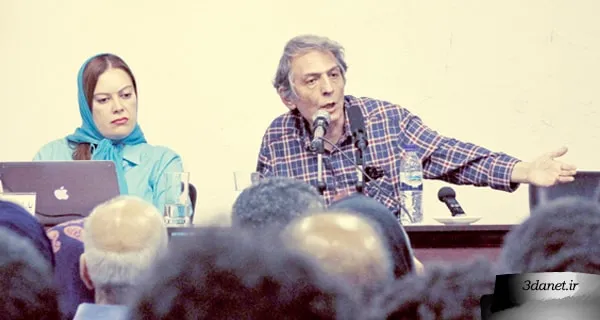
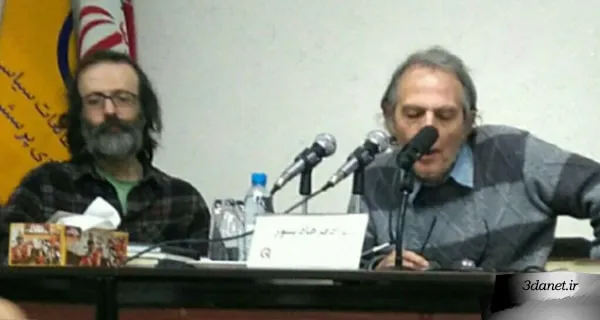
<<Primitive accumulation is a process in which immediate producers are separated from the means of production, and wealth and the means of production become concentrated in the hands of a few; this process is carried out on the basis of force and extra-economic power.>> Morad Farhadpour, author and translator of radical left thought, speaking at the seminar “The Transition to Capitalism: A Critique of the History of the Victors,” held on Thursday evening, August 20, at the Porsesh Institute of Studies, elaborated on the concept of primitive accumulation, calling it the central idea of the logic of capitalism. Contrary to common perception, he argued, it is not confined solely to the initial formation of this system but has been reproduced in various forms throughout the 300- to 400-year history of capitalism’s expansion and, as it happens, has reproduced its own modes of resistance. Farhadpour’s discussion served as a prelude to Baraneh Emadian’s talk on the ideas of Silvia Federici (born 1942), the Italian-American left philosopher, focusing on the concept of primitive accumulation in her book <<Caliban and the Witch: Women, the Body and Primitive Accumulation>> (2004). Emadian holds a PhD in philosophy from the University of Westminster in England and was a student of Ernesto Laclau, the renowned Argentine left philosopher; we have previously seen her book The Natural History of Decline. What follows is the text of Morad Farhadpour’s lecture and excerpts from Baraneh Emadian’s remarks.
My discussion is devoted to an introduction to the concept of primitive accumulation and its evolution from Marx’s time to the present day. The concept of primitive accumulation was apparently first proposed by Adam Smith, but it is in fact Marx who, at the end of the first volume of Capital, refers to this concept using the term <<primitive accumulation>>
(so called primitive accumulation), indicating that he adopts an ironic stance toward it. As far as Marx is concerned, the starting point of primitive accumulation is an economic fact. At the end of the first volume, Marx discusses how, with the transition from the period of formal abstraction to real abstraction (that is, the point where capital itself undertakes its own reproduction), the initial volume of capital needed to start a business enterprise increases. That is, unlike the early days when a simple feudal workshop could be transformed into a capitalist enterprise by somewhat altering the master-apprentice relationship into an employer-worker one, after the various branches of capital—such as transportation networks, communications, and mass production and consumption—took shape, a heavier capital outlay is now required to start a business. Here the logical question arises: where does this capital come from, since this is supposed to be the starting point? It is here that Marx introduces the primitive accumulation of capital, which is a response to this logical impasse.
The Separation of Labor Power from Labor
Of course, since we are dealing with Marx, even at the very end of the first volume, this concept moves beyond a purely economic meaning and
just as Marx himself examines the concept of accumulation as a social process and relation, primitive accumulation is also presented in the same way. For Marx, the very concept of accumulation rests on the concept of separation, that is, the separation of immediate producers from the means and instruments of production and the production process. This practically means the separation of the working class from the production process and the concept of the alienation of labor that Marx proposes. He believes that neither the product of the worker’s labor, nor the process of his labor, nor the machinery and capital that make production possible belong to him (the worker); he possesses only his own labor power, which he sells. Therefore, the condition for the launching of a capitalist economy—whose characteristic is the separation of value from politics and the cultural-ethical-religious superstructure of society—is the formation of a proletariat as a class that can only sell its labor power. Thus, accumulation is not only the accumulation of capital but also the accumulation of labor. We also have this concept in primitive accumulation, and the difference seems to lie only in the historical direction of this issue, meaning that this accumulation occurs at the beginning of capitalism and the stage of transition from feudalism to capitalism, where we are faced with the disintegration of feudal relations and the detachment of peasants from the land.
اما نكته اصلی كه اتفاقا ماركس بر آن تاكید می گذارد، مساله زمانی قضیه و موقعیت ابتدایی این انباشت نیست. هر چند در اصطلاح آن از لفظ <<ابتدایی یا اولیه>> یاد می شود بلكه تاكید بر نقش زور ماورای اقتصادی در انباشت اولیه سرمایه است. انباشت اولیه و انباشت هر دو بر جدایی (separation) استوار هستند یعنی جدا كردن نیروی كار از خود فرآیند كار و وسایل تولید كه در شكلی كه ماركس با آن روبه رو بود، چیزی نبود جز جدا كردن یا كندن دهقانان دوره فئودالی اروپا از زمین و آوردن آنها به شهر به عنوان فقرایی كه بعدا قرار بود طبقه فرودست پرولتر را بسازند یعنی كنده شدن از روابط تولیدی قبلی و ادغام شدن به عنوان پرولتر در روابط سرمایه دارانه ای كه بر معادله پولی و روابط بازار استوار است كه در آن همه به صورت صوری برابر هستند و هر كس می تواند چیزی را بفروشد و مبادله كند. بنابراین نكته اصلی در اینجا تاكید گذاشتن بر زور یا نیروی ماورای اقتصادی است كه بر خلاف حالت اولیه انباشت، در این بحث كاملا پای سیاست، قدرت و درگیری و مبارزه را مطرح می كند.
صورت بندی منطق سرمایهداری
نخستین سوال این است كه چرا ماركس این بحث را ادامه نمی دهد و در همان جلد نخست با اشاره كوتاه از آن می گذرد؟ من ناچارم خیلی سریع از این بحث ها می گذرم. اگر جلد نخست كاپیتال را به تعبیر وبری نوعی نمونه آرمانی (ideal type) بنامیم كه ماركس ساخته تا بتواند قوانین حركت سرمایه را كشف و بیان كند، بنابراین او در این كتاب تنها می تواند از یك سرمایه در كل سخن بگوید و یك فضای كاملا انتزاعی بسازد كه از قضا آن ویژگی خاص وجه تولید سرمایهداری یعنی جدا بودن اقتصاد از بقیه وجوه جامعه باید شرط اولیه اش باشد یعنی ماركس باید نظامی بسازد كه در آن حركت سرمایه خودش را صرفا بر اساس رابطه داد و ستد میان سرمایه و كار بدون دخالت هر عنصر ماورای اقتصادی و بدون نقض آن برابری صوری توضیح دهد. او از قراردادی بین كارگر و كارفرما بر اساس آنچه بعدا از آنها تحت عناوینی چون تولید ارزش مبادله و تولید ارزش اضافی و مساله استثمار یاد می كند، سخن می گوید.
اما ماركس در جلد دوم نیز این فضای انتزاعی را ادامه می دهد زیرا می خواهد نشان دهد كه چگونه در یك جامعه صرفا سرمایه دارانه كه در آن فقط بورژوا و پرولتر حضور دارند، چگونه ممكن هستند و چگونه انباشت در چنین شرایط رخ می دهد. او این كار را بر اساس تقسیم بندی دو دپارتمان تولید وسایل تولید (ماشین آلات) و دپارتمان تولید كالاهای مصرفی انجام می دهد. او تنها در جلد سوم است كه به رقابت و سرمایه های بسیار و واقعیت انضمامی و تاریخی می رسد و آنچنان كه از یادداشت هایش بر می آید، قرار بوده كه در ادامه بتواند مساله بازار و بازار جهانی و دولت را طرح كند و در این صورت بندی كلی بگنجاند. البته او عملا نمی رسد این كار را تمام كند، اما به عقیده من اگر واقعا هم كار را ادامه می داد، وقتی به دولت می رسید، می دید كه نمی تواند دولت را صرفا از دل نمونه آرمانی صرفا اقتصادی كه در مجلدات یك و دو ساخته بیرون بكشد، آن طور كه رقابت را در جلد سوم از دل همین نمونه آرمانی استخراج می كند یعنی برای طرح مساله دولت به یك منطق كاملا متفاوتی از منطق سرمایه نیاز است.
This very fact meant that, in the subsequent Marxist tradition, this binding of capital to something outside of capital and its economy was not much discussed in practice. The concept of primitive accumulation in Lenin is presented exactly as if it were something that occurs only at the very beginning of the formation of capitalism. It is only Rosa Luxemburg who, in her critique of Volume II, concludes that accumulation as Marx presented it has a problem. Of course, many, like Mandel and Rostovski, believe that Luxemburg's understanding of Volume II is wrong. But in any case, Luxemburg concludes that a third element is necessary for accumulation; that is, for its accumulation and self-reproduction, capital must go beyond the exploitation of labor power into the pre-capitalist or non-capitalist world (Third World countries), extract surplus value from there, and thereby solve the problem of accumulation. Even for Luxemburg, this did not mean the intervention of politics in the economy, because she thought this extraction of value occurred passively, that the people of those countries themselves would show no reaction, and that the issue ultimately came back to the industrial proletariat in Europe having to settle the matter once and for all. This is very similar to Marx's own view of the feudal peasants, whom he thought had a passive attitude towards the expropriation of their property and the pressure that primitive accumulation brought upon them, accepting it without a struggle ensuing.
The Continuation of Accumulation in the History of Capitalism
This view of accumulation has undergone a transformation in recent years. Thinkers such as David Harvey, Massimo De Angelis, Federici, and others have tried to show that the issue is not one of historical primacy or initial occurrence; primitive accumulation is a continuous and recurring process, and even a fundamental aspect of the imposition of capital and the reproduction of the capitalist system and its various waves of expansion, especially its globalization. They believe that primitive accumulation is, in fact, a central, fundamental concept, and we encounter its repetition throughout history. That is, we are faced with primitive accumulation through extra-economic force.
I will continue by addressing only three points; the first point is that in the concept of the primitive accumulation of capital, we encounter the intersection of those two main logics, namely the logic of capital and the logic of the state; because, in reality, extra-economic force or coercion can take various forms, such as a tribe that plunders, or a company like the diamond mine in South Africa four years ago that, through extra-economic methods and conspiracy, brutally suppressed a workers' strike and killed 40 people. But let us not forget that the officials of this company carried out this action in cooperation with the police and state military agents. That is, in reality, when we speak of extra-economic force, in 90 percent of cases, what is meant is the state, and the remaining 10 percent is also, through mediation, ultimately traceable back to the state and its coercive organs. This is where the discussions of thinkers like Carl Schmitt on the state, war, and the monopoly on the use of organized force become relevant. The state is fundamentally defined as the institution claiming a monopoly on organized force and weaponry in the form of the army and police. This is the main, inner core
of any state, and everything else is secondary to this definition. Therefore, extra-economic force means the state. Thus, in the primitive accumulation of capital, although Marx does not unpack the issue of the state, we are faced with the combination of capital and the state, that is, we encounter the two main poles of the system of domination. This is where the most principal logics of domination—namely the logic of exploitation, which Marx addressed, and the logic of government, which Foucault later addressed—intersect and become intertwined. For this reason, the primitive accumulation of capital is the main and central law of the civilization I have described with the adjective 'barbaric.' This is not a kind of pessimism of nagging romantic intellectuals; rather, it can be shown with numbers, figures, and facts how the primitive accumulation of capital is the principal law governing the system of domination and the barbarism that has engulfed the world today. I am addressing those who love facts, although such people only love facts when they are in their own favor and are not so factual at other times! Therefore, the intertwining of the two fundamental logics of domination, namely the logic of capital and the logic of the state, is one of the points that makes the concept of primitive accumulation the most important practical and theoretical challenge for radical thought and popular, egalitarian politics.
Resistance to Accumulation
The second point is that it is very natural that the intersection of the two principal laws of domination is precisely where resistance and struggle also erupt. That is, the primitive accumulation of capital is another name for a multitude of popular struggles and resistances over the past four or five centuries, and it is entirely natural that from the very point where these two anti-human logics meet, the collective resistance of human beings should erupt. As I said, Marx or even Luxemburg were not aware of this aspect of the matter and do not refer to it. The importance of figures like Federici and Harvey lies precisely in this linking of the concept (primitive accumulation) with class struggles and conflicts and other forms of struggle. Marx, as noted, was indifferent to the struggle of the peasants, but we shall see to what extent the history of the Middle Ages was filled with struggle. Subsequently, in today's conditions as well, the entanglement of this economic logic with politics seems to be once again in question.
It is worth noting that in some exceptional cases we encounter a gap between the realization of primitive accumulation of capital and the political, combative reaction against it. This occurs in places where another source for accumulation exists and the state can obtain that necessary capital. For example, in Iran at the beginning of the 1340s [1960s], that is, during the White Revolution and land reform, we see that since the state had access to oil revenues, there was no necessity to extract accumulation directly from the peasants themselves. But the rest of the story, apart from the matter of wealth accumulation, occurs even in Iran. That is, in Iran we witness the accumulation of the proletariat and the uprooting of peasants from their previous subsistence relations and their pouring into the cities in the form of the urban poor. That is, in Iran too, although peasant lands were not seized by force as in Europe and accumulation did not take place through privatization and the extraction of value from the people, yet that same historical part—namely, being uprooted from previous subsistence relations, the creation of a market, the expansion of monetary relations among peasants living in slums, and so on—was sufficient to construct a great popular resistance against despotism and royal plunder. Therefore, even the exceptional case of land reform confirms that general law in which we see that primitive accumulation has always occurred in conjunction with struggle and resistance, because the value and productive power of men and women is to be confiscated. It is clear that this is met with their resistance and struggle.
Various Forms of Accumulation
A final point returns to the range of examples of primitive accumulation. Marx notes at the end of Volume I that this process of accumulation occurs in different forms in different countries, and leaves it at that single sentence. But what we have is a strange and vast spectrum of these forms, and one can practically say that aside from certain fundamental processes of modern history—such as the transition to modernity and capitalism itself from the fifteenth to the nineteenth century, industrialization, the discovery of America and the destruction of native American civilizations, and the experience of colonialism that has encompassed all of Asia and Africa over the last three centuries—what has occurred are general and universal instances of the process of primitive accumulation of capital. But beyond these general examples, one can say that wherever we have encountered plunder, embezzlement, state corruption, war, coups d'état, conflict, and organized state violence, in all cases we are dealing with different forms of primitive accumulation. The confiscation of people's homes in the 2008 crisis is one example of this. The entire Arab Spring was nothing but resistance to the primitive accumulation that the IMF and the World Bank sought to impose. Throughout the entire 40-year assault waged by neoliberalism, one can see primitive accumulation. Even in the First World, what is happening in Greece under the name of austerity policies is nothing but the primitive accumulation of German and French private banks. These banks extract surplus value from Greece through political and extra-economic force. The 800 billion Obama paid to bail out the banks is people's tax money that goes to capital in crisis. All forms of plunder and state corruption are primitive accumulation. All forms of privatization of public resources being implemented everywhere are nothing but primitive accumulation. For 40 years in the Congo, multinational corporations, alongside armed groups with meaningless names, have been enslaving indigenous people and raping their women in various places, and over these 40 years, the titanium Apple has needed to build its iPhones has largely been obtained in this way. The situation in Syria, the US attack on Iraq in 2003, and the entire affair of the War on Terror are also directly or indirectly tied to this very issue of the primitive accumulation of capital. Throughout these 40 years of neoliberalism, during which the assault of capital has intensified, all instances such as increased privatization, various forms of state plunder, the revival of slavery in different forms, and so on, have been revived, and their repetition is the concept of primitive accumulation. I will conclude the discussion with the example of Black slavery in America. We must not think this is a matter belonging to the Middle Ages, the past, prehistory, or something exceptional and bizarre. The story of slavery in the American South begins in 1812 with the privatization of all the lands of the Mississippi Valley, an area roughly the size of Iran. A law was passed stating that these lands could be taken from their Native American or white owners. White settler men, with loans taken from English banks, acquired these lands under the privatization law and, with the help of the labor of Black slaves brought from Africa, cleared the forests and turned them into cotton plantations of several thousand hectares. Here, an oligarchy of a large landowning class forms that operates based on this very slavery and the labor of Black slaves. That cotton was exported to Manchester, turned into yarn and cloth by weakened English proletarians, and that cloth was exported to India by the East India Company, destroying India's native textile industries, as Marx realized toward the end of his life. Therefore, Black slavery in America was not merely a regional matter confined to America, but was part of the global capitalist economy. Without this slavery, England's Industrial Revolution would not have advanced. Thus, we witness how slavery, as a form of capital accumulation, is tied to the movement of capital, its globalization, and its reproduction. In this discussion, I have only tried to show how the history and geography of the modern world, which we are supposed to applaud, began and has continued, in Marx's words, with what blood and filth, and the production of this blood and filth still exists in the form of Africa, Syria, the War on Terror, and the American presence everywhere.
.
Silvia Federici, the Body, and Primitive Accumulation
How Did Capitalism Replace Feudalism?
Baraneh Emadian
As Mr. Farhadpour explained, a new formulation of primitive accumulation, as theorized by Marx, has been presented by various thinkers. Among them, Federici holds a special place, because she uses this concept to continue the unwritten or repressed Marxist tradition. The importance of Federici's work lies in the fact that she points to aspects that Marx did not address. I therefore emphasize that I did not choose Federici from a feminist perspective, but rather as a revolutionary thinker who creates a rupture in distorted historiography (a rupture written solely from the perspective of the state or even of men). Like Luxemburg, Federici has written history from the perspective of those who have been excluded. Moreover, she has been on the front lines of many struggles; she embodies the historiography of which Walter Benjamin speaks—that is, revisiting and retelling history from the perspective upon which the victors have imposed silence. The prefix "primitive" in the compound "primitive accumulation" in Marx's Capital has led to misunderstandings in the analysis of this concept. For primitive accumulation did not occur at the beginning of capitalism; rather, it is repeated up to the present day and is a continuous phenomenon. One of the limitations of this concept in Marx is that it is examined only from the perspective of industrial workers within the wage system. Another point missing from Marx's narrative is the dramatic transformations that capitalism brought about in the reproduction of labor power and the condition of women. Marx makes no mention of the killing of hundreds of thousands of women under the label of "witch," which is one of the most important moments of capital accumulation in the 16th and 17th centuries in Europe and America. Thus, Federici's thesis in the book Caliban and the Witch is that the accumulation of capital and the formation of the subordinate class—which we can call the proletariat—during the transition from feudalism to capitalism is not limited to the expulsion of peasants from their lands and their transformation into urban industrial workers, nor to the theft of the gold and silver of Native Americans and their exploitation. Another of Federici's theories is that the process of accumulation entails the transformation of the human body and its conversion into a working machine, as well as the subjugation of women to the reproduction of the social labor force. This subjugation of women was achieved through the destruction of women's power. Another difference between Marx's and Federici's interpretations relates to Marx's position as an Enlightenment philosopher. In Marx's view, capitalism, for all its ruthlessness, is a necessary stage on the path to human emancipation. Federici, however, does not see this stage as necessary. Marx believed that capitalism destroys small-scale property, increases the productive capacity of labor more than any other economic formation, and provides the material conditions for humanity's emancipation from material necessity and scarcity. More importantly, Marx assumed that the progress of capitalism is inversely related to its violence, and that this violence diminishes as capitalism matures. But on this point, Marx was mistaken, for today we are confronted with the most violent forms of the return of primitive accumulation. In fact, capitalism continues to survive precisely thanks to this violence.
Foucault and Federici
Federici's attention to the body and the organization of the body brings her close to Foucault. Federici has criticisms of Foucault's perspective and believes that some of Foucault's conclusions indicate a series of historical limitations. Foucault's most glaring omission is that in his discussions on the organization of the body in the modern era, there is no trace of the destruction of hundreds of thousands of women during the transition to capitalism and the institutionalization of the repression of women. Foucault writes about the transition from a power "dedicated to death" to a "power over life" (that is, the organization of life) in the 18th century, yet he makes no mention of the motivations behind this system of bodies and remains within the confines of an analysis of power. Whereas, if we place the need for this organization of bodies against the backdrop of the emergence of capitalism, according to Federici's narrative, we see that what Foucault calls the control and organization directed at life is nothing other than the concern for the accumulation and reproduction of labor power. In fact, what Foucault overlooks is the dialectic of sovereign power to increase labor power on the one hand, and the torture and crushing of the body on the other. Both existed simultaneously and presuppose each other.
If Foucault had paid more attention to the Marxist concept of <<dead labor>>, he would have realized that when life and the body are placed in the service of profit production, the accumulation of labor power is only possible through boundless violence. Federici concludes that if, instead of focusing on Christian confession, Foucault had attended to the long history of the so-called witch hunts, he would have seen that this history should not have been written from the perspective of a neutral, genderless, and abstract narrator. And he would have realized that the crisis of capital causes the return of primitive accumulation, which is nothing but an attempt to lower the cost of labor and exploit women, the natives of the colonies, and so on.
Capitalism as <<Counter-Revolution>>
The most important thesis Federici presents is that the capitalist system does not simply replace the feudal system. That is, contrary to the prevailing view, we are not faced with a merely economic and passive transition from feudalism to capitalism; rather, the feudal system is first shaken by deep class struggle and combat, and capitalism acts as a <<counter-revolution>> that halts the revolution the classes had initiated against feudalism.
In other words, capitalism is a reaction to the people's revolution against feudalism, one that functions far better than feudalism in suppressing the people. Thus, capitalism is not a more advanced and evolved form of social life, and it must be acknowledged that the crisis of feudalism was born of the struggles of the European people, not the advent of capitalism.
The battles between peasants and nobles in various European countries led to bloody wars, and in all these battles, the peasants were not merely content with greater freedom and better financial conditions; they also wanted to end the power of the nobility. In the late 15th century, the counter-revolution, which was capitalism itself, was taking shape. The state became the principal manager of class relations and the reproduction of labor power, enacting laws aimed at limiting the cost of workers, prohibiting vagrancy and unemployment, and forcing workers to reproduce in order to increase the labor force. Ultimately, the class struggle caused the bourgeois class and the noble class to unite with one another, and it was this alliance, along with the support of the absolutist state and the Church, that led to the defeat of the people's liberation struggles. In fact, contrary to the official bourgeois narrative, it considered the lower class its real enemy and allied with the nobility and the Church to put an end to the struggle of the lower classes.
Wage Patriarchy
One of the prominent strategies of primitive accumulation that Federici describes dates back to the era of mercantilist capitalism in the late seventeenth century. Mercantilists considered population growth the best way to preserve a nation, and in this regard, they enacted laws that aided the reproduction of labor power. This system launched a veritable war against women to completely destroy their control over reproduction and pregnancy and turn them into docile machines for producing labor power. Many women were tried and executed for using contraceptive methods. In this way, the female body became a tool for producing workers and expanding the labor force. The state's force in reducing women to reproductive machines and women's unprecedented resistance to this instrumentalization became a form of class war. For this reason, Federici expands Marx's theory of alienation and writes from the perspective of women.
The structural nature of alienation from labor stemmed from the fact that for centuries after the rise of capitalism, women's work was not considered work at all and followed a kind of zombie-like existence outside the labor market. The next stage was that women were proletarianized and forced to work in factories in addition to housework, while their wages were paid to their husbands. Federici calls this situation <<wage patriarchy>>.
The fundamental issue is that economists attribute the leap and growth of capitalism, which resulted from the increased productivity of labor, to the specialization of work. Whereas the greater part of the increase in labor productivity was owed to the destruction of women's economic standing and their exploitation. Thus, every stage of primitive accumulation up to the present day entails a process of de-accumulation. Federici sets this concept of de-accumulation against the classical economic concept of accumulation. For there is no accumulation without de-accumulation. In her book Caliban and the Witch, Federici points to three moments of de-accumulation that are the principal factors in the transition to capitalism. In the Age of Reason, the bourgeoisie set about recreating the lower classes in order to reshape them according to the needs of the new capitalist society. This issue did not escape the notice of <<Weber>> either. He emphasizes the co-implication of recreating the body in the Protestant ethic.
The fundamental issue is that this process of reproducing the body was by no means easily realized; it had a long and hellish path, took three centuries, and it was in the nineteenth century that the ideal human of capitalism—that is, the obedient, castrated human committed to work—was born. A human whose freedom was demarcated by the hands of a wristwatch and who lost sensitivity to the question of exploitation. This process was so difficult because the idea of wage labor was like a nightmare for the people of the sixteenth and seventeenth centuries, and there is much evidence showing that many workers even preferred death to wage labor. This resistance of the people confronted the capitalist system with its first crisis, and the bourgeoisie was forced to resort to a full-fledged system of terror and intimidation to bring the workers to their knees. In England alone, 72,000 people were hanged by Henry VIII on charges of vagrancy and unemployment.
Now the question is: what was the role of philosophy and science in this repression? This period was the time of the formation of mechanical philosophy, which indirectly aligned itself with the goals of the bourgeoisie. Descartes theorized the idea of the body as a machine. Descartes separates the body from the mind, and this separation makes it possible to treat the body as an instrument or tool. Whatever is noble and worthy of preservation in the human being is consigned to the realm of the spirit, which is separate from the body. Thus, any treatment of the base body is permissible. In this way, mechanical philosophy and the science of anatomy, which became very popular in this period, implicitly aided the bourgeoisie's social engineering to transform the worker's body into a useful tool. For this reason, the world of magic, which saw no difference between body and spirit and attributed forces to the individual, came under attack. Among others, <<Bacon>> said that magic is in conflict with industry. Hobbes, who supported the killing of so-called witches, described it as being in the service of civil society. Ultimately, hegemony belonged to the Cartesian system, not the Hobbesian one. For Cartesian logic saw social discipline as dependent on the discipline of the individual will. Whereas in Hobbes's thought, the individual can only be disciplined by surrendering himself to the Leviathan.
Contrary to the one-sided view of mechanical philosophy, which attributes the beginning of the machine age to the invention of the steam engine and the clock, we must say that the machine age began with the invention or reconstruction of the human body as a machine. The first step toward conquering the world, as Weber said, was the disenchantment of the world, and this disenchantment means the destruction of the power of women, who were healers and showed the greatest resistance to the disappearance of old structures. Even in the peasant battles against the privatization of lands in Europe, women were always on the front lines of the struggles. So women were like a thorn in the eye of the ruling system. The first step on the path of social engineering of the masses and the destruction of women's power was taken through the demonization of women.
There were many similarities between the ideology of misogyny and racism. If women were called witches, the consorts of Satan, the natives of America were also turned into the embodied Satan of America. To the extent that in many paintings and representations of the Devil surviving from this period, the Devil is depicted as black-skinned.
When we look at the hundreds of thousands of victims of the witch hunts, it becomes clear that they were called witches for various reasons. Some for rebelliousness, some for petty theft born of poverty or inability to work, some for begging and making a living through palm reading.
According to Federici, the similarity between the situation of women and the working class in early capitalist Europe and the exploited natives of the American continent shows that a common logic drove the capitalist formation, and undoubtedly the most obvious example of this is the continuation of the logic of the persecution of women in the New World, that is, the American continent. This was a strategic persecution to create terror and fear in the inhabitants of these regions, to destroy the native and communal unity among them, and to sow division among them. Soon the witch-hunt spread to parts of Africa as well, and it continues to this day in places like Nigeria. All of this shows us that by the advent of the sixteenth century, new ruling forces had formed in Europe that were economically, politically, and socially shaping the body of a kind of global proletariat and had tested the logic of domination on a global level. If we look at the present in light of this past, we find that the resurgence of witches in many parts of the world in the 1980s and 90s is a clear sign of the existence of a process of primitive accumulation that is repeated in conditions of crisis. Federici concludes her narrative with this statement by Arthur Miller about the witch trials in America: <<As soon as we strip away the metaphysical trappings from the persecution of witches, we will recognize in it the presence of phenomena very close to our own situation.>>
.
.
PDF file of the report The Transition to Capitalism: A Critique of the History of the Victors in Etemad newspaper
.
.
A report by Mohsen Azmoudeh - Ali Varamini (Etemad newspaper No. 3322 Saturday, 22 August 2015)
.
.



Discussion0 comments
No comments yet; let yours be the first voice.