History
The Decline of Myths and Histories: A Session at the Porsesh Institute
Morad Farhadpour and Saleh Najafi, at an event held by the Porsesh Institute, critiqued identity-based readings of the Shahnameh and idealism; Farhadpour described the Shahnameh as a tool of resistance against nationalism, and Najafi called Tabatabai's approach paradoxical.
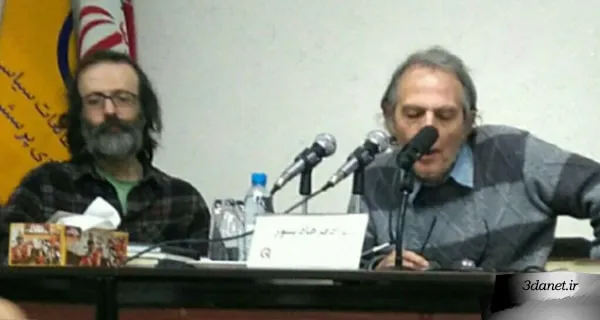
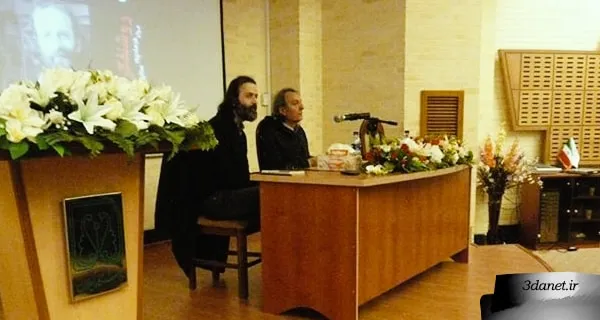
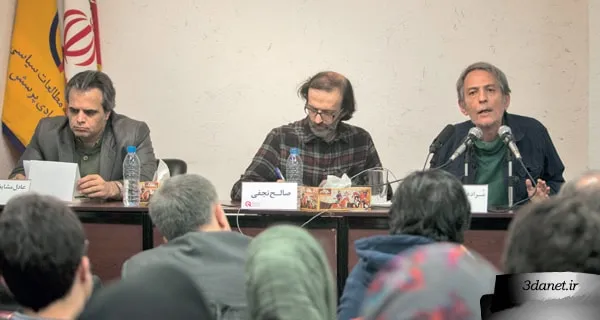
The session “The Decline of Myths and Histories,” part of the Thursday series of talks at the “Porsesh” Institute, was held on March 9, 2017. Morad Farhadpour initiated a rich discussion on the necessity of a critical re-reading of the themes of the Shahnameh, such as the “ideal king,” “the land of Iran,” and so on. Drawing on the research of the late Shahrokh Meskoob, he offered a reading—through the “tragic,” human, and paradoxical heights of the Shahnameh’s tales and characters, such as the battle of Rostam and Sohrab and especially the combat of Rostam and Esfandiyar, the distinction between myth and magic, the dissolution of theology into politics, and so on—that differed from the authoritarian and state-centric notions of “Iranshahr.” He delivered an enlightening lecture critiquing the rise of various forms of nationalist identity politics and religious fundamentalism, populisms, and authoritarianisms in the world and the system of domination and capital. And Saleh Najafi, under the subtitle “Believe Me, I’m Lying: On the Possibility of a History of Decline,” by describing idealist discourse and meta-narrative, critiqued the paradoxical claims in Javad Tabatabai’s historical approach...
.
.
A Lecture by Morad Farhadpour and Saleh Najafi on Theoretical Idealism in Iranian Historiography
The Decline of Myths and Histories
Last Thursday, the session “The Decline of Myths and Histories” was held at the Porsesh Institute, welcomed by enthusiasts. In this session, Saleh Najafi first spoke under the title “Believe Me, I’m Lying: On the Possibility of a History of Decline,” followed by Morad Farhadpour on the subject of “The Shahnameh and Demythologization.” Ehsan Shariati was also present as a guest at this meeting. What follows is a selection of the lectures from this session. It should be noted that only portions of Morad Farhadpour’s lecture have been published.
Morad Farhadpour: The Shahnameh and Demythologization
Motivations for the Discussion I will begin my discussion with a relatively lengthy introduction to the motivations behind this talk on the Shahnameh. I must emphasize that what I am about to say was prepared several months ago, and I have no intention of responding to criticisms recently published in one of the journals. I have not read the aforementioned journal in recent days, so as not to alter today's discussion. I am fundamentally suspicious of publications and institutions that try to boost their circulation by fueling controversy, and I do not believe that entering such disputes is beneficial in a situation where all discussions and criticisms are personal and psychological. There were two main motivations for today's lecture: first, the incomparable treatise by Shahrokh Meskoob on Ferdowsi's Shahnameh, titled "An Introduction to Rostam and Esfandiar," in which he points to the greatness of Ferdowsi's work and the pettiness of our treatment of it as Persian speakers. This treatise clearly demonstrates just how contemptible our engagement with the Shahnameh has been, especially recently, as the Shahnameh is once again being proposed as a reference text for a form of nationalism and identitarianism. Despite the fact that the Shahnameh, as a national epic, can willy-nilly play a role in nationalist ideologies, a close examination of its content provides tools for deconstruction and resistance against any form of identitarianism, particularly nationalism. The second motivation is that identitarianism is not limited to Iran: in the last decade, with the growth and emergence of various fundamentalisms, we are faced with identitarian politics and discourses that are presented in the form of a return to the self, a principle, a complete and solid identity. They take various forms, but all of them always posit this identity in opposition to an Other: from an ethnic and racial Other to a ritual and religious Other. In any case, this fundamentalism, whether religious or national, follows a single line. You probably agree with me that the religious fundamentalism of ISIS and the nationalist fundamentalism of Trump are two sides of the same coin, and in our world, both of these fundamentalisms are responses to a crisis created over nearly forty years by the unbridled growth of bureaucratic capitalism in a neoliberal manner. Now, all levels and experiences of human life, from nature and the environment to daily life, politics, economics, and abstract financial relations at the level of banks and so on, are all afflicted by deep, widespread crisis, ruin, and corruption. Regardless of the ideologies and claims of governments to differ from one another, this is prevalent and pervasive throughout the world, and the entire world is grappling with unemployment, injustice, inequality, poverty, and corruption resulting from this crisis. Identity politics everywhere is a reaction to the present crisis, in the absence of any genuine emancipatory action and thought, which, for various reasons, has not been able to provide an adequate response to this crisis. For this reason, this void is filled with all sorts of right-wing populism that claims to critique the system of domination, respond to the crisis, and defend the people's interests, but is nothing more than a form of demagoguery that ultimately serves the interests of the capitalist system and the global system of domination. This is done by constructing a solid identity, in connection with the state and power, and establishing an aggressive politics based upon it. Everywhere we witness how the right-wing identitarian tendency serves powers and is linked to the very system of domination it claims to be in conflict with and criticizing. Everywhere we witness this form of statism under the shelter of power, which sees the primary manifestation of this identity as the organized power of a state: whether a state that exists or a state that the ISIS caliphate seeks to establish. The Position of Iranian Identitarian Theories The concepts that have emerged from the theoretical projects proposed in Iran in recent decades, especially the works of Mr. Tabatabai, are legible as moving towards a rigid identitarianism. I do not intend to reduce the entire theory to this issue (especially considering the various dimensions and claims he makes in connection with different historical periods; I am neither a historian, nor is this the place for a precise assessment of these claims). Rather, my intention is to try to understand where these present theories are articulated from. Their content is not as important as their position: from where and from what standpoint are these theories articulated? The position and perspective from which this theory is articulated willy-nilly affects its content as well, and I have tried to present this position in light of the crisis of globalization and the right-wing reaction to the present crisis in the form of identity politics. Regardless of his theoretical and philosophical discussions, there is no doubt that these claims are made from this very historical position. This position is, in truth, the position of decline and decadence.
The ridiculous claims that pertain to change and the defense of the people will sooner or later reveal just how baseless they are and how they serve the system of domination. But perhaps it is better to address this position—which I have tried to refer to universally as statism in the service of power—more specifically in connection with our own historical conditions in Iran. It is along this path that we practically encounter more determinations, which I had previously referred to under the general heading of "primitive idealism": scientism, a bizarre interest in philosophy, the magnification of the idea and thought, and the reduction of history to the idea are all components of "primitive idealism." The reason for its primitiveness is its non-scientific and non-academic aspect. Just like these quarrels and the interest of a large number of people in watching quarrels, which are themselves signs of primitiveness. Marshall Berman considers the modernism specific to underdeveloped countries to be a modernism based on absence and lack, not on presence and real experience. Hence, it is a kind of modernism of wish, desire, and fantasy, and then fantasizing. In the early 1350s [1970s], while nearly half the country was illiterate and most villages lacked piped water, Mohammad Reza Pahlavi claimed that we would soon become the world's fifth industrial power, and he also criticized Europeans and Westerners for being incompetent, lazy, and not knowing how to develop. The importance gained by desire and wish through a modernity experienced only through the mediation of lack leads us to magnify thought and the idea, to explaining an entire history entirely based on the possibility or impossibility of thought. In contrast, in the materialist historiography of figures like Braudel and Marc Bloch, we witness how consciousness is explained based on social being, not the other way around. Reducing history to the idea and thought are the first steps towards primitive idealism. Another point in connection with the position from which these theories arise is the fundamental paradox of our own contemporary history, which I believe can be discussed based on the "dialectic of integration and isolation." Over the past forty years, the economic movement in all governments, with different political orientations, from reformist to principalist and others, has been towards integration into the global capital market, and all governments have moved in this same direction. I have also said before that we are witnessing the repetition of the logic of primitive accumulation of capital and cycles of dispossession throughout all these periods, and all governments have implemented the prescriptions of the World Bank and the International Monetary Fund and integrated us, as an underdeveloped peripheral country that is a mere exporter of raw materials, into the bureaucratic capitalist system. Yet, alongside this economic integration, we have always faced political and cultural isolation and have experienced its results in the form of sanctions and prolonged isolation. It is interesting that the two poles of integration and isolation reach their peak in a strangely paradoxical manner in one place and simultaneously, namely during the ninth and tenth administrations. In this period, we witness the peak of primitive accumulation of capital, dispossession, and integration into global capitalism according to the neoliberal models of the World Bank, including liberalization and privatization, and alongside it, the peak of political isolation and sanctions based on the mostly verbal conflicts that the ninth and tenth administrations created in criticizing the Western world. How these two converged in this period must be explained by those anxious about justice, and they must say why we reached this level of poverty, inequality, and corruption; questions that are not within the realm of possibilities for examination and critique by me, as a leftist cultural intellectual, to address. The concerned friends, or friends who claim pragmatism in the political arena, must answer these questions. Although they, too, do not have much to say on this matter, and this paradox remains. The result of this isolation for theory and theorizing has been total theoretical poverty, especially in terms of domestic productions. It is enough to research contemporary history to realize that even compared to some African countries, we have fewer resources, resources that originate from within. As a result, this isolation has allowed us to have no clear, objective criteria for critique, theorizing, and scientific research. In the 1370s [1990s], due to the lack of these criteria, I raised critiques about compiled-translations that, with access to a few books and the mention of foreign names, intimidated everyone and even reached their thirtieth and fortieth printings. This balloon grew larger and larger, but like all balloons that burst with a small needle, the internet in the 1380s [2000s] did just that by providing a mass of resources and books. Today, we still face these balloons, which must either have a needle to burst them or be left to inflate to the point where they burst from within.بیشک با بحرانی در نظریهپردازی، فقدان معیار با وضعیت بد دانشگاهها و دعواهای روانی و شخصی و حساسیت نسبت به نقد، کمکاری، تنبلی، تاکید بیش از حد بر فرهنگ شفاهی و غیره - که خود را نیز بیرون از آن نمیدانم – مواجهیم که ناشی از قرارگیری در این انزوا است. به همین دلیل از پیوند تفکر و ترجمه دفاع کرده و میکنم. در بحث صالح نجفی بهخوبی تناقضات این جایگاه به شکل نظری و مفهومی مطرح شد که چگونه این تناقضات در خود دعاوی گفتارهای برخاسته از این جایگاهها جلوهگر میشوند. بعد از این مقدمه طولانی میپردازم به بحث اصلی. واسازی شاهنامه بیشک جهانبینی و فلسفه فردوسی چیزی است غیر از دیالکتیک هگلی یا ماتریالیسم تاریخی مارکس. من نیز قصد ندارم جهانبینی فردوسی را در زمانی اندک توضیح دهم یا نقد کنم. بلکه میکوشم نشان دهم به لحاظ سیاسی درون شاهنامه با موارد و استراتژیهای آگاهانهای روبرو میشویم. واسازی مفاهیم و مقولاتی چون ایرانزمین نشان میدهد شاهنامه میتواند سلاحی باشد برای مقابله با ایدئولوژیهای هویتگرای ناسیونالیستی. ما به افرادی نیاز نداریم که شاهنامه را از حفظاند و میتوانند تفاوت نسخهها را از هم تشخیص دهند بلکه به کارهای کسانی چون مارکس، فروید، بنیامین، آدورنو و صدها نفر دیگر در ردههایی پایینتر از آنها نیاز داریم که با رجوع به کتاب، اسطورهها، ادبیات، گوته، دانته و جز آن برای پرورش نظریههای انتقادی خودشان استفاده کنند. ما این کار را با حافظ یا فردوسی نکردیم. در اینجا نیز من در مقام یک خواننده عادی، بدون هیچ ادعای تخصص نسبت به ادبیات سنتی و شعر ایران، میکوشم صرفاً با برجستهسازی دیدی تاریخی و انتقادی به برخی قصههای شاهنامه بپردازم و از دل ساختار قصه و شخصیتها، واسازی و انفجار درونی مفاهیمی مثل ایرانزمین را بیرون بکشم و نشان دهم میتوان از شاهنامه در این جهت معکوس استفاده کرد. قبل از هر چیز، وقتی فردوسی میگوید «تو این را فسون و فسانه مدان»، بدان معناست که خود آگاه است که عمر دراز رستم و دیو سفید و غیره تخیلات است ولی دقیقا این افسانههای تاریخی را به شعر تبدیل میکند تا از طریق این قصهها نکات دیگری مطرح کند. بنابراین این دعوی که میتوان صرفاً بر اساس ساختار قصهها و شخصیتها نکاتی را بیرون کشید فردوسی نیز تایید میکند. در ادامه میکوشم با چند مثال به صورت خیلی فشرده این موضوع را باز کنم. ابتدا به شاه آرمانی و دو مثال مرتبط با آن میپردازم. شاید نخستین و بهترین نمونه فریدون باشد که از هر جهت شاهی آرمانی است: شاه برگزیده ملکوت با تمام صفات دلاوری، شجاعت و عدل و انصاف و غیره. در این الاهیات سیاسی که بر اساس برگزیدهبودن فریدون ساخته میشود غلبه کامل با سیاست است. سیاست چنان برجسته میشود که به طور کامل سویه الاهیاتی را در خود حل میکند. فریدون با وجود برگزیدهبودن ناگهان با کنشی مافوق طبیعی در قصر ضحاک ظاهر نمیشود تا حکومت را به دست بگیرد. در ضمن باید توجه داشت هزار سال حکومت ضحاک قبل از فریدون نشاندهنده یک بدبینی زیبا و درست در فردوسی است که مانع بازیهای ایدئولوژیکساختن گذشتهای زرین میشود. در واقع غلبه همیشه با ضحاک است. ولی رمز مقبولیت فریدون یک اقدام سیاسی مردمی است، نه انتخابات بلکه قیام مردمی است. یک کارگر، کاوه آهنگر، قیامی شهری به پا میکند و مردم نیز او را همراهی میکنند و زمینهای میشود برای پذیرش فریدون بهعنوان فرمانده این قیام. درفش کاویانی که سلطنتطلبها شیفته آنند، سفره چرمی یک کارگر است که بعدها روی آن جواهر دوختند. این نکته بسیار مهمی است که سیاست در هیأت یک امر کاملاً زمینی و مردمی، یعنی قیام کارگری مردم شهر، فریدون را شاه میکند و اختیاراتی به او میدهد. فردوسی حتی به این هم بسنده نمیکند و برای اینکه در غلبه سیاست بر الاهیات هیچ تردیدی باقی نگذارد میگوید: «فریدون فرخ فرشته نبود/ ز مشک و ز عنبر سرشته نبود / بداد و دهش یافت آن نیکوئی/ تو داد و دهش کن فریدون تویی». فردوسی کاملاً نشان میدهد که هیچ چیز در ذات فریدون آرمانی نیست: هر کس بر این کرسی بنشیند شاه میشود، و هر کس نیز این اعمال اجتماعی و سیاسی را انجام دهد به فریدون تبدیل میشود و هیچ احتیاجی به مشک و عنبر و فرشته و حور نیست. مورد دوم، که از جهاتی عکس مورد اول است، کیخسرو است. کیخسرو شاید حتی از فریدون هم آرمانیتر باشد. مشخصه اصلی کیخسرو خصلت متعالی اوست که نسبت به جهان واقعی و سیاست و زندگی زمینی بدگمان است. یک شاه آرمانی متعالی است. ولی او نیز بهلحاظ فردی و بیولوژیک از یک طرف نوه کاووس کی است و از طرف دیگر نوه افراسیاب: «نژاد از دو كس داشت آن نیك پی / ز افراسیاب و ز كاووس كی». یعنی شاه آرمانی عالی ما نوه شاه اهریمنی دیوصفت است. بنابراین با حالت وراثت نیکی مواجه نیستیم، بلکه در نیاکان کیخسرو شر همانقدر حضور دارد که خیر. کیخسرو کسی است که پیش از لرد اکتون میدانست قدرت فساد میآورد. به همین دلیل بعد از آنکه شاه میشود و همه جهان را فتح میکند و دیگر هیچ شکی در قدرت و برگزیدهبودنش نیست، برای جلوگیری از آلودهشدن به تناقضات ناشی از سیاست و فرمانروایی به این نتیجه میرسد که نمیتواند شاه باقی بماند. برای حفظ رابطه مجبور میشود از سلطنت بگذرد. کیخسرو عزلت و چلهنشینی میگزیند و ارتباطش را با دربار و مردم و پهلوانان قطع میکند. چون از آلودگی به دنیای زمینی آدمها میهراسد. به همین علت، نهایتاً در یک کنش عجیب مافوق طبیعی غیب میشود. در اینجا شاهد منطق تعالی هستیم. اگر شاه لیر فهمیده بود بین خودش بهعنوان شاه و نهاد سلطنت شکافی وجود دارد (یعنی هرکس روی آن تخت شاهی بنشیند شاه میشود)، کیخسرو دریافت شکافی درون خود تخت شاهی است. مهم نیست چه کسی روی آن تخت بنشیند، هرکسی روی آن بنشیند، تخت فرد را به درون خودش میکشد. کیخسرو بعد از ترک تخت شاهی یک چهره عادی مثل لهراسب را جایگزین خود میکند که شاهزاده و پهلوان گمنامی است. همین امر نشان میدهد چقدر در نظرش جایگاه شاهی و جانشین پس از خود بیمعنا و حقیر بوده است. و اما نکته آخر، مقوله ایرانزمین. بر اساس منطق داستانی قصه میتوانم ادعا کنم دالی که نماینده ایرانزمین است رستم است: نه یک شاه، بلکه یک پهلوان که حاکم یک ایالت شرقی است و از بسیاری جهات تجلی ایران اشکانی است. ایران دوران ملوکالطوایفی در تقابل با ایران ساسانی. این تقابل را در داستان رستم و اسفندیار بهخوبی میبینیم. رستم دال نشاندهنده ایران است و این بسیار مهم است. فردوسی نیز بر این موضوع تاکید دارد: «رستم یلی بود در سیستان/ منش کردهام رستم داستان». نکته مهم سویه ماتریالیستی ساختهشدن شخصیت رستم است. رستم نهفقط شاه نیست، بلکه انسانی درگیر زندگی واقعی و مادی است: از بزم و رزم و عشقورزیاش تا رابطهاش با پسرش و غیره. دالی که نماینده ایران است نه یک امر انتزاعی مثل دولت و قدرت، بلکه یک انسان فیزیکی است که مهم برایش نام و ننگ و آزادگی است نه سلطه و قدرت. اما فردوسی با ایجاد انواع تضادها، تنشها و شکافها درون شخصیت رستم به ما این اجازه را میدهد که دال ایرانزمین را از این حالت قدسی، یکدست و یکپارچه دور کنیم. برای مثال، رستم همان کسی است که در برابر سهراب دروغ میگوید؛ وقتی او با مرگ روبرو میشود بهدروغ میگوید رسم ما ایرانیان این است بعد از سهبار زمینخوردن میتوان رقیب را کشت. در حالیکه خودش وقتی برای اولینبار سهراب را زمین میزند او را میکشد. پس رستم انسانی است که در برابر مرگ ضعیف است و دروغ میگوید. به همین ترتیب وقتی انتقام سیاوش را میگیرد و به توران حمله میکند، خشم و غضب دیوانهاش کرده و فردوسی بهخوبی نشان میدهد که سپاه ایران، عملی انتقامجویانه و تخریبی انجام میدهد. مواردی که نشاندهنده تضادهای انسانی درون رستم است که به مفهوم ایرانزمین منتقل میشود. نکته آخر، نقطه اوج شاهنامه، چه بهلحاظ محتوایی و چه بهلحاظ فرم ادبی، نبرد رستم و اسفندیار است. جایی که با یک اوج تراژیک روبروییم، چون تقابل رستم و اسفندیار به معنای سنتی تراژدی (تقابل دو نیروی خیر) است. از هر نظر رستم و اسفندیار برابرند. هر دو راستگو و پهلواناند و هفتخوان را طی کردهاند. با اینحال حتی در زبان فردوسی شاهدیم که برتری با رستم است و فردوسی حق را به او میدهد. در جنگ آنها وقتی هر دو زخمی میشوند و برمیگردند، فردوسی میگوید: «ببینیم تا اسب اسفندیار / سوی آخور آید همی بیسوار / وگر باره رستم جنگجوی / به ایوان نهد بیخداوند روی». که نشاندهنده علاقه فردوسی به رستم است. با اینکه اسفندیار و همه اطرافیانش میدانند که پدرش گشتاسب با نیرنگ او را به جنگ رستم فرستاده تا کشته شود و تاج و تخت را به او ندهد ولی هربار که کسی این موضوع را به او میگوید با عصبانیت پاسخ میدهد: «چو فرمان یزدان، چو فرمان شاه»، حتی چرخ و تقدیر هم با او همراه است. در حالیکه رستم به او میگوید: «که گوید برو دست رستم ببند / نبندد مرا دست چرخ بلند». یعنی اوست که در برابر تقدیر و چرخ اسطورهای میایستد. مساله اصلی در اینجا انتخابهای تراژیک رستم است. در اولین برخورد آنها که رستم زخمی میشود و همراه با رخش فرار میکند به پدرش میگوید میخواهد بگریزد. ولی زال به او میگوید اگر فرار کنی اسفندیار تمام سیستان را غارت میکند و تو در برابر مردم سرزمینت مسئول هستی. در نهایت نیز چارهای نمیماند جز توسل زال به جادوی سیمرغ که تیری از چوب گز بسازد و از چشمان اسفندیار او را بکشد.It is here that we reach the peak of the tragic atmosphere: the Simorgh tells Rostam that whoever kills Esfandiyār will both swiftly die a painful death in this world and suffer eternal torment in the next: “In this world, he shall have wretchedness / And should he pass on, pain and hardship shall be his.” By accepting the choice to kill Esfandiyār in order to preserve his own freedom and defend the people of Sistān, Rostam accepts both death and eternal torment in hell, which marks the arrival at the mythic frontiers of Ferdowsi and the Shahnameh. In my view, the confrontation between Esfandiyār and Rostam is a confrontation between myth and magic. When Esfandiyār, who is a good and virtuous man, goes as a chosen prince to fight Rostam, he inevitably moves toward the mythic forces behind the human relationship with nature. In contrast, the Simorgh possesses a magical quality that represents a magical surplus within the heart of nature. From this, one can discern the opposition between magic and myth, as Adorno and Horkheimer elaborate in Dialectic of Enlightenment. The logic of myth is an abstract logic, an instrumental, universal, and general reason that seeks to build a system and, through the domination and objectification of nature, makes the human-nature relationship one based on fear and enmity. It is to overcome this fear that humanity is compelled to repress nature, including the nature within itself. Nature’s revenge is the transformation of society into a second nature, whose laws and history are no longer under human control but instead shape human destiny in a mythic fashion. But opposed to myth, we have magic, which, as Benjamin says, is always a sign of nature’s complicity with humanity in the human striving for reconciliation and redemption—that is, the attainment of a classless, free, and liberated society. Benjamin says: “The fairy tale tells us of the earliest arrangements that mankind made to shake off the nightmare which the myth had placed upon its chest.” Magic manifests itself in the form of an undominated nature. The Simorgh is a kind of wild nature that has taken Zāl into its care, not the other way around. The Simorgh is never subjugated to the will of human beings. The Simorgh’s magic, like any other magic, operates according to a mimetic logic, not a rational one. Mimetic logic, instead of the relationship between the universal and the particular, or concept and instance, seeks the concrete relationship between singular things. We see this mimetic state, which has a materialist aspect, in magic. For magic to be effective, you must have a material piece of the other party. This is a profoundly imitative, material, concrete relationship based on singularity. In the mythic world of the Shahnameh, there is no trace of the Abrahamic religions; therefore, there is no sign of history, the God of history, the apocalypse, life after death, resurrection, or redemption—all that exists is mythic destiny. Yet within this mythic destiny, we also see the resistance and freedom of Rostam as a human being, as if pointing to something beyond myth and drawing on the complicity of nature and magic for his freedom, even as he submits to his tragic end.
Saleh Najafi: On the Possibility of a History of Decline
I will begin the discussion with a short story by Søren Kierkegaard. This story is taken from his journal entries and dates back to 1839. Almost everything I want to say is encapsulated in this story. Kierkegaard writes: "A horseman rode up to him and whispered, Sir, the commander must turn around. Retreat. Upon hearing this, the major shouted, Company, retreat! and thus once again found himself in the wrong position. Never mind that the whole company also found itself in the wrong position. You know, the misfortune of politicians is of this same kind, that they imagine the dispute is always about the whole company. Suppose it is only they themselves who must turn around." The project whose outlines I am trying to sketch today, based on the writings published by Seyyed Javad Tabatabai, is about thirty years old. It seems this project, at least in written form, began in 1986. First, I will bring some quotations from one of his books that has been the main source of his renown. The title of this book is The Decline of Political Thought in Iran: A Discourse on the Theoretical Foundations of Iran's Decline (10th edition, 2015). This book, according to the author himself, "unfolds aspects of the decline of political thought within a text of the history of Iran's decline," thought in general and political thought in particular. The history that is to be narrated is the history of Iran's decline. In the "Preface to the Second Edition" (1999-2004), we read: "Until now, no important book on the history of political thought in the West has been translated into Persian. It is difficult to gain a proper understanding of political thought in the West, and since this writer's plan to write a history of political thought in Greece has been postponed, I decided to bring a summary of the latest research findings concerning Greece for the readers' awareness in the first part." These "findings" appear in the first part of the book The Decline of Political Thought in Iran. He then continues, "The political thought of the philosophers of the Islamic period began following the translation of the writings of Greek philosophers into Arabic and through reflection on these writings, and in this respect, a discussion about political philosophy in the Islamic period will not be without problems if it is not assessed from a comparative perspective with Greek wisdom." This is the foundation of a comparative study of which he considers himself the initiator. He then adds, "A discussion about political philosophers in the Islamic period and their place in Islamic civilization requires an assessment of two systems of thought [Greek and Islamic]," and then we gradually realize how this project defines itself. "As long as the fundamental transformations that occurred in the structure of the concepts of Greek political thought during its transmission to the political thought of the Islamic period have not been properly clarified, elucidating the logic of the evolution of the two systems of thought will not be possible." The promise made in this project is to clarify the logic of the evolution of two intellectual systems: Western and Islamic, and to explain the transformations of Western concepts in the course of their transmission to Islamic philosophy. After this, a claim is made upon which Mr. Tabatabai's propositions will be founded. He writes: "Every culture and civilization is established on the foundation of a system of rational thought and concepts that are its building blocks." From his perspective, the building blocks of all civilizations and cultures consist of rational systems and concepts. To put it more simply, the building blocks of any civilization are concepts. Therefore, the fact that the concepts of Greek philosophy were not correctly transmitted to Islamic philosophy, from his perspective, has a logical consequence: "Islamic civilization is founded in the absence of certain fundamental concepts." Because some concepts of Greek philosophy are not transmitted to the Islamic period. In summary, the etiology of Mr. Tabatabai's project is that we suffer from the absence of certain concepts of Greek philosophy in the political philosophy of the Islamic period, and the main effect is that the path to certain fundamental transformations in the history of Islamic countries is blocked. To put it more simply: in the history of Islamic countries, fundamental transformations did not occur because some concepts of Western political philosophy were not properly transmitted here. Mr. Tabatabai also has another proposal for comparing these two histories: in the West, the millennium of the Middle Ages precedes the Renaissance or rebirth, whereas in the realm of Islamic civilization, the period of historical decline and the decay of thought, the Middle Ages, comes after the Renaissance, a Middle Ages that, in his opinion, "in some respects, continues." The history he specifies is around the 6th century AH, and then with the Mongol invasion, in his words, a terrible descent begins, which is only halted for a brief period in the first century of Safavid rule.
Mr. Tabatabai says: a systematic history of thought and political thought in Iran has not yet been written, and as long as such a history has not been compiled, a proper assessment of it will not be possible. In his view, if this systematic history is not written, the history of thought and political thought in Iran will not be assessable. In the next proposition, he writes: "The historical transformations and the future history of political thought in Iran depend on advancing such a discussion." "This discussion should have even begun simultaneously with the preparation of the groundwork for the constitutional movement of the Iranian people." Here you encounter a strange idealist view of history: the "successive failures of historical transformations and modernity in Iran" are the result of the failure to advance the discussion he has in mind from the time of the Constitutional Revolution to the present. It is our duty to advance this discussion so that transformations succeed; otherwise, they will fail one after another. Since the signature of this preface is "Berlin 1378 – Paris 1383," one could say we are dealing with a five-year plan: the "Second Five-Year Plan" of the project for compiling the history of political thought in Iran, authored by Mr. Tabatabai. The summary of this five-year plan: "The discussions presented in this volume are among the most significant problems of history and the history of thought in Iran, and it does not seem that a satisfactory explanation of all its angles can be offered in the near future. My reflections on this subject have not yet concluded, and if they do conclude, and if life permits, I will prepare a third version of this volume in the future (i.e., the Third Five-Year Plan). If such an opportunity does not arise, I hope someone from among the people of philosophy, with greater means and ability than I possessed, will pursue this task." Signed 1383 in Paris. We go further back to the time when the project was initiated. That is, the First Five-Year Plan in 1365 Tabriz and 1370 Tehran. Mr. Tabatabai says: "Of course, this volume is merely an introduction to the discussion; otherwise, such a monumental task, under conditions where we have none of the preliminaries and theoretical foundations for conducting such a deep and wide-ranging research, is beyond the capacity of one person and, in any case, beyond the author of these lines. This important matter will be accomplished in an uncertain future by the capable hands of a philosopher whose emergence, after nearly four centuries of the suspension of thought in Iran, has been deferred." Signed 1370. We have been waiting four centuries for a philosopher to advance this task. In the Second Five-Year Plan, that philosopher presumably enters the field. Mr. Tabatabai draws an important conclusion in 1370: "The transition from historical decline will not be possible except through thinking about it. The absence of the concept of decline in a culture is not a sign of the absence of decline, but is the very essence of decline." Not thinking about decline is itself decline. And in order to think about decline, we must wait for a philosopher who has emerged after four centuries, although he himself says this is not a one-person job. My question is this: when you hear statements like these, how can you judge them? Can they be considered true or false? How can or should one react to them at all? My emphasis in the discussion is on the word "perspective" (didgāh): that is, there is someone who claims to "see" correctly the history of the decline and decay of our thought and political thought, but you do not know his perspective. "Gāh" originally meant the royal throne, but in current usage, it is a suffix that refers to both time and place. You are observing a view that has no "gāh" (time/place). That is, it can never be specified in what time or place this view speaks. Because this history is not yet finished: in other words, the question is where he is standing and from what position he speaks. To react to these statements, we must go back to 1960. In that year, one of the most important thinkers and philosophers of language of the twentieth century, J.L. Austin, passed away, and two years after his death, a book was published entitled "How to do things with words." Before Austin, philosophers of language usually talked about statements that are either true or false. The main criterion is verifiability or the meaningfulness and meaninglessness of propositions. Austin touches upon an important point that may seem simple but is fundamental, namely that many of the sentences we use in language, which appear to be declarative, are fundamentally not meant to be true or false. Austin's favorite example was the Christian tradition of marriage. In this tradition, when a priest asks the groom, "Do you take this woman to be your wife?" and the groom answers, "I do," his answer is a declarative sentence that does not describe anything but is itself part of an action, the marriage formula.Austin's problem was this: when the groom utters that sentence in church, he is not describing something; rather, by uttering that sentence, he is performing an action. The conclusion was clear. We are faced with a class of utterances in language that are more akin to actions than to words. That is, someone appears to be stating something, but in reality is performing an action. These utterances, in Austin's view, are performative utterances or, as has become common in Persian today, executive utterances. Their opposite are constative utterances. Constative and performative utterances are two categories of linguistic utterances, and philosophers of language are obliged to distinguish between them. Subsequently, Austin gradually came to believe that one cannot draw a very precise distinction between performative and constative utterances. Austin arrived at a curious conclusion: instead of the constative/performative opposition, speak of three types of acts. This time the classification changes: when someone asserts something or describes something, they are just as much performing an action as when they make a promise to someone or thank someone. That is, all our utterances are, in a sense, performative. The classification is now made with three terms that are established today in the philosophy of language: locutionary acts, that is, acts that are purely verbal; illocutionary acts; and perlocutionary acts. In the second category of acts, you have a speech act that is meaningful based on the cultural framework in which you are speaking, whether it be promising, advising, or warning. The third category consists of acts that occur through speech but are concerned with consequences. That is, you try to persuade someone of something or inspire them, and ultimately you seek to produce an effect in your listener. In this triad, many of the utterances we have reviewed so far are present. In these utterances, you are constantly making promises or giving assurances to your addressee, and, of course, in the process, you offer pieces of advice and, more importantly, issue commands, and at the same time, based on the action that your audience is supposed to accept, something must come into being. That something has already come into being. That is, his theoretical project for writing a codified history of the decline of political thought in Iran. Austin said that every speech act or every utterance is in fact a kind of action. Everyone who says anything performs an action. For this reason, when you encounter statements that constantly flow from people's tongues and circulate in communication networks, rather than determining their truth or falsehood, you must pay attention to the degree of fidelity of those statements to something that is the fundamental structure of language. The fundamental structure of language can, with inspiration from Jacques Derrida, be called the messianic structure of language, a structure that belongs to all languages. Derrida believed that every time someone opens their mouth to speak, they make a promise or give an assurance to someone. There is no utterance in language that, when spoken, the speaker is not engaged in giving a promise. The very moment someone opens their mouth, in Derrida's terms, a "believe me" or an "I assure you" comes into play. The curious thing is that, according to Derrida, even when someone is lying, that "believe me" suddenly appears. The person who lies, more than before or more than in any other utterance, implores the addressee, "believe me, I am telling the truth." In the late Umberto Eco's novel *Baudolino*, the main character tells his master at one point that when you recount your imaginings and others also say that your words are accurate down to the last detail, in the end you yourself come to believe it. We have a process whereby we share our imaginings with a group around us, and this group has been chosen in such a way that they confirm our imaginings. So the result is clear. Gradually, we come to believe these imaginings and consider them more real than reality itself. Many times, lying is precisely intended to keep the performative aspect of language alive. Derrida calls this the messianic structure of language. In Derrida's terms, when someone lies, in the very act of lying, they promise their addressee that they are telling the truth. That is, sometimes by lying, you make a stronger promise to your addressee that "I am telling you the truth." This is the a priori or pre-empirical, messianic aspect of language. What does this issue have to do with Mr. Tabatabai's project? We are dealing with an author who constantly declares, "I am in the process of writing the history of the decline-degeneration-suspension of thought in general and political thought in particular." This history has not yet been completed, and more importantly, this history is a process that will not end until the history of decline is fully codified. As long as we have not written the history of decline to its end, we remain in the period of decline.Compiling this history depends on compiling and consolidating the foundations and principles of that history and establishing a theory based on those same foundations and principles. Our great historian points out an important point: we all live within the text of this decline. The logical conclusion: if we all live within the text of the history of decline, then every word we speak, everything we write, is part of that same history of decline. So the main question is: how can one exit this text? Exiting the text of the history of decline, from the perspective of our great historian, has only one path: establishing the theoretical foundations of decline and then compiling a comprehensive theory about it, that is, the theory of decline. The result: we must wait until the great project of our great historian is completed so that afterward the sufficient, and not necessary, condition for exiting decline is fulfilled. Perhaps we need to do something else. Anyone who has a project or has defined a political or theoretical task for themselves must shut it down or, in Mr. Tabatabai's words, "defer it," and all individuals engaged in unnecessary projects must join him so that this project, which is the necessary condition for exiting the history of decline, reaches completion as soon as possible. According to our great historian, not thinking about Iran's degeneration is itself degeneration, and thinking about degeneration also requires learning concepts or refining concepts that we have incorrectly imported from Greece into the thought of the Islamic period. The one who writes the history of decline himself lives within the text of this degeneration and decline. The result: any theoretical discourse that is in any way linked to political thought is inevitably considered one of the instances of the alleged decline by the compiler of the theory of decline. Thus, the subject compiling the theory of decline and the historical process of decline have a relationship with each other whose explanation requires another theoretical discourse. We recognize the decisive distinction for thinking about these two subjects (that is, the subject that is in the historical process of decline and the subject that compiles the theory of decline) through the distinction between the subject of the statement and the subject of enunciation. On the one hand, we are dealing with the subject of a statement, which is roughly synonymous with the subject of the sentence. On the other hand, the subject of speaking or the agent of the act of uttering or expressing. The subject of the first sentence that says "I am writing the history of decline" is an "I" (first person singular) that, in the language of psychoanalysis, can be linked to the ego. This is the subject we assume in everyday discourse so that speech can be attributed to an agent. This subject has an image of itself and shows it to others, for example, it believes it is a hardworking student or a learned professor or the compiler of the theory of the history of decline. The subject of the statement, in the language of psychoanalysis, is a signifier. But its signified is not the subject; its signified, in the words of linguists, is a pronoun whose meaning is dependent on a context and has no meaning in itself. That is, it must be referred back to a context or historical conditions. This condition or ground is precisely fulfilled by the act of enunciation. In most cases, what comes after the "I" provides that context. This "I" in itself has no determinate meaning or content unless something like "hardworking student" is added to it. In contrast, the subject of enunciation is the unconscious subject. That is, it emerges from within our speech and through our signifiers, and not only differs from the "I" of the sentence but, at times, even contradicts it. The subject of speaking is a subject that emerges from within our speech and, rather than producing, is produced. In the words of Jacques Lacan, this subject is caught like a mouse and falls into the trap of discourse. In this way, the subject is not the agent or cause of what it says; as much as it speaks, it itself is spoken like a word. The upshot is that it is through the act of speaking that we gain access to the unconscious pronoun. In any discourse, in the process of the act of being spoken, the presence of the unconscious can be discerned. Because the unconscious is situated in the locus of the Other or the symbolic order. The main issue is the difference between these two subjects: in psychoanalytic discourse, the unconscious is situated in speech and language. This point has a very important logical consequence: the unconscious should not be sought in the depths and hidden recesses of the mind. The unconscious behaves like a backwash from the shore. The origin of speech is neither the ego nor consciousness. The origin of speech is the unconscious, and language precisely originates from the big Other. Therefore, the notion that I am the master of my own utterance is an illusion. Where does the gap between these two subjects (the subject of the sentence and the agent of uttering) manifest itself? The best example is the paradoxical sentence "I am lying": I am lying. The project of the great historian of decline must be compared with this proposition.فقط زمانی متوجه این پارادوکس میشوید که در ذهن خود سوژه enunciation را از سوژه statement جدا کنید. سؤال این است که مسندالیه جمله (من) درباره فعل گفتن راست میگوید یا نه. هیچگاه نمیتوان فهمید که گوینده درباره راستگفتن دروغ میگوید یا نه. با اینحال، میدانیم این جمله پارادوکسیکال کاملاً معتبر است. معنای شکاف بین این دو سوژه این است که وقتی میگویم دروغ میگویم، شما را فریب میدهم. سؤال: بالاخره سوژه دروغ میگوید یا نه؟ پاسخ لکان این بود که او از طریق دروغش راست میگوید.این یعنی سوژه ناخودآگاه. در تراز مسندالیه جمله دروغ میگوید و تراز فاعل گفتن درباره آن دروغ راست میگوید. نویسنده تاریخ زوال خواهناخواه داخل فرایندی قرار دارد که از آن صحبت میکند اما او به جایگاه خودش در این میان اشاره نمیکند، جایگاهی که بر طبق روایت خودش «محصول فرایند زوال-انحطاط-تعطیل چندصدساله اندیشه» است. نظریهپرداز ما ظاهراً از ارتفاعی به این تاریخ مینگرد که از آنجا میتواند کل این تاریخ را به صورت پیوسته روایت کند. راوی ما برای رسیدن به آن ارتفاع باید مدام بنیادها را کاوش کند. اما نظریهای که به ادعای او پیشنیاز خروج ما از زوال است، بر طبق مدعای خود او لاجرم جزئی از فرایند فراگیر زوال خواهد بود. نکته این جاست که صدق و کذب یا عمق و غنای محتویات این گفتار دخل چندانی ندارد به زوال ماتقدم یا ماقبل تجربی کل پروژه او، یعنی تصمیم او به روایت تاریخ زوال. میتوان تصور کرد در محتویات متعدد ایشان در مقام مورخ، فیلسوف و کسی که هم تاریخ اینجا و هم تاریخ غرب را از نو مینویسد مواردی وجود دارد که برخی سطحیاند، برخی غنیاند و برای بررسی برخی باید به مورخهایی که واقعا مورخند و ادعای نظریهپردازی ندارند رجوع کرد. ولی مسئله این است که این پروژه یک زوال ماتقدم دارد. از دو حال خارج نیست: یا نظریهپرداز تاریخ زوال درباره وضعیت انضمامی تاریخی ما یکی از بسیار اظهارنظرهای ممکن را پیشنهاد کرده است، یا اینکه بیرون از تاریخ زوال ایستاده است. نکته اساسی در اظهار «آنچه اکنون میگویم دروغ است»، موضع اظهار آن است. باید کسی را که مدعی تحریر تاریخ زوال است دقیقاً مشمول محتوای ادعای خودش کرد. حقیقت کلام مدعی تاریخ زوال به شرطی عیان میشود که کذب موضع اظهار او را بپذیرید و این در گرو آن است که او را به درون خود این تاریخ بکشیم. پاسکال میگفت عظمت آدم در این است که ذره غباری بیشتر نیست ولی ذرهای است که دقیقا میداند ذرهای بیشتر نیست. یعنی به شرطی میتوان عظمت را احراز کرد که به ناچیزبودن و حقیربودن اقرار کرد: همین که من دریابم نظر به وجود عینیام موجودی ناچیزم باید بپذیرم که موجودیت ذهنیام از آن هم ناچیزتر است. نظریهپرداز زوال همین که تصدیق کند جزئی از تاریخ زوال است دیر یا زود باید قبول کند که نمیتواند یک سوژه یا ناظر معاف و مصون از فرایند تاریخی باشد که مدعی تحریر آن است. بدینسان با دو فانتزی روبهروییم: از یک طرف فانتزی (دروغین) تماشاگری که خودش را بیگناه و بیرون از جریان زوال میداند و مشغول تدوین نظریه زوال و تاریخ انحطاط است. فانتزی دوم فانتزی (راستین) مبارزانی «آلوده» و «درگیر» وضعیت انضمامی خویش که دل در گرو گفتارهای رهایی دارند. نبرد اصلی، به گمان من، بین این دو فانتزی در جریان است و الّا اصلا امکان مباحثه با نظریهای که تمام گفتارها را فرع بر اتمام پروژه «سترگ» خود میداند متصور نیست. مارکس در اواخر حیاتش نامهای به یکی از مبارزان روسی مینویسد و درس مهمی میدهد: اگر آدم از یک تئوری کلی تاریخی-فلسفی به جای شاهکلید استفاده کند به هیچجا نمیرسد. (گواینکه البته در ایران ظاهرا میتوان رسید). تئوری کلی دقیقا چون هیچ چیزی را توضیح نمیدهد همه چیز را توضیح میدهد. در ایران میتوان آن را ایدهآلیسم متظاهرانه نامید. در برابر آن باید از شکلی از ماتریالیسم دفاع کرد. لویی آلتوسر در نوشتههای آخر عمرش از تقابل تعیینکنندهای بین ایدهآلیسم آزادی و ماتریالیسم ضرورت میگفت و برای فراتررفتن از این تقابل از ماتریالیسم مواجهه سخن گفت: ماتریالیسمی که ادعایی در مورد توضیح همه چیز ندارد، ماتریالیسمی که هر لحظه را آبستن توقف تاریخ سلطه یا وقوع اتفاقی خلاف توقع خودش میداند. در ایدهآلیسم متظاهرانه نظریهپرداز زوال نوعی اقتدارگرایی تئوریک وجود دارد که با منطق سلطه گره میخورد. مهم نیست که او خود را مخالف و منتقد دولت یا همه چیز بداند. او به لحاظ جایگاهی که برای خود تعریف کرده با این منطق پیوند خورده است. این قضیه در فرم و محتوای گفتار او و در موضعگیریهای او و در برخوردهای او با سایر نامها و پروژهها مشهود است. In contrast, the discourse of liberation envisions a subtle and unexpected movement that can and must redeem the whole with a slight change. From the perspective of decline theories, this change most likely does not exist at all. The theorist of decline is the very same major from Kierkegaard's short story. When the silent command to retreat reaches his ear, instead of turning around, instead of pausing for a moment and reflecting on his "position," he loudly commands the entire company to turn. If the company does not heed his retreat command and does not budge, our major will remain in his wrong position. Because he was supposed to turn. And if the company listens to him and retreats, the result is that both the company and our major end up in a wrong position. The voice whispering in the ear of our grand theorist, advising him to turn, belongs to the discourse of liberation. Our grand theorist's face is always turned toward the state. The history of decline he writes is the history of the decline of powers and states. The only exceptional moment in their history of decline from the sixth century onward is a fragment of Safavid state history. It is evident that we have a theory whose face is always turned toward the state, and when a whisper in its ear says you must turn—meaning you must turn your face away from the state and write a history for liberation—it commands everyone to turn. And if everyone heeds his word, everyone's face will be turned toward the state. This is a story we constantly repeat. In the performative utterances of liberation discourses, from the perspective of the theorist of decline, no value or meaning is found. The truth of those discourses stems precisely from this "value-meaninglessness," a truth that the theorist of decline must constantly deny..



Discussion0 comments
No comments yet; let yours be the first voice.