Philosophy
Thursday Questions: “Philosophy and Politics” with Farhadpour, Mashayekhi, and Najafi
Iranian academic philosophy, having been depoliticised, has lost the capacity to engage with society's questions. At a gathering with Farhadpour, Mashayekhi, and Najafi, the truth of today's world, the logic of moderation, and the repetition of failure were examined.
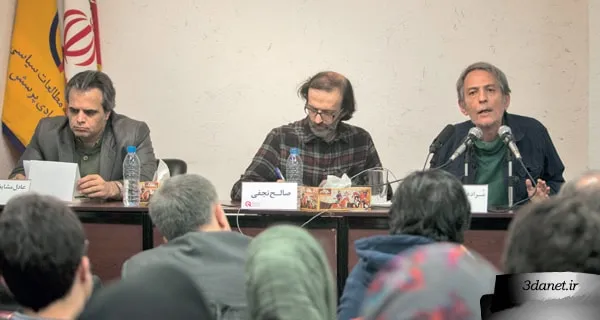
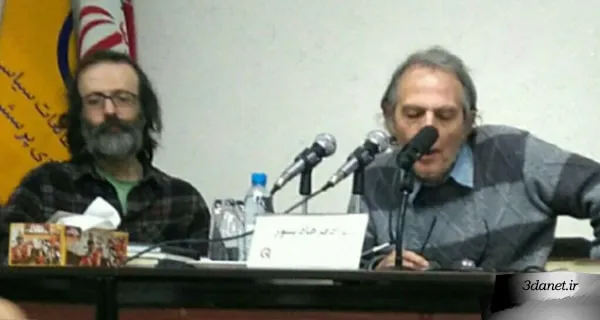
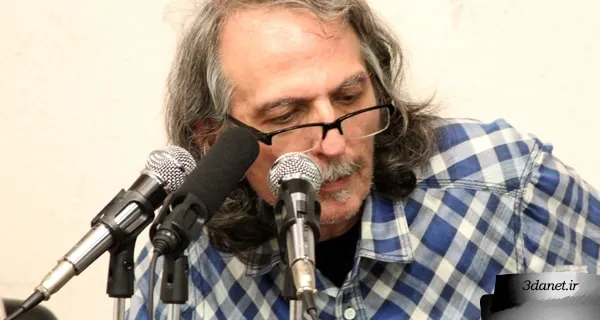
The relationship between philosophy and politics has always been and remains problematic, and denying it in any form or guise is merely self-deception and the deception of others. Since philosophy was established and taught as an academic discipline in Iranian universities about eighty years ago, philosophy departments have mostly been housed in faculties of literature, and the connection between philosophy and politics within them has been limited to one or two elective courses titled political philosophy or philosophy of social sciences, as if all efforts have been aimed at depoliticizing philosophy—an endeavor doomed to failure that has only resulted in sterilizing Iranian academic philosophy itself and its inability to connect with those interested in philosophy. In other words, one of the main reasons for the flourishing of philosophy and philosophizing outside the universities is the irrelevance of academic philosophical discussions to the fundamental questions that arise from social and political life, questions that our academic philosophy neither addresses nor has the capacity to confront. As a result of this very absence, if a researcher or scholar has addressed the pressing issues of society and politics in Iran, they have come from the fields of law, sociology, political science, economics, psychology, or history. Our university-trained philosophers have remained silent in this regard, contenting themselves with general and abstract, if not irrelevant, remarks. In this context, of course, figures such as Shahid Motahhari, Ahmad Fardid, Mostafa Malekian, Javad Tabatabai, Yousef Abazari, and others must be excepted, who were not indifferent to the issues of the day and politics and each reacted to this subject from their own perspective—a reaction that, of course, must be subject to critique and evaluation, while the fact that these figures were outsiders to philosophy departments in Iranian universities in various senses, whether in terms of their place of upbringing and education or in terms of their place of activity or the tolerance shown to them by the university, itself underscores the aforementioned affliction. It is necessary to note that taking the relationship between philosophy and politics seriously in no way means advocating for this or that political tendency or politicizing philosophy; rather, in the simplest (and therefore most superficial sense), it means philosophy addressing the fundamental issues of politics and society. The topic of the Thursday session of the Porsesh Institute for Political-Economic Studies was also dedicated to the discussion of the relationship between philosophy and politics. In this session, Morad Farhadpour lectured on philosophy and the truth of today's world, Adel Mashayekhi addressed the logic of moderation and the evasion of the real, and Saleh Najafi discussed the theme of the repetition of failure, the inverted memory of liberation. Given the large volume of material, especially Saleh Najafi's extensive discussion, we were compelled to content ourselves with excerpts from it.
Philosophy and the Truth of Today's World
Morad Farhadpour
Researcher and Translator of Philosophy
Philosophy has always dealt with the universal, and I am exploiting this aspect of it, making statements that may be generalizations with no room for proof. In my belief, the emergence of philosophy in Greece was not a matter of chance; of course, all universal matters and truths, despite being universal, always occur and begin in a particular, specific thing, and commence as a rupture and exception within the particular. Philosophy, too, although universal, has its specific beginning in ancient Greece, and as something that can perhaps be linked from the search for truths to the love of knowledge, it is connected to a duality in the atmosphere of that time. This duality, beyond the complex relationship between democracy and philosophy, encompassed all the phenomena of that era. This duality itself is nothing but a society in crisis confronted with critique, both sharing a single root; that is, a society caught at a crossroads: either a return to a form of absolute, foundational truth—a kind of fundamentalism based on the absolute mythological beliefs of that time, which could not be questioned and guaranteed the cohesion of society and the entire world (let us remember that one of the accusations against Socrates was corrupting public minds and insulting dogmatic beliefs). This was a line to which even the democrats who tried Socrates were ostensibly loyal. The opposite point is philosophy's battle with sophistry, that is, the battle with what can easily be called a kind of relativism that believes no truth exists, but rather there is only rhetoric or oration, similar to what today is called media, culture, language, and everything that intervenes in public opinion. A perspective in which the personal interests and tastes of the individual are equated with truth in its universal sense; this was the task of every sophist in its universal sense, meaning they taught individuals how to use the tools of rhetoric to advance their own interests at any given moment, and on this basis, practically adhere to no truth other than their personal benefit. It seems that in the atmosphere of that period, philosophy in practice, as a political act, could not open this third way, because we always see that when reality presents an individual with two paths, situated between bad and worse, only a change of the entire reality can open a third way. But as we saw, philosophy did not have this ability. This is evident both in the case of Plato and in the relationship between Alexander and Aristotle (Alexander's teacher). That is, we witness that the movement toward power and ideas like the philosopher-king did not allow reality to change and, consequently, a third way to be opened. Although theoretically, philosophy was at least able to open up criteria for truths and create a kind of possibility for transcending the choice between bad and worse. A choice that seems not only to have accompanied philosophy throughout history but has also become a prominent and central issue in the contemporary period today, a period that in some respects resembles that initial period of philosophy's own birth, and its accompaniment with a form of formal democracy coincidentally intensifies this resemblance. Trump, the combination of Bin Laden and Bush I have repeatedly emphasized that in the era we live in, the economic paradigm is neoliberalism, the political paradigm is security and the war on terror, and culturally, a kind of postmodern aesthetics prevails. As a result, this era confronts us with this crossroads, which I have tried to refer to with the duality of Bush and Bin Laden. Although when I raised this issue, I did not know that reality could be so rich as to combine Bush and Bin Laden together in the form of Trump or Putin and present them to us. I had not predicted this! This crossroads, in my opinion, is before us, in the form of various fundamentalisms and extremisms of identity, religion, nation, race, language, etc., which we encounter in different forms of nationalism or religious fundamentalism, and although it seems to be an exception in terms of the volume of its power, it is in principle this exception that makes the rule. That is why we see today that this very security paradigm, the fear of terrorism, and the war on terror are as determining as the Cold War and the struggle against the Evil Empire of the Soviet Union were 50 years ago. To see what philosophy should do in this era with this crossroads, and how its position can essentially be defined in connection with this situation, I will point to two points.
These two discussions also return to the examination of the logic of capital, as the strongest and most universal force shaping our world today. Naturally, the description and analysis that Marx provided of capitalism is the most complex, condensed, and, in my view, the truest examination of this logic itself, especially in the project of the critique of political economy, which, as a program and theoretical investigation, is historically more complex and important than even cases such as Einstein's general relativity or Newton's theory of universal gravitation. When we begin with Marx, we know that in his Manifesto we encounter a praise of capital as a creative, epoch-making force that advances based on competition and continuous revolution and possesses a magical power to shatter the old world and build a new, uniform world, the groundwork for which is communism. But in the preface to Capital, we encounter this strange idea that we are harmed not only by the progress of capital, but that the lack of progress of capital and the absence of capitalism is also a damaging problem. This point becomes clear when we examine the relationship between capitalism and pre-capitalist relations, and it is here that other logics, including the logic of the state, are raised. That is, there is a relation between the being and becoming of capitalism, and it is based on this relation that, even in Marxism, the discussion is not only about what capitalism is and how one can go beyond it, but also about how the transition to capitalism took place and what its origins were. These two, namely the past (the origin of capitalism and the transition to it) and the present (the nature of capitalism), are tied to one another, and the answer for the future must be sought in this entanglement of past and present. Under Marx's conceptualization of formal to real subsumption, we are faced with the situation where capital, as a global force, uses everything and not only creates its own specific contradictions, conflicts, and catastrophes—in such a way that its production of wealth is accompanied by the production of poverty—but also uses the contradictions, repressive institutions, ruptures, and catastrophes of the past for its own reproduction. This is something capital has easily done in reconciling times and institutions that have nothing to do with each other. We have repeatedly seen how capital has been able to preserve, re-affirm, and utilize even the most traditional and reactionary institutions alongside itself. This utilization is, in the first instance, in the form of formal subsumption, that is, using them for the production of exchange value and the realization of surplus value, but in the course of its movement, capital reaches a point where it now itself produces that which it found in past history and which were its own historical presuppositions. That is, those pre-capitalist elements are completely integrated into the logic of capital and become a component, or moment, of capital's own movement. In Hegelian terms, this is the positing of the presuppositions; the spirit to which Hegel refers produces the presuppositions of its own existence itself. It is here that capital takes on a circular form in the past and present. The past of capital is constructed by capital itself in the present. It is this very matter that gives capital its eternal and natural character. Because when you look at it in this circle, you think it has always been and always will be. That is, the mode of production that is the most revolutionary, history-making, and transformative, appears to be the most natural and eternal, precisely because of this kind of entanglement of past and present. It is here that we see the existence of capital can be as problematic as its absence. That it also burdens the present with the heavy weight of the dead and the dead labor of the past, not just the exploitation that takes place in the present moment. What is the solution? When we continue this logic, the question that first arises is: what is the solution? In the project of the critique of political economy, Marx can ultimately arrive at the point that we are facing a crisis; this circle, whether in the dimension of the present or in the use of elements belonging to the past, creates crisis and catastrophe. But capital in no way shows us how one can pass through this catastrophe.در یك بعدی میتوان عناصری از حیاتگرایی را در خود ماركس دید، از آن جا كه او سرمایه را نوعی تجسم نیروی خلاق میدیده، همراه با خیلیهای دیگر مثل اسپینوزا و نیچه تا دولوز و نگری و هارت و حتی شتابگرایان، از این بحث میكند این نیروی حیاتی بر موانعی كه خودش ساخته، به شكلی غلبه میكند و به شكل درون ماندگار پیش میرود. یعنی همانطور كه نگری و هارت مطرح كردهاند، با تغییر زاویه دید فرمال، سرمایهداری جهانی همان كمونیسمی میشود كه انتظار میرفت. اما ماركس در واقع هگلیتر از این تفاسیر است و سعی میكند كه اتفاقا از طریق یك نوع دیالكتیك تاریخی مبارزه طبقاتی به راهحلی برای این مساله برسد. همین جاست كه میتوان گفت مشكل اساسی مطرح میشود. زیرا دیدی كه ماركس مطرح میكند و بر اساس آن سرمایه باید كاملا به عنوان یك نیروی جهانی وو جهانیساز خوانده شود، نهایتا ما را به این سمت میبرد كه بر اساس منطق مبارزه طبقاتیاش از نوعی بورژوازی بینالمللی جهانی صحبت كنیم كه در متن یك بازار جهانی، رویاروی یك پرولتاریای جهانی ایستاده است و نبرد این دو باید به یك جایی برسد، یا نابودی هر دو طبقه یا پیروزی یكی. اما واقعیت است كه در هیچ جای دنیا و در هیچ دورهای سرمایهداری خودش را به این شكل جهانی نساخته است. یعنی ما یك ساختار چارچوب دولتی جهانی نداریم، سرمایهداری برای كار كردن به چارچوبهای فرهنگی، زبانی، حقوقی، اخلاقی، قضایی و... البته بازار ملی احتیاج دارد. اما هیچ كدام از اینها را در سطح جهانی نداریم. آنچه هست، در سطح جهانی منطق دولت و دولتهاست كه بر خلاف این جهانی شدن سرمایه، كاملا در جهت تكثر خود دولتها حركت میكند. این جا ناگزیرم با كلیگویی و پرش مفهومی این نكته را مطرح كنم كه آنچه ما به عنوان مدرنیته میبینیم، به اعتقاد من تعاملی است میان دو منطق جهانیساز سرمایه و منطق دولتها كه هیچ كدام از اینها را نمیتوان به یكدیگر تقلیل داد و اینكه ماركس نتوانست مجلدات آخر سرمایه را كه اتفاقا قرار بود به همین دو مفهوم بازار بینالمللی و دولت بپردازد، حضور این نقص را بارزتر میكند. یعنی آنچه ما مدرنیته میخوانیم، ناشی از تعامل یك منطق دیگر است كه مثل خود سرمایه این توانایی را دارد كه نیروهای مختلف مثل فرهنگ، زندگی روزمره، رسانهها و... را در یك كلیت گردهم آورد، یك كلیت ملی ناسیونالیستی نه یك كلیت جهانشمول. ناخوانایی مدرنیته و پست مدرنیته اینجاست كه میتوان به شكلی تفاوت این دو را بر اساس نه فقط تفاوت بین دو منطق دولت و سرمایه سنجید، بلكه جلوتر رفت و از آن بر اساس دورهبندی تاریخی به عنوان ناخوانایی میان مدرنیته و پستمدرنیته یاد كرد. اگر به تاریخ اطراف خودمان رجوع كنیم، این دوگانگی را در وضعیت اتحادیه اروپا و درگیری میان كلگرایی اقتصادی بروكسل با ناسیونالیسم متكثری كه دولتهای گوناگون اروپایی دنبال آن هستند و الان در قالب انواع پوپولیسم راستگرا در همه جا در حال ظهور است، میتوان دید، به صورتی كه اتفاقا جایی كه دیگر منطق دولت حضور ندارد تا از طریق تعامل با سرمایهداری چیزی به اسم مدرنیته را بسازد كه اصلا دیگر نمیشود صرفا بر اساس منطق حركت سرمایه آن را توضیح داد، بلكه میبینیم جایی كه قدرت دولتی وجود ندارد و آن سویه جهانیسازی و گلوبال سرمایه تاخت و تاز میكند، آن جاست كه میبینیم تنها نتیجهای كه حاصل میكند، این است كه یك پیشوند مابعد یا post را به مدرنیته اضافه كند و حركتش برای این جهانی شدن در خود همین باقی ماندن اصطلاح مدرنیته نشاندهنده ضعف این حركت است و نشاندهنده این است كه رویاهای جهانیساز سرمایه تحقق پیدا نكرده است و نمیكند. این امر را در بحران ٢٠٠٨ و بازگشت اكثر ملتها به پوپولیسم دیدم، یعنی اقتصادهایی مثل برزیل و تركیه و چین و روسیه كه قرار بود خیلی جهانی شوند، همه به حوزههایی بازگشتهاند كه در آنها با استبداد خاص روبهرو هستیم، مثل پوتین و اردوغان و... یعنی در همه جا این دولت است كه جلو آمده و جلوی جهانیسازی ایستاده و مانع آن شده است.بنابراین بحث نخست به ما نشان میدهد كه برای فهم جهان موجود كه در آن دوگانگی بوش و بنلادن مطرح میشود، باید بتوانیم هم منطق دولت و هم منطق سرمایه را بفهمیم و هم تركیب اینها در قالب مدرنیته را در یابیم و هم اتفاقا جایی كه سرمایه به تنهایی پیش رفته است و چیزی كه ساخته یك منطق فرهنگی و زیباشناسانه بوده است، نوعی رویه زیباییشناسانه كه به عنوان فرهنگ جهانی همه جا را فراگرفته و امروزه در قالب فرهنگ و هنر، نقش ایدئولوژی را بازی میكند، نه به عنوان امری كاذب بلكه به عنوان خود واقعیت. به همین علت است كه امروز به نظر من میتوان با استفاده از حرف قدیمی ماركس خیلی به راحتی این سخن را گفت كه در دوران ما هنر افیون تودههاست و چیزی جز این نیست و تمام تلاش سرمایه برای ساختن و جهانی كردن خودش، از طریق افیون هنر وفرهنگ جلو میرود. فرمولی برای سیاست رهایی بخش نداریم پیشتر این نكته را اضافه كنم كه ما هنوز فرمولی برای سیاست رهایی بخش نداریم كه یكی از دلایلش دقیقا این بوده كه نتوانستهایم هم منطق دولت و هم منطق سرمایه را مورد نقد قرار دهیم و در عمل علیهشان بجنگیم. واقعیت این است كه اگر فكر كنید میتوان یكی را جانشین دیگری كرد یا از تفاوت این دو (دولت و سرمایه) استفاده كرد یا به نوعی با یكی علیه دیگری ساخت، در هر مورد شكست خواهیم خورد. یعنی تسلیم شدن در مقابل یكی از این دو، به معنای شكست خوردن از هر دو برای هر چیزی كه مدعی ذرهای از رهایی بخشی و رادیكالیسم است. بنابراین آنچه در دوره معاصر تحت عنوان ستایش از دولت تحقق یافته، باید این شجاعت را داشته باشد كه نتیجه نهاییاش یعنی بروز فاشیسم و شبهفاشیسم را گردن بنهد و پشت حرفهای كلی هگل ماب راجع به ستایش از سلطنت و... پنهان نشوند. اما نكته دوم بحث من واقعیتر است و به نقش فلسفه و جستوجوی حقیقت حتی به همین شكل نظری در این دوران ما باز میگردد و بر اهمیت آن به مثابه تنها امید روزگار ما تاكید میكند. این به تجربه خودمان در دهه ٨٠ باز میگردد و به آنچه موج به اعتقاد من انباشت اولیه است، مربوط میشود. یعنی بر خلاف تصور سنتی این انباشت نه اولیه است و نه یكباره. بلكه از قضا بارها و بارها تكرار میشود و محتوایش نیز جز غارت و سلب مالكیت از عموم به یاری نیروهای ماورای اقتصادی و دولت است كه نظارت، نقد، خواست پاسخگویی یا هر شكلی از مقاومت در برابر آن را ناممكن میكنند. ما شاهد بروز گستردهترین موج انباشت اولیه در دهه ٨٠ بودیم و دیدیم كه این اقدام چگونه منحصر به عرصه اقتصاد نبود و عواقبش این بود كه اخلاق، سیاست، زندگی روزانه، فرهنگ و همه ابعاد زندگی اجتماعی پوك و تو خالی و همه ابعاد دچار فساد شد و به دملهای چركینی بدل شد كه از وضعیت محیطزیست تا بهداشت و دانشگاه و... را در بر میگیرد، با فسادهایی رقمهایش به قدری زیاد شده كه همه به راحتی از هزاران میلیارد دزدی سخن میگویند، یا یك پوسیدگی كه از قضا در شرایط فعلی هم ادامه پیدا كرده است. زیرا تا آنجا كه به اقتصاد بازمیگردد، همه دولتها نئولیبرال بودند و در تمامی آنها ایران به لحاظ اقتصادی ادغام شده در بازار جهانی بود و در همین پست مدرنیسمی كه نهایتا جز همان افیون هنر، میتواند فساد و گندیدگی ایجاد كند. این نشان میدهد كه چطور میشود به لحاظ اقتصادی در منطق سرمایه حل شد، هر چند به لحاظ منطق دولت با تضاد و درگیری روبهرو بود كه هیچ دلیلی نیست كه یكی از این دو را غیرواقعی بدانیم یا یكی را زیر دیگری پنهان كنیم. نكتهای كه قصد تاكید بر آن دارم، این است كه این وضعیت و آنچه تجربه كردیم، به هیچوجه استثنایی و خاص ما نیست. این یكی دیگر از تصورات كاذبی است كه از قضا برخی مخالفان سرمایهداری بر آن دامن زدهاند كه سرمایهداری عقبافتاده غیرعقلانی فاسد جهان سومی با سرمایهداری عقلانیتر و تمیز اروپا و غرب متفاوت است. حال آنكه در همه جا شاهد بروز بحران بودهایم. مگر ٢٠٠٨ در امریكا چگونه پایان یافت؟ مگر اینطور نبود كه دقیقا با پول مردم بانكها را نجات دادند و آقای اوباما اجازه نداد كه هیچ تغییری داده شود و همان روشها و سلب مالكیتها ادامه پیدا كرده است؟ این تنها بانكهای ما نیست كه معلوم نیست به چه كسی وام میدهند، بانكهای امریكا و اروپا نیز همگی ورشكستهاند. این را اقتصاددانان چپگرا نمیگویند، از اقتصاددانان دستراستی كه دلشان برای اندوختههای طبقه متوسط امریكا میسوزد، بپرسید كه چگونه قرض گرفتن از آینده و چاپ دلار كاری كرده كه تمام اقتصاد جهانی پوچ و تو خالی است.Forty years of neoliberalism and the claim that nothing but the issue of mere profit and making money has corrupted everything and everyone. Now you see that even German factories, famous for their orderliness, lie and, through manipulation and deceit in their engines, have tried to claim they comply with European Union environmental protection standards. In 2008 it became clear that all German banks had lied and manipulated interbank interest rates. Wherever you point a finger, filth and grime ooze out, and this is by no means an exception here. It is clear that some scenes of this crisis are closer to the Third World, how the impoverished Arab masses in the millions rise up against the parasites of the Gulf Council, and with the West's help, their revolutions come to the day we are now witnessing. We are witnessing the same situation in Africa with drought and the manipulation of creating various fundamentalist groups from below. We have crossed the threshold of catastrophe With the experience we ourselves have had, the global situation can be easily understood. As it happens, perhaps the historical irony is that the key to these two was struck together. It is the liberal economics of Reagan and Thatcher that has today reached the brink of complete putrefaction, where both the logic of capital and the logic of the state can only continue their work through lying. Today we witness America and Russia bombing hospitals in Syria and Yemen, and no protest occurs. The lying of great and small powers is evident to all. In such a situation, I think a politics capable of confronting both does not exist, and considering that something of the eleventh thesis still remains—that "philosophers have only interpreted the world; the point, however, is to change it"—I do not know how this change is possible, and I personally think we have crossed the threshold of catastrophe, not in the Hollywood sense that one day a strange and bizarre event will occur. In Benjamin's terms, catastrophe is precisely this existing state of affairs, and I think the catastrophe that is underway began forty years ago and may last until the end of this century. Within this catastrophe, it is also not the case that everyone is treated equally; probably the walls of technology and science will again allow a wealthy minority to continue their lives in this catastrophic space. Since no predictions can be made, and what lies ahead of us is not a third way through changing reality but a combination of bad and worse in the form of a quasi-fascist assemblage, I think in such a world, even the survival of a discourse that insists on truths as universal matters is not only useful but necessary. For this reason, philosophy, even though today it is perhaps a meaningless exception whose place is unclear even in humanities faculties, is present in the arena of historical and social reality as the search for universal truths, and its presence is necessary.The Repetition of Defeat: The Inverted Memory of Liberation
Saleh Najafi
Philosophy Researcher and Translator
My assumption is that politics is the paradoxical condition of philosophy. By philosophy, I mean it in its specific sense, that is, a word with a Greek lineage, a free and particular activity rooted in the soil of Greece, flourishing in that same soil, and later, western winds carried its seeds to other lands wherever the conditions for the emergence of that specific intellectual activity we know as philosophy were prepared. Based on this assumption, it must be said that if there were no such thing as Athenian democracy, we would not have anything called philosophy. That is, Athenian democracy is the condition for the emergence of philosophical activity, and philosophical activity also begins with the emergence of a form or genre known as the Socratic dialogues. However, this relationship is paradoxical, or contradictory, or counter-consensual, because Athenian democracy means freedom of expression for those who, under specific conditions and with the exclusion of certain groups, were considered citizens, and this is the condition for philosophy taking root. This implicitly signifies that those who express opinions in this democracy hold opinions that are equal and equivalent to one another. Whereas the beginning of philosophical activity means that opinions are not equivalent. If we accept this relation, that is, if we accept that the intellectual activity of philosophy begins with the separation of truth from doxa, then we must accept that philosophy, from the very beginning, starts by negating the political condition of its own emergence. That is, the first intellectual activity that critiques a form of statecraft we call direct Athenian democracy is philosophy itself, and philosophy negates its own condition of possibility (Athenian democracy) and pulls the rug out from under its own feet. In this sense, the beginning of philosophy is the start of a tense theater whose main theme is the relationship between politics and philosophy. That is, from the first great philosopher in the history of philosophy to the present day, we will constantly encounter this tension, its denial, engagement with it, or circumvention of it. To clarify the dimensions of this tension, I will point to two critical moments in the history of philosophy. The first act of this theater begins with Plato. The second act is dedicated to the twentieth century and the famous affair of Martin Heidegger's infamy. Plato and Politics We know that in his youth, Plato intended to become a tragedian or poet. Around the age of 20, he met Socrates, and biographers usually describe him as a tragedian who failed at writing tragedies and joined the circle of young men around Socrates. This association lasted seven or eight years, until Socrates was executed. The idea of compiling or creating the form known as the Socratic dialogues took shape in Plato's mind after the execution of Socrates and the condemnation of Socratic thought in the Athenian court. After that, Plato became the narrator of Socrates' relationship with Athens, something we call the beginning of philosophy in the specific sense of the word. After Socrates' death, there are journeys in Plato's life about which we lack precise information. But there is a journey that recurs in Plato's life, and the title of repeated failure in the current discussion comes from here. The most definitive information about Plato's travels concerns his journey to the islands of Sicily and southern Italy. The question is, what was his motive for these journeys? Historians of philosophy have some conjectures in this regard. The more certain probability is that he wanted to establish a political relationship with Dionysius I, the king of Syracuse. The idea that one could approach the center or locus of political power to reform a society and establish an ideal society apparently begins with this risk taken by Plato. Plato's stay at the court of Syracuse is tense. Because he practically becomes acquainted with the king's brother-in-law, who is interested in theoretical discussions, and this causes Dionysius I to put Plato on a ship and exile him. The ship takes Plato to the port of Aegina, and there Plato is arrested and put up for sale in the slave market. This is the fate of the first philosopher in the history of philosophy when he does not maintain the necessary safe distance from the center of power. On the island of Aegina, because they were at war with the Athenians, the custom was that any Athenian captured would either be sold as a slave or killed. It can be said that our luck was that Plato was not killed, and someone from Cyrene bought and freed him. In the year 367 BC, that is, when Plato was 60, Dionysius II succeeded Dionysius I in the region of Syracuse.
There, Dion, Plato's former friend, intervenes in politics, and this makes Plato feel once again that he can seize the opportunity. Dion tries to reform the state's situation there. This means inviting Plato as a philosophical advisor. Plato accepts the invitation in the hope of implementing the political ideal we later read about in the treatises. In 366 BC, Plato embarks on this journey, and this time a dispute arises between the king's advisors and Plato. Because Dion is pursuing a conspiracy and wants to sit on the throne of the king (Dionysius II), and Plato is his advisor. With the conspiracy exposed, Dion is exiled, and Plato becomes a prisoner of the king in the royal palace. This is Plato's second failure in approaching power to change it. In 365 BC, Plato is allowed to return to Athens. Five years later, Dionysius makes repeated requests to Plato to return here, saying I need you as an advisor. Dionysius stipulates that he will reconcile with Dion, who is also in exile, only when Plato accepts to advise him. Plato tries his luck for the third time. He goes to Syracuse and returns distressed this time as well, remaining in Athens for the rest of his life and dying there. But there are two accounts of Plato's death. One says he died during a wedding feast, and the second, according to Cicero, is that he apparently died while writing. The synthesis of these two is that Plato probably died at a banquet or symposium, ostensibly while writing, and this is the end of the first act of the relationship between philosophy and politics. Heidegger and Politics The second act takes place in the twentieth century, in the 1930s. On May 1, 1933, Martin Heidegger, a 44-year-old philosopher, joins the Nazi Party. This is perhaps the most scandalous act a philosopher commits in the twentieth century. Ten days later, he becomes rector of the University of Freiburg, and the famous speech on reforming the university's structure through the conservative revolution known by Heidegger's name is delivered during this rectorship. Heidegger's failure occurs very soon, that is, less than a year later, in April 1934, he resigns from the university rectorship and never attends a single Nazi Party meeting, but he remains a member of the party, as if he must carry this stigma with him to the end. We know that Heidegger's hope was for the so-called conservative revolution, and he is disappointed very quickly. Heidegger remains banned from teaching until 1951, and during this period, he is a thoroughly disgraced philosopher with an unsavory past. He never formally apologizes for his actions until the end of his life; we have only heard sentences from his private meetings where he said his rectorship or political activity was his greatest political folly, and there is also a famous sentence that Herbert Marcuse quoted from him: "Killing people in gas chambers is similar to the mechanization of agriculture or the calamity man has brought upon the earth." After the Heidegger affair, where we ultimately do not understand his motive for never apologizing, two official narratives are told about him: The first narrative tells us that Heidegger's mistake in dealing with the Nazis was similar to the mistake other philosophers have made in relation to politics, but the fundamental question is: what is the relationship between this specific decision and the intellectual system of that creative philosopher? We know that proponents of the so-called open or liberal society tell us that the first enemy of the open society is Plato himself, and this lineage can be traced to Hegel and Marx (who was also mistakenly influenced by Hegel), and this story is recounted with greater explicitness in Heidegger's case. Or it must be said that the thought of a creative thinker like Heidegger and Foucault has nothing to do with their political mistakes, meaning they should be introduced as creative thinkers who made these mistakes in their real lives, and this mistake has nothing to do with their thought, but it must be remembered that the discussion is about an intellectual activity for which one of its conditions is politics. But the second way is to say that this political activity is not only related to the intellectual system of these thinkers, but also reveals a fundamental flaw in the structure of that philosopher's thinking. That is, through this mistake, one can close the file on that philosopher or thinker and their intellectual system. Futile Efforts The discussion of the repetition of failure goes back to Slavoj Žižek's idea in the book In Defense of Lost Causes in 2008. Žižek, in this book which is literally translated as “In Defense of Lost Causes,” but whose idiomatic and precise translation is “In Defense of Futile Efforts or Unfinished Business,” engages with Heidegger’s action and says that the actions of Heidegger and Foucault are instances of a movement through which the aforementioned dilemma regarding the relationship between politics and Heidegger, and fundamentally the relationship between politics and any other thinker, might be resolved. Žižek says that in these specific moments of intervention in politics, the mentioned thinkers take the right steps in the wrong direction. If someone takes a right step in the wrong direction, then the task of those who follow or even narrate that path becomes different. The right step cannot be ignored, while the wrong path also cannot be denied. The more radical examples in this matter are, of course, a challenge. We know that Robespierre’s revolutionary terror, or Mao’s Cultural Revolution, or the Bolshevik movement are struggles whose actual or objective consequence has been terror or historical defeat. These historical defeats cannot be denied, but the point is that the bloodbath that ensues, and from which all historical narratives try to begin, is meant to conceal something. What is concealed is a valuable core of idealism or political idealism in the sense of utopianism, and the official narrative, namely politics based on liberal-democratic consensus, practically functions to prevent that core from being seen or, in our terms, from being redeemed. In Žižek’s view, in confronting the crises that have occurred since 2008, even at the ecological level, one must return to futile efforts (lost causes), that is, ideals that have failed in terms of their actual consequences, which, if you revive them, certainly entail risk, but which must certainly be revived, such as revolutionary terror and the dictatorship of the proletariat. If we wish to refer back to the two earlier acts in the history of philosophy in light of what has been said, it must be said that the mistaken move Heidegger made, or the right step Žižek claims he took, belongs to the category of tragedy. That is, we must establish that Heidegger’s move was tragic, but the very act of saying this is problematic. I will try to show in what sense this move is tragic. If someone’s effort is to bring the structure of a revolutionary act to the fore, and in the process of bringing it to the fore, to invert, distort, or deform it, then after that event occurs, with the catastrophes that follow that act, what is fundamentally concealed is the original structure, that is, the structure that refers back to the revolutionary act. Being tragic means that Heidegger, precisely at the point that became the greatest lapse of his life, was closer to the truth than ever. When we highlight this perspective, we see that Heidegger’s main writings, that is, the writings that are close to that revolutionary structure, were written precisely in the late 1920s and early to mid-1930s. What must be done with Heidegger is to repeat him. But repeating requires a rereading of the philosophical concept of repetition, parts of which I will try to unpack, but the main goal is to recover the lost aspect or potential of Heidegger’s thought, because that right step was taken in the wrong direction. Conservatism and Revolution In the late 1930s, Heidegger makes statements in which he, firstly, clarifies the relationship between conservatism and revolution from the perspective of someone who is among the founders of the conservative revolution, and secondly, revives the philosophical concept of repetition. In these years, that is, before the start of the Second World War, Heidegger writes: “That which is conservative gets stuck in the swamp of historiography, and only that which is revolutionary reaches the depths of history. By revolution I do not mean subversion, nor destruction, but rather a form of uprising whose goal is to recreate matters that seem customary or habitual to us.” He then explains: “Our goal is to renew the structure of the beginning, that is, what is original and relates to the origin, because it belongs to the beginning. You set as your task the renewal of the structure of the beginning, but renewing the structure of the beginning does not mean a shallow imitation of the past. The attempt to renew the structure of the beginning means bringing to appearance something that is exactly the past and at the same time something other than the past.» یعنی شما اینجا از امر نویی سخن میگویید كه با تكرار چیزی در گذشته پیوند دارد. این حلقه گمشده تفكر انتقادی است، یعنی خطی كه از آگامبن تا ژیژك را در بر میگیرد، مجموعه متفكران شاید ناهمگونی كه آقای فرهادپور در این سالها معرفی كرد. نكته این است كه هایدگر در لحظه عجیبی این حرفها را میزند كه همزمان با تزهای فلسفه تاریخ بنیامین بیان میشود. این تزها نیز در اواخر دهه ١٩٣٠ نوشته شدند. در تزهای والتر بنیامین میخوانیم كه «انقلاب اكتبر تكرار انقلاب فرانسه است، برای جبران شكست انقلاب فرانسه. » به این معنا كه وقتی انقلاب فرانسه شكست میخورد، تكانه خلاقی كه آن انقلاب را به راه انداخته و الان زیر خاك رفته و مدفون شده را باید كشف و احیا كرد. تكرار تكانه خلاقه انقلاب شكست خورده، شرط بازیابی آن پتانسیل مدفون شده آن انقلاب و جبران آن شكست است. تكرار به روایت كی یركگور این تلقی از تكرار از متفكرانی كه ما ظاهرا به آنها نظریه پردازان انقلاب یا تدوینكنندگان نظریههای سازماندهی نیامده است، بلكه از متفكری آمده كه تقریبا هیچ ارتباط مستقیمی با انقلاب به مفهوم سیاسی و اجتماعی آن ندارد، یعنی سورن كی یركگور دانماركی. كی یركگور به ما میگوید كه تكرار مفهومی است كه عصر جدید به آن نیاز دارد. او در رسالهای كه در سال ١٨٤٣ منتشر میكند، میگوید تاكنون تاریخ فلسفه دو مفهوم اساسی به ما تقدیم كرده است: نخست مفهوم «انامنسیس» یا recollection است یعنی «تذكار» یا «به یاد آوردن» و دوم Aufhebung هگلی به معنای «ترفیع» یا «ارتفاع» است. كی یركگور میگوید عصر جدید به مفهوم سومی نیز نیاز دارد كه به یك تعبیر سنتز دو مفهوم قبلی است، او این مفهوم را «تكرار» میخواند و از آن تعریف عجیبی ارایه میكند: تكرار همان تذكار یا به یادآوردن اما در جهت معكوس است. یعنی كسانی كه چیزی را تكرار میكنند، دارند چیزی را به سمت جلو به یاد میآورند یعنی تجدید خاطرهای از آینده میكنند. كی یركگور در رساله تكرار نشان میدهد كه تولید یك امر نو، در گرو تكرار است و تكرار به معنای بازتولید امری قدیمیتر نیست. او این بحث را تا جایی بسط میدهد كه به نتیجه فلسفی باورنكردنی میرسیم: تكرار تنها یكی از روشها یا شكلهای ظهور یا تولید امر نو نیست بلكه امر نو فقط و فقط از طریق تكرار اده میشود. دولوز و تكرار بحث از تكرار دستاورد اصلی فلسفه كی یركگور است و برای امروزی كردن آن نیازمند نام بردن و اشاره به متفكرانی است كه حول محور تكرار شكل میگیرند. یكی از این متفكران كه از قضا او را از ضد دیالكتیكی متفكران قرن بیستم میخوانند، ژیل دولوز است و تاكید میكنم كه از طریق هسته كی یركگوری فلسفه دولوز میشود وجه انقلابی آن را نشان داد. مساله این است كه دستاورد اصلی فلسفه دولوز به نظر من تمایز میان virtual و actual است كه هنوز نمیتوان به دقت آنها را ترجمه كرد (شاید بتوان آنها را به ترتیب امر مجازی و امر واقعی ترجمه كرد). اگر به مجلد پایانی رمان در جستوجوی زمان از دست رفته مارسل پروست مراجعه كنید، به تعریف شگفتانگیزی از خاطره بر میخوریم كه در آن وجه سیاسی خاطره روشن میشود و آن را از خاطره بازی و فیتیشسازی از گذشته متمایز میكند. در این جلد رمان، پروست میگوید خاطره یا لحظهای از گذشته داریم كه رئال (واقعی) است، اما اكتوال نیست، ایدهآل است، اما آبستراكت (انتزاعی) نیست. صورتبندی پروست كاملا فلسفی است و به كمك آنری برگسون وارد تاریخ فلسفه قرن بیستم میشود و دولوز آن را در كتاب برگسونیسم بسط میدهد. وقتی پروست میگوید كه خاطرهای داریم كه واقعی است اما اكتوال نیست، واقعی (رئال) در تقابل با ممكن قرار میگیرد و امر اكتوال (بالفعل) در تقابل با virtual قرار میگیرد. اینجا مفهوم فلسفی virtual شكل میگیرد. امر ویرچوال چیزی است كه واقعی است، اما بالفعل نیست، ایدهآل است، اما انتزاعی نیست. تكرار شكست اگر شما متفكری را تكرار نكنید، تكراری كه كییركگور از آن صحبت میكند یعنی فقط او را نقد یا سعی كنید راههای فكری او را به جاهای دیگر بكشانید یا حتی خیلی رادیكال، آن را سر و ته كنید، هر كاری كه انجام دهید، نادانسته یا ناخواسته درون افق آن متفكر میمانید. راه برگذشتن از افق فكری یك متفكر این است كه درون میدان مفهومهای متفكر به او خیانت یا او را تكرار كنید، یعنی از طریق تكرار هسته خلاقه او. این داستان تكرار در فلسفه است ما برای آن قرینه سیاسی میخواهیم. قرینه سیاسی آن را در برخورد ماركس با انقلاب فرانسه میتوان دوباره بازگو كرد. Marx used to say that all those who become involved in revolutionary processes have a day that is their day of revolutionary passion and ecstasy; the next day, that intoxication leaves them and only the hangover remains, and the result is that on the morning after the revolution, you must begin to think about what results we have achieved after the revolution. The actual result of the sublime explosion of revolutionary passion becomes what was the actual outcome of the event brought about by the French Revolution, namely the advent of liberty, fraternity, and equality, a world whose foundation is the circulation of commodities in the market, that is, a world that revolves around profit-seeking, selfishness, and individualism, and the result is a miserable one. Marx told us that from the perspective of those who are watching the theaters of revolution, the truth of the passionate theater of revolution for liberal spectators is the same banal reality of consumption and commerce. So if other societies have reached this reality of consumption and commerce without revolution, one could say that the best thing is to avoid revolution as much as you can. In the explosion of revolution, a utopian aspect always occurs or manifests itself, which we call the space of universal emancipation, which is the result of that revolutionary intoxication. Certainly, when the intoxication leaves the revolutionaries, they say to themselves, how clumsy or always anarchy! One must become rational again and return to the same reasonable structures, and precisely this utopian aspect, or the aspect that relates to universal emancipation, is the surplus that the market betrays. That is, the reality that prevails the day after the event. The point is that this surplus is by no means abolished, it does not easily disappear, and it is not even forgotten. The real way to free oneself from the trauma of the past is not to remember it but to repeat it completely. When you completely repeat the trauma of the past, then you understand that you are reviewing the inverted memory of emancipation. That is, this event will be oriented toward your future. Samuel Beckett's famous rule is that after every failure, you have only one task: you must fail again, and this time better and more beautifully than before..
.
PDF file of the Thursday Questions session: “Philosophy and Politics”
.
.
Philosophy and Politics, with lectures by Morad Farhadpour, Adel Mashayekhi, and Saleh Najafi
Philosophy is the only hope of the world today
The world has crossed the threshold of catastrophe
Report source: Etemad newspaper | 20 Azar 1395 (Mohsen Azmoudeh - Atefeh Shams)
.
.

Discussion0 comments
No comments yet; let yours be the first voice.