Philosophy
A Talk by Mostafa Malekian on “Philosophical Projectiles”
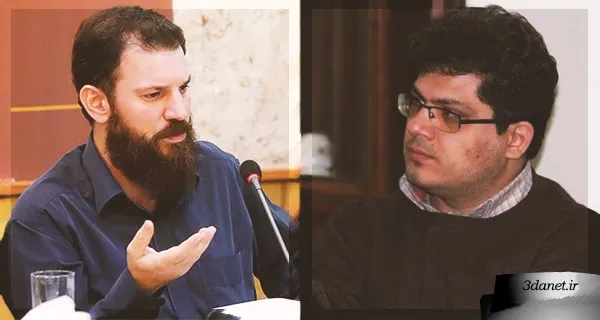
Mostafa Malekian considers Mohammad Mehdi Ardabili's book Philosophical Throws an outstanding example of the essay genre, in which the author expresses not only his beliefs but also his feelings and desires. At the meeting, he discussed the characteristics of the essay and the importance of honesty in stating assumptions and of concision.
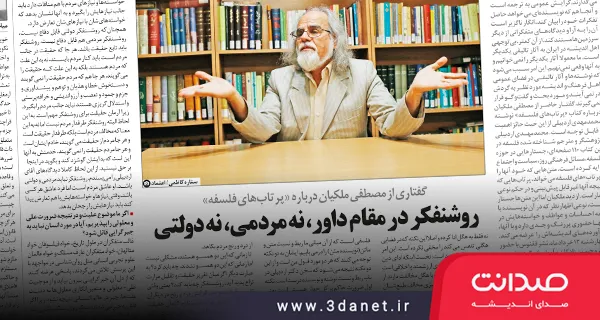
A Talk by Mostafa Malekian on “Philosophical Projectiles”
The Intellectual as Arbiter: Neither of the People, Nor of the State
Mohsen Azmoudeh
Authoring and writing down views and opinions is not a very common practice among intellectuals and academics in the humanities in Iran, and only a few figures dare to write and share their thoughts with audiences. The general tendency is toward translation, and even when an author wishes to express the fruits of their own reflections, they seem compelled to anchor them in the views and opinions of thinkers from other lands. Even rarer is the attention paid by thinkers in Iran to one another’s authored works. We usually do not read each other’s works and do not take them seriously. This means that authored writings and works do not circulate within the public sphere of the cultured and thoughtful, and are not discussed or debated. The present talk by Mostafa Malekian on the book “Philosophical Projectiles” by Mohammad Mehdi Ardebili is significant and noteworthy in this regard. Mohammad Mehdi Ardebili, a well-known philosophy researcher and translator, has presented, in this 110-page book, essays in the fields of philosophy, contemporary cultural issues, politics, and society—texts he himself calls “projectiles” of philosophy, projectiles whose outcomes are unpredictable and akin to a kind of gamble. From Malekian’s perspective, however, these texts are essays, a type of commentary in which the author is present with all their feelings, emotions, and desires in a vivid and serious way, and through them, offers the products of their thought. On Wednesday, June 1st, Qoqnoos Publishing, with Zohreh Hosseinzadegan and Arian Shabgard in attendance, held a meeting on the occasion of the reprinting of the book Philosophical Projectiles. In this meeting, Mostafa Malekian, while pointing to the importance of the book Philosophical Projectiles, expressed his views on the concept of the intellectual and, at the end, raised a discussion about determinism. What you read is an account of the questions and answers that were raised in this meeting.
First, please tell us why the book is important?
In the cultural and philosophical sphere of our country, Mohammad Mehdi Ardebili’s book Philosophical Projectiles is considered an important book. This book can be placed in the genre of the “essay,” that is, in continuation of a tradition whose lineage can be traced back to Michel de Montaigne, the famous sixteenth-century French philosopher. My understanding, from Montaigne’s time onward, is that a piece of writing that has three characteristics is what I call an essay:
1- Every author, by writing in any field of knowledge—be it philosophy, the natural empirical sciences, the human empirical sciences, historical sciences, mystical sciences, etc.—in the form of an article, treatise, book, or..., and every speaker in any field of knowledge, in the form of teaching, lecturing, dialogue, or..., expresses their own conception of the universe or a part of it. But their claim is that their conception of the universe or a part of it also corresponds to reality. In the essay, the author emphasizes that they consider their writing to be a “conception” of the real world. In other words, all writings and speeches are the author’s and speaker’s conception of the real world, but we imagine that in non-essayistic writings, this conception is a conception of the real world that corresponds to it, whereas in the essay, the author themselves emphasizes that they are only expressing their conception of the real world and make no claim beyond that. In this sense, the essay is the most humble type of writing, and indeed the most realistic type of writing. The greatest aspect of its realism is that it emphasizes: I know I am expressing my conception of the real world, and I make no claim beyond a conception.
2- In essays, not only are the author's beliefs expressed, but alongside beliefs, their feelings, emotions, will, aims, desires, ideals, and norms are also expressed. Whereas in other, non-essayistic forms of writing, it is assumed that authors express only their beliefs—that is, they present to us only their doxastic-epistemic dimension; but in the essay, the second (feelings) and third (desires) dimensions of human existence are also expressed entirely in parallel, intertwined and interwoven with beliefs. 3- In non-essayistic writings, the author is expected not merely to express the product of their thought, but also to express the process of arriving at that thought—that is, to state by what reasons and why they have reached the conclusion that, for example, "A is B," and by what reason or reasons they reject the opposing view. In other words, in non-essayistic writing, the author is expected to present their arguments. In the essay, only the product of the author's thought is presented, and what corridors they have traversed, what ups and downs they have passed through, what rejections and acceptances they have made, are not expressed. The book "Philosophical Projectiles" possesses all three of the above characteristics; therefore, it must be said that it is written in the essay genre.
Apart from the book being written in the essay genre, what are the other reasons for its importance?
The first importance of this book lies in the fact that, within the essay genre, it is vastly superior to other works previously written in this genre, and in this respect, it is not at all comparable to them. Another reason for the book's importance is that Dr. Ardabili in it not only acknowledges his debt to Hegel but does not at all conceal the fact that he breathes in a Hegelian atmosphere. This is valuable for two reasons: first, acknowledging a debt and expressing indebtedness is a valuable and ethical act; and second, readers who disagree with Hegel will know from the outset that they will not find anything contrary to their disposition in this book and will know that they must enter a Hegelian space to derive greater benefit from it. In other words, the reader knows that the author in this book holds Hegelian presuppositions. Not concealing one's presuppositions is an important matter. The third reason for the book's importance is its epistemological, metaphysical, and axiological positions, which, in my view, are not only acceptable but are also expressed well and effectively. Of course, not much argument is offered in their favor, but they are instilled in a believable manner. The fourth reason for the book's importance is its conciseness and brevity. Unfortunately, authored books in Iran usually suffer from prolixity and verbosity. If Dr. Ardabili had wanted to be verbose, this book could have been a thousand pages, but Dr. Ardabili has expressed the matter with utmost brevity—yet not a brevity that is detrimental—and has been mindful that this book is read by a reader for whom such prolixities are not at all beneficial but would certainly be tedious. He has appreciated the value of lines and has truly not spoken excessively.
Do you agree that the further we go, the more comprehensible the book's content becomes?
For me to make abstract statements so that the audience knows what space I am in, and then to arrive at concrete statements, is a defensible method. But the issue is that the present book presupposes a series of pieces of knowledge for the reader—that is, even where it speaks about food or historical matters, it is not the case that one can use it without any philosophical background. However, relatively speaking, the closer we get from the beginning of the book to its end, the more comprehensible and accessible it becomes, which I think is also the right thing to do.
Is the author of the book Dr. Ardabili, or, in the role of the philosopher as Hegel said, is it this era that is expressed through Ardabili, and could this be a prelude for others to make similar efforts?
I will answer in three parts; first, concerning the philosophical foundations from which we understand the relation and connection between the text and the author (the writer of the text). He draws attention to two points, both of which I accept, and from these two points it follows that Dr. Ardabili's statement regarding the relation and connection between the writing and the writer is correct. The first point is the necessity that governs the entire universe, meaning the universe is a universe of necessity, and we imagine that the universe is one of possibilities. Everything is necessary; what has happened had to happen, what is happening must happen, and what will happen in the future must happen. But we imagine that what has happened could have happened otherwise, and so on... The second point present in Hegel's thought, which Dr. Ardabili affirms, is that we are a part that, in one sense, is nothing, and in another sense, the whole exists within us in a fused and encapsulated form. Hegel is completely influenced by Spinoza on this point. In other words, for a book to come into being, for example, the entire universe has joined hands.
The second point relates to the term "projectile" in the book's title. What the author means by the term "projectile" is that the fate of a writing, after its composition, is no longer in anyone's control, not even the author's. Therefore, it is true that the author, to some extent, determines "what do I write?", "for whom do I write?", "why do I write?", and "how do I write?", but this extent is limited, and beyond that, it is not under his control. It is existence that determines who the audience of the writing will be. But beyond that, when the writing reaches people, not everyone reads it; of those who read it, not everyone understands it; of those who understand it, not everyone accepts it; and of those who accept it, not everyone adheres to it throughout their lives. These four stages are very important, so the notion of being projected is entirely correct.
The third point is that the universe has given the author what it has given him freely, and the author had no prior merit. Just as what it has not given him was not preceded by any prior lack of merit. Therefore, the author cannot attribute the book solely to himself.
About 21 years ago, I wrote an article with this title: "The Declaration of Truth and the Reduction of Suffering: The Tragic Aspects of Intellectual Life." That article can be read as my life's manifesto. From that time until now, I have constantly been the subject of reproach, opposition, and protest from other friends, intellectuals, and some political activists. About a month ago, I also had a conversation on this matter with my esteemed teacher and dear friend, Dr. Soroush. In the year 1379 [2000/2001], I made this point that the intellectual has two duties towards the global community or towards his own society: one is to share the "truth" he has received, meaning what he believes to be the "truth," with his fellow human beings. If an intellectual receives something from existence and it seems to him that this is the truth, he should share it with his fellow human beings. This task is the declaration of truth. The second task is the reduction of suffering, meaning alleviating the pain and suffering of the people. The intellectual must, as much as he can, reduce the pain and suffering of the people, even if only by a small amount.
As long as these two are aligned, there is no problem, but when they are not aligned, what should be done? In other words, if a conflict arises between the declaration of truth and the reduction of suffering, what should the intellectual do? That is, when declaring the truth leads to an increase in the pain and suffering of others, or reducing suffering necessitates concealing the truth, what should he do? To express my view in the aforementioned article, I went through three stages. First, I presented the arguments of both groups, meaning the arguments of those who advocate for the priority of declaring truth and the arguments of those who advocate for the priority of reducing suffering, and I concluded that, in my view, the arguments of both groups are of equal weight, and neither group can drive the other from the field, and the arguments of both are equally weak or strong, and consequently, through philosophical reasoning, neither of the two positions can be driven from the field in favor of the other. In the second stage, I wrote that since we cannot prefer one over the other through deductive method and philosophical reasoning, we must refer to our own intuition and see which one should be preferred over the other. Where philosophical reasoning is absent, we have no choice but to refer to our own intuition. In the third and final stage, I wrote that my personal intuition says that the declaration of truth takes precedence over the reduction of suffering. We must speak the truth, even if the suffering of the people increases.
Of course, I believe that if we speak a truth somewhere and people’s pain and suffering increase, there are, on the other hand, ways to reconcile and help people come to terms with that bitter truth, and we can also place those ways at the disposal of our fellow human beings and say: this is the truth, and it is bitter—in my view, almost every truth is bitter. A representative should not be the spokesperson of the people and should not say that whatever the people say is correct and whatever position they take is right. I wrote in the aforementioned article that the intellectual must also be a judge of the people, meaning they must tell the people, for instance, that they are not in the right here. This does not mean defending the ruling political regime; rather, their point is that here, because the people have gone astray culturally, the fruit of their politics has become so rotten, corrupt, poisonous, and harmful. Politics and the political regime are the fruit of a society’s tree of culture. If the tree of a society’s culture is unhealthy, the fruit of its politics will also be rotten, corrupt, poisonous, and venomous. Therefore, the intellectual should not consider themselves the spokesperson of the people but rather their judge. Wherever the people are in the right, they should say you are in the right, and wherever the people are not in the right, they should frankly and promptly say you are not in the right. The intellectual is not the people’s lawyer; they are the people’s judge. Where the people’s wants and needs conflict, they must side with their needs and show them that their wants conflict with their needs.
Just as a state intellectual is indefensible, a populist intellectual is also indefensible. The intellectual must be a follower of truth. Wherever truth is on the side of the people, they must stand with the people, not because they are the people, but because they speak the truth; and wherever the people do not speak the truth and are prey to error, delirium, delusion, prejudice, dogmatism, rigidity, bias, wishful thinking, superstition, and the evasion of reasoning, they must not side with the people. Because the ideal of truth is important to the intellectual. In this sense, of course, the intellectual is not a supporter of the people, but not in the sense that they are against the people; rather, they are a supporter of truth, and wherever the people speak the truth, they are their servant, and wherever the people do not speak the truth, their service to them is to admonish them and tell them that here
you are not in the right. In this respect, I fully endorse Mr. Ardabili’s views. The intellectual should not be populist or statist. They are a lover of the people, but whoever one loves, when their needs and wants come into conflict, one must give preference to their needs.
If we accept the subject of causality and, consequently, causal necessity, must we not then subscribe to determinism regarding human beings?
Most thinkers throughout history, whether philosophers, theologians, mystically inclined thinkers, or scholars of the human empirical sciences such as psychology, in confronting this question, have tried to offer an answer from which determinism does not emerge, and from which causal necessitation and the determination of effects by causes does not result in determinism in the human world, because if they subscribed to determinism, nothing would be built. I, as it happens, subscribe to determinism; therefore, I believe you must either deny the principle of causality or acquiesce to determinism in the human world. But the determinism to which I subscribe is Spinozistic determinism, which also exists in Hegel, to the small extent that I am familiar with him. I subscribe to Spinozistic determinism, but Spinozistic determinism suspends neither ethics, nor education, nor law, and consequently nor legal punishment and reward. The reason for my acceptance of Spinozistic determinism is that I subscribe to the determination of the effect by the cause, meaning the non-deviation of the effect from the cause, and, in short, the necessity of the principle of causality, and I do not deny that, in my view, all efforts made to reconcile human freedom with causal necessity have been unsuccessful. Therefore, accepting the principle of causality means accepting Spinozistic determinism. I emphasize that none of the corrupt consequences usually enumerated for determinism apply to Spinozistic determinism, and this (Spinozistic) determinism keeps us fully committed to ethics, education, law, and the punishments resulting from non-compliance with the law.
A detailed discussion requires another occasion, and here I will merely state my view briefly. First, one must distinguish between action, will, desire, and the desire to desire. Whether each of these four is deterministic or not differs from the others. My discussion, of course, concerns action, but what I say also holds true for the other three (will, desire, and the desire to desire). When we say an agent's act occurred deterministically, it means that, for example, a hundred factors must come together for this act to take place, and if these hundred factors do come together, this act occurs deterministically. But if even one of these hundred is absent, there is no determinism in the occurrence of this act. The moral advice of the agent's teachers and parents are also among these factors. Therefore, upbringing is effective in the occurrence of an act; likewise, legal rules are also effective in the occurrence of an act. To explain, I will use the example of Gandhi. When a scorpion stings a person, this stinging is a requirement of nature, and it did not do so out of anger, malice, or will. But this does not mean we should not prevent it from repeating this act. This also holds true for human beings. Therefore, I believe the determinism that Spinoza espoused does not suspend ethics, education, law, or legal punishment; yet, philosophically, it is defensible because it accepts causal necessity. Unless we do not accept causal necessity, or we do what Kant did, which, in my opinion, is unsuccessful. Kant said, as if this causal necessity does not exist in the realm of the spirit and exists in matter and material things. He believed there is a kind of freedom in the spirit. In my view, this path is entirely unsuccessful.
In closing, I recommend reading the book Philosophical Projectiles, because I think it contains many thought-provoking points. It is a book that makes one think. Of course, we may not agree with what the author has proposed, just as I disagree with Mr. Ardabili on some points, but at the same time, I consider it thought-provoking. In the sense that it makes the reader think and reflect, and asks them how they think about these subjects. Thought-provoking books are valuable, and this book is, in all fairness, one of those works I have read in recent years.
Since the time of Montaigne, I have called a piece of writing that has three characteristics an essay: 1- In an essay, the author emphasizes that they are only expressing their own perception of the real world and make no claim beyond that. 2- In essays, not only the author's beliefs are expressed, but alongside the beliefs, their feelings, emotions, will, goals, desires, ideals, and norms are also expressed. 3- In an essay, only the product of the author's thought is presented, and what corridors they have passed through, what ups and downs they have traversed, what rejections and acceptances they have made, are not expressed.
I adhere to Spinozist determinism, but Spinozist determinism suspends neither ethics, nor education, nor law, and consequently, neither legal punishment nor reward. My reason for accepting Spinozist determinism is the acceptance of the principle of causality. None of the corrupt consequences usually enumerated for determinism apply to Spinozist determinism, and this (Spinozist) determinism keeps us fully committed to ethics, education, law, and the punishments resulting from non-compliance with the law.
.
.
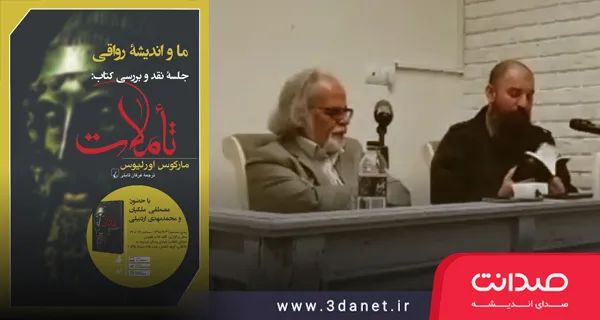
A Conversation with Mostafa Malekian on the Book Philosophical Projectiles by Mohammad Mehdi Ardabili
Hosts: Zohreh Hosseinzadegan and Arian Shabgard
Organized by Qoqnoos Publishing
Session Date: June 2, 2021
Source of the report as text: Mohsen Azmoudeh / Published in Etemad Newspaper No. 4945 - Monday, June 7, 2021 / Telegram channel Zamane-ye Barkhord
PDF file of the report as text
Watch the video on YouTube | Aparat
Download the audio via direct link | on Telegram
.
.


Discussion2 comments
با سلام جناب استاد ملکیان عزیز ، به نظر من این سخن جناب دکتر اردبیلی ، که روشنفکر در مقام داور ،، نه مردمی است و نه دولتی ، در شرایط حال حاضر ایران امکان پذیر نیست . گرچه من سخن جناب دکتر اردبیلی را کاملا منطقی و عقلانی می دانم و با سخن ایشان همدل هستم . چرا که عملکرد برخی از روشنفکران حال حاضر در انتخابات ریاست جمهوری گذشته نشان داد که روشنفکر ایرانی" مردمی نیست" ولی" دولتی است" . حمایت از دولتی که این دولت نه تنها دولت( تدبیر و امید) نبود ، بلکه دولت بی تدبیری و ناامیدی بود . حال پرسش این است ، که همه اساتید که از دولت آقای روحانی در دو دوره حمایت کردند ، چرا این اساتید محترم فلسفه ، که همیشه ندای عقل سر می دهند و مخالف تعبدورزی و تقلید هستند ،، در مقابل اشتباهات دولتِ گذشته سکوت کردند ؟! چرا همین اساتید به آقای روحانی ، اشتباهات دولتش را گوشزد نکردند؟ چرا همگی به نوعی در بهت و سکوت فرو رفتند؟ چرا در حوادث آبان ۹۸ در حالیکه خود آقای روحانی در خواب تشریف داشتند و جوان ها در کف خیابان ها پّرپّر می شدند، بیانه ایی صادر نکردند؟ و همچنین در مشکلات تورم و گرانی ها ، برخی از روشنفکران مهر سکوت بر لب نشاندند ؟ البته سکوت نیز نوعی کنش اجتماعی محسوب می شود، ولی از آنجائیکه جنابعالی در مقاله " تقریر حقیقت و تقلیل مرارت " بیان فرمودید : که روشنفکر نسبت به جامعه جهانی یا نسبت به جامعه خودش دو وظیفه دارد : یکی اینکه حقیقتی را که دریافت کرده ، یعنی آنچه را به گمانش(حقیقت) است با همنوعان خودش در میان بگذارد ،، این کار (تقریر حقیقت) است . حال پرسش من این است ؟ این همه حقیقتی که روشنفکر در طی ۸ سال گذشته دولت آقای روحانی دریافت کرده بود چرا قابلِ تقریر نبود ؟! چرا بسیاری از روشنفکران ، حتی به خودشان زحمت ندادند که بیانه ایی در رد حمایت از اشتباهات دولت آقای روحانی صادر کنند ؟ حتی به خودشان زحمت ندادند که از مردم یک عذرخواهی ساده کنند؟ به نظر من یکی از نقاط ضعف روشنفکری در ایران ، عدم یک عذرخواهی ساده از مردمی است که به سخنانِ روشنفکران خود اعتماد می کنند . جناب استاد ملکیان، من بر خلاف جنابعالی (حقیقت) را تلخ نمی دانم . به نظرم حقیقت از هر شیرینی ، شیرین تر است . شیرینی حقیقت به این است که هنگامیکه که آشکار می گردد ، تمام تخیلات و توهمات را به کناری می زند و خودش را عیان می کند . (حقیقت ) خودش آشکار کننده خودش است و شیرینی اش به همین دلیل است که خودش ، خودش را به ظهور می رساند . این “حقیقت” نیست که تلخ است , بلکه “حقیقت” خودش آینه ایی شفاف و روشن است که بازتاب کننده تلخی ها و شیرینی هاست. اینکه یک روشنفکر به زعم خودش( تقریر حقیقت) می کند شاید در نظرش تلخ باشد ولی هنگامیکه ،، حقیقت خودش ، خودش را آشکار کند ، شیرین نمایان می شود..
با سلام شنیدم که استاد ملکیان وارد بازی های سیاسی شده و کاندایی برای ریاست جمهوری معرفی کرده اند بنظرم شان ایشان اجل از اینگونه کارهاست چه خوب هست در زمینه علوم انسانی کام مشتاقان را سیراب فرمایند