Religion
Mostafa Malekian's Lecture on The Cloud of Unknowing
Mostafa Malekian considers reading mystical works, without necessarily accepting their theoretical foundations, essential for an ethical and psychologically sound life. The book The Cloud of Unknowing, a work of Christian practical mysticism, focuses on 'meditation' and the distinction between spiritual striving and contemplation.
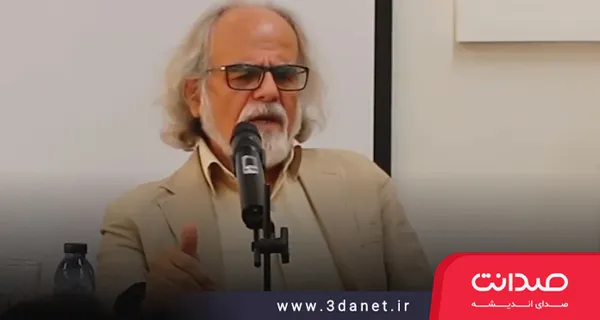
Mostafa Malekian's Lecture on The Cloud of Unknowing
From Striving to Witnessing
Mohsen Azmoudeh: Mysticism, mystical thought, and the mystical life, across various religions and traditions, have always called toward a single truth, inner peace, and psychological purification, and in this respect, in times of hardship, it is a method for confronting calamities and difficulties. In the mid-fourteenth century, at a time of the Church's dominance, war, social discrimination, and the spread of the deadly plague, a Christian mystic, in a series of letters to a friend, spoke of the clouds of unknowing and forgetting, and called upon disciples to contemplation. The result of these letters was a book titled The Cloud of Unknowing, which has recently been published by Phoenix Publications in a translation by Saba Sabeti. This book has been translated into various languages, and many commentators and experts have written about it. On Thursday, July 6th, Mostafa Malekian, the renowned scholar of philosophy and ethics, delivered a lecture on this book, a report of which follows. With this explanation that what is said about the characteristics of mysticism and mystical thought and our contemporary mode of encountering them pertains to all mystical traditions in various religions and traditions, and certainly, regarding how this encounter should be, there are different views and opinions.
*********
Those who have made progress in universal mysticism, especially in practice, from his perspective, have shunned fame and public attention. Therefore, it is not so surprising that the author of the book "The Cloud of Unknowing," who was probably one of the high-ranking Christian monks, did not allow anyone to discover his identity as the author, and still, after 600 years, it is not known who the author of this book and six other books is.
What is the need to read mystical works?
But at the beginning of the twenty-first century, in the modern era, or in the postmodern era as some would say, what is the need to read mystical works? The first answer is that although the majority of us are familiar with and more or less accustomed to modern and postmodern ideas, there are still people in the world who agree with all the theoretical foundations of mysticism and can read mystical books because they are mystical books, and derive the same enjoyment that readers in past centuries did. But the second, more important answer is that even if you do not accept the theoretical foundations of mystical books, that is, even if you do not accept the existence of God or do not believe in divine union, or, in the translator's terms, unification with God and annihilation in God and subsistence through God, much of what is in mystical works is good for achieving six purposes, that is, for attaining a good life—meaning an ethical life—and a happy life—meaning a life that, psychologically, is accompanied by the least possible pain and suffering, a life in which we have moral health and in which we can endure more pain and suffering and inflict less pain and suffering. From this perspective, I firmly believe that all those active in psychology, psychotherapy, and even psychiatry, and those active in the political and social reform of a society, and all the intellectuals of society must use this rich mystical treasure, at least for the second purpose (attaining a happy life). The two present books, published in a single volume, even if we do not accept any of the theoretical foundations of mysticism, including their most fundamental assumption, can help in achieving one or more of the six aforementioned goals. Therefore, despite much opposition, I consciously emphasize that we always need to read mystical works, because these books are not only for those who want to attain divine union, annihilation in God and subsistence through God, or Nirvana, or other expressions found in different mystical traditions, but they are also beneficial for those who want to be good and happy.
In the Realm of Christian Practical Mysticism
The book The Cloud of Unknowing is a work in the field of Christian mysticism, but it deals more with practical Christian mysticism. The theoretical complexities of the mystics are not reflected in this book. In this respect, it is more similar to Rumi's Masnavi-ye Ma'navi than to Ibn Arabi's Fusus al-Hikam or Al-Futuhat al-Makkiyya. Simply put, a person benefits more from Rumi's book than from Ibn Arabi's Fusus, because in the Fusus the discussions are purely theoretical, whereas in the Masnavi, the individual does not necessarily intend to become a mystic, but rather, for example, wants not to be envious and to be humble. Therefore, in this book, the practical aspect prevails and dominates over the theoretical aspect. Of course, even within practical mysticism, the book's emphasis is on the concept of "contemplation," and it deals less with other aspects of practical mysticism. "Contemplation" holds a central place in practical mysticism, whether in the practical mysticism of Eastern religions like Buddhism and Taoism. The book begins with the statement that this book is a treatise on contemplation.
Jesus (PBUH) at the Home of Martha and Mary
In the Gospel of Luke, there is a story about this: one day Jesus (PBUH) entered a village, and a woman named Martha, who lived with her sister Mary, invited him to a meal. Jesus (PBUH) accepted their invitation and went to their home. Mary sat beside Jesus (PBUH) and simply fixed her eyes on his movements and gestures and listened to his words. But Martha busied herself with cleaning the house, cooking, serving the guest, and the duties of hospitality. When Martha grew tired, she said to Jesus (PBUH), tell my sister Mary to help me with the hosting. Jesus (PBUH) replied that Mary's work is superior to your (Martha's) work. We take this story into the context of Christianity. Firstly, in the context of Christianity, Jesus (PBUH) is not a prophet, but God the Son or the Son of God, meaning he is one of the three divine hypostases, meaning he is God who has taken on a human manifestation. Therefore, these two sisters, Martha and Mary, are in the service of God, and neither deviated from serving him, yet at the same time, one (Martha) turned towards activity and serves Jesus (PBUH), and the other (Mary) merely gazes upon him and beholds Jesus (PBUH) in word and deed. Jesus (PBUH) also prefers the latter. From this time onward, in the mysticisms of the three Western religions, this concept emerged that those who want to reach God have two paths: the path of action or deed (action), or in our mystical literature, striving, and contemplation, or in our mystical literature, witnessing. The active mystic, like Martha, is a person of striving, and Mary is a person of witnessing. Of course, both pursue the path to God and want to be in God's service.
The People of Contemplation or the People of Witnessing
There are those who are not at all obedient to God, who are people of rebellion, transgression, and sin, and have no intention of following or obeying God. These are usually called sinners. But those who are obedient are of two kinds: one kind obeys God while maintaining their social life, meaning their entire goal in this social life is to reach God; these are the people of striving and are active. The second kind, however, suspends social life and goes to a monastery, convent, ashram, cave, or grove, completely distancing themselves from their social life, and ultimately form a community among themselves. For example, monastics also live together. That is, in order to reach God, they turn their backs entirely on the requirements of social life and ultimately live in the community of their friends and fellow wayfarers. The first group are people of activity or striving, and the second group are people of contemplation or witnessing, meaning they suspend everything and want to reach God through concentration, firstly on the existence of God and secondly on the presence of God. The life associated with the second kind is called a life of contemplation.
One meaning of contemplation is a method or lifestyle, the wayfaring lifestyle of those who want to deviate from social life. This book is also written for those who have suspended the active life and moved towards a contemplative life. But contemplation in the book also has a second meaning, and that is a specific practice that these same individuals perform. This specific practice can be defined in various ways. One definition is this: contemplation means reflection on spiritual and transcendental matters. The book is about contemplation in both senses, meaning it explains both that lifestyle and that specific practice which is the very essence of that lifestyle.
The Very Essence of Mysticism
If we wish to use mystical books in general, and this book in particular, to become more ethical, or for the six purposes mentioned above, we must do several things; otherwise, we will find an emotional barrier between ourselves and the book's content. First, we should disregard anything in these books that pertains to magical beliefs and thinking. Second, we should eliminate whatever relates to mythological beliefs and thinking. Our modern understanding does not accept these myths. Do not imagine that if these eliminations are carried out, nothing will remain in the end. They contain so many points that it is worthwhile for a person to spend a lifetime on five of these books. Third, disregard whatever is said in these books about the founder of that religion or creed. Such as the world being created for the founder of this religion, and that if this founder had not existed, God would not have created the universe, or that this founder committed no error in his life, or was not influenced by the culture of his time, etc. The followers of every religion and creed attribute these characteristics to the founders of their own religion and creed, but this is not compatible with realism. Incidentally, these founders are highly respectable human beings, but one of the signs of true respect for them is to say that they reached this point while being human, with all the ordinary characteristics of a human being. This is the greatest respect. The fourth point is that we must disregard what is said about the authenticity of sacred texts. These are matters we fabricate for ourselves. The cause is a group narcissism that exists within us humans, requiring that everything within our group must be without flaw. The fifth point is that anything related to the sciences and knowledge of that time, which the subsequent evolutions of human sciences and knowledge have shown to be erroneous, must be eliminated. For example, whatever in these works is influenced by the astronomy, cosmology, geography, and medicine of that time must be eliminated. When these items are removed, we go for the very quintessence of that perspective. Unless you are someone who, while living in the twenty-first century, can accept all those statements, which I find strange. But generally, for an ideal life, we must do these things. If these five types of sifting are carried out, these books can be very useful.
Why Observation Instead of Meditation
But why is the contemplative life preferred over the active life? Most mystics say it is because a human being seeks liberation on one hand and perfection on the other. For liberation, the active life alone suffices, but liberation is a negative matter, and we may desire perfection in addition to liberation. They believe that one can attain perfection only when one turns to the life of the people of observation, or the contemplative life. Whenever I want to perceive something well, I must turn my back on everything other than it. Attention, meaning turning towards, is always accompanied by billions of aversions (turning away). In the mystics' view, if an individual wants to reach only God, and only union with Him, the divine union, is necessary for him, he must turn his back on everything else, even if all other things are, in the expression of Islamic mystics, sanā'i' Allāh, meaning God's handiworks and creations. In this perspective, the individual must pay attention only to God Himself and not to anything else, because if he does not do so, he has not observed the etiquette of love. Only under this condition do we attain perfection beyond liberation, deliverance, and salvation. The people of meditation and observation attain perfection, but the people of striving attain only deliverance, liberation, salvation, prosperity, and freedom. Liberation is a negative matter, meaning salvation from perdition, but perfection is a positive matter.
For Whom Is Meditation?
On the other hand, contemplation is not for all human beings. God wants activity from all human beings, but He does not want contemplation or observation from all. How can we know from whom God has asked contemplation and observation? In two places in the book, the author provides three signs for those who can be people of observation, and indeed should be so. Therefore, God does not command anyone to be a person of contemplation; rather, the individual must see whether they possess this threefold state or states within themselves. If they do, they must abandon social life and become a person of contemplation: 1. They observe morality and are not entangled in lies, deceit, hypocrisy, trickery, cunning, arrogance, betrayal of trust, breaking promises, and unfairness. 2. Even when all material and spiritual needs are met, they still feel a thirst. That is, they are satiated in material matters such as wealth, fame, power, respect, reputation, popularity, and discursive knowledge, and in spiritual matters such as joy, hopefulness, reconciliation with oneself, equilibrium with the environment, existential integration, and meaningfulness. The second sign of a person who must turn to contemplation is that, despite all this, they still have something lost and turn wholly toward God. 3. When they see or hear how people of contemplation live, a longing arises within them, they weep at the memory of them, and a wistfulness arises within them. A person who has these three characteristics, even if they remain in social life until the end of their life, will be dissatisfied with themselves and must move toward contemplation. Otherwise, that is, in the absence of these three characteristics, they are only a person of striving and are not hell-bound. In this regard, the saying of Jesus (peace be upon him) gains importance when he says: "Many are called to my Father's house, but few find their way into it." That is, all are invited to obey God, but those who find their way into the house, that is, the people of contemplation, are few.
The Cloud of Unknowing, the Cloud of Forgetting
Turning one's back on everything has been described in a particular way by the author of this book and, three centuries after him, by the Spanish Christian mystic John of the Cross (San Juan de la Cruz, 1542–1591), who was influenced by the author of The Cloud of Unknowing. What does this turning away mean? The author uses the metaphor of the "cloud." He says there are many things we should not know, but we do know, and there are higher things we should know, but we do not know. Therefore, firstly, our duty is to consign what we should not know to the cloud of forgetting, and secondly, our duty is to know the matters that are in the cloud of unknowing. The author of The Cloud of Unknowing and later John of the Cross, following him, say that we are faced with two clouds: 1. The Cloud of Forgetting: a cloud that we ourselves must cast over the knowledge that is of no benefit to us and is, in fact, a hindrance and an annoyance. This cloud is only good for two things: one is satisfying our curiosity, and the other is for boasting and engendering vanity within us. The author of the book condemns both. In Buddhist literature, this state is called liberation from knowingness. 2. The Cloud of Unknowing: a cloud that prevents us from knowing what we should know about God. Therefore, the relationship between these two clouds is such that the thicker the cloud of forgetting becomes, the thinner and more diaphanous the cloud of unknowing becomes, and vice versa. That is, the denser the cloud of forgetting becomes, the thinner and more diaphanous the cloud of unknowing becomes regarding transcendental matters and what benefits the human being and brings about spiritual transformation, until gradually it is as if one sees God through a gauze curtain. Of course, as Saint Paul also said, ultimately we see God through a veil (albeit a very thin one).
What is the benefit of contemplation?
اما اگر انسان در این راه موفق نشد، چه باید كرد؟ یعنی اگر فردی زندگی اجتماعی خود را تعطیل كرد و به صومعهای رفت و مثلا كوشید شبیه فرانسوای آسیزی شود، اما چنین نشد، وضعیت به چه طریق میشود؟ به این سوال یك جواب الهیاتی و یك جواب روانشناختی ارایه میشود. یا به تعبیری یك جواب دینی و یك جواب ناسوتی یا سكیولار. جواب دینی این است كه محال است خدا خلف وعده كند. او گفته هر كه مرا بخواهد، من او را میخواهم. اصلا قبل از اینكه او مرا بخواهد، من او را خواسته بودم. بنابراین امكان ندارد كه خدا وعده خودش را خلاف كند. تعبیر مشابهش در ادبیات عرفان اسلامی چنین است: «من كان لله، كان الله له» (هر كه از آن خدا شد، خدا یكسره از آن او خواهد شد). اما جواب ناسوتی یا سكیولار چیست؟ این پاسخ این است كه فردی كه دنبال این امور است، به آرامشی دست پیدا میكند كه كسانی كه دنبال مطلوبات مادی بودند، به آن نرسیدهاند و همواره ملولند و از زندگی خستهاند. او به مطلوبات معنوی میرسد كه فردی كه همواره به دنبال مطلوبات مادی بوده، به آنها نمیرسد.
فضایل عرفانی
At the beginning of the talk, I said that even if we do not accept the metaphysical foundations of mystical works, they are still beneficial. Of course, these books should not be read like a newspaper; rather, they must be read constantly and repeatedly. In the words of that German mystic, instead of reading a thousand books, read one book a thousand times. In my opinion, the book *The Cloud of Unknowing* has an astonishing exposition of several moral virtues, and the reader truly intuits that it speaks the truth, and that if a person possesses this trait, their situation is more orderly than its opposite, its contrary, or in any case, its counterpart. These virtues are: 1. Gratitude toward existence, though the author speaks of gratitude toward God. 2. Hopefulness. 3. Humility. 4. Living in the present, a life of the here and now. 5. Perseverance in one's ideal and not deviating from goals or ideals, something sometimes referred to as patience and steadfastness. 6. Doing what one can and leaving the rest to existence, which in mystical terms is called trust (*tawakkul*). 7. Disregard for the praise and blame of others, meaning inattention to the value judgments others make about me. I must fulfill my moral duty toward everyone, but what that person infers from my moral duty is of no importance whatsoever, whether they praise or blame. For example, I am obliged to behave humbly with others. When I do so, one person might infer that my ancestors were servants and I am the child of a servant! But another might say how obsequious I am, a third might say how charming I am! A fourth might say perhaps I have ulterior motives! All these inferences exist and have nothing to do with me. If I have discerned that my moral duty is humility, I must do so. The praise of others should also not make me happy. 8. Not judging others. I must hate lying, but not the liar. That is, if I see someone oppressing the wronged, I defend the wronged, but I do not judge the oppressor. I can take a moral stance on the actions of others, including their behavior, speech, and even body language, but I must not judge the others themselves. I should hate wrongful speech and deeds, not the person who commits them. Precisely because I love that person, I say, 'I wish they had not done that,' for such a person has harmed themselves before anyone else. 9. Self-knowledge. The more self-aware I become, the more I grow and the humbler I become, because I better recognize my own weaknesses and find motivation to reform myself. A person who does not know themselves, firstly, develops vanity and pride, and secondly, does not move toward improvement. In Rumi's words, the illusion of perfection is the sole obstacle to perfection. 10. Forgiveness. A person must forgive all human beings, including themselves, and not constantly dwell on the past of others. 11. Love for one's fellow human, which is higher than compassion for one's fellow human. Love for one's fellow human means loving your fellow human as much as you love yourself. In compassion, a person bestows a portion of their own rights upon others, but does not love them as much as themselves. In other words, behavior toward others has three stages: first, treating others with justice, meaning respecting the rights of the other; second, compassion, where a person bestows a portion of their own right upon another; and third, love, where a person considers the other as one with themselves. In love, I regard the other as myself. 12. Self-restraint. Our desires are infinite; we are not meant to pursue all desires. We must show self-denial and be self-restrained, pursuing two out of every thousand desires. Moreover, most desires, when fulfilled, are to my detriment. 13. We must not be hard on ourselves. Even in the most spiritual matters, one should not burden oneself with something beyond one's capacity. 14. We should not form attachments, but we should love. The difference between love and attachment is a discussion I have raised elsewhere. In closing, I would like to emphasize that they have both chosen a good book to translate in *The Cloud of Unknowing*, and they have translated this good book well; their translation is, in fairness, very good. In this world where appreciation and gratitude toward beings have diminished, it is essential to be grateful to someone who translates such a book.
.
.
Source of the written report: Etemad Newspaper / No. 5254 / 1401 Wednesday, 22 Tir
Watch the lecture video on YouTube
Download the lecture audio
.
.



Discussion1 comments
در ادیان قبلی تاکید بر قیام بالقسط (بهره مندی همگانی) کمتر است ، بسادگی بجهت کم بودن جمعیت و سادگی ابزار...بیشتر به باور به قیامت امر میشده است و افراد برای مواجه نشدن با عذاب الهی به انفاق نیز توصیه میشده اند...نابودی مستکبران و اسرافکاران و غیر مومنین آن جوامع بیشتر با نیروی عوامل الهی انجام میشده است و البته همراهی مومنین... با رسیدن به اوایل دورانی که انسانها در کنار تولید ابزار قدرت و کشتار بیشتر در جنگ ها ، با درک قوانین بهداشت و طب میتوانند جمعیت زیاد داشته باشند اسلام ظهور میکند و استقرار پیدا میکند.... بعنوان دین پایانی بر قیام بالقسط توسط خود مومنین و رضایت اجتماعی تاکید بسیار میکند (مبادا کسانی یا جوامعی فراموش شوند)... يَا أَيُّهَا الَّذِينَ آمَنُوا لَا تَأْكُلُوا أَمْوَالَكُمْ بَيْنَكُمْ بِالْبَاطِلِ إِلَّا أَنْ تَكُونَ تِجَارَةً عَنْ تَرَاضٍ مِنْكُمْ وَلَا تَقْتُلُوا أَنْفُسَكُمْ إِنَّ اللَّهَ كَانَ بِكُمْ رَحِيمًا ﴿۲۹﴾ حال پیروان ادیان قبلی یا هر قوم و قبیله دیگر ، به این اقامه قسط تن بدهند و مخالفت نکنند میتوانند بر آداب خویش باشند و امید تزکیه برای آنها هم هست....والا باید با آنها مبارزه بی امان کرد....اجازه رشد ناپاکان نباید داده میشد و بشود....عدم مبارزه با ناپاکان و اسرافکاران ، امکان پاک زیستن را از همه میگیرد... این به گوش ارباب ثروت و ستایندگان رقابت (رقابت هایی که خود در آن پیروزند) و ... سنگین می آید... حقوق بشر و دموکراسی و تکثر گرایی و... بهانه است.... با سفارش ایشان ، میخواهند آخرین دین هم تحریف یشود....این بار کتاب دین را نمی توانند تحریف کنند سازمان های عریض و طویل برای تفاسیر سفارشی تاسیس ، و با طبل و نقاره در اذهان جاسازی میشود... وَقَالَ الَّذِينَ كَفَرُوا لَا تَسْمَعُوا لِهَذَا الْقُرْآنِ وَالْغَوْا فِيهِ لَعَلَّكُمْ تَغْلِبُونَ ﴿۲۶﴾ فصلت میخواهند از تعالیم تحریف شده ادیان قبلی که خشونت و قتال کمتری دارند و اهلی و "عرفانی" شده اند ، استفاده کنند...قیام بالقسط برای این دوران از زندگی انسانها ضروری بوده و هست والا فساد از در و دیوار جوامع بالا خواهد رفت ، محیط زیست نابود خواهد شد و....