Philosophy
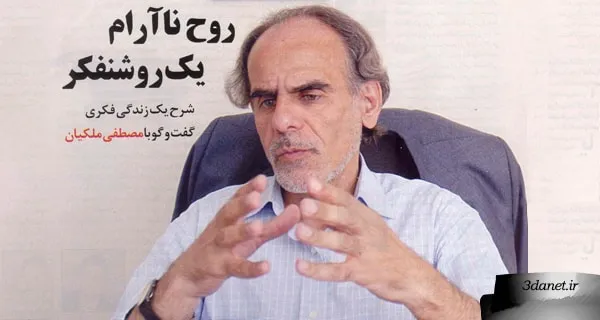
A Conversation with Mostafa Malekian on Consumerism, Class Divide, and the Emotional Divide
Mostafa Malekian sees consumerism as a destructive phenomenon that leads to self-alienation. He also believes that class division creates an even more sinister phenomenon called the 'affective gap,' for which he proposes ethical remedies.
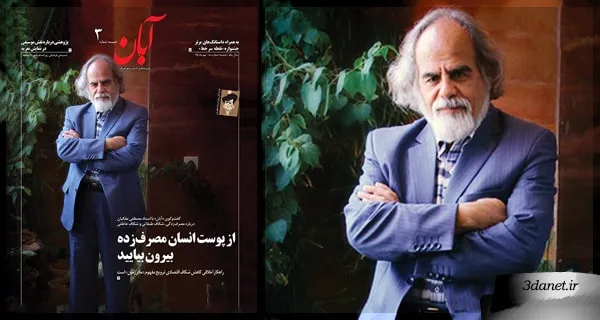
Ehsan Akbarpour: Consumerism and the class divide are no longer a myth nor something hidden; they are evident, visible, and plain to see. What is perhaps still thought-provoking, however, is the "fever" of consumerism and the "acceleration" of the class divide. But how has consumerism become a part of daily life and a universal habit? What are the causes, factors, and consequences of consumerism, and how can one avoid being a member of a "consumer society"? Furthermore, is there an ethical solution to counter the economic divide? A divide that, according to Mostafa Malekian, has given rise to a more sinister phenomenon called the "emotional divide."
Perhaps this awareness of moral intuition can be better gained from the perspective of a professor of ethics. So we take Mostafa Malekian's presence in Shiraz as a good omen and participate in the two-day workshop by the professor of ethics. A workshop on the "Virtue of Simplicity," organized by the "Soroush-e Mowlana" Cultural and Artistic Institute. In this workshop, Malekian elaborates on his world of thought regarding the virtues of simplicity and repeatedly points to the conflict between consumerism and simplicity. So, on the sidelines of the workshop, we propose a conversation about consumerism to the author of "A Way to Liberation," and Malekian cheerfully agrees to the proposal. The next day, we become guests of Mostafa Malekian and his Shirazi host, and we begin the conversation with the causes and consequences of consumerism. He pauses briefly at first, and then, in his usual calm tone, begins to speak about consumerism. The author of "Longing and Abandonment" first calls consumerism a "devastating" and "dangerous" phenomenon and enumerates four reasons for its prevalence. He then addresses three devastations of consumerism, including "hard-heartedness towards fellow human beings." According to the author of "Enduring Kindness," the devastating consequences of consumerism, although psychological phenomena, have "sociological consequences." But what consequences will consumerism bring for the consumerist person? Is the consumerist person a self-alienated person? The ethics professor's answer to this question is "entirely" positive: "I truly believe that if consumerism becomes part of a person's personality and character, it creates a kind of absolute self-alienation, that is, pervasive and boundless, in all of their judgments. Every judgment of a consumerist person is as if it is an assessment made in a bank, a stock exchange room, or a currency exchange center, and all of their judgments take on this aspect." Apart from consumerism, however, social systems today are also facing another phenomenon, and that is the increasing class divide. A divide that, according to Mostafa Malekian, has in recent years in our country led to the creation of "a more sinister phenomenon called the emotional divide." Now, is there an ethical solution to reduce the class divide and the emotional divide? The author of "The Meaning of Life"'s answer to this question is three solutions; so that "at least the sinister and ill-omened economic and class divide does not create an emotional and psychological divide." According to Malekian, these ethical solutions can prevent the creation of envy, malice, and hatred from the lower class towards the wealthy class of society. But do the wealthy and governments not have a duty to reduce the class divide? The ethics professor's answer to this question is positive, and in the final part of the conversation, he enumerates these solutions, which "are not meant to be merely ethical recommendations." Read the detailed conversation of "Aban" with Professor Mostafa Malekian below.
A Conversation with Mostafa Malekian on Consumerism, Class Divide, and the Emotional Divide
Step out of the skin of the consumerist person.
Based on officially announced statistics, "the food and clothing expenses of the tenth decile of Iranian society are 8 times, and their total expenses are 14 times the expenditure of the first decile of society," and "more than half of Iran's population consumes more than they need." Now, considering the place and virtue of simplicity in your system of thought, as well as the conflict between simplicity and consumerism, what do you think are the ethical and then social reasons for and consequences of consumerism in our society?
I will first address the most important causes of consumerism and its prevalence as a social phenomenon (which is, of course, a destructive and dangerous phenomenon as well). In my view, four causes (each on its own or a combination of several of them) lead to the prevalence of the phenomenon of consumerism, both globally and domestically within our country. The first cause is that if I, as a human being, find no value in my life other than the pursuit of pleasure—unbridled pleasure-seeking, not the measured Epicurean pursuit of pleasure—and imagine that no aspect of life is worth living unless one seeks as much pleasure as possible, this will naturally drive me toward consumerism. In other words, the first factor in the prevalence of consumerism is the unbridled pleasure-seeking of the sort associated with Antisthenes in ancient Greece, not the measured pleasure-seeking of Epicurus; for pleasure-seeking in the Antisthenian account will itself lead to consumerism.
The second cause of consumerism is the lack of a proper evaluation of one's lifetime. If I do not know what a tremendous capital my life and time are, placed at my disposal, and do not know what an unparalleled and incomparable gift called a lifetime has been bestowed upon me, then I have no qualms about giving up my life and receiving money in return. And when I have given up my life and received money in return, that is, I have developed a kind of careerism and job-obsession. Now, with the income from this career and job (which has swallowed up my entire life), I must do something, and what better activity comes to mind than consumption? When I place no value on my lifetime, if you propose that I sell you every hour of my life, I will not imagine that I am at a loss in such a transaction. So I am willing to give all my life to others in exchange for money, and when I obtain money this way, I must buy goods with this money, and this is, in fact, the meaning of consumerism stemming from job-obsession.
The third cause of consumerism, however, is keeping up with the Joneses. If I constantly see myself, theoretically, comparing myself to you and, practically, in a race with you, and think that, for example, your house is bigger than mine, and because I see myself as a competitor in this race, I must go and buy a house bigger than yours, a car better than yours, and so on. This means that I am drawn toward consumerism, solely so as not to fall behind in the race with you and my other peers. In other words, many times, if a person is left to their own devices, they do not intend to buy so many goods and be consumerist. But when they compare themselves to others, they have no choice but to move toward consumerism in order not to fall behind in this race.
The fourth cause of consumerism is that when social relations are structured in such a way that they block the path to creativity and participation in collective activities for a person, then that person is confined to something that does not require collective participation; and the only thing that does not require collective participation is consumerism. If I live in a society where the ruling political system has left all kinds of collective participation open to me, then, depending on my personality and character, I will engage in these various forms of social participation and find satisfaction through this. Now, each person may pursue a different path—one may go into philosophy, another into economics, education, charitable work, and so on—because here, all kinds of paths for collective participation are open. But when you have a totalitarian political system where, wherever you turn, you hit a wall or a dead end and can have no creativity or participation anywhere, you retreat back into your own home. And at home, the only thing at your disposal is to seek more enjoyment and pleasure.
For this reason, in totalitarian societies, if people have the financial means, they are more consumerist than individuals in non-totalitarian societies. If a society is both totalitarian and poor, this happens less often, but if a society is totalitarian and wealthy, like China today, individuals will be more consumerist. Because the paths to creativity are closed to the wealthy of that society, they retreat into their familial shell, and within this shell, they will have nothing to do but seek more enjoyment and pleasure. Therefore, I see these four factors as very influential in consumerism. But what does this mean?
This means that if these four factors are the causes of consumerism, and we consider consumerism to be a destructive phenomenon, then to prevent this destructive phenomenon, we must address these four factors and reduce their strength, intensity, severity, and solidity. Because the more the strength and power of these four factors diminish, the more consumerism will decrease. But now let us turn to your question: if these four factors are the causes of consumerism, is consumerism itself a destructive phenomenon? And if so, what are its consequences? Undoubtedly, due to its negative effects and outcomes, consumerism is a destructive phenomenon and must be combated as much as possible. Of course, combating it means combating its four causes, not anything else. If these four causes remain in place, any struggle against consumerism will be reduced to mere regulations and sloganeering, and will have no effect.
But what does the destructiveness of consumerism consist of? I believe consumerism has three major destructive effects. One is that consumerism strips life of its existential philosophy. We came to live so that through it, we might attain something more valuable than life itself. We came to make living a prelude to reaching something more important than living; but with consumerism, we remain preoccupied with living itself and can never transcend or elevate ourselves to something higher than living. To put it another way, Pasteur lived, but through his few decades of life, he saved millions of lives; that is, he attained something greater than life. All of us can become Pasteur, because we are all potentially Pasteur. But for this potential to become actual, we must not preoccupy ourselves with life itself; rather, we must view life as a ladder we are meant to climb to reach something more important than life. Consumerism, however, does not allow this; consumerism, instead of letting us climb the ladder, preoccupies us with the ladder itself, and we cannot even set foot on its first rung; instead, we are solely concerned with making this ladder more luxurious and beautiful, and adding to its ornaments.
The second destructive effect of consumerism, which I believe is immensely destructive, is that consumerism reduces the value of human beings to the level of inanimate objects. You look at an inanimate object from only one perspective: "What use does this have for my life?"—nothing more. Because with inanimate objects, you have nothing at your disposal but an instrumental view, and you see the object as a tool. Consumerism turns human beings into inanimate objects for us as well. Because we constantly look at everyone with an eye to what use they are for satisfying my consumerism. To use a Kantian expression, the consumerist person can never look at another human being as an "end"; rather, they must necessarily look at them as a "means." They have no choice, because their end is "possessing ever more goods," and so when they look at you, they are thinking about how many goods you will bring into their life. Therefore, for the consumerist person, any value other than sheer economic value for human beings is meaningless. They only look at your economic value and pay attention to how much associating and befriending you can add to their life in terms of goods. I think this, too, is very dangerous.
And the third destructive consequence of consumerism is the emergence of a kind of hard-heartedness toward one's fellow human beings; and not only toward fellow human beings, but this hard-heartedness also develops toward the world of animals, plants, and inanimate objects. Consumerism creates in me the notion that I am the master and the world is my captive, and that the world must be in my service and employ to satisfy my consumerism. Therefore, I no longer care about what becomes of the environment as a result of my consumerism. Because I become ruthless, hard-hearted, and cruel, or at least, in a more moderate expression, indifferent to the fate of the environment; while the most important members of this environment are my fellow human beings. They are also parts of my environment, and I am indifferent to their fate. Thus, what we refer to as empathy, sympathy, and compassion will never again arise in me. Because the consumerist person is so preoccupied with themselves and thinks of their own pleasure that the possibility of paying attention to others weakens in them day by day. When I am not consumerist, my attention to the external environment, including my fellow human beings, is far greater than when I am merely immersed in accumulating goods, consuming goods, discarding goods, importing new goods, consuming new goods, and again discarding those new goods; and the more consumerist I am, the more this ruthlessness and hard-heartedness grows within me. Whereas if a person cares for their environment, they do not look at the environment through the eyes of a consumerist person. In my belief, these three destructive consequences of consumerism, although they are psychological phenomena, have sociological consequences.
In your remarks, you referred to the consumerist person's commodified view of humans, the environment, etc. Jean Baudrillard, however, goes even further and writes in his book "The Consumer Society" (Pirouz Izadi, Nashr-e Sales): "The age of consumption is the age of radical alienation, and [in this age] the logic of commodities governs all culture, sexuality, human relations, and even individual dreams and instincts" (page 308). In your opinion, is the consumerist person, as Baudrillard says, an alienated person whose "appearance" has subsumed their "being"?
Yes, absolutely. Of course, I am not familiar with Baudrillard's thoughts, but this statement you quoted from him is a completely acceptable statement. To show how true this statement is, I will give an example from the aesthetic aspect. Suppose I tell you there are two houses in Shiraz; the price of one is 50 billion tomans and the price of the other is 50 million tomans. Well, this is a clear economic fact. Now I ask you, "In your opinion, is the house that costs 50 billion tomans more beautiful, or the house that costs 50 million tomans?" Now, if you step into the skin of a consumerist person, they will immediately say: the house that costs 50 billion tomans is more beautiful than the 50-million-toman house. Why? Because even your aesthetic value judgment is based on consumerism.
Whereas if you are not consumerist, you will say: it has not been proven in any equation that whatever is more expensive is more beautiful; or that whatever is cheaper is uglier. Because this equation has not been proven anywhere, and we cannot say we have a philosophically proven equation that economic value and aesthetic value are parallel and concomitant with one another. Not only has this equation not been proven, but in numerous cases it can be proven that these two [being more expensive and being more beautiful] move in opposite directions. But regardless of whether we want to have a philosophical debate about this or that side of this equation, if I step into the skin of a consumerist person, I will no longer pay any attention to how this equation can be proven on this side or that side; rather, I have already made my judgment, and I say the same thing not only about aesthetic judgments but also about philosophical judgments. If you step into the skin of a consumerist person and present two philosophical systems or schools to him and ask what philosophical preference exists for one of these two systems or schools, you will see that he will not enter into purely philosophical disputes at all and will immediately consider which of these two philosophical schools is more beneficial and useful for his consumerism and provides better theoretical foundations or practical preliminaries for it. I want to say that I truly believe that if consumerism becomes part of a person's personality and character, it creates a kind of absolute self-alienation, that is, a pervasive and boundless alienation in all of his judgments. That is, every judgment of a consumerist person is as if it is an assessment made in a bank, a stock exchange room, or a currency exchange center, and all of his judgments take on this aspect. Of course, I emphasize again that I do not know Bourdieu, but I fully accept this sentence that you read from him.
In recent years, with the growth of consumerism, we have also faced a sharp increase in the class divide. You previously mentioned in a conversation (with Andisheh Pouya magazine) that this class divide has led to an emotional divide, and you described this divide as more worrying than the class divide in India. Now, in your opinion, are there ethical solutions that can prevent the expansion of this emotional divide created in our current social system?
Yes. In my opinion, so that this economic divide (which is itself a very sinister phenomenon and must be eliminated) does not become a cause for a more sinister phenomenon called the emotional divide, there are solutions so that at least this sinister and ill-omened economic and class divide does not create an emotional and psychological divide, and I think three solutions are more realistic. One way is for us to use literature, that is, the written art, and some non-written arts such as cinema and theater to show the poorer strata that the image they have of the lives of the more affluent strata is not an image that corresponds to reality. In the sense that the poorer person thinks that the wealthier person necessarily lives a happier and more joyful life than him, is more content with his life, and has greater self-satisfaction. It is from this that he so desires this life and feels envy or jealousy towards that wealthier person. This envy and jealousy creates the emotional divide.
Now, however, through literature, cinema, and theater, it can be shown that, in fact, when wealth in life exceeds a certain limit, from that moment onward, life's pleasures begin to decline and deteriorate. This proposition is not a slogan I am offering; rather, it is the result of 25 years of research by a large team of social psychologists, sociologists, philosophers, theologians, literary scholars, anthropologists, and economists led by Harvard University in America. This research has shown that if the members of a society fall below the poverty line, the lower their income, the more their enjoyment of life, self-satisfaction, and happiness decrease; and from the poverty line up to eight times one's needs, the more wealth increases, the more enjoyment, self-satisfaction, and happiness increase. But if income rises above eight times one's needs, the more it increases, the more happiness, enjoyment, and self-satisfaction decrease. Meanwhile, the poor person, because of all this economic gap between themselves and the wealthy, feels that as the wealth of the rich increases, their situation necessarily becomes better than his own. But we must know that just as poverty has its own miseries, wealth, if it exceeds a certain limit, also has its own miseries, and many times these miseries are greater than the miseries of poverty. Of course, this statement of mine in no way means the sanctification of poverty; on the contrary, I strongly warn my audience against the phenomenon of sanctifying poverty. Indeed, I pointed out that as wealth increases from the poverty line up to eight times one's needs, enjoyment and happiness increase. I only want to say that we must prevent the idealization of the lives of the wealthy so that the poor do not think so much that, in terms of happiness, self-satisfaction, and enjoyment, there is a galactic distance between them and the wealthy.
The second way to reduce this emotional divide is to show the poor, through cultural means and especially through written literature and certain aspects of non-written art, that not every wealthy person has necessarily attained wealth through oppressing their fellow human beings. In the previous stage of the emotional divide, envy was created, but in this stage, there is resentment and the notion that all wealthy people have become rich by wronging the people. I pointed this out in another conversation, and many thought that Malekian, like so many others, was whitewashing the wealthy. I understand that an important factor in becoming wealthy is oppression and injustice. But this is only one factor, and many individuals who have attained great fortunes have not become rich through injustice and cruelty toward others.
Many of them have been those who made the best use of their life and youth. These individuals have learned time management, have learned a kind of proper etiquette and social graces, are people who have not wasted their inner talents and have seized opportunities. These are very positive characteristics, and we cannot condemn any of them, and many wealthy people in the world and in Iran have attained wealth because they did not squander their life and opportunities. Therefore, we should not think that everyone who has a better car than us attained it at the cost of oppressing us. If we reach this understanding, then our emotional distance from the wealthy will decrease. This, too, is a point that I consider important. Of course, the prevalence of Marxist literature has created a notion in us that being wealthy is only achieved through being an oppressor, violating the rights of others, and exploitation. Whereas I believe this notion is one fact among other facts; otherwise, this case is also a fact, and I fully accept it. So the second solution reduces resentment, hatred, disgust, aversion, and enmity, and causes a reduction in the emotional divide.
But the third solution for reducing the emotional gap between the poor and the rich is for us to show, in various ways, that although the desire for wealth accumulation is morally ugly and reprehensible, this unethical reality nonetheless exists in many human beings. Now, we must show the poor that if this psychological and morally reprehensible reality of the wealthy were to disappear, the poor would become even poorer. That is, we, the poor, can make use of that morally reprehensible thing that exists in the psyche of the wealthy. But now that the wealthy person is afflicted with an anti-ethical state called hoarding, let us not become afflicted with several other moral vices. Rather, let us say that these people who have heated the world's oven, although they themselves have suffered a moral decline, it is with this oven that we too bake our bread. To put it more simply, if this greed and avarice for hoarding did not exist in the world's wealthy, then there would be no factory from which a worker could earn a living. Of course, we do not want to heat this oven; this oven is hot by itself, because this greed and avarice exists in most of us. But the poor individual also derives some benefit from this ugly desire for wealth accumulation.
Does the entire moral burden resulting from the emotional gap fall on the shoulders of the poor, and do the wealthy and governments have no duty? That is, can nothing fundamentally be done to first reduce the economic gap so that the emotional gap does not widen further?
Yes, I believe the wealthy can reduce the economic distance. Up to now, we were talking about reducing the emotional distance, and I wanted this emotional gap between the poor and the rich to be reduced. But the wealthy can also reduce even the economic gap. This matter, of course, cannot be accomplished solely through moral advice, and its grounds must also emerge in society. Nevertheless, I know of three ways to reduce this class divide. The first way, which I think is one of the very good phenomena in some Western countries, is the promotion of establishing enormous charitable institutions by the wealthy of those societies in the years after the Second World War. That is, now another competition, named the founding of charitable institutions, has arisen among these wealthy individuals themselves, and because they have proceeded with a spirit of competition and comparison, they have now fallen into this rivalry. Here too, we are making use of the moral and psychological weakness of the wealthy, a weakness that has itself become a strength. Because these charitable associations, although their founders established them so as not to fall behind in the competition, have brought about enormous improvements in the condition of the poor in African and Southeast Asian countries. Therefore, one of my three ways to reduce this class divide is to make endowment-making and charitable associations valuable.
The second solution, however, is very obvious, and it is that we must use social psychology to show that the wealthy need the poor. In other words, the life of a wealthy person depends on the poor being saved from their poverty, because in that case, the wealthy will also become wealthier. This is not a new point and has been discussed for years in social psychology and economic psychology. Fundamentally, the mechanism of the economy is such that if purchasing power decreases, the first, tangible, perceptible, and immediate loss reaches the poor, but the main, subtler, and harder-to-detect loss reaches the wealthy. This matter causes the wealthy to realize that, for the sake of their own personal gain, it is in their interest for the poor to have higher income and purchasing power.
The third solution, however, is a purely moral one, and if I do not delve into its scattered recommendations, I can express it in a single principle from which all moral recommendations branch out. This point is that a kind of conception of universal solidarity among all of existence must be promoted, developed, and deepened day by day. This is the same thing that some people today refer to with concepts like "Mother Earth" or Gaia. A concept that means "the world is a living being." This thought is close to Eastern thought, but it exists today in many academic and university circles around the world. Of course, I do not want to steer it toward the "Unity of Being" of the mystics; that Unity of Being of the mystics is a profound expression of this point, but at a lower level too, we are faced with a greater global entity called Gaia.
In fact, just as it is impossible for a needle to pierce a person's skin without affecting their entire body, the same holds true for the world. We know that the human body possesses an organic unity, not a mechanical one. A television, by contrast, has a mechanical unity: if a spring in it malfunctions, the structure and function of the other parts do not change; however, because the whole has lost one of its components, the function of the whole is disrupted. But beings such as humans, animals, and plants have an organic unity, and for example, if a needle is inserted into a part of their body for any purpose, the entire body becomes aware of it and its state changes. This is because the whole has an organic unity, and its structure and function are influenced by the structure and function of each part.
The Gaia hypothesis is also an idea according to which the world as a whole, and the Earth in particular, possess an organic unity. Now, the more this idea of the world having an organic unity, or at least the idea of organic unity within the human realm (which, in my view, is also entirely defensible philosophically), is promoted through the institution of education, so that we understand that we are parts of a whole, and if one part of this whole is subjected to pain, suffering, torment, and harm, the whole can no longer remain immune to that pain and suffering, then the class divide and its moral and social consequences will also diminish.
.
.
A Conversation with Mostafa Malekian on Consumerism, Class Divide, and the Emotional Divide
Source: Third issue of the Aban Special Supplement (cultural supplement of the Afsaneh Shiraz newspaper), Mehr 1395
Text from the Niloufar site
.
.

Discussion2 comments
ممنون خیلی خوب بود لذت بردم
« ...اجزای یک کل هستیم و اگر یک جزء از این کل دستخوش درد، رنج، آزار و آسیبی شود؛ کل دیگر نمیتواند از آن درد و رنج مصون بماند ... » . این « کل » همان « جامعه » است که استاد پیشتر وجودش را انکار کرده بودند . به هر رو ، با پذیرش این که افراد یک کل را می سازند ، راه برای فهم این امر هموار می شود که طبقه و جامعه ای با ساختار ( اجزاء و روابط پایدار ) معین ، رفتار و کنش معینی دارد که در افراد آن کل نمود می یابد و ..... ؛ و مصرف و ریاضت دوره ای ( در زمان ) یا طیفی ( همزمان ) برآیند ناگزیر تولید ـ توزیع مبادله ای ثروت است . با این نگرش ، پند و اندرز از جنبه فردی فراتر می رود و بازاندیشی و اصلاح فرآیندهای زیست جمعی ـ و اکنون نوعی ـ را در کانون توجه قرار می دهد .