Psychology
A Test for Measuring Femininity or Masculinity in an Individual
Unlike biological sex, gender identity is shaped by social patterns. Sandra Bem's Gender Schema Theory measures femininity and masculinity beyond stereotypes, offering a framework for raising children free from gender constraints.
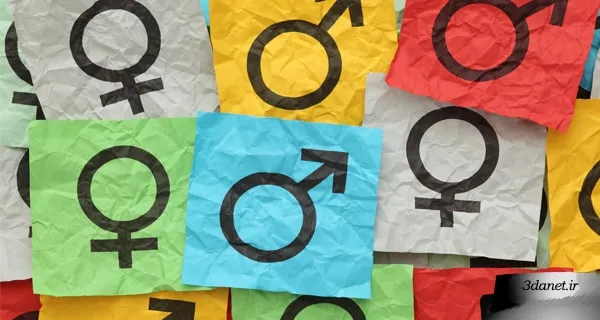
Regardless of a child's biological sex, they observe "gender patterns" in the family and society and structure their gender identity based on them.
With a little attention to ourselves and those around us, we may have realized that we do not behave in a one-hundred-percent masculine or feminine manner. For example, you might see a boy who is intensely interested in dolls and so-called girlish games, while on the other hand, a girl might be interested in football and playing with cars. In this article, we will examine the extent to which an individual's personality behaviors depend on their physiological sex, apart from the male or female bodily state with which they are born.
First, it is necessary to know that "sex" is a set of biological traits, and "gender" is a set of acquired, cultural, and social traits. To examine this issue, the "Bem gender schema theory," first introduced in 1981 by Sandra Bem and later developed in 1983 by Carol Martin and Charles Halverson, can be a good guide. According to the gender schema theory, at the beginning of life and after the formation of biological sex, the child receives "gender patterns" from the family and environment. The child's social relationships and gender patterns, dependent on their intuition of society and culture, are the elements that constitute gender patterns.
These gender patterns steer children's behavior toward the "gender norms and stereotypes" and "cultural expectations" present in society. These patterns are formed based on the child's observation of familial and social behaviors, and for instance, based on their observation, the child realizes what degree of behaviors, from the family's perspective, falls into their gender categorization. A famous example of such categorizations is perhaps toys like cars or dolls. Based on their observations of family and those around them, the child consciously or unconsciously arrives at the notion that, for example, playing with dolls is not a commendable or nice thing for a boy.
In fact, gender patterns, apart from the child's actual and natural sex, place them within frameworks that designate some behaviors as feminine and others as masculine, essentially defining being a man or a woman based on these social patterns. In this definition, the social role of a gender distances itself from the real and natural identity of that sex, and it is mostly society and custom that, as an external factor, assumes new definitions and behaviors as natural for a gender. These social definitions may not even have much connection to the biological identity of that sex. For example, a child who has lived and grown up in a not-so-modern society considers childcare and housework as a duty and a presupposition for being a woman, and defines the male gender identity in terms of work and earning an income. On the other hand, a child whose gender identity has been formed in a modern society may not necessarily define housework and childcare as part of the femininity pattern, and may also consider childcare or housework as a necessary aspect of masculinity duties. Sandra Bem believes that masculine and feminine gender patterns act as a barrier and obstacle for society. In this way, if we raise our children outside the predefined stereotypes and patterns in society, they will have a higher power of choice both in childhood and adulthood, and these limitations will not block the flexibility of their personality in facing various phenomena.
Sandra Bem, in addition to the aforementioned theory, also presented a questionnaire titled "Bem Sex-Role Inventory". In this questionnaire, there are 60 questions, and instead of limited choices, a range of scores is provided to individuals so they can rate that item based on their own opinion. Through this link, you too can participate in this questionnaire and see to what extent you fall outside gender stereotypes, in terms of femininity or masculinity.
Apart from the degree of accuracy and validity of this questionnaire, which remains somewhat questionable, we need to pay more attention to the theory itself. Gender stereotypes have been accepted and approved by humans for centuries, and in previous decades, centuries, and millennia, being outside these frameworks was considered an illness and abnormality, and from the past until now, many families have raised their children based on these very patterns. According to existing statistics, in elementary school and early middle school, girls and boys are equally interested in mathematics, but by the end of high school and the start of university, boys hold almost the absolute majority of seats in engineering and math-oriented fields. In your opinion, what is the reason for this significant difference?
But what is our duty as fathers and mothers? Perhaps we, as those responsible for the growth and upbringing of the next generation's children, should distance ourselves a bit from these stereotypes and, during the child's developmental stages, not internalize some destructive, dominant social beliefs and thoughts in their mind and behavior. As a father or mother, a correct understanding of sex and gender can be a good guide on the path of raising and developing your children.
.
.
Guide File for the Test Measuring Femininity or Masculinity in an Individual
Download from Server 1 | Download from Server 2
.
.
Sources: Acrwebsite | Books.Google.De
Compiled by the esteemed website Vidoal
.
.






Discussion1 comments
ساختار فیزیولوژیک بدن انسان نیازمند بعضی از ویژگی های شخصیتیست. حال اگر ما در تربیت کودک برای رسیدن به این ویژگی شخصیتی تلاش نکنیم به او ظلم نشده؟؟