Philosophy
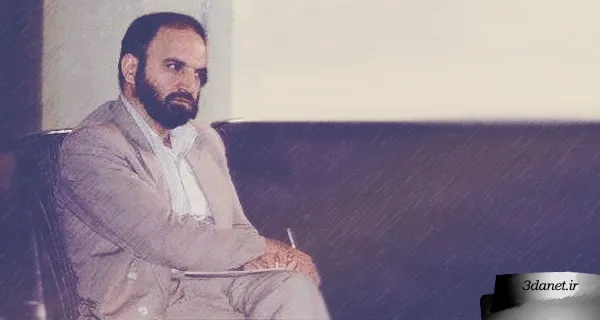
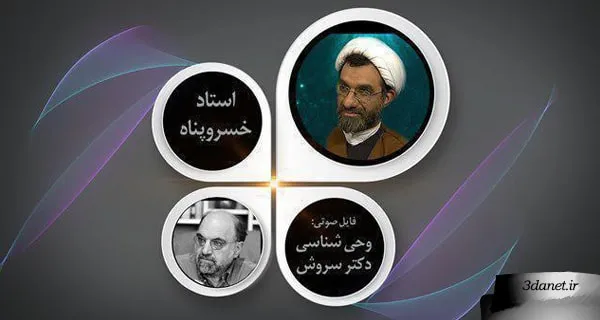
Abdolkarim Soroush's Lecture Series: The Method of Critiquing Ideas (1)
Critique of ideas requires avoiding haste and rigid categorization. Abdolkarim Soroush classifies ideas into five types and, by examining the characteristics of contingent ideas, argues that they are neither true nor false but are shaped by need.
Introduction:
This series of lessons and discussions is intended to demonstrate the correct method of thinking and, in particular, to separate sound ideas from unsound ones, and right from wrong. We do not aim here to offer a method for understanding all phenomena; rather, we want to see, when we encounter the realities that are in circulation, the books we read, and the ideas we come into contact with—whether political, economic, or otherwise—
by what means we can penetrate them, and how and according to what method we can judge them, and whether there is a way to critique them or not.
Clarification of Two Points:
A) Naturally, the path we will take will be a long, winding, and rocky one, a journey that must be traversed gradually. And from the outset, we never promise anyone that we will give them a golden key with which they can open all locks and the doors of paradise will be opened to them. A particular patience is required of the individual. And one must gradually accustom the mind to this method and turn it into a faculty.
B) Today, due to the existence of mass media and the dissemination of ideas, we are confronted with various thoughts. And since we cannot cook and chew these ideas to deliver them to our digestion, and perhaps we also lack a strong digestion—in other words, we lack the necessary apparatus for evaluating ideas—therefore, a measured confrontation with thoughts is a very necessary and important matter.
Two Important Recommendations:
First: Avoiding Hastiness
One of the maladies of our time is "mechanism," that is, being machine-struck or imitating a machine. The perfection of the machine lies in speed and greater production in less time. The machine-struck person attributes exactly this perfection to themselves, and this yields nothing for the human being but hastiness. Instead of chewing thoughts and ideas and delivering them softly and slowly to its digestion, the mind swallows and gulps them down, the result of which is intellectual indigestion and, in a sense, placing a burden on the mind without the person deriving sufficient benefit from what they have learned. Therefore, our first recommendation on this path is to abandon hastiness, and one must have patience and forbearance.
Second: The Necessity of Classification
The second recommendation is that we assume and convince ourselves that when we encounter an idea, we are not facing a single thing but rather a complex fabric of multiple and diverse matters. We never encounter a pure sample of an idea, but rather samples that are immensely complex. In this case, we must undertake analysis. The very thing Descartes did, and his advice was: one must first divide in order to conquer. Descartes said: In my rational method, I saw that when I face a collection of ideas, the best way is to begin division and analysis in order to master them; otherwise, the opposite will occur. (Descartes also said that most people believe that God has given them too little of everything and should have given them more, but regarding reason, no one believes they have been given too little, and people believe they have enough reason. But if reason has been given sufficiently to all people, why is there so much disagreement? The conclusion Descartes then drew was that the importance lies in the method of conducting reason, not in possessing reason.)
In the world of ideas, as in politics, one must sow division among them and separate them in order to overcome them. Therefore, our first task in the discussion of critiquing ideas will be the issue of classification.
So, our first task in the discussion of critiquing ideas will be the issue of divisibility. I believe that classification will lead to the conclusion that we have no more than five categories of thought in total, and when these thoughts are presented, they become mixed together, and separating them according to this classification will greatly help us to recognize the characteristics of each, to place the judgment of each in its proper place, and later, if an argument is made based on these thoughts, to evaluate that argument properly.
Presentation of the Five Types of Thought
First category: Metaphysical thoughts
Second category: Non-metaphysical thoughts, which themselves are of two kinds: 1- Scientific thoughts 2- Non-scientific thoughts
Third category: Constructed or posited thoughts or ideas (when we say posited, one should not assume that we mean imaginings). These are also divided into two kinds: 1- Conventional 2- Evaluative.
Thus, the types of ideas we deal with in life are limited to these five kinds:
1) Metaphysical ideas
2) Non-metaphysical scientific ideas
3) Non-metaphysical non-scientific ideas
4) Conventional constructed ideas
5) Evaluative constructed ideas
What usually creates confusion is that a person mistakes one idea for another. This is one of the most important modes of error in thinking. Or that one reasons from one to another. One is taken as a basis and then a conclusion is drawn that belongs to another category of thought. For these, many examples must be given so that the point becomes clear.
Now we are compelled to discuss the characteristics of each individual idea in order to approach the differentiation and evaluation of ideas, which is our goal.
Characteristics of Constructed or Posited Ideas (Introduction to Four Characteristics)
We begin with constructed ideas, as they are somewhat more apparent and, in a sense, at the same time more unknown, and on the other hand, we deal with them in life more than with other ideas.
Constructed thoughts and ideas generally have four characteristics:
First: They are not subject to truth and falsehood. That is, one cannot say a constructed idea is true or false. Truth and falsehood mean that a concept or theory has a referent in the external world or not. If it does, that theory is true and correct, and if it does not, it is false and invalid.
Second: Posited ideas have no referent or counterpart in the world outside our minds, that is, in the external world. You cannot point to something and say this is the very referent of the concept I have in mind; such a thing cannot be found. In other words, they have no external corresponding object. One should not imagine that this type of ideas are merely purely mental affairs that are of no use, whereas we will see that these concepts are the most common and most effective ideas, and in fact, they form the foundation of all doctrinal and ideological knowledge.
Third: These ideas are need-nurtured. That is, their emergence is due to the existence of a need, and setting them aside and abandoning them is also due to this need. Therefore, need nurtures them and needlessness kills them. These differ from some of the theories we have in science or philosophy. There are issues that are not subject to our need; for example, when it is said the sun is bright, this is not subject to our need but is an external reality that is merely subject to our discoveries. But when we say the murderer must be punished, the concept of this statement does not exist in the external world, and it is merely we who, due to the relations we have, need to have such a legal rule, and the type of its punishment is again subject to and influenced by this same characteristic.
Fourth: Constructed ideas are revocable; just as we bring them into existence, we can revoke them.
These four characteristics apply to all constructed ideas, whether evaluative or conventional.
Now we turn to some examples of ideas and examine whether they are conventional or non-conventional. What is important to grasp here is to see what method we need for accepting or rejecting any given idea. The significance of the matter lies in the fact that we should not try to cut iron with a knife that is only good for cutting cheese. Our mistakes usually occur in just these places. For each case, one must obtain the necessary knife and tool.
Examining the First Example: "He who is knowledgeable is powerful"
We first address whether this has an external referent or not. We can think that in the external world, knowledge is one thing and power is another, and a knowledgeable person differs from an ignorant one, just as a powerful person differs from a powerless one. Therefore, an external reality is conceivable for both knowledge and power. A knowledgeable and powerful person, a knowledgeable but powerless person, an ignorant and powerless person, an ignorant but powerful person—all these are conceivable and thinkable instances, and their occurrence is not unusual. Therefore, regardless of whether "he who is knowledgeable is powerful" is true or false, this statement can have an external instance; we have not created it due to our needs but have at most discovered it. Of course, we might have erred in our discovery. An error in discovery is different from having created it. Thus, one can think that in the external world, knowledge and power might be concomitant, and from this perspective, it is not a fictitious idea.
We must all bear in mind that all ideas subject to voting are conventional, and if someone tries to hold a vote on non-conventional ideas, they have made a mistake. Voting in elections and voting in parliament is always for conventional matters. No one can put the issue of the earth's sphericity to a vote in parliament and ask them whether they would like the earth to be spherical or not, and then have them vote. Because that method does not suit this type of idea. Voting is not, in truth, a new criterion, but it can to some extent illuminate the meaning we are pursuing. If an issue can be put to a vote, that issue is conventional; otherwise, it is not.
Second Example: "No pain, no gain // The reward was earned by the one who worked, my brother"
Is this verse a conventional proposition that we have constructed? Or is it that in the external world, no product will ever be obtained without expending energy? If the matter truly is that one cannot reap a harvest without expending effort, then this statement is true and also non-conventional. But if the meaning is whether there are people who gain a treasure without suffering, then it seems this is true, and there are those who have gained treasure without pain. In that case, at most one can say this statement is false, but it is non-conventional, because it has become subject to truth and falsehood. The very fact that it is said to be so or not so means this statement is non-conventional.
Third Example: "Indeed, life is belief and struggle"
This sentence can be interpreted in two ways, and depending on these two meanings, the type of the sentence will change. It is, incidentally, an interesting example of how these ideas become mixed together. If the intention is merely to state and describe reality, its meaning would be that human life, as it is, consists of all humans having a belief and struggling for that belief—similar to saying that all humans breathe. This is a description of the external world, and for this reason, regardless of its truth or falsehood, it is a non-conventional statement.
This statement can also be interpreted in another way, namely that life ought to be striving for a belief; that is, we are making a recommendation and a value judgment. That is, if you want your life to be humane, to have dignity, and for us to be able to assign human value to it, there must be belief and struggle for that belief. If we interpret the sentence this way, it will be conventional. It is merely a recommendation, a value judgment that we consider one type of life better and more humane.
In the next part, we will discuss prominent examples of conventional ideas.
.
.
Abdolkarim Soroush's Lecture Series: The Method of Critiquing Ideas (1)
Download from Server One | Download from Server Two | Download from Server Three
.
.
These lectures were delivered in the year 1358 [1979].
.
.

Discussion7 comments
تا زمانی می توان ادعا کرد برخی اندیشه ها متافییکی هستند که تجربه گرایی منجر به شک گرایی و انکار امکان نیل به معرفت وجود داشته باشد. تجربه گرایی منجر به شک گرایی می شود( بیلر، بونژور). پس نمی توان در دسته بندی تمایزی ماهوی بین افکار متافیزیکی و علمی قایل شد. معرفت شناسی سروش ناسازگار با فلسفه تحلیلی روز دنیاست. او مانند پاپر تلاش برای تعریف معرفت تجربی م یکند و یک تجربه گراست و مانند تجربه گرایان شکست خورده است . یک اندیشه غیر متافیزیکی را لطفا نام ببرید.سپس تبیین بفرمایید چگونه از تجربه حاصل شده است . نمی توانید و به این دلیل متوجه باشید که تفکر علمی سروشی مفهومی outdated و قدیمی شده است که بعلت بدفهمی وی از فلسفه علم مطرح می شود.
سلام و درود خدای عالم بر دست اندرکاران سایت ارزشمند و فخیم صدانت! بسی سپاس از پخش مطالب سودمند و کارا از اساتید شایسته! برای بهره ی کامل خوانندگان و شنوندگان گرامی از دو فایل جامانده ( ۶ و ۷ ) آدرس زیر پیشنهاد می شود: http://www.shiadars.ir/fa/%D9%81%D8%A7%DB%8C%D9%84-%D8%B5%D9%88%D8%AA%DB%8C-%D8%AC%D9%84%D8%B3%D8%A7%D8%AA-%D8%AD%D9%88%D8%B2%D9%87-%D8%B9%D9%84%D9%85%DB%8C%D9%87/%D8%A7%D8%B3%D8%AA%D8%A7%D8%AF-%D8%B3%D8%B1%D9%88%D8%B4-%D8%B1%D9%88%D8%B4-%D9%86%D9%82%D8%AF یا حق!
با سلام و تشکر از زحماتتان این درسگفتارها ۷ جلسه می باشند که متاسفانه فقط ۵جلسه در سایت ارائه شده اند. و یک خواهشی هم از شما دارم که لطفا دروس را به فایل pdf مهیا فرمایید. باتشکر وارادت فراوان
سلام خواهش میکنم در فرمت pdf هم مهیا فرمایید خیلی خیلی ممنونم از زحمات شما
بنام خدا باسلام دروس روش نقد اندیشه وسایر نوارهای درسی دکتر سروش را اینجانب سالهای خیلی گذشته از ارشیو دانشگاه تهران اخذ نموده وتاکنون بسیار بهره برده ام والبته شاید همه پژوهشگران ومحققین حوزه فلسفه ودین که اکنون صاحب نظران ونظریه پردازان قابلی گردیده اند بهره و افر وغیر قابل احتسابی از اقیانوس بیکران دانش استاد بلامنازع دین وفلسفه وعرفان جناب اقای دکتر سروش را نصیب خود نموده اند وهر که این نوارها را گوش داده است از تاریخ سال ۵۸ ان اگاه است .براستی هرگز کسی برایشان در احیای دین برمحکم ترین روشها پیشی نگرفته است وتقدم ندارد ومهمتر اینکه هنوز یک شخصیت علمی ظهور نیافته است که بتوان اورا یک تئوریسین در حدوقامت دکتر سروش دانست حتی ده درصد ارزش علمی وتاثیرکاربردی وعملی نظریه های دکتر .زیرا مهم ترین نکته فربه وپخته دیدگاه قبض وبسط تئوریک شریعت نظریه تکامل معرفت دینی و علوم انسانی است طرح ویا کشف سایر تئوریهای کاربردی مطروحه بعداز ایشان در این حوزه تماما بر گرفته از تئوری ایشان است متاسفانه هیچکدام از شاگردان ودوستان دکترسروش به اهمیت نظریه قبض وبسط وتاریخ ظهور وپایه ای بودن وتاثیر اعجاز امیزان برسپهر علمی کشورتاکنون اشاره صریحی ننموده اند که عده ای برای خودشان ندای مااعظم شانی سرمیدهندانصاف سیری چند؟؟؟؟
بنام خدا این رااینجانب دودهه پبش از ارشیو دانشگاه تهران اخذ نمودم وبه صراحت درنوارها اشاره به تاربخ این دروس در سال ۵۸ شده است .
این درسگفتار ،بزعم من علیرغم انکه بیش از حدودا سی سال پیش ایراد گردیده ، بی بدیل است ، دوستان علاقمند قدر آنرا بدانند .