Philosophy
Abdolkarim Soroush's Lecture Series: The Method of Critiquing Ideas (2)
Abdolkarim Soroush enumerates the characteristics of imaginary thoughts and considers language an example of conventional thoughts that arise from human need and are not subject to truth or falsehood; attributing independence to language leads to fallacies.
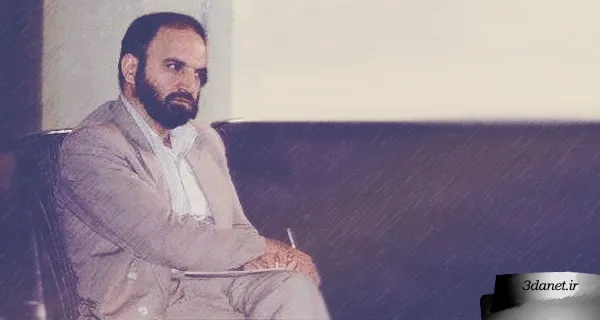
Fictive ideas had two parts: the part of evaluative fictive ideas and the part of conventional fictive ideas; examples of these were mentioned in the previous session, and now we wish to address this issue with greater elaboration and, with God's help, show with more explanation how, in encountering these ideas, we can apply the criteria we have previously learned and how we can become acquainted with some of the subtleties involved in this matter, so that we may gain a deeper understanding of the ultimate goal of these discussions, which is the recognition of ideas from one another, and accustom our minds to perform this differentiation naturally and fluently.
Briefly, I recall that the characteristics we enumerated for contingent (fictive) ideas were as follows:
1- The characteristic that all fictive ideas are the product of our needs, the product of human needs, social life, psychological needs, and human relations; in other words, they are need-bred.
Such that if there were no human being, or if there were a human being but without the present needs, living instead as another kind of animal, then those ideas would not have arisen or come into being.
2- In the second order, the next characteristic was that fictive ideas, which are expressed as propositions, are not subject to truth and falsehood; that is, one cannot say of them that they are erroneous or correct, true or false. They are merely fictive ideas and have existence only in the vessel of fiction and in the vessel of our thought; one cannot find a correspondence or referent for them in the external world so that, by correspondence or non-correspondence with an external referent, one could say these ideas are correct or incorrect. And therefore, the third characteristic of these ideas, which is in fact entirely connected to the second characteristic, is precisely that they have no external correspondent and no external counterpart.
The fourth characteristic was revocability, or the ability to escape from the implications of these ideas; one can escape them, one can revoke these ideas themselves and think about them in another way, or decide that they are ideas that rely on our decision, our convention, our creation, and our positing, and when this creation, positing, and decision changes, those ideas will also change.
And in the fifth order, because these ideas are revocable, they are not the same everywhere and for everyone; rather, one can find diverse cultures, societies, and environments in which these ideas exist in different forms. It is not the case that when one of these ideas is expressed, everyone thinks about it identically and everyone accepts it identically; rather, because truth and error do not even apply to them, it is solely the decision-making of individuals and their particular understanding and inference that will make these ideas differ.
These were the set of characteristics we enumerated for fictive ideas.
In this session, we wish to recognize some instances of these ideas and mention examples to clarify these matters.
Firstly, a clear example of fictive ideas, specifically of the conventional type, is language. All the words we use in language, all the names that have been or are being assigned to objects, events, beings, and phenomena, everything we have under the titles of language rules, grammar, syntax, morphology, and the like in various languages—all of these are of the category of fictive ideas.
It can readily be seen that truth and falsehood do not apply to these; they are entirely subject to abrogation, and they differ across various environments, languages, and cultures. The moon itself never necessitates that its name be “moon,” even though the moon itself possesses external attributes whose existence or non-existence does not depend on our will or decision—the moon’s own sphericity, its mass, its volume, its orbit, its distance from and proximity to the sun, its relation to the earth, the effects it has on the seas, and many other such matters: none of these are imaginary affairs.
They do not depend on anyone’s decision and are not abrogated by anyone’s decision; they are real and external. We may err or not err in discovering them, but once we apprehend the moon as it is, it will be the same for everyone. However, that the name of the moon is “moon” is a hundred percent a matter of convention, a hundred percent contractual, and it is clearly seen that this name can be abrogated and another name put in its place, and one cannot say that it is correct for the moon’s name to be “moon”; correctness and incorrectness have no place here. Whatever we stipulate, that will be the moon’s name. Here one cannot say that the moon’s name has falsely become “moon,” nor can one say that the moon’s name has truly become “moon.” In different languages, whatever name they have given to the moon, that is it, and in the Persian language, since they have said “māh,” that is it; we also have “qamar” for the moon, we also have “moon,” we also have “lune,” and various other names for the moon. It is clearly seen that all naming is conventional, and it is we who decide here, and again it is clearly seen that naming and the creation of language are entirely determined by human needs. If humans did not exist, or if humans existed but had no need to exchange thoughts, they would not have created language. It is we who have created language. All the rules for sentence-making and phrasing in all languages are entirely contractual; they are all of the kind of imaginary thoughts, and a completely different kind of contract could have existed, and phrasing could have taken place in another way, without the slightest harm to or failure to achieve the purpose we have. Therefore, language is a prime example of imaginary thoughts. As we had pointed out before, we have the most contact and dealings with imaginary thoughts, and when we said that imaginary thoughts are, in one sense, the most important thoughts we have in life, and that imaginary thoughts have sometimes also been called instrumental thoughts, it is precisely for this reason. Imaginary thoughts are like instruments in the hands of human beings, and we always know that the creation and invention of an instrument is the result of need, and if we have no need for something, we will also have no need for the means of attaining it or the instrument for acquiring and obtaining it. Language is among our instruments, but it is not the only instrument we employ, nor is it the only example of imaginary thoughts; any sanctity we might ascribe to language, we must know that it is deceptive. We will see later how many fallacies have arisen from language, and many of these fallacies have been based solely on the fact that some have imagined that language is something other than an instrument; that besides being our creation, it possesses an independent existence; that besides being able to be created or abrogated by our hand, it can continue its life independently.
Thus, they have looked upon language as if it were an independent external object, and in this respect they have sought aid from it as from an external object, and in this way the door has been opened to a series of fallacies, which we will point out and explain in the future regarding this type of fallacy that has arisen from the misapprehension of language.
But more important than language are other kinds of imaginary thoughts, which we must identify one by one.
Let us consider the issue of rights. In our view, all the varieties of what is called by the name of right or under the title of duty are among the kinds of imaginary thoughts.
We have nothing in the external world that is itself a right; our meaning of right here is the right that is used in opposition to duty. It is the rights that individuals accord to themselves or to others. Our meaning of right is not right in opposition to falsehood; that is, correct in opposition to incorrect; it is right in opposition to obligation and duty that we are employing.
Nothing can be found in the external world that is identical to rights; that is, right has no external referent, and it is also susceptible to abrogation; and whether someone possesses a right or does not possess a right is not subject to truth and falsehood, and possessing rights or being obligated to duties is one hundred percent a consequence of our needs and relies upon our decisions and conventions, and nothing is right-creating, and it is up to us what we consider right-creating or not. This is a very important issue, and we have raised these discussions precisely in order to properly recognize and clarify these matters; initially, it seems that this is a statement contrary to the majority and it seems that we are saying something for which we perhaps cannot provide rational citation and rational argumentation.
Before I give a sufficient explanation about this, I must emphasize one point, and that is that when we call an idea fictive or conventional, one should not imagine that fictive ideas mean illusory, imaginary matters that have no root, are of no use whatsoever, and are merely playthings in our hands.
It is this illusion that sometimes causes the mind to resist considering an idea as fictive. If we dispel this illusion and accord the same kind of independence and authenticity to conventional ideas that we do to other types of ideas, a great deal of the mind's power of resistance will automatically break. And in the second place, one must know that just as we grant authenticity to other ideas and consider them to have solidity for themselves and within their own container of existence, here too, within the container of existence of fictive ideas and in the realm of their application, these ideas possess that same solidity. One should not imagine that by making an idea fictive, we are depriving that idea of solidity; this is not correct. However, solidities should not be compared with one another; each idea will attain solidity for itself and based on its own foundations. This is precisely the error that perhaps occurs, where it is thought that in order to gain solidity for fictive ideas, they must somehow be made to rely on other types of ideas.
This is exactly the error we wish to caution against, that doing this is tantamount to making these ideas weakly founded. These ideas have a different, gushing spring, and their authenticity must be grasped with attention to their own spring, just as non-conventional and non-instrumental ideas are also like this. Neither do these gain solidity from those, nor are those in need of the solidity-bestowing of these.
This point must initially be kept in mind. Therefore, when we say that rights and duties are conventional matters and have no external referent, its meaning is that rights and duties are tools that we employ, similar to our language, and they are very useful in the world of human relations, but their texture and their substance are of the type of conventional ideas, which are not subject to truth and falsehood.
We usually say that a wife has rights over her husband, a husband has rights over his wife, a child over the father, the father over the child, the nation over the government, the government over the nation, the press has rights, has duties, professors have rights over students, have duties, students over professors; the mass media over the nation, the nation over them.
All of these have rights and duties relative to one another; for every right, there is a duty, in the words of the Commander of the Faithful: whoever has a right over someone, certainly someone else will have a right over him, and if there is one who has only rights and no duties, that one is God alone. All rights are conventional. What this means is that when you consider two people who have mutual rights and duties, if you dissect, analyze, and lay bare all the spiritual and physical characteristics of these two individuals, you will find nothing to which you can assign the name 'right.' Dissect and lay bare the entire physiology of a man, lay bare the bodily physiology of a woman—suppose obesity were under consideration—and if one could also analyze and dissect all the spiritual organs of the man or the woman, if one could lay bare all the constituent elements within them, nothing will be found in the woman or in the man, in the two spouses relative to each other, that is itself a right. Yes, there are emotions in this one, there are desires in each of them, a specific physical constitution—each of them has these: a blood constitution, a spiritual constitution. All of these exist in a particular way in each man and woman, but what is it that can be said to be the right that resides in the man toward the woman, or in the woman toward the man?
We will never find such a thing. That which is in the man or in the woman upon which we bestow the name 'right' is nothing other than what we think we should grant to the woman toward the man or to the man toward the woman; it has no external correspondent. This is the entirety of our point regarding the matter of rights. Nothing can be found in the external world that is itself the possession of a right, the very substance of rights. If you mention the name of blood, yes, blood exists in the body of the woman or the man; mention the name of the brain, yes, the brain exists in both of them.
Mention the name of emotions, yes, emotions exist in both of them. But when you mention the name of 'right,' what is it in one that is his right toward the other? We do not find such a thing
in the child toward the father or in the father toward the child. It is sometimes said that our capacities generate rights. Whatever capacity a person has will create a right for them. We do not wish to dispute now whether this statement is correct or incorrect; this is not the place for it. We may examine this statement more closely in the future, but even in this statement, assuming its correctness, if we look closely, we will see that what we have been saying so far holds true there as well; that is, right has still not been shown as a real, external entity.
They say that because a human being has the capacity for literacy, they therefore have the right to literacy; because a human being has the sexual instinct, they therefore have the right to choose a spouse; because a human being is free, they therefore have the right to choose a religion, the right to freely choose a spouse, the right to freely choose a country and citizenship in relation to a particular state, and so on with these kinds of rights, each of which is based on a type of ability, capacity, and spiritual and physical characteristic that exists in human beings.
We said that we are not currently disputing or scrutinizing the correctness or incorrectness of this statement, but it is abundantly clear that in these cases, it is not said that our capacity is the very right we possess; it is said that our capacity generates a right. Therefore, right is other than capacity. That is, if you explore a human being, analyze, dissect, and lay bare all their physical and spiritual characteristics, you have laid bare their physical and spiritual characteristics, and then it is another decision that we make from the outside.
And we say that because a woman or a man, a father or a child, or anyone else—because a human being in general has such-and-such a characteristic, such-and-such a type of physical and spiritual constitution—this causes them to possess a right, any kind of right. Therefore, right is other than an external entity. So what is it? So if right does not exist in the external world, then what is it?
A normative (contingent) thought is one that has no external referent. When I say someone has a duty, that you are obliged to do such-and-such a thing—a soldier is obliged to his officer, an officer is obliged to his soldier, we are obliged to God to perform our duties, individuals have duties, commitments, and responsibilities towards other people—everything that goes by the name of commitment, responsibility, obligation, and duty, all of these are normative (contingent) thoughts. None of these partake of existence in the external world. You will never find any obligated human being for whom one of the external attributes of that being is the duty they have. When we said that normative (contingent) thoughts have no external referent or correspondent, our point was precisely this: they are not considered a real attribute of any existent. They neither possess existence themselves, nor are they an attribute of any existent. In this respect, all duties fall under the category of normative (contingent) matters. In all cases where we speak of 'ought' and 'ought not,' it is exactly the same. All propositions containing 'ought' and 'ought not'—since these propositions express duties and obligations for individuals—are all likewise considered normative propositions.
It is quite clear: when we say, 'The murderer must be punished,' or 'The murderer must be executed,' first of all, we cannot find an external referent for this sentence. You cannot point to something in the external world whose meaning is that. This is a convention: 'The murderer must be executed.' We have no such thing; it is merely a decision, merely a ruling. And furthermore, this is not like when we say, 'The moon is luminous.' Yes, we can point to an existent that exists in the external world and is luminous. When I say, 'God exists,' one can explain and point to something, though not by pointing with a finger or hand—that is not even necessary. It is sufficient to be able to say this is true or false. 'God exists' can be true, and it can be false. 'The moon is luminous' can be true, and it can be false. But 'The murderer must be executed' has no meaning as to whether it is true or false. We cannot find such a thing in the external world to then say that this sentence corresponds to it or not. This sentence can be accepted or not accepted. One can act upon it, and one can evade acting upon it or abolish it, but truth and falsity do not apply to it.
Naturally, it is a product of our needs. This statement of ours: we live in a human society, we need specific relationships for a specific kind of life, and therefore we have made this decision.
For now, we are not concerned with who the decision-maker is. Our discussion is entirely independent of the origin and source of the institution. We do not want to say who instituted this, or why they instituted it.
Whether it was good that they instituted it, or bad that they instituted it—such talk is not at that stage. The discussion is at this stage: after its institution and after its creation, we look at this created thing, at this statement that has been made, to see what its nature, fabric, and texture are. And we see that, by the characteristics and criteria we have given, it is a contingent statement, a product of our needs, not subject to truth and falsity, having no external referent, and susceptible to annulment—meaning one can evade it.
A murderer can hide and not be executed. People can choose not to act upon this law and can consider another law for their own culture and society.
This is not like the law of gases. This is not like the law of refraction and reflection of light. Light cannot abandon or disregard this repetitive behavior that it has.
The earth, with the structure it has and the materials within it, cannot but possess this amount of gravity; a stone in a gravitational field cannot behave otherwise, but human beings can escape this very law. Human beings can abrogate this very law; the one who established this law can himself abrogate it. Sometimes the abrogation is at the hands of the legislator himself, and sometimes the abrogation is at the hands of those who, after the establishment, encounter that speech, that thought.
Therefore, what goes under the title of punishment for criminals and everything of this sort are one hundred percent ideational thoughts. There is a very marked difference between someone falling ill due to contact with a parasite or microbe and someone becoming deserving of punishment due to committing a crime; there is a very marked difference between these two. When we said that person A contracted a specific disease due to contact with a certain microbe, we have not uttered an ideational thought; it is a non-ideational matter, and we will later see to which type of ideational thoughts it belongs. But when we said that someone has become deserving of punishment due to theft, in this case we have expressed an ideational thought, because the former, regardless of our will, regardless of our conventions and agreements, and regardless of our decisions, has spontaneously brought about a real state for him in the external world from which he cannot escape, in the sense that no one can, by their own decision, deny the effect of the microbe in their own body; it either is or is not.
But someone can, by their own decision, either abolish the punishment or escape the punishment for theft. Different schools of thought can also exist that have established the titles of punishments for the crime of theft. It is in this way that, in our opinion, both right and duty are of the type of ideational thoughts, and all propositions that contain them are ideational propositions. There is something called natural right or natural rights; it is said that it is part of people's natural rights to become literate, it is part of people's natural rights to participate in elections, and matters of this sort. In our opinion, something called natural rights cannot exist.
According to what we have said so far, it can be accepted, it can be tolerated—at least at the present stage—that there are certain characteristics that can be accepted as obligating a right for someone. If we consider natural right in this sense, we can currently consider a reasonable meaning for it, although there is still room for discussion; but if someone imagines that there are persons for whom, naturally and according to their existential constitution, something is their own right or their own duty, such a thing does not and will not exist. All rights and all duties, based on what we have said, will be placed among conventional (ideational) matters.
As another example, all the regulations we have in society, all types of social laws that are enacted—very prominent examples of which are traffic laws and signs—all of these are among conventional (ideational) matters. The color red itself never necessitates that cars stop, and the color green never necessitates that cars proceed. It is not correct to say that it is true that the color red causes cars to stop, or it is true that the color red is a sign for cars to stop; it is merely a sign that we have established. We could have established another sign. The color red, in itself, does not generate stopping, and the color green, in itself, does not generate proceeding.
It is usually a matter of our needs; it will change with our decision, and here truth and falsehood do not fundamentally apply. And we see again that these serve as tools that we employ; therefore, it can in no way be proven that the color red must be chosen for stopping cars, or that the color green must be chosen for cars to proceed.
One of the points we will make in the future is that none of the contingent (conventional) matters can be proven by logical means, nor can they be negated or refuted by logical means. No one can provide a reason why the moon should be called 'moon'; no one can provide a reason why Persian grammar should be the way it is; we have no proof. On the other hand, from the side of refutation, we also have no proof; no one can provide a proof that Persian grammar should not be the way it is, or that the name of the sun should not be what it now is.
Or that the color red cannot serve as a signal for cars to stop—it must not; we cannot provide such a proof. Therefore, one of the important characteristics of conventional thoughts is that they are not susceptible to logical critique. We cannot argue for or against them, neither to affirm nor to deny; we cannot offer proof, bring evidence for their negation or their affirmation. The only characteristic that conventional thoughts possess is that we must see whether, for the purpose for which they were created, they possess sufficient adequacy or not. If we suppose that the color red is not visible to the eye, then there is no obstacle to agreeing upon the color red for stopping cars. But this purpose will not be fulfilled; when it is not fulfilled, we do not recognize this convention as an adequate convention, and in that case, it will be discarded of its own accord.
The meaning of this statement is not that we have argued that it is wrong; right and wrong have no place here. We have only said that because conventional thoughts are instrumental thoughts, this instrument is not sufficient for achieving that purpose. So, in the case of conventional thoughts, one can only speak in terms of adequacy and inadequacy, not in terms of correctness or incorrectness. We can speak of their capability for the purpose for which they were created, but not of their truth or falsity. And this is a very important point, and we will pursue this matter until the end of this discussion.
The critique that can be made of conventional thoughts is a critique of capability, not a critique of correctness.
As another example, we can take the issue of marriage. Marriage, the rights of spouses, and the recognition of two persons as husband and wife is a one hundred percent contingent (conventional) matter. When I say that so-and-so is the spouse of so-and-so, I am reporting a convention one hundred percent. Why? Because the marital relationship is a relationship that we have recognized.
We have posited and created it, and we can also annul it. After two persons are recognized as spouses, there is no attribute; spousal status for either party—a woman, merely by becoming a spouse, does not acquire a specific external attribute, and a man, merely by becoming a spouse, does not acquire a specific external attribute. In other words, if we were to conduct a psychological and physical dissection of a man who has a spouse, he would be no different from a man who does not have a spouse. The only difference is that in the man, a convention has been accepted, whereas in the man for whom this convention has not been accepted, there is no such decision or commitment. So, it is a decision that has made this man a spouse, and it is a decision that will annul this spousal status. This is not like a man's weight, not like his volume, not like his age. A human being, by his own decision or by the decision of another, will not acquire a specific weight, a specific age, a specific volume, specific emotions, desires, and psychological states; those are as they are.
Before we properly analyze the issue, I must again point out how widespread and effective these fictive ideas are, how they have been created as tools, and how we are immersed in them and use them well and abundantly. The main task is to distinguish them from other ideas, as we have repeatedly emphasized and noted, so that the rulings of these types of ideas are not conflated with one another. If someone considers leadership a non-fictive matter, they can commit very dangerous errors; and once leadership is recognized as a fictive matter, immunity from many errors will be secured.
Why is leadership a fictive idea? When I say that so-and-so is a leader—whether they are the president, the head of state, the principal of a school, the head of a family, whatever they may be—when they are the leader, leadership is a conventional status; why?
Because, firstly, we create it; we choose someone as a leader. If no one exists, or if people exist but do not approve of or accept anyone as a leader, that person will not be a leader. Leadership is not a quality inherent in someone, as if they were a leader by essence. Leadership is a convention that we establish and by which we choose someone as a leader, in every case, and naturally, when we revoke it, that person will fall from leadership. When people do not want someone to be their leader, that person will no longer be their leader. If we do not want the moon to have a certain orbit, our wanting or not wanting will have no bearing on it; it has that orbit, that weight, and that volume. But as soon as we do not want someone to be our leader, they will not be our leader. Leadership depends one hundred percent on our acceptance, on our taste, on our approval and disapproval, and in this respect, it can also be revoked by our own hand; we can revoke it. It is also something one can flee from; someone can flee from another's leadership. Leadership is not like the Earth's gravitational field for us, where once we are in it, we are in it. Someone can, in their heart, not accept a person's leadership or flee from its requirements. All our emphasis is on the fact that leadership is something for which you will find no external referent in the outside world.
In a leader—a president, a head of state, a school principal—you will see many qualities that truly exist in them. If you ask about their age, they really have it; if you ask about their weight, if you ask about their volume, if you ask about their literacy, if you ask about their other psychological characteristics, these are qualities that truly exist in them. But if you ask about the quality of their leadership, where is this quality? You will see that this quality is not in them. This quality is attributed to them by virtue of the fact that there are other people of whom they are the leader. If those people did not exist, they would not be a leader.
Therefore, this quality is not intrinsic to them; this quality has been accepted by others to be recognized for them. It is a product of our needs. To manage the affairs of our lives, we are compelled to entrust management, leadership, and command to some people, and for some people to accept their command, and
in this way, the affairs of life are conducted. There have been those who considered leadership a natural matter, and this is the very important issue that we are compelled to point out here and wish to emphasize: how dangerous the conflation of conventional and non-conventional rulings is.
In the past, there were those who believed that the leader in society is like the head in the body; the word 'ra'is' (leader) is derived from 'ra's' (head), and the lower classes are like the feet in that same body. We all know that the head in the body has a natural place; it is its place, and it has properties that are its attributes. We have not bestowed those attributes upon the head, nor can they be changed or taken back at our will. The same goes for the foot. And this collection of organs in a human body has a kind of harmony and cooperation with one another, such that if their places were swapped, the result obtained from the human body would not be obtained.
If we liken society to a human being, as has been done, and then identify the leader in society as the head in the body, in that case we have assigned the leader a natural place, we have attributed a natural characteristic to him, and the meaning of this will be that this characteristic cannot be taken back from him. It is his characteristic, it belongs to him, it is his, it is his natural place to be the leader, and it is the natural place of others to be like the feet and be the leader's burden-bearers. It is in this way that some have justified the class system in past societies or the tribal system.
Initially, they would draw an analogy, and after this analogy, they would conflate a conventional matter with a non-conventional matter. If we can draw an immediate conclusion from our discussion, it is that it is very dangerous to mix these kinds of thoughts together; one must recognize the ruling of each and the characteristic of each. As soon as we know that leadership is a conventional (imaginary) matter.
The definite conclusion is that it is revocable, and the necessary consequence is that no one has the right to leadership as if it were a natural characteristic of theirs, that this person was created to be a leader. Such a thing does not exist in the world. Individuals are created intelligent; that is their external characteristic. Individuals are created beautiful; that is their external characteristic. But no one is created a leader; leadership is a conventional (imaginary) matter, therefore it is revocable.
Marriage, in our opinion, was exactly the same as the example we gave earlier; it too was among imaginary thoughts, and therefore, just as we said about marriage, we can say the same about leadership. It is not correct to say that truly he is the leader of these people; truly, no one is the leader of these people, and falsely, no one is the leader of anyone, as long as these people want him, he is their leader.
When we do not want him, he will not be their leader, exactly similar to saying that truly the name of the moon is 'moon,' or falsely the name of the moon is 'moon'; neither of these is true, it is not correct, it is neither true nor false. This name for the moon is our convention and our will. No one is truly the leader of anyone, and falsely, no one is the leader of anyone; it is only by their will that he is their leader, and by their will that he is not their leader. Of course, when people choose someone for leadership, he is a tool, and they have expectations of him, and all that can be said about leadership is his ability to resolve issues in accordance with the expectation they have of him, not that it is correct for him to be their leader or incorrect. Here I must point out a point that is important and may provoke a kind of error and confusion in the mind. That point is that here, we can speak in two stages; one of them will be an imaginary thought and the other not.
If I say that a certain person truly holds the leadership of certain people, we said that this is a conventional statement, and truth and falsehood have no place here. But if I say that certain people have chosen person A as their leader, this statement is not conventional; this is a non-conventional matter. This is news of an external event; we are stating a contract that has been made by some people, exactly similar to saying that a certain person has chosen the spouse of a certain person, has accepted it; this is not a conventional matter.
We are giving news of where and what contract has occurred. I say the regulations of a certain country regarding the import of a certain type of goods are such and such; this is not a conventional matter. This itself is news of the existence of regulations in the external world and that some people adhere to these regulations and implement them.
But the regulations for importing a certain commodity are themselves a matter of convention. The regulations themselves are a matter of convention, meaning that they can be abolished and replaced with other regulations. They are a product of our needs, and it is in no way correct to say that these regulations are true for these goods. Truth and falsehood do not apply here; it is like a name. For the moon and the sun, other regulations can be substituted. So there is a difference between reporting on a conventional existence and mentioning the convention itself. The convention itself is a construct, but reporting on the existence of a type of convention is no longer a construct (imaginary).
If I say that Arabs call the moon 'Qamar,' this is not a construct (imaginary); it is a report and a factual matter. But if I say the moon's name is Qamar, then that is a convention, and truth and falsehood do not apply here either.
.
.
Abdolkarim Soroush's Lecture Series: The Method of Critiquing Ideas (2)
Download from Server One | Download from Server Two | Download from Server Three
.
.
Related Content:
Abdolkarim Soroush's Lecture Series: The Method of Critiquing Ideas (1)
.
.

Discussion5 comments
درود خدمت تمام شما عزیزان! اگر باقی جلسات روش نقد اندیشه ها را بگذارید، مدیون تان خواهم بود. سپاس
کار بسیار پسندیده ایست که سخنرانی ها را بصورت متن پیاده می کنید روی متن خیلی بهتر می توان تفکر و تامل کرد
با سلام و تشکر بابت سایت خوبتون. چرا ادامه ی جلسات رو قرار نمی دهید؟
بنام خدا اکثرخیرفی النساء .امام صادق ع.بیشترین خیر نزد زنان است . برگرفته ازحدیث پیامبرص :این دخترانندکه دلسوزومددکاروبابرکتند.
سلام اگر چه با بسیاری از محتواها موافق نیستم،اما از اینکه در نشر افکار میکوشید متشکرم؛ خصوصا اینکه خیلی از صوت ها را هم پیاده و مکتوب میکنیدکه کاری است بس طاقت فرسا