Philosophy
Abdolkarim Soroush's Lecture Series: The Method of Critiquing Ideas (4)
Abdolkarim Soroush regards poetic analogies as subjective and constructed matters that should not serve as the basis for serious inferences. Drawing on the example of Rudaki and Toynbee's critique of Spengler, he shows how reliance on unfounded analogies can unravel entire theories.
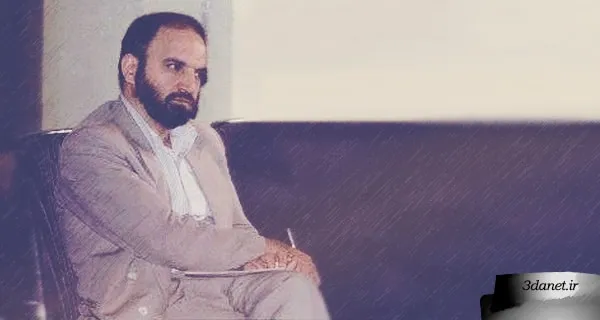
We continue our discussion on the critique of ideas, the method of employing this critique, and the manner of entering into criticism; this is the fourth discussion in the series we have begun, and we are still dealing with conventional and evaluative matters, and in explaining the criteria and characteristics that can distinguish these ideas from other ideas.
What is intended in these discussions, and must be kept in mind throughout these lessons, is that we are speaking about ideas, not about external affairs and the real instances of things in the external world. From this perspective, although ideas are about instances and external affairs, and although they are entirely and completely close to one another, one must not be mistaken for the other, and this itself is a kind of fallacy called the fallacy of concept and instance. (That is, if we choose one in place of the other and extend the judgment of the concept to the instance, or vice versa.)
In this session, among conventional ideas, we will mention some other instances and cases and will examine and scrutinize them. After that, we will come to the explanation of this point: how recognizing these ideas in light of the characteristics we have so far demonstrated with numerous examples will save us from falling into certain pitfalls of fallacy and intellectual errors.
One of the very important materials that must be well recognized among fictive ideas, distinguished from other ideas, and whose trap one must not fall into, is the various types of poetic similes that we encounter in literature, in stories, and in poems.
These types of similes are entirely considered as fictive, conventional, and instrumental ideas, and they exist solely and exclusively within the mind of the poet, the literary figure, and the person making the simile, and no reality for these similes can be sought outside of them. We all know that in the past, when a poet praised a patron, it was for a purpose and an intention he had, and when that purpose was not achieved, the satire of the patron would immediately begin.
In praise, the patron was initially likened to noble and subtle things, and when the time for satire arrived, the time for obscene and unpleasant similes also arrived. Neither were the first similes correct and possessed a share of truth, nor the second ones. It was merely the poet's motives and needs that created such similarities, and later, with a change in need, a change in desire, and inner turmoil, he would cancel those first similes and turn to another simile.
The revocability of these likenings clearly demonstrates the conventional property and nature of this type of thoughts. We all know that when Rudaki wanted to persuade the Samanid Amir to go to Bukhara, he constantly likened him to a cypress tree and Bukhara to a garden, and then he would urge, "The cypress comes toward the garden." And again, he would liken him to the moon and Bukhara to the sky and say, "The moon comes toward the sky." There was no one to ask Rudaki (and there was no room to ask) how, a moment before, you said the king is a cypress, and now you say the king is the moon. This is the nature of ideas that took shape and developed solely and exclusively within the mind of the poet. They allowed all kinds of roaming, and at any moment he could liken a person to something, and in the next moment retract that simile, disregard it, turn to another simile, and possibly reverse it. The fact that these similes are our creation, the result of our needs, change with the change of our taste, possess no share of truth, no instance or correspondence can be found for them in the external world, and are not universal—meaning anyone can make a kind of simile according to their desire—clearly demonstrates the conventional nature of these ideas, as we have pointed out.
The very fundamental point that exists here is that we must not fall into the trap of our own similes; that is, we begin with a simile, and then, after mentioning a simile, we imagine that such a similarity truly exists—a similarity that is our creation—we suppose it is a real matter and exists externally, and then, based on that similarity, we wish to draw grave conclusions.
This is where a person will fall victim to the sword they themselves have forged. Similes are our creations, like a hero we invent in a story; they partake of no truth, possess no reality, and therefore can offer us not the slightest resistance. How helpless and abject must one be to be captive to one's own creation, unable to distinguish the real from the unreal, and to fall into the trap of an imaginary being that is one's own handiwork.
Toynbee, the famous English historian whom we know, in his renowned book A Study of History, offers a critique of the ideas of the German historian Spengler. We are all more or less familiar, probably, with the thoughts of Oswald Spengler, someone whose ideas about history and the analysis and interpretation of history were highly prevalent and widespread between the First and Second World Wars, and which rapidly declined after the Second War, so much so that today his name is scarcely on anyone's lips.
Oswald Spengler imagined that history is like a plant that grows, and after a time this sapling turns into a mighty tree and bears fruit, and its springtime arrives. But springtime is only one season in the entire life of a plant; after that comes autumn, and when the plant enters autumn and its leaves and fruits fall and are gone, there is never any hope of another spring returning. Cultures, in his view, are the youth of societies, and civilizations are the era of petrification and old age; and once a culture reaches civilization, it has entered its fossilized era, and thereafter only the graveyard awaits it. And history is a graveyard beside a graveyard, and within it there is no resurrection.
Spengler's ideas took root because of the despair that the First World War had engendered in European societies, and because of the collapse of that notion of stability which was common to all—that notion of stability which Russell, Freud, and others recount in their writings. Russell mentions that unless one had seen the Europe of the days before the First War, one cannot know how tranquil the world was and will never grasp the meaning of tranquility. But when the First War arrived, everything collapsed, all hopes were dashed, all those imagined stabilities were suddenly destroyed: bank deposits, savings for the future, all those thoughts and hopes they had for their upcoming holidays were abruptly shattered. All these dreams were disturbed, and everyone knew that the world was not so hopeful and that history could not be trusted so much. It was in this context that Spengler's views gained ground, and fundamentally, it was because of tracing the roots of the outbreak of the First World War that he gradually turned to the analysis and examination of the whole of history, and from this examination of the totality of history, he drew such a conclusion. He then wrote two large and substantial books that were entirely founded upon this particular philosophy of history.
The critique Toynbee has of Spengler's thought is a simple one, but it is a devastating critique. He says that all of Spengler's views, with all the eloquence and rhetoric he possesses, rest solely upon a single simile, and if we remove this simile, nothing will remain. And this is a true statement. Initially, if we come and, without ourselves imagining something as a certain entity (and among entities, history, for instance), if such an independent entity were to exist, and we liken it to another entity, for example, a plant, and then from this simile we wish to conclude that the fate of history is therefore the fate of a plant, this is where we have erred. The simile is in our hands. No one has compelled us as to which entity to liken to what thing.
We can liken a prince to a cypress, to the moon, to a lion, to a demon, or to any other good or bad being; in this respect, our hands are not tied. And for this reason, we must not suppose that after mentioning a simile we have stated a fact, and allow our simile to drag us along behind it. The majority of those who speak in history, especially in the philosophy of history in its modern, prevalent sense, are often victims of a single error, which consists of being taken captive in the trap of their own simile.
If, at the outset, we liken history to a growing child, many conclusions can then be drawn. If we liken history to a pregnant mother, with the events that occur in history being the children of this mother who will inevitably be born one day, we will then fall into historical determinism. If we liken history to a train or a caravan traveling a road from which there is no return, we will automatically imagine passengers for this caravan, as well as stragglers and those who die or are trampled underfoot along the way, and we will inevitably chart a long and curved path for history as well.
All of these are consequences of that analogy. If we were to liken history to a forest, such conclusions could never be drawn. And if we are to prove that history is not like a forest but like a moving caravan, then what carries weight is that proof, not the analogy. In this respect, we can never reach a rational conclusion that corresponds to reality with the aid of an analogy. The secret of the matter lies here: all these similes and allegories are our own creations, not the discovery of an external reality, and for this reason, they cannot be indicative of an external reality. Poetic similes come in many kinds and varieties. In many instances, and especially in political writings, you will rarely find someone explicitly stating what they are likening to what else. Rather, the subject is often expressed without mentioning the resemblance being considered, and it is up to the reader to discern well whether this argument is built upon an analogy or whether reasons are being given without analogy, based purely on facts.
Regarding the other types of subjective constructs we were mentioning, I wish to explain that everything expressed under the names of approval, determination, punishment, respect, insult, right, obligation, obligation, recommendation, reprehensibility—all of these, when expressed, indicate a kind of subjective concept. For example, when we respect someone and perform an act deemed worthy, good, and acceptable by society, what actually occurs in the external world is nothing more than a series of specific behaviors. But whether this specific behavior is considered an insult and deemed bad, or is considered an act of respect and deemed commendable, is purely a subjective matter, dependent on our conventions and values, and is entirely replaceable and revocable, having no share of external reality. The meaning of having no share of external reality is that no entity is found in the external world to which the concept of the goodness of respect truly applies. Rather, what is found in the external world is a series of entirely specific behaviors that, from a physical standpoint and in terms of mere quantities of energy and the performance of certain types of bodily movements, are no different from one another to an observer. Candidacy is precisely a subjective concept. When we nominate someone for parliament, for presidency, or for any other matter, we all know that the candidate does not possess a quality called candidacy; it is we who bestow it upon them, and we who take it away. In this respect, it is revocable and is not the same for everyone; it is not a real attribute of any entity, just as presidency is not. The currency of a country is one hundred percent a subjective matter. We all know that a country's currency, if other conventions prevail elsewhere, is very likely to be considered absolutely worthless there, especially paper money, where it is purely convention that we consider these things to carry value. Saadi said of old, 'The ignorant nobleman is like the local currency / Which in a foreign land they count as nothing.' 'Shahr-ravā' means the current currency of a city, of a country; in a foreign land, that currency is counted as nothing, meaning the value it holds in the first society it will not hold in other societies, and this clearly demonstrates its revocability. On the other hand, it is our human needs that have brought money into existence. If these needs did not exist and we could exchange in another way, we would never have created money. From this perspective, one can in no way ask whether this banknote is really worth ten tomans or not. No reality exists here. It is solely with us that we have bestowed this value upon it, just as we mentioned before, it is like the names we give to entities; one can never ask whether the name 'moon' really is the moon or something else. Reality is absolutely absent here, and what is present is our subjective construct. The instrumental nature of these ideas is clearly evident.
We merely employ these as instruments to meet our own needs. If this instrument lacks the ability and adequacy to fulfill the purpose for which we created it, we will cast it aside, take up another instrument, and ascend to the roof of our intention with a different ladder. This is a point we will address more fully later.
Punishment, as we have spoken of before, is an entirely contingent matter. All traffic signs are contingent matters. A country's flag, which represents a nation, is a contingent matter; the origin of a calendar is among contingent matters. The retirement age is among contingent matters. All the types of games we know, such as football, volleyball, basketball, all of these and all the rules employed in these games are entirely contingent rules; they are mere conventions, and it can in no way be proven that the game of football must have these rules and not others. It is what it is, and if we choose other rules, we will, of course, have another game. Grading is a contingent matter, meaning how we classify and how a teacher, with what signs, wishes to indicate the level of their students' knowledge. In all these cases, which we have mentioned for further reflection, we see how immersed we are in contingent thoughts, and if we lacked this instrument, how we could have no hope of any kind of action in social life. For this reason, the efficacy of thoughts is immensely important to us.
Initially, when we said these thoughts are revocable and not subject to truth or falsehood, it might have seemed to some that they are useless and inefficacious thoughts. But in truth, they are among the most useful of human thoughts, and we cannot live without them. Our life is such that it requires these thoughts, and it is for this very reason that we have created them. Among contingent thoughts, we had said there is a category we identified as value thoughts. Value thoughts, broadly speaking, are of no more than two kinds: they either express the goodness of things or the badness of things and actions. We call some beings good and some bad; we call some behaviors good and some bad. We want to see whether, in reality, apart from our convention, apart from our thought-construction, good and bad are two real entities and two external attributes in things, or whether it is our classification and evaluation that ascribes attributes to beings. Initially, it sometimes seems that some beings are good, and are truly good. That is, their goodness has a reality in the external world and is an attribute within them, and some things are bad, and are truly bad. If the thoughts of goodness and badness, good and evil, are contingent thoughts, and in other words, if the criteria we mentioned for distinguishing contingent thoughts hold true for them, then we are compelled to accept that good and bad are not found in the external world, and although they are two very important thoughts, they are not attributes of any being.
This will lead us to a series of very important matters and will open a door to discovering many significant points that we perhaps pass by unexamined and untested. We have previously pointed out in these discussions that if you thoroughly analyze the cholera microbe, which you consider bad, you will find nothing in it that is itself bad. In it we will see many attributes; we may well analyze the chemical structure of the cell membranes of this microbe's body, break it down, study all the enzymes within its body, observe the effect of these enzymes on the host organism when this microbe enters someone's body, and obtain all their subsequent consequences quite well. But where is the badness? All that we have mentioned is a series of external events that have occurred. We may say that each of these events, or the sum of these events, is bad, but these are not the badness itself; rather, we grade and evaluate them as being bad. In other words, if we say that one of these matters that occurs externally is badness itself, then when we say that a certain event is bad, it would be equivalent to saying that bad is bad, because we have considered the event itself as bad—that is, we have considered it identical to badness. From this perspective, being bad will always remain as an attribute for entities, an attribute that we give to them, but not an attribute that we discover in the external world for entities. Being good is exactly the same way; there too we must know that whenever we describe an object as good, goodness is not an attribute in it in the way that color, volume, or weight is an attribute in objects.
When I say justice is good, fairness is good; when we say oppression and cruelty are bad and enumerate all other types of behaviors, what exists in those actions and behaviors in the external world is nothing more than a series of energetic transformations. But these energetic transformations are bad; this badness is not something that has been attached externally to an action, nor is goodness; rather, we bestow value upon this set of behaviors. This is a point we must mention here.
We must emphasize again that although goodness and badness are subjective/constructive matters, this does not mean that these matters are bad, it does not mean they are inept, it does not mean they are incompetent; we cannot live without evaluation.
The entire meaning we intend is that one should not suppose that just as weight is an attribute of objects, just as geometric dimensions are among the attributes and qualities of objects, just as heat is a quality of objects—something is hot or cold—goodness and badness are not like that. Such attributes and qualities do not exist in objects; good and bad are neither quality, nor quantity, nor are they among the accidents of objects, nor among substances; no entity of this kind exists. This is a very valuable point. Some have thought that human beings inherently contain contradiction and have traced this inherent contradiction to two types of things, good and bad, within the human being. And because they have assumed that good is in contradiction with bad, they have mistakenly supposed that two contradictory entities exist within the human psyche. Some contemporary philosophers have rightly pointed out that good and bad are two subjective/constructive matters, not two real entities that are in contradiction with one another. And when this is established, the root of this problem is pulled out, and we clearly see how the conflation of two concepts (one a subjective/constructive concept and the other a non-subjective and non-fictive concept) with one another, and the failure to distinguish these from each other, has led and will lead to what extensive disputes.
As soon as this recognition takes place, all that conflict will vanish. It is a very troubled dream, but upon recognizing this distinction, the person will immediately awaken, and all that troubled, misleading, distressing, and stinging dream will come to an end. Two things, two faculties, two characteristics that exist in man, or more than that, if we call one of these two characteristics bad and the other good, one base and the other superior and lofty, and then, imagining that good and bad are opposed to each other, supposing that the base and the lofty are mutually contradictory, we think that two entities truly exist in the external world that are in conflict and strife with one another—this conflict is purely a matter of convention and has no real existence. It is exactly like the name of the moon, which externally {gap in the tape} we have done so; if we are not alert, we will fall into the trap of our own convention, and this is precisely the fallacy that we have had in mind from the beginning of this discussion to present as the product of these inquiries.
We mentioned one example of it in history, and we have just now alluded to one example in the discussion of human nature and the discovery of human instincts and faculties and the psychological mechanism of man. We can mention many other examples later.
As soon as someone grants these an independent reality in the external world, they must know that they are standing in worship and sacrifice before a weak, imaginary creature of their own making. It is here that one must recite this Quranic verse: "They are not but names you have named them—you and your fathers—for which Allah has sent down no authority. They follow not except assumption and what [their] souls desire, and there has already come to them from their Lord guidance." (An-Najm/23) These are names that you and your fathers have created; they have no share of the truth; God has provided no support for them. And name-worship is something we strongly reject.
Anything that is of the category of names, meaning it is conventional, contractual—giving it an identity, turning it into an idol, granting it existence and personhood in the external world, prostrating before it, and worshipping it—all will be called name-worship. And all will, in one way or another, be instances of the fallacy we call the fallacy of convention and reality, or the fallacy of confusing convention with reality. This is the most important fallacy that occurs in conventional matters, and recognizing these thoughts will help us eliminate these fallacies. If someone imagines that money truly has value in the external world, this is a confusion of conventions and reality. If someone imagines that one can prove with reason when the retirement age begins or should begin, if someone thinks it can be proven through rational and logical arguments what and how the punishment of a thief should be—all such notions and illusions, without exception, are based on one error, and that is mistaking imaginary thoughts for non-imaginary ones.
We are approaching our conclusion. That conclusion is that with the help of imaginary thoughts, no non-imaginary thought can be proven, and conversely, with the help of non-imaginary thoughts, no imaginary thought can be proven. The path is blocked from both sides.
One cannot, by means of an analogy, draw a conclusion about the external world; this use of a fictive theory to prove a real, non-fictive proposition, and conversely, one cannot draw conclusions from non-fictive matters and non-instrumental thoughts. For example, what color a country's flag should be, or what the amount of taxes should be, or what value money should have—none of these can be proven with non-fictive thoughts. In very many cases, it is precisely this mixing of the two kinds of thought, and I invite all of you from now on to look more carefully at such writings and observe well whether the argument proceeds in this manner, moving from a non-fictive theory to a fictive theory, or vice versa. Wherever such a thing occurs, know that an error has taken place and that argument is unacceptable. We mentioned a very important instance of this here, which was concerning ownership, and we will not repeat it, and we showed what complexity exists in this matter and how some have imagined that by mentioning how much the worker works or how much the capitalist invests—and both of these are real matters—they have imagined that by mentioning these they can prove to whom the profit belongs and whose it will be, the worker or the capitalist. We were saying that the belonging of profit to the worker or to the capitalist or to anyone else, to the state, is entirely a fictive matter.
Because ownership is a constructual thought, but investing is a non-fictive thought, working is a non-fictive thought; these have external correspondents, they are discoveries of reality, and if this is so, one cannot reach the second from the first, that is, to state premises that contain non-fictive thoughts and derive a fictive matter as a conclusion. We believe that those who have supposed that, merely on the basis of what human instincts are, merely on the basis of what the human bodily structure is, they can prove in what way the exercise of the sexual instinct is permissible and in what way it is not permissible—these have gone down a misguided path.
We, of course, believe that some types of satisfaction and exercise of the sexual instinct are not in accordance with the nature of humans, and some other types are in accordance with the nature of humans. But as for accordance with nature being a reason that something is good, or non-accordance with nature being a reason that something is bad, the former is a non-fictive matter and the latter is a fictive one, and these two do not tie together.
We suppose that we think that if some people, with the help of scientific discoveries or philosophical discoveries, for example, show which way nature lies and which way our world is heading, and from that they want to prove which way we ought to go, they are repeating exactly the same error. Which way we ought to go is a fictive thought; it is a matter for which we have no external correspondent and is revocable, it is need-nurtured, and all that we previously said as criteria for the characteristics of fictive thoughts holds true for it. But which way the world is heading is a real matter {gap in the tape} and following it is entirely possible. It is possible that something we find desirable and know to be so is also completely proportionate to our spiritual makeup, which is usually the case, meaning we generally find things good that are in harmony with us, with our innate nature, with our spiritual structure. All of this is possible, reasonable, and existent, and therefore, because humans have similar spiritual structures, it is possible that good things are always similar for all of them; these points are not denied by us. What we want to say is that {gap in the tape} the second cannot be derived from the first. We suppose that what has been proposed under the title of the myth of progress in history and biology is entirely based on such an error.
What occurs in the external world consists of real events in the natural world, in forests, in the plant kingdom, and in the bodies of living organisms—whether these living organisms move toward greater complexity in their cellular chemical structure, or toward greater simplicity, or any other transformation that takes place in their bodies. However, to conclude from these transformations that they are therefore moving toward being better is precisely to commit this same error. Becoming more complex is not the same as becoming better. Being better, being more perfect, is a constructed, instrumental idea, and all the characteristics we mentioned apply to it. But complexity in a chemical molecule and the multiplicity of organs and limbs in a living being is a real matter. The former does not automatically yield the latter, and one cannot think that as we move toward increase and complexity on one side, we are moving toward an increase in perfection and goodness on the other. Darwin himself was well aware of this, and in one of his books he had pinned a small piece of paper, a little scrap of paper, on which he had written: Never speak of higher and lower. He knew very well that in the world of biology, good and bad are not at issue, and such conclusions cannot be drawn from science. We now repeat the same thing in logical language: the former does not generate the latter, and vice versa. From ideas such as evolution and the like, one cannot deduce the structure of the world. This is a move from the conceptual to the non-conceptual, and in both cases we commit a kind of error.
We must point out another matter here, which is that we have so far spoken of the revocability of certain ideas. This revocability lies in the nature and essence of conceptual ideas. However, in some cases, this revocation is the responsibility of the positor and the institutor of that theory, and if someone accepts the institution of an institutor, they can forever be subject to the institution of that positor regarding revocation or non-revocation. We are all Muslims and are bound by the institutions, creations, and posited laws of the school of Islam. In this respect, when we say a theory is revocable, it does not mean that we can revoke it on our own accord. Yes, we can revoke it; someone can disobey the commands of the Sharia and not act upon them. This is not like the law of gravity, which we cannot disobey as long as we are within the Earth's gravitational field. Someone can turn their back on a school of thought, ignore its words, and trample its commands underfoot. But when someone is bound to a school, is committed, and has accepted that school, for them, those commands will not be revocable, even though for the positor of those decrees, the attribute of revocability of those commands will still remain. From this perspective, we emphasize and reiterate that this revocability does not mean that everyone is permitted to revoke them at will. In truth, being permitted or not permitted is itself a constructed matter, and when someone commits to adhering to a school, they have stripped this permission from themselves and placed the revocation or non-revocation of those commands upon the positor of the school and the originator of the ideology. We all know that God has two kinds of laws in this world: generative laws, as they are termed, which are in the fabric of creation and are unchangeable, and the world is as it is, and the specific behavior of matter in this world is such that these are irrevocable. That is, if matter is what it is, it necessarily and obligatorily possesses specific properties that cannot be stripped from it, unless matter ceases to be matter and becomes something else. If light is what it is, it will forever have these same laws under specific conditions, and it is a contradiction to suppose that light could be light but not have the specific behavior it now has. These are God's generative laws, embedded in the fabric of creation, and they will not be alterable by anyone's will and will remain as they are. But God has another set of laws called legislative laws, and these are God's revocable laws, and they are in no way similar to generative laws. We all know that God has sent down various Sharias, sent different books, sent numerous and diverse prophets, and many of them were possessors of a Sharia, possessors of a religion. And there are kinds of worship, behaviors, and traditions in our Sharia that did not exist in other Sharias. These laws were revoked by God's own hand, and other laws were put in their place. But it is clearly seen that legislative laws are revocable, and of course, God carried out their revocation according to His own discretion. There is no doubt, but we wish to mention that light, from the beginning of creation until now, has always had these same laws under those specific conditions. Electrons and protons are the same, elements are the same, chemical compounds are the same. Without a doubt, every entity is what it is, and as long as it exists, it possesses the properties that its nature necessitates, and these are not revocable for it, and no one can strip those attributes from it. But legislative laws are completely strippable and revocable. This exact same process exists in our society as well. We all know that society has a set of laws—this very society—which are non-conceptual laws. That is, how the flow of wealth in society operates is not something definable by anyone's will. This is one of the very important points. Until one or two centuries ago, it was not well known whether laws govern societies that could create a science called sociology, laws that are not subject to anyone's desires but are rather in operation by themselves. Just as there is lawfulness in the mountain, in the moon, in the Earth's rotation, could it also exist in the movements of societies? If such laws exist, these laws are in operation by themselves and by nature, and are irrevocable, unchangeable, and we must only assume the position of a discoverer before them and discover them. For example, prices in a society are subject to specific fluctuations that never depend on anyone's will but are rather the resultant of a series of matters flowing in society. And it is for this reason that prices can never be controlled by decree or by mere legislation.
This is the beginning of a new kind of knowledge: if something can be altered by changing desire and changing taste, it is a conventional matter; if it cannot, it is not a conventional matter. If we suppose that through preaching, through directives, through simple legislation we can influence a matter and change it, then that matter will be conventional. But as soon as we recognize that this is not the case, we must know that we are dealing with a non-conventional matter, and this again clearly demonstrates the danger of that misleading conflation. How should we confront a matter? It depends entirely on what knowledge we have of it. This knowledge will begin, in the first instance, from whether we consider this matter conventional or not. We all know that to change the name of the moon, nothing on the moon itself needs to be altered; it merely requires the acceptance that we, in our own language, agree to no longer use that name and to use another name. We all know that regarding a specific punishment, for example, or the color of a flag, things of this sort, we can change the matter through legislation, through enactment in parliament, and from tomorrow apply a different name, a different flag, and a different punishment. Yet we also all know that with such legislation, one cannot, for instance, fix prices and rates. They cannot be made to act as we desire; they are subject to a series of currents that are not easily changeable by our wishes. In this way, we are dealing here with a real issue and not an imaginary one. And if this is the case, one cannot approach and combat them with conventional and contractual methods; rather, one must choose methods appropriate to them. What is sometimes written in certain texts—that we have deep knowledge and superficial knowledge—if such things exist, the criteria usually mentioned there never provide a precise demarcation between these boundaries. These stages, assuming they exist, will occur long after these initial stages of demarcation between the conventional and the non-conventional. Until the true nature of these ideas is well understood, the danger of falling into the trap of many errors remains. This was an important point that needed to be mentioned here. Another point must also be mentioned here to avoid another error. That other point is that some conventional matters are permanent, even though they are conventional. When we speak of imaginary and conventional matters, it does not necessarily mean they are constantly changing. There are cases where it is a requirement of human humanity that one's life be accompanied by conventional matters, and in this way, dispensing with some imaginary ideas is inevitable. The idea of good and evil is among the conventional ideas that are permanent, and with the dawn of humanity, these ideas were born and began.
We have always deemed some things good, some things bad. I am referring to the very notion of good and bad, even though their instances have changed greatly, and many cases can be shown that were once considered good and later deemed bad, and vice versa. But the very act of deeming external objects and actions good or bad is among the conventional matters that have accompanied humans forever. From this perspective, being conventional or revocable again does not mean that conventional matters—some of them, that is, all of them—are such that they are constantly in flux. We said that conventional matters are human tools, and some of these tools began immediately from the very birth of man and humanity. In this respect, one can also find permanent conventional ideas. The important point is which conventional ideas are permanent and everlasting and have always accompanied and will always accompany humans. This is a point that is, of course, highly debatable, and we are not now striving to determine its instances. Good and evil appear to be such an idea. Utilization appears to be such an idea; by utilization, we mean the very act of employing a tool and using something to achieve an end. Since social life began, language has been a convention that humans have constantly had with them and benefited from. The diversity of languages, the deep-rootedness of languages, and script all demonstrate that humans have been inescapably bound to such a convention, along with many other conventional matters that can be discovered and obtained.
Up to this point, our discussion in the first part of our talks concerning contingent matters comes to an end. In order to provide a summary of what we have said in these four sessions, and so that those who have followed these discussions with sufficient care may know what the conclusion of the matter is and what we have intended by all those logical precisions, we reiterate that thoughts, in the first division, are divided into five types, one type of which we called contingent, which itself is of two parts: the part of valuational and non-valuational fictive thoughts. And according to the characteristics we mentioned for these thoughts, contingent thoughts, firstly, are not subject to truth and falsity; truth and falsehood have no way into them, and they have no external correspondent or referent—that is, they are neither an attribute of the attributes of existents, nor are they themselves part of existents independently. And in the second place, they are thoughts that are subject to the positing, fabrication, and convention of human beings, are revocable, and are not universal; there has not been a single view about them in all societies and throughout history; they are in flux. And when this is the case, the path of these thoughts will be entirely separate from non-fictive thoughts. Fictive thoughts are highly efficacious; they are instruments of the individual and social life of human beings, and without them, life individually and socially is impossible. We posit them, employ them, and benefit from them. In our exchanges, in our relations, in our working upon lifeless external matter, and in our human contacts in societies, these thoughts are constantly at work, carrying our intentions and bringing our activities to fruition for attaining our human goals. We said that no logical argument can be offered for the acceptability of any contingent thought. For the names of things, for the rules of games, for the price of money, for the goodness or badness of something, and no other form of contingent thoughts are logically provable or refutable. And the purpose of this not being logically refutable or provable is that one cannot deduce a fictive thought with the help of non-fictive thoughts. The converse of the proposition is also true: one cannot deduce a non-fictive thought with the help of fictive thoughts. This holds true and applies both in conceptions and in assents and propositions. From this perspective, this error, which is the most important of errors, will be recognized with the help of distinguishing fictive thoughts from non-fictive ones. We said that some fictive thoughts have always accompanied human beings and humanity, and this perpetual accompaniment in no way contradicts their being contingent. In our opinion, among the important instances of contingent thoughts, one is authority, one is ownership, one is the positing of good and bad for behaviors, and another is the similes that we employ according to our own desire, and if we are not alert, we may mistake them. Up to this point, the first part of our discussion concerning fictive thoughts comes to an end. We will see the next part in the following session.
.
.
Abdolkarim Soroush's Lecture Series: The Method of Critiquing Ideas (4)
Download from Server One | Download from Server Two | Download from Server Three
.
.
Related Content:
Abdolkarim Soroush's Lecture Series: The Method of Critiquing Ideas (2)
Abdolkarim Soroush's Lecture Series: The Method of Critiquing Ideas (3)
.
.

Discussion1 comments
سلام خواهش میکنم قسمت های بعدی را هم بگذارید هنوز بحث ادامه دارد و اندیشه های مهم متافیزیکی مانده اند و اگر لطف کنید و در فرمت pdf مهیا بفرمایید واقعا عالی خواهد بود.باز هم ممنونم...خسته نباشید