Religion
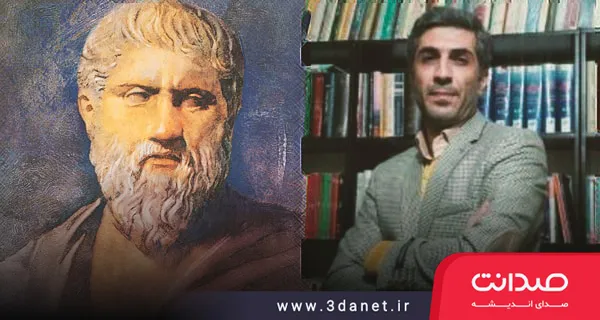
Akbar Jabbari's Lecture: 'Obstacles to Understanding the Quran'
Understanding the Qur’an depends on recognizing its genre. A “problem-based” approach, with its historicist outlook, addresses belief in a way that fosters literalism, whereas a “mystery-based” approach, adopting a transhistorical perspective, treats the text as a story open to interpretation and invites the reader to faith.

Akbar Jabbari's Lecture: 'Obstacles to Understanding the Quran'
Topics of the Lecture on Obstacles to Understanding the Quran:
1- Determining and recognizing the genre of the Quran takes precedence over any research, investigation, exegesis, or interpretation. 2- Genre, in a general classification, is of two types. 2-1 The "Problem-Oriented" Genre 2-2 The "Mystery-Oriented" Genre 2-1-1 The problem-oriented genre both views the book within the realm of the problem and seeks to present the problems of its surrounding world to the book and find an answer. 2-2-2 In the problem-oriented genre, the book is treated as a practical treatise of religious rulings (Tawzih al-Masa'il) and was revealed to solve human problems. 2-2-3 The practical-treatise approach to the book, just as it is susceptible to compassionate and merciful readings, is also condemned to superficial literalism and provides a suitable ground for excommunicative (takfiri) and violence-oriented readings. 2-2-4 The practical-treatise approach owes this ground and context to the "historicist" perspective. 2-2-4-1 The historicist perspective understands the text through historical data and considers "meaning" as an "object" that must be attained. 2-2-4-2 The historicist perspective advances itself through various methods, styles, and ways. 2-2-4-3 The identification of "belief" (i'tiqad) with "faith" (iman) is the common feature in all historicist methods. 2-2-4-4 Jurisprudential, theological, tradition-based, scientific, social, and political exegeses are all founded upon historicism and fall within the "problem-oriented" genre.
2-2-1 In the "mystery-oriented" genre, the book is like a "tale" that is "interpreted" and "allegorically interpreted" (ta'wil). 2-2-2 In the mystery-oriented genre, the audience places themselves within the world of the text so that this text may organize their world. 2-2-3 In the tale-centered approach, both the unseen (batin, inner dimension) of the verses and words, and the unseen of the world are taken into consideration. 2-2-4 The tale-centered approach is based on a "transhistorical" perspective. 2-2-4-1 The transhistorical perspective reads the text as if it has just now been revealed to the reader, and all names, pronouns, and addresses refer back to the audience. 2-2-4-2 The transhistorical perspective has been proposed, more than anywhere else, in mystical exegeses and among mystics. 2-2-4-3 In the mystical path, there is a fundamental difference between faith and belief.
3- No authentic text invites the audience to "belief" nor makes believers its audience. 3-1 An authentic text has two characteristics: 1- It has the potential for perpetual interpretation and allegorical interpretation. 2- It is epoch-making. 3-2 An authentic text invites its audience to faith and speaks with the faithful. 4- Faith, as an intentional act, is always faith in something. 4-1 The first and most fundamental object of faith in the Quran is the "Unseen" (Ghayb). 4-2 Faith is an openness towards the unknown (the Unseen). 4-3 The Unseen is either the "World of the Unseen" or the "Unseen of the World."
.
.
Audio of Akbar Jabbari's Lecture Titled 'Obstacles to Understanding the Quran'
.
.





Discussion1 comments
بالا خره کسی را یافتم چیزی بفهمد!!!بخشید