Sociology
Amid the Clamor of Poverty and Violence
Celebrating the death of Atena's murderer reproduces violence, for poverty and violence are twins, and the killer himself is a victim of poverty and sexual repression. This jubilation is a warning sign for the mental health of a society that has turned death into a carnival of joy.
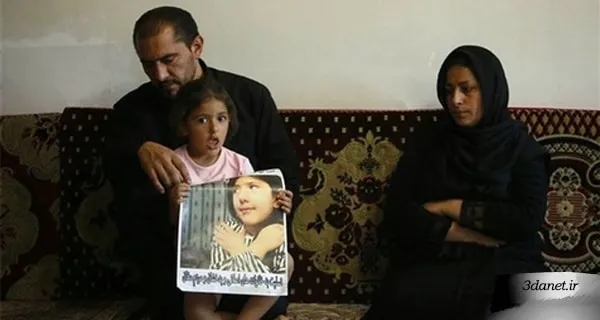
The murder of Atena is profoundly painful. But in a violence-ridden society, pains are not few. The pain is greater when, to compensate for one act of violence, more violence is demanded. The pain is greater when a society erupts in cheers of joy to create more violence. The people's cry of "stone him, stone him" and the victim's family's desire to hear the murderer's scream at the moment of stoning are repressed desires that resurface in the guise of violence.
In an article I wrote years ago on the occasion of Bijeh's execution and death, I unveiled a face of violence. That incident faded from memory, and only the cheering born of joy at the murderer's scream at the foot of the gallows persisted in the background of society's appetite for violence. In that note, I showed how poverty and violence are twins, and the murderer, in every circumstance, is himself a victim of violence. Widespread violences that have cocooned themselves upon the gaunt face of poverty, and do not release their grip on society except through successive victimizations. Now, "sexual repressions" must be added to this tableau. This is not the first time a murderer has victimized his sexual prey twice. Once through rape, and once through committing murder. But neither of these takes effect without victimizing the murderer himself. Before that, society victimizes the murderer, either due to "irresponsibility towards poverty" or due to "irresponsibility towards sexual prohibitions and repressions." You observe that when violence becomes generalized in a society, Atena is not merely a victim; her innocent and painful corpse is that of someone who exposes a chain of violences. Atena's death unveils the cold, frozen face of a society that remains indifferent to its social responsibilities. It is not without benefit now to draw esteemed readers' attention once again to that note. ▫️▫️▫️▫️▫️▫️▫️▫️▫️▫️▫️▫️
When Bijeh went to the gallows, perhaps the author was not the first person to be deeply affected by his death. But why does cheering and a clamor of joy at the death of someone who is himself a victim of poverty and violence resonate in the urban space? Why does the echo of joy occur in the most marginal point of the capital? Is the palate of the people of Pakdasht so kneaded with the taste of death that on the day after Muharram, they greet the first morning with a clamor of joy at death? Is it not poverty and marginalization that draw the mask of joy over the hideous face of death? Is it not a segment of the city-center dwellers who transfer the cost of their happiness onto the death and joyful poverty of the marginalized? Is it not economic inequalities that create violence and public destruction? Is not the transformation of death into a carnival of joy and the transformation of mourning carnivals into entertainment ceremonies manifestations of the generalization of violence and destruction? Is it not the Chaharshanbe Suri celebrations which, despite all manner of destruction and incendiary materials that, on the scale of a full-blown war, season the clamor of joys, gradually transform from what was once known as dispelling "the pallor of one's face" and a symbol of poverty eradication into a symbol of Iranian violence?
Apart from factors such as levels of awareness, systems of expectation, and the accumulation of energies that find no outlet for self-expression, is the release of these energies during Chaharshanbe Suri not a clear symptom of the sickness and spread of violence in society? Why do those reformists who are terrified of violence thus close their ears and eyes to the public violence and destruction present in society and fail to see the truth as it is? But violences do not always and everywhere manifest identically. The forms of expressing violence in the center differ from expressing violence in the margins. When inequalities become the source of violence, violences may also be expressed in both high and low forms. In the upscale parts of the capital, on snowy days, they put on a display of crashing expensive cars, and in low-lying areas like Pakdasht, they stage a celebration of an execution ceremony?
Statistics show that violence and destruction in today's Iran, relative to what is attributed to the humanistic culture of Iranians, are clear symptoms of a general anomaly. Violence in the West is the product of a process that has turned entertainment into culture. The capitalist system itself, by producing various forms of entertainment, directs violence toward the erosion of consciousness and further entertainment. But in countries like ours, how does violence manifest itself? If entertainment in the West, and even in the affluent, literate areas of the capital, causes inequalities to be concealed and channels the energy of the youth toward certain forms of violent tendencies—violence accompanied by sexual pleasures and various entertainments—then on the margins of the capital, due to sexual deprivations and deprivations stemming from a lack of dignity and livelihood, violence erupts in the worst forms of crime. To the extent that the spectacle of execution and the violence preceding it against an individual who is himself a victim of poverty and violence appears as a collective jubilation.
Perhaps rejoicing at the death of certain criminals who, through misguided policies, drag a country into criminality—like the cheers of joy from the Romanians who saw Ceaușescu off against the wall with bullets—is a justified display of revolutionary jubilation. Yet the death of no human being, even the death of a dictator, can be a cause for happiness. But the cheers of joy from people at the death and execution of someone who is himself a victim of poverty and violence is a serious warning to those who contemplate or plan for the mental health of society. Perhaps rejoicing and even applying the most violent methods of death against criminals and offenders, and even against those who have committed murder within a family, in times when vengeance was considered a value and in societies, clans, or tribes where emotional bonds were the basis for regulating social behavior, was considered a pleasurable and charismatic act. In this state, neither the father, nor the mother, nor any of the victim's relatives, when they took pleasure in shedding blood, thought about the fact that shedding the murderer's blood was pleasurable insofar as they had undertaken it for the continuation of social life and the removal of a source of corruption. The pleasures derived from revenge were and are due to the fact that they discharged their malice and enmity toward the murderer of their child, a feeling of happiness resulting from the subsiding of vengeful anger.
Before the human being was recognized as an individual and as a legal entity, the existence and expression of this feeling was considered a right. Nevertheless, the existence of this feeling is recognized as a symptom of pre-civil life and an opposition to human rights. From the perspective of religious doctrine, and particularly what is mentioned in Islam, retribution (qisas) is considered a "method for the continuation of life." This perspective, when human reason is addressed in these very allusions and admonitions, draws our attention more and more to the rights-based nature of the verses. This is while the pre-modern view on the subject of revenge relied on the feelings and emotions of the community. The feeling of revenge and satisfaction from revenge is an anti-human and anti-ethical feeling. There is no human or ethical option that can justify the feeling of revenge. The feeling of revenge pertains to a private understanding. An understanding that only responds to the satisfaction of individual desires and, at most, the satisfaction of the desires of a tribe. Even if the feeling of revenge originates from a right (as in the case of Bijeh), it is devoid of any human or ethical substance. Therefore, fueling the feeling of revenge from any quarter is to empty the avenger of human and ethical substance.
The avenger never asks themselves: how does bloodshed soothe the pains of the one whose blood was shed? What is there in bloodshed that cleanses wounded feelings? Does the avenger not know that by shedding blood again, the one whose blood was shed does not return? They certainly know, but they certainly do not know that without the motivations related to the "continuation of social life," the subject of punishment is devoid of any value.
Moreover, the avenger is unaware of the fact that the subject of punishment "without the continuation of life," and solely for the sake of punishment, is something that pertains to the human condition on the Day of Judgment. A condition specific to the relationship between a person and their deeds. No individual has the right to punish another human being solely for the "sake of punishing" them or for reasons of inflicting pain. From a legal standpoint, crime and punishment have an individual nature and basis, but the purpose of punishment has a "social nature." In other words, every individual is responsible for the rightness or wrongness of their behavior, and in response, punishment is directed at the individual responsibility they bear for their conduct. Society undertakes punishment in order to prevent the "continuation of crime." Therefore, if society disregards this goal and adopts the aim of punishment for the mere sake of punishment, it has not only relegated the work of the Resurrection to this world but has also set upon the path of the worst forms of violence. Because it has made the nature of punishment, from what is necessary for the continuation of life and preventing the occurrence and spread of crime, contingent upon punishing the criminal solely for their torment.
Punishment with the aim of torment both reinforces the feeling arising from vengeance and cannot prevent the continuation of crime. On the contrary, the process of torment and vengeance creates an endless chain of vengeance upon vengeance. However, punishment with the aim of continuing life is an approach that both leads to the negation of the emotional relationship of punishment and eliminates that which the feeling of vengeance relates to. In this way, any private or social groundwork for the spread of violence is eliminated. Another important point is that belief in the Resurrection, regardless of being a religious belief and regardless of whether we believe in the Day of Judgment or not, is significant from this perspective: "By relegating punishment to the Day of Judgment, the emotional and tormenting relationship of human with human (in this world) is transformed into a rational relationship aimed at the continuation of life."
The spectacle of Bijeh's execution and the roar of the people's joy was a display of the feeling of violence and the feeling of vengeance. This satisfaction was perhaps justified from the perspective of pre-legal and pre-civil life and on an individual and familial scale. But on the scale of a society with a population of thirty thousand and the unified presence of the city, it was a warning heralding the spread of public violence. Had this crowd, cheering joyfully at the death of one person, not thought of the factors of poverty and misery that were the effective grounds for the crime? Was Bijeh a born criminal? Was their joyful cheering not an affirmation of the exploitation created by the inequalities of capital-city dwelling?
When the people of Pakdasht and all those living on the margins strive to conceal what were the social, economic, and perhaps political grounds of the crime, are they not, in effect, rejoicing at the poverty and oppression directed against them? But it was not only the people of Pakdasht who held a celebration of poverty and violence; did the authorities, by putting Bijeh on display and flogging him before his execution, not create the grounds for a violence that led others to target him with knife blows before his execution? Did the authorities not ask themselves what place flogging had for someone who no longer has any need of this world? Were they trying, through this action, to place the exact retribution the criminal deserves into his own hands? Could all this punishment compensate for a moment of the crimes Bijeh displayed against children? Certainly not, but if it could not, then if the purpose of punishment could not be exact retaliation, what was the purpose? If flogging before execution, especially putting it on display before a massive crowd where the potential for reinforcing feelings of vengeance exists, was not carried out with the aim of exact retaliation, with what aim was it carried out? Does this very example not prove that the legal system must be regulated, with an orientation towards the sole execution of a single sentence, from among the multiple issued sentences? With a new perspective on the issuance of sentences and the manner of their execution, will we not put an end to the clamor of violence and poverty?
.
.
Amid the Clamor of Poverty and Violence
Author: Ahmad Faal
t.me/BayaneAzadi
www.ahmadfaal.com
.
.



Discussion2 comments
حالا مشکل شما فقط همون هلهله ست؟! چه اشکالی داره اونم بذار به پای استثماری که نابرابریهای پایتخت نشینی ایجاد کرده!!!
مبهم نوشتید مخصوصا به جامعه دینی برنخوره