Sociology
Silence! At the Moment of Tragedy; This Time, the Tragedy of Atena!
The Athena Aslani case became a pretext for political posturing and calls for punishment, but we must ask why the social system undertook no rehabilitation of the perpetrator. Instead of hating the sinner, scientific and psychological analysis can prevent the recurrence of such tragedies.
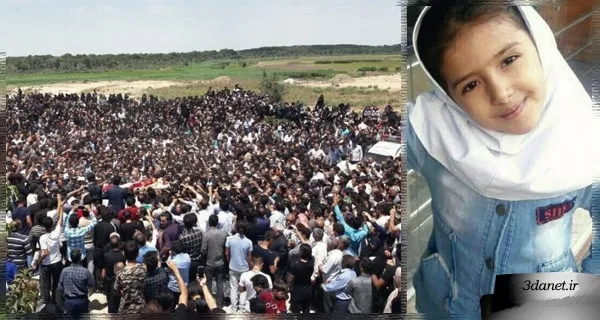
Ever since receiving the news of the catastrophic incident involving our daughter "Atena Aslani," this poem by Shamloo has been repeating incessantly in my mind:
Against the leaden backdrop of morning rider stands silent ...
"O God, O God! Riders must not be standing when the incident is signaled...
Beside the burnt hedge the girl stands silent and her thin skirt in the wind flutters O God, O God ..." [An excerpt from a poem by Ebrahim dar Atash]
In Greek mythology, Athena is the name of a goddess; the goddess of wisdom and courage, pure and virgin, beloved of her father. Although her father Zeus initially feared her dominance, after she grew and he observed her composure, she became the father's most beloved child, even causing the envy of Zeus's other children!
Athena; it takes its name from her epithet Parthenos, which means "Virgin"!
Once again, an innocent young girl has been victimized. It is very difficult to put ourselves in her place, at the moment she was subjected to that heinous act. It is shattering to imagine being in the place of Atena's family. But the incident has broader dimensions.
Unfortunately, in our politicized society, Atena's case has once again become a pretext for sharpening political alignments!
If only one could say: Friends, pause for a moment! For God's sake, let us approach this tragedy more empathetically, and let our first reaction not be to cast blame on the opposing faction. In this incident, the reaction of our reformist friends has been: If the 2030 Agenda had been implemented, this tragedy would not have happened! And the reaction of the opposing faction: If hijab, chastity, and the boundaries between mahram and non-mahram had been observed in society, and if, for example, in the interactions between Atena and her oppressed father, with that wretched dye-master, religious boundaries had been respected, that tragedy would not have happened! And users from each of the two factions, in conflict with the opposing faction's stances, even resorted to mocking the other side's analysis and suggestions. But, surprisingly, I must say that from a more empathetic standpoint, one can find common ground between these two positions. In the discourse of the traditionalist faction, the necessity of teaching chastity as a deterrent is assumed, and in the discourse of the more modern faction, there are teachings with a different lexicon that also have a deterrent aspect! Very well, what harm is there in, at least as a first step, relying on commonalities, and in subsequent steps, if necessary, evaluating the points of difference! Regardless of the reactions of users in the virtual world, the coverage by the official media (television) was also not sufficiently measured. Reporters, alongside covering the news and the stances of law enforcement and the regional judicial official, merely highlighted the determination to punish the one labeled a criminal, murderer, and rapist, making an effort seemingly aimed at quelling the people's anger. The noble people whose reaction, in their hatred for the individual and the location of the catastrophe, was to set fire to the murderer's shop! But no one analyzed who the murderer was. Incidentally, the name of the one now called "murderer" is "Ismail"! The name Ismail indicates he was born and raised in a family with religious affiliations. In religious narratives, Ismail is among the prophets and the ancestor of the Holy Prophet of Islam! I believe no one should doubt that the 40-year-old Ismail, whose entire existence is now reduced to "murderer-rapist," was, so to speak, "innocent" at birth. Why do we not ask in which educational and social environment Ismail grew up that such a crime was committed by him? It has been said that Ismail had 5 prior records of child abduction and acts contrary to chastity! Truly, what corrective behavior did our social system exhibit towards Ismail after his previous crimes were discovered? If, after his prior offenses and before the tragedy of Atena, our social system had shown corrective behavior based on psychological and sociological counseling rather than just judicial action, would the fates of Atena and Ismail not have been different now?
In his official confessions, Ismail has said that he coveted Atena's gold jewelry, and when he tried to take the girl's gold, she made a noise, and to silence her, Ismail put his hand over the little girl's mouth and suddenly found her body lifeless. For now, we are unaware of the truth or falsehood of this claim! But my heartfelt wish is also that further interrogations do not prove rape before murder. Although, if that heinous act did occur, it is the duty of the judiciary to uncover it. But should all of society's concern be limited to crime detection and punishing the criminal? Should "assuaging the feelings of the victim's family" be tied to the "severest" punishment and the matter declared closed here?
The golden advice of sages and the wise has been that hatred should be directed at the "sin" and not the "sinner"! I believe the tragedy of innocent Atena has four victims: 1- The oppressed Atena herself, and 2- Ismail, who is both the murderer and, in a way, a victim, 3- Atena's family, whose heart-wound will not easily heal, and their real need is not the deepening of the roots of anger and revenge, but scientific and religious methods of correctly facing calamities, healing, and returning to life, 4- Ismail's family, who seem to gain nothing but chronic disgrace, while they too are human and have the right to live with dignity. I ask myself, where are the sociologists of social issues, the psychoanalysts, and social psychologists to provide a scientific analysis of the incident, and why is the immediate presence and analysis of these experts absent in public media, with only the emergence and reflection of law enforcement and judicial apparatuses being broadcast?
I hope the dimensions of the affair are not reduced merely to "crime and rape," and that Esmail's behavior is investigated as the manifestation of a kind of "illness," and that through correct, scientific analysis, the recurrence of similar cases is prevented. Perhaps by adopting this approach, the soul of our innocent goddess "Atena Aslani" will also find greater peace; not just by fanning the flames of revenge! I hope the silent riders do not stand still when the incident gives warning. Here, public affairs managers, sociologists, psychiatrists, and psychologists are being addressed, as well as governmental and non-governmental institutions involved in Iran's social issues.
Suggested focal points for experts and the media to address: - The psychological dimensions of the phenomenon of child abuse, murder, and possibly sexual assault - The sociological and cultural dimensions of delinquency - The psychological traumas before and after the crime in the individual labeled as rapist/murderer, and ways to improve their psychological state as a human being - The psychological traumas of the victim's family and ways for them to recover their mental health - The psychological and social traumas of the perpetrator's family and ways to optimize their situation - Strategic recommendations for families, to adopt correct behavioral methods within the logical spectrum between two extremes: severely restricting children out of fear of similar incidents on one hand, and abandoning children in a society prone to such incidents on the other.
I hope academics, NGOs, research institutions, alongside the press, the national broadcaster (IRIB), and centers such as the Social Deputy of the NAJA (Law Enforcement Forces) and the Judiciary, would turn to such holistic perspectives and scientific analysis, and not settle for outbursts of anger that flare up instantly and subside in a short time, thus not providing the opportunity for another tragedy.
.
.
Silence! At the Moment of Tragedy; This Time, the Tragedy of Atena!
Author: Ardeshir Mansouri – July 14, 2017
.
.



Discussion0 comments
No comments yet; let yours be the first voice.