اندیشهفلسفهخردگفتگوحکمتمعناپرسشفرهنگ
Sociology
A Glance at Education on the Threshold of Another Mehr
Due to structural weaknesses and politicisation, the education system has failed to cultivate citizens. Drawing on thirty years of experience, the author critiques teacher recruitment and textbooks while offering teachers recommendations such as studying teaching methods and avoiding supplementary workbooks.
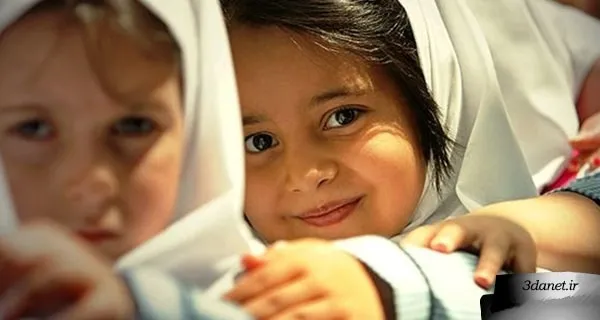
When does first love ever leave the heart! (Rumi)
Although I did not retire as a “teacher,” I was employed as a “teacher” and, in various work situations, never shed the skin of a teacher. After thirty years of work, the most captivating moments of my life were the spark that lit up in the eyes of a pupil or student who found a new path to a different way of seeing, and I had a small part in that discovery; and the bitterest moments were when, for whatever reason, despite my efforts, I found myself unsuccessful in opening a window in this regard.
The most important cultural event coinciding with the beginning of autumn in the cultural history of contemporary Iran is the reopening of schools on the first of Mehr; schools that are guided under the institution of “Education.” An institution that could have played a very important and foundational role in development, but has been prevented from fulfilling its vital role due to fundamental and structural weaknesses.
The main root of the emergence of these weaknesses must be sought in the macro-level goal-setting and policy-making of the education institution, which manifest in the sub-systems of: “teacher recruitment and training,” “textbook compilation,” “school management style,” and “teaching methods.”
In recent decades, the education institution, with an increasing trend, has bent under the burden of the political institution and has strayed from its primary mission, which is cultivating citizens with insight, knowledge, and basic skills for a better life. Now, the outputs of the education system are citizens who are neither adequately familiar with their historical and cultural past, nor with citizenship rights and duties, nor the realities of the new world, nor basic life skills (such as learning skills, critical thinking, empathy, self-knowledge and self-esteem, anger management), nor important environmental issues, nor even aware of and committed to the very ideals upon which the most goal-setting, budgeting, and resources of education are spent, namely religious-ideological values.
As a citizen who entered the world of teaching 30 years ago, and although for more than the first 12 years of my career I was not directly in that role, during these 30 years my connection with the school and the institution of education and the various sectors of the education system was never severed, I consider it possible to offer some concerns to the community of dear teachers:
A) The Descriptive Step - Within the body of the education system, there are many noble and highly motivated individuals, sincere people and those who are the pride of the teaching profession—those who entered this occupation not out of necessity, but out of a love for teaching and nurturing human beings. However ... as a direct observer, I believe that these individuals by no means constitute the majority of teachers. There are many who entered this profession not with interest, but because they could find no other job, without having fully acquired the skills and competencies of teaching. Perhaps in any other profession, a certain degree of lacking basic competencies can be overlooked, but in teaching, the damage resulting from this lack is far more detrimental than in any other job. The lack of the competencies in question has roots in various places, but the most important root must be sought in the teacher recruitment and training system. - Regarding textbooks: it can be said that books related to mathematics and experimental sciences, such as physics, chemistry, and biology, possess a minimum level of acceptability and, in some cases, match the textbooks of developed countries. However, two problems still exist: one is in the area of the provisions and content of humanities textbooks, where the dominance of an ideological burden has diminished their richness and efficacy, and in some cases, they either lack the necessary adequacy for the correct teaching of concepts or even transmit incorrect teachings to students. The second point is the marginalization of official textbooks, which, in terms of teaching methodology, are written based on educational standards, but the profiteering of books known as "educational aids" has caused these main textbooks to be eclipsed, and solution manuals, sometimes riddled with errors, have taken their place, and this adds to the depth of the crisis of inefficiency in our education system. - The payment system and career advancement processes for teachers are also highly flawed. Teachers' salaries are so low that they have never risen above the lowest wages, even on a national scale. Teacher promotion is also mainly based on years of service, not on the level of capability and efficiency. The complementary criterion to years of service, unfortunately, boils down to two things, both of which are often defective: one is in-service training courses, which are often conducted in a very lifeless manner and without tangible educational achievement, and the other is what is done under the name of "action research," which, it can be said, in 99 percent of cases, is nothing more than copying from the internet. Interestingly, not only is this matter not unknown to education officials, but in most cases, the officials themselves are the facilitators of these defective processes.
B) The Recommendatory Step
Dear and precious teachers, forgive this citizen who holds you dear, and if you find them worthy, reflect upon these recommendations:
1- Seriously place the study of modern teaching methods on your agenda. I have tasted the bitter flavor of teaching unmotivated and, so to speak, ill-tempered students with the depth of my being. I dare say that I know of no task harder than teaching an imposed subject, whose content the teacher themselves sometimes does not believe in, to a teenager who is not interested in learning it. Such a class is equivalent to what is known as hard labor. But believe me, if the teacher is equipped with modern teaching methods, the amount of that torment is significantly reduced.
2- Do not be promoters of educational aid books. The dominance of using common educational aid books can lead to the mental paralysis of the student. The textbooks authored within the education system, regardless of content, are, in terms of authorship method, more measured than the books of the treacherous educational aid market. Let students encounter problems and even ambiguities when referring to textbooks, and you teach them the method of overcoming the problem and ambiguity. Solution manuals are killers of thinking skills. Our children are inherently weak in thinking skills; let us not play a role in deepening this weakness further!
3- Read literature: be familiar with at least one book of poetry every six months; read one novel a year.
It does not matter what your specialized field is; mathematics or physics, sociology or Quranic studies. Please consider that success in teaching in any field depends on establishing effective communication with the student, and this communication is not possible without possessing refined and strengthened emotions. Literature, if studied purposefully, leads to the elevation of the spirit and the strengthening of emotions.
4- Be proud of being a teacher from the depths of your being. Forgive me! But either set aside teaching, or do not directly and indirectly speak ill of teaching and cause its status to decline. Whenever you rise to claim your rights from the authorities, express your lack of salary correctly and protest this bitter reality, but never be mindful of the lack of salary when facing a student. Do not link the spiritual nurturing of a developing being in your presence to the amount of your wages. In the difficult moments of life and work, think of this: although your salary is low and protest is your right in its proper place, no salary can compensate for the education and training provided by a worthy teacher who loves nurturing human beings. Please remember that expressing the lack of salary and benefits when facing a student and their parents is ineffective in compensating for the shortcomings, but it is effective in further diminishing this position!
5- Magnanimity and self-esteem are necessary for all human beings, and this is doubly so for a teacher. All human beings love popularity alongside material benefits. Expecting things like a Teacher's Day gift or a certain letter of appreciation from a certain official diminishes self-esteem. Let this natural thing happen if others are truly appreciative and if we are truly worthy of appreciation. The overt and covert expression of the expectation of appreciation yields no result other than the reduction of self-esteem and dignity.
6- Please never ask someone else to write a so-called "research"(!) article for your promotion. This act is, without any doubt, an instance of dishonesty and lying, which is reprehensible both ethically and religiously. Believe that writing articles can be learned; take it upon yourself to learn it, or ask your respective education departments to hold training courses for you with the presence of experienced and conscientious instructors. Presenting someone else's article for career advancement is undoubtedly an instance of academic fraud. A fraudulent teacher cannot raise a student who is not a cheat, and a cheating student means a dishonest citizen who, whatever position they hold tomorrow, is a threat to the society in which we live.
7- Place these two books, alongside all other books, on your study list for the first six months of the 1396-1397 academic year: - The Hidden Half of Formal Education, Abdolazim Karimi, Abed Publications. - Nonviolent Communication: A Language of Life, Marshall Rosenberg, Kamran Rahimian, Akhtaran Publications.
.
.
A Glance at Education, on the Threshold of Another Mehr
A Word Especially to the Dear Ones Involved in Teaching in Iran
Author: Ardeshir Mansouri
.
.


Discussion2 comments
خیلی عالی بود. ما معلمان متاسفانه کم می خوانیم و بیشتر گرفتار روزمرگی هستیم.
سلام و درود و تشکر از به اشتراک گذاری این مقاله. به نکات خیلی خوبی اشاره شده است. مطلبی که میخواستم به آن اشاره کنم این است که هم اکنون کتاب های خوبی مثل سواد رسانه ای و تفکر انتقادی و انسان و محیط زیست به مجموعه درس های دوران متوسطه اضافه شده که اگر خوب به آنها توجه شود، می تواند دریچه ی ورود مناسبی باشد به صحبت کردن از مهارت های زندگی در آموزش و پرورش.