Philosophy
Ashamed of My Share
The author expresses regret for his role in spreading postmodern beliefs, arguing that their convergence with liberalism has produced a weak and horizonless society in Iran; he then outlines four responses to the event of modernization.
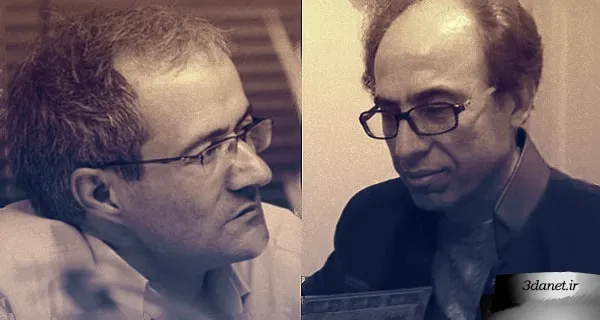
My dear friend Dr. Morteza Mardiha has written a Facebook note about me. In this note, which is laced with humor, the story of a private conversation is recounted to the effect that I have repented of my past. It is true; I had said that previously I paid a great deal of attention to postmodern thinkers, and among them to Foucault. I have conducted research, delivered lectures, and written notes in elaboration of their views. But today my impression is that the excessive reception of this type of belief was not merely a reception of a set of scientific theories, but rather played an implicit and unspoken function in organizing our situation and our present. When I pay attention to these functions, and to my own role in expanding them, I feel remorse.
Dear Dr. Mardiha kindly published this part of my confessions, but I wish they had not overlooked this sentence of mine: "I feel a loathing for the prevalence of two intellectual currents: one is postmodernism and the other is liberalism or neoliberalism." In that session I did not mention this point, but now I clearly point out that the reason for my loathing of postmodernism is also its complicity and collusion with the wave of liberalism in Iran.
In my view, liberalism and postmodernism, despite all the intellectual conflicts they have with each other, were complicit and collusive in advancing a certain affair in Iran.
How is it possible for a student of political thought to express disgust and loathing for schools of thought and intellect? The truth is that, as someone interested in intellectual discussions, I try, to the extent of my talent and ability, to learn something from all schools of thought. Rawls, Berlin, and Popper have rendered great services to the thought of humanity today; Foucault, Deleuze, Agamben, and Badiou also have many profound and instructive points. They are among the teachers of wisdom and reason for humanity today. Certainly, without them, deficiencies would have occurred in the intellectual heritage of humanity. But the epistemic and intellectual value of these great figures does not prevent us from sometimes assessing the consequences of the expansion of a thought in a specific situation as leading to calamities. The discussion is not about the epistemic values and the truth or falsity of those thinkers' beliefs; the discussion is about the necessity of employing various forms of thinking and their relation to the exigencies of the situation. A doctor might say to the relatives of a patient who died by suicide, I wish they had not had so much access to artistic works like bitter films and novels in that mental state. If they had consumed other intellectual and artistic works, perhaps they would be alive today and would have faced their problems better.
My story, with all that has befallen us, is similar to that of the doctor; I wish our historical developments had not coincided with the wave of the expansion of liberalism and postmodernism. I claim that the accidental accompaniment of our historical developments in the 1990s with the wave of neoliberalism and postmodernism has created calamities. The accumulation of the mentality of one or two generations with this type of belief has been extraordinarily effective in producing a weak, powerless, atomistic, and horizonless society. I myself have been among those who have played a role, to some extent, in expanding postmodernist beliefs, and for this reason I feel remorse.
Allow me to explain more in this regard. Like a narrative story, I will explain the story of Iran's intellectual developments after the revolution. But before that, I need to mention a theoretical introduction.
Types of Practical Reactions to the Event of Modernization
Modernization was not and is not a choice. It has been an inevitable event for the countries of the world. The fundamental characteristic of this event is the uprooting of all foundations and, as Marx put it, melting into air all that is solid. In the face of this event, four reactions are conceivable:
First: The attempt to rebuild ruined houses: Some cannot bear the foundationless modern world. In the nihilistic context of the new world, they do not believe what they see and experience. So they set to work and try to revive the uprooted world of tradition. This type of reaction can be considered a conservative reaction to the new world. This type of reaction naturally emerges in a segment of the populace and even in the individual psychology of many people. But sometimes this type of reaction takes on a pathological aspect. Some rise up, destroy, in order to create a new world. If they fail, they intend to destroy themselves and the world; if they achieve no success, they throw themselves into the embrace of death to be rid of the new world.
Second: Living in total homelessness. Another reaction to this world is clinging to total freedom as the special gift of the new world. Freedom in this type of reaction means liberation from every bond. The uprooted tradition, for this group, signifies the destruction of a dark and terrifying prison. Now one must live cheerfully and joyfully. They cannot bear any nostalgia for a return to old relations. They fundamentally do not seek a home or shelter. They are attached to freedom in its radical sense. They are pessimistic about any restrictive vehicle—not only religion and the foundations of traditional morality, but even new legal and juridical mechanisms. They submit to rules and laws only insofar as they do not cause trouble for others, lest they themselves become the object of nuisance. They seek maximum pleasure from the very texture of life. Pleasure generates the deepest experience of life in this world. They assault anything that is a ceiling, rampart, or meaning.
Third: Living in doubt and searching: The third type of reaction to the foundationlessness of the new world is searching. There are a few who, in the wasteland of meaning and foundation of the new world, try to search for a meaning—without, of course, regressing to the ruined houses of tradition. They are careful not to soil their garments with tradition along this path, not to become contaminated by any dogmatism of the traditional kind. So they mix reason with the elixir of doubt and skepticism and set out into the valley of thought. But what serves as their shield against the affliction of dogmatism itself becomes the central issue. They find nothing, so they remain forever in the valley of doubt and skepticism. Gradually, they sanctify the principle of doubt itself. They accept everything on the condition that it increases doubt and skepticism. The principle of searching becomes the central issue. Living in search becomes an end in itself. Continuous critique, doubting everything taken for granted, questioning and ever-new questions become the exhilarating fruits of their world.
Fourth: Building on foundationless grounds: The fourth type of reaction to the new world is the resolve to build. Action and the desire to build replace the absence of meaning in the new world. In this type of reaction, the individual sees themselves as an agent constructing individual or collective aspirations and desires. They imagine freedom in destroying what they do not want and in acting and striving toward what they consider ethical and rational. They are a free rational agent, in the sense that instead of seeking freedom in the satisfaction of desires, they think about constructing reality based on their desirable rational models. They begin from a perspective similar to the homeless subject, but find life in building a home and order in this world. Unlike the former, they are not confined within their inner desires; they make pacts with others, form communities, establish rules, issue laws, and enforce them. They are intensely a political and active subject.
These four reactions inevitably emerge in the face of the inevitable event of the new world. Of course, I do not mean that people are necessarily divided into these four groups. These are reactions that sometimes all emerge within a single individual and their incompatible temperaments. Each of us sometimes finds ourselves in a conservative reaction, sometimes a pleasure-seeking agent, and at another hour, a searching or acting agent. This fourfold pattern emerges naturally, and of course, each has its gifts and, naturally, its afflictions. Instead of relying on one of these types of reactions, one must think about their balanced combination.
The conservative reaction is the manifestation of society's effort not to be lost. If society surrenders its reins entirely to the destructive forces of the new world, it will disintegrate and quickly collapse. But if it culminates in a destructive fundamentalist force, it will swallow modern society and, like a monster, reduce everything to ruin. The reaction of the homelessness type is a reality that arises from the gift of freedom in the new world, but if this reaction prevails, it will act like an acid that dissolves all social capital. The reaction of the search type, which emerges in modern science and philosophy, is what nourishes modern reason to open new horizons and not remain within existing dogmas. But if this type of reaction prevails, social agents will turn into passive, cold subjects, and fundamentalist actors will destroy the objective grounds for their continued existence. The pragmatic type of reaction, too, creates subjects who posit, forge, and establish. They build institutions, enact laws, create new grounds, and make the deemed-impossible possible. It is obvious that if this group, too, entirely appropriates social life, society will lose the power of evaluation and assessment. Gradually, the builders may in fact be the destroyers.
What Happened to Us in the Sixties and Seventies
Iranian society, in the forties and fifties, was above all the arena of life and activity for a combination of the first and fourth models. It created modern, conservative active subjects. They were of the agent and actor type. Responsible, oriented toward building upon the groundless foundations of the new world or desiring to re-erect the lost past. In fact, in the atmosphere of the forties and fifties, two types of active agents were operating in harmony with one another but were unaware of their incompatible intentions. The revolution and the establishment of the Islamic Republic turned the hidden rivalry between these two types of actors into an arena of competition, strife, and war. Two active forces clashed with each other. Years of violence and destruction were the result of this calamitous conflict. They were both actors who had been emptied of the power of rational and moral judgment and decree. The very thing we mentioned in the third type of reaction to the modern world. Ultimately, the battle ended in favor of the conservative forces. Their ability to rely on the immense power of religion, their benefit from a powerful rentier state, their exploitation of the opportunity of war, and the power of modern media all worked together to organize a new order.
The sixties were a decade of heavy burden. The new generation that stepped onto the stage of society and culture in the late sixties could not establish a connection with the world of its fathers and older brothers. The world that lay before it was empty of the joy and passion of life. Empty of ethics and the power of rational decree and judgment. But beyond all this, not even a trace of spirituality and the former world of meaning could be found in it. There was no longer a generative force within it. It was intimidating and empty.
These events coincided with the collapse of the Soviet Union and the Marxist bloc. With the fall of the Berlin Wall, a wave of liberalism and neoliberalism swept the world. Upon our atmosphere of suspension and stagnation, a tempest of liberalism began to blow. Its force was such that it seemed everything was being uprooted in its direction. Critique, denial, and pleasure were the common triad that filled the atmosphere. The newly emerged young generation gathered intensely around it. A booming market took shape. A fresh wind was blowing and heralding another world.
The interesting point was that the conservatives, who had fallen into a state of stagnation and suspension since the late sixties, found the space of liberalism's rise to be a new arena for their own revitalization. Rightly, only this space could give Iranian conservatives a new force for life and revival. The more the liberals critiqued and denied and beat the drum of a life coupled with individual reason or personal enjoyment and pleasure, the more they made the drumbeat of the conservatives audible, so that they could breathe new life into their sectarian and particularistic values.
No voice was raised any longer calling for the construction of a new edifice in the modern, foundationless world. No one said that democracy and modern tenets require building and founding. There must be allied actors who, in opposition to what the conservatives build, erect new structures. Democracy and the new world require modern institutions. The concepts nurtured by philosophers and the desire for pleasure and ecstasy they instill in the youth are no remedy for a society that lacks a shelter and a roof for modern collective life. Promoting individuality and separating individual worlds from the social world is tantamount to vacating the field for conservative rivals to build their sectarian structures on the empty lands.
The substrates of our modern life were filled with two types of philosophers, both rooted in the liberal world. First, philosophers who, like factories, channeled new concepts into the consumer market, and second, philosophers who, outside the world of concepts, invited people toward a pleasure-seeking individual life. But those concepts and this invitation to a world of pleasure-seeking were similar in that both possessed a subjective, isolated, individual aspect, detached from the social, cultural, and historical world.
When acting subjects were engaged with one another, the contemplative philosophers were not critics promoting moral and rational judgment. Now that the field had been emptied of creative, acting players, a group had taken to the streets and alleys, spraying the acid of judgment on everything, destroying, and insinuating that in the wake of these destructions, a green and lush forest of democracy, modern rationality, and political and economic development would swiftly bloom. Others were whispering in the ears of the youth, "Even if no green forest replaces it, what is it to you and me? Seize your individual pleasure, for the world is ruin upon ruin. Seize the moment, for life is but a fleeting shadow."
The Role Played by the Postmodernists
Liberalism was promoted from the late 1980s onward and, of course, built a good market for itself. But its simple, straightforward, and logical language lacked sufficient passion and excitement for the new generation. It needed a companion, an ally, and an aide to evoke new horizons through the abstract forms of complex concepts.
Right in the midst of these events, the wave of postmodernism also entered Iran. I myself was among the first to be captivated by their concepts and approach. Individuals emerged who, with concepts of discourse, critical critique, and the production of a radical perspectivism, unleashed a far-reaching wave of philosophical, political, and social nihilism. Instead of logical and simple language, they employed a complex one. Complexity in speech was more evocative than the discursive order of the liberals.
In the intellectual consumer market, the postmodernists appeared as rivals to liberalism. The market being filled with these two rivals gave the consumer a sense of choice and free will. Yet both were different packaging of the same commodity. In practice, both were engaged in destroying the social, cultural, and political world necessary for the life of the modern middle class. The perspectivism of the postmodernists meant bracketing any possibility of judgment. The elimination of judgment is precisely what the pleasure-seeking liberal world demanded.
Allow me to put it more clearly. I said earlier that the Iranian liberal wave appeared in two guises: those founded upon individual reason and the power of personal judgment, and those who promoted hedonism. The postmodernists effectively served the promoters of pleasure and marginalized the first, rational type.
*****************
It was as if the postmodernists and the pleasure-seeking liberals had a secret coalition. Together, they embarked on a holy crusade. The result of their holy crusade is a world empty of collective capital, empty of creative and generative subjects. Empty of any possibility that might motivate the subject to resolve, in alliance with others, to found a new world upon the ruins of the old. The result of that holy crusade is lands scorched of social capital. The result is empty, vacant horizons.
In that private gathering where dear Dr. Mardiha was also present, I said that I too have a share in creating this situation. I do not know how much. But whatever it is, it is a cause for shame. Today I believe that postmodern methods and concepts, although they may carry profound insights, although they may be valuable in terms of research, are a deadly poison when they seek to function as a strategic approach in the realm of politics, society, and culture.
.
.
I am ashamed of my share
Mohammad Javad Gholamreza Kashi
March 12, 2017
Source: Zaviyeh Did website
.
.


Discussion0 comments
No comments yet; let yours be the first voice.