Sociology
Audio of the Debate between Dr. Khosropanah and Dr. Khosrow Bagheri
Universities suffer from a loss of self-confidence, and the unity of the seminary and the university must be in purpose, not path. A debate between Dr. Khosrow Bagheri and Hojjat al-Islam Khosropanah on the transformation of the humanities, book censorship, and the relationship of science with ideology and the Quran.
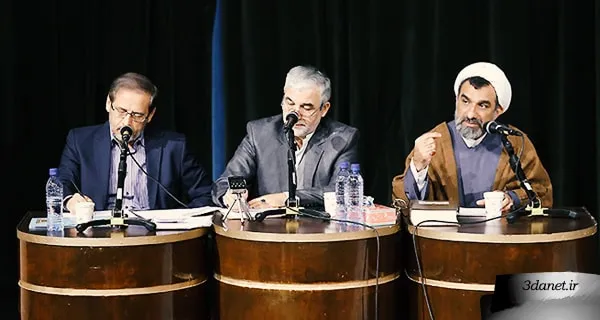
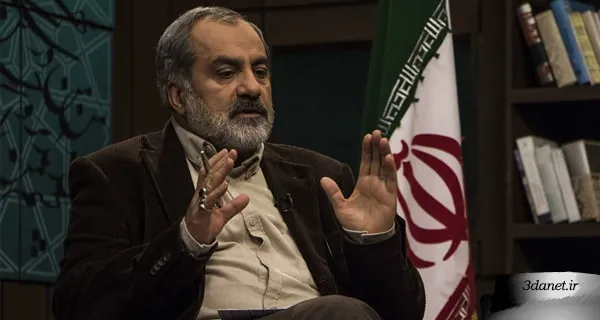
The academic session "Transformation in the Humanities" with a debate between Hujjat al-Islam Dr. Khosropanah and Dr. Khosrow Bagheri In this academic session, which was dedicated to the place of transformation in the Islamic humanities and the unity of the seminary and the university, Hujjat al-Islam Khosropanah and Dr. Bagheri engaged in a debate on this subject, the continuation of their remarks follows . . .
?Are our universities in a state of self-alienation
Khosrow Bagheri, a professor at the University of Tehran, said regarding the unity of the seminary and the university: The unity of the seminary and the university is a long-standing concern; the unity that was expected to take shape between the seminary and the university has not been properly established. Of course, the unity that would pave the way for transformation in the humanities has also not been formed. One of the factors for a successful connection is the incorrect conception that the seminary and the university have of the transformation of the humanities; indeed, both the seminary and the university suffer from a misunderstanding regarding the humanities.
This university professor added in the continuation of his remarks: The misunderstanding of the seminary institution is towards contemporary humanities, to which it has an ideological view, such that if something in the Western system is considered the fruit of the tree of falsehood, then we must also consider that matter false in science. Likewise, the seminary has shaped science in a kind of ideological way, whereas science in contemporary history has a special relationship with experience, so it cannot be called entirely ideological. Some individuals try to subject verses and narrations to experience in the form of science, something I do not accept.
Bagheri, pointing out that the university has not yet presented a correct and acceptable understanding of the humanities, stated: We in the university also suffer from a misunderstanding of the humanities, because the university has not yet reached a correct and clear understanding of the humanities and culture.
According to Bagheri, the university has not been able to correctly analyze the relationship between science and culture, and I believe our universities are in a state of self-alienation and have not come to believe that we can be a source of theorizing. Of course, when we speak of theorizing, it does not mean that anyone writes a theory and claims to have ideas and theories in all fields, but we do have self-alienation in this area.
Pointing out that the seminary and the university are two independent institutions, he said: Some in the country believe that the unity between the seminary and the university means that the university must be placed under the supervision of the seminary and be established so that the weaknesses existing in the humanities are resolved in this way. However, I believe the meaning of unity between these two institutions is unity in purpose, not in path. Because a hierarchical relationship between these two institutions has been a mistaken one.
?Our emphasis is on cooperation between the seminary and the university, not the domination of one over the other
Hujjat al-Islam Khosropanah, in the continuation of Bagheri's remarks in this debate about the seminary and the university, raised four preliminary and general topics and said: The seminary is an educational, research, and religious institution with a method of ijtihad; the university is also an educational, research, and promotional institution that engages in the promotion of both science and religion.
He added in the continuation of his remarks: It is true that the seminary and the university are two independent institutions, but the diversity of viewpoints has led to the formation of many thinkers with diverse perspectives. What is wrong with subjecting religious discussions and topics to experience so that we can apply them for those who do not believe in verses and narrations as we do? Of course, by humanities, I mean the social sciences, which are interpreted into three categories: the description of the ideal human, the description of the actual human, and the transformation of these two humans.
Hujjat al-Islam Khosropanah clarified: Transformation in the social sciences means structural and content changes. Of course, in my belief, the principle of transformation in the humanities is already occurring and cannot be denied. Now the question arises: to what extent is this transformation being utilized in the environment of the seminary and the university?
The head of the Iranian Institute of Philosophy and Wisdom, referring to Khosrow Bagheri's remarks that some believe the unity of the seminary and university means the university being placed under the supervision of the seminary, explained: I have never seen anyone claim that the university should work under the supervision of the seminary; our emphasis has always been on cooperation between these two institutions, not the subjugation of one by the other.
Khosrow Bagheri, persisting in his statement, continued: There is this issue that some believe the university should be under the supervision of the seminary, and he further raised the point: Why should research institutes censor university books?! Why is this not the case in other foreign universities?! Why is there no committee there that, for example, says to remove a certain statement of Freud's from his book, but I have seen this issue where some people come, read university textbooks, and say that you must delete this topic.
He asserted: In my opinion, Mr. Khosropanah speaks words of an ideological nature. He spoke of the ideal human being, which in my view, positing a human being as a political ideal human or an economic ideal human means everything is politics or everything is economics, and this is precisely ideological thinking and must be avoided.
Bagheri further stated: Mr. Khosropanah acknowledged that we should put religious discussions to the test of experience so that those who do not believe in verses and hadiths might turn to this matter, but in my opinion, this is the contradiction of religious science; that is, bringing hadith and narration to do something, and to prove a theory one must pray, this is disrupting the game of science.
?The Quran is not a scientific book / Topics in the Quran are stated concisely, not in detail
Bagheri further added: Ideology can never be science, but it can be related to it. We in the seminary and university do not have a correct understanding and definition of science and the transformation of the humanities, and these contradictions we witness today are the result of lacking this correct understanding; to understand to what extent we should use ideology and to what extent experience, because in my view, the Quran is not a scientific book, although topics related to science are stated in it concisely, not in detail.
Hojjat al-Islam Khosropanah re-emphasized: In absolutely none of the research institutes or the Qom Seminary does such a thing occur where parts of books are censored. My definition of science differs from Mr. Bagheri's definition, as he sees science as purely empirical. It is ideology that poses questions to the mind to inquire about realities, and I believe ideological thinking exists even in modern social sciences. No one has said that everything must be extracted from religious sciences. Mr. Bagheri, in his book "The Identity of Religious Science," attributed such a concept to Ayatollah Javadi Amoli, which I reject; Mr. Bagheri's argument is the inherent contradiction of religious science.
Addressing Bagheri, he said: Can you not accept the propositions of the Quran even at the level of a hypothesis? My intention in applying religious discussions in the form of experience is for the benefit of those who do not believe in religious foundations. You yourself say that many propositions exist in the Quran. My question is, do you not accept those very propositions? The very propositions that you yourself say are empirically testable.


Discussion4 comments
سلام قطعا از کسی که فلسفه نمیدونه و فلسفه رو با کتاب فارسی یکی میدونه نمیشه توقع داشت که فیلسوف رو بشناسه
سلام ... اقای خسروپناه که عمرش رو توی مسائل فلسفی گذرونده نمیدونه ؟؟؟ کمی تقوی و اندیشه ... بیوگرافی ایشون رو مطالعه کنید .
خواهشا این مباحث و موضوعاتی که تلویزیون صبح تا شب با پول بیت المال درموردش برنامه میذاره رو بیخیال شین. آخه آقای خسروپناه چیزی از فلسفه میدونه که تو سایت فلسفی از ایشون میذارید؟
حسادت آفت غم است ، برای عقده گشایی حرف تازهای بزنید