Literature
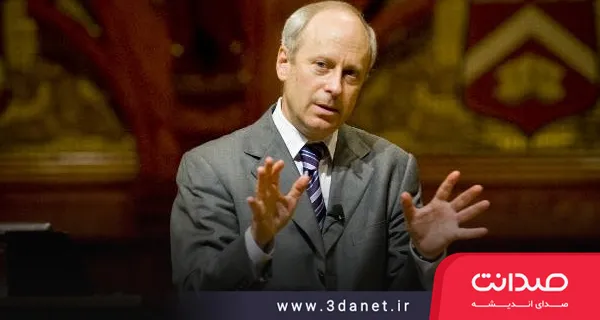
Bahram Beyzai’s Lecture Series: “The Semiotics of Iranian Myths”
Bahram Beyzai reads the Shahnameh as a social and political document about a great nation that attains wisdom through its mistakes; the lecture focuses on the epic's origins in Sasanian turmoil and the massacre of the Mazdakites, and the Umayyad impact on Iranian identity.
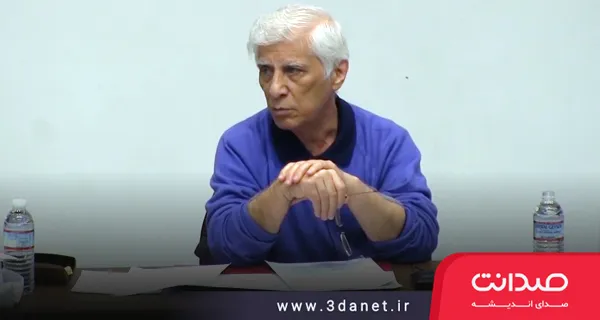
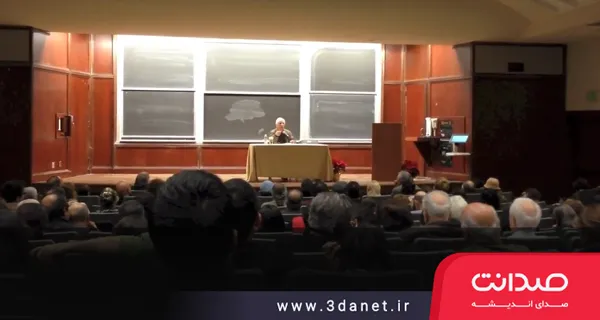
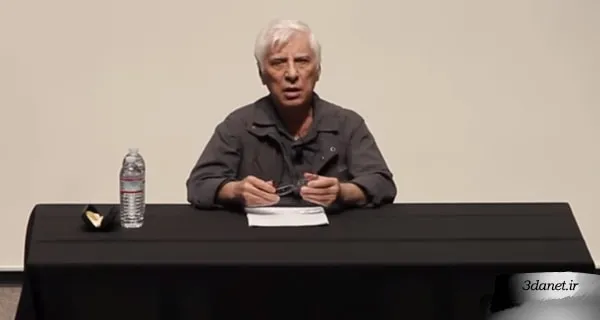
Workshop with renowned Iranian film director Bahram Beyzaie at Stanford University, January-March 2013. Sponsored by the Stanford Hamid and Christina Moghadam Program in Iranian Studies, and the Bita Daryabari Endowment in Persian Letters.
.
First Session of Bahram Beyzaie’s Lecture Series: “The Semiotics of Iranian Myths”
I will speak about the semantics of the Shahnameh in its social and political context, not its artistic one. The Shahnameh was composed at the end of the 4th century AH, and its final redaction, considering Ferdowsi’s death, must have been around 405–407 AH. We are now roughly in the 15th century AH, and more than 1,000 years have passed since that era. A distance has, in fact, opened up between us. A distance that has opened up between everyone and everywhere and that time. And this distance is, of course, not only temporal but also consists of historical events.
The Shahnameh speaks of the greatness of a nation that, through its own mistakes, fell into smallness. Anxiety about the future is visible in Rostam Farrokhzad’s letter, and Ferdowsi, the author of that letter, was right. These thousand years clearly show that Ferdowsi was right. The centuries immediately following the Shahnameh—the 5th, 6th, and 7th—are an era of the collapse of national aspirations. – The narrowing of the circle of hope, the result of several centuries of successive defeats – the closing of the horizon – the shrinking and dissolving of the people – from being the axis of the world to becoming a part of a whole, (Beyzaie explains that he means before that we claimed to be the axis of the world, but in that era Islam claimed, and still claims, to be the axis of the world) gradually this despair turned into isolation and renunciation of the world, dissolving into Allah, drowning in ideological disputes, drowning in petty quarrels that have led nowhere to this day and will lead nowhere for another 1,000 years.
It was part of the policies of the Umayyads and Abbasids to drown nations in fruitless disputes. Consequently, becoming content with little and less, and ultimately contentment with the four walls of one’s home, or a corner of the tavern, or under a tree, or by the stream. Contentment with proverbs disparaging this world and praising the hereafter… and that happiness is not possible in this world, and handing the world over to others, and accepting that we are playthings of fate. All of these cases are very far from the world of Ferdowsi and the Shahnameh. This is how the distance between the nation whose greatness the Shahnameh speaks of and the Shahnameh itself has grown day by day. In the modern era, the Shahnameh is recognized as a standard of language and linguistic discernment, but with today’s Europeanized outlook, does anyone even read the Shahnameh? We do not know! On a scientific, scholarly, and research level, it is of great interest to many, and it is of interest to intellectuals and enemies, which I will speak about later, and it is still an undiscovered world. But does it also answer everyday affairs? In my opinion, yes. Just as it has answered for the past 35 years! It did the same thing it accidentally did in its own time and became a standard of struggle.
Why and how did the Shahnameh come into being? At the end of the Sasanian era, a terrible event took place called the massacre of the Mazdakites, who were considered the reformist group of that time. Dr. Bahar, in his research, says Mazdak was probably a social reformer who established connections between the villagers, or the deprived class, and the court. Until then, there had been centuries of wars between Iran and Rome. In fact, during the Arsacid and Sasanian periods, all energy and wealth were spent on meaningless wars between Iran and Rome instead of being spent on development. But in the late Sasanian era, there were conflicts among the religious leaders, or the Mobeds, who wanted religious power to rule over Iran, and we know that in the last 50 years of the Sasanian period, about 19 kings were replaced, some of whom did not even last 6 months, and this indicates the disorder and social instability of that time. In that period, the Mazdakite revolution was carried out by the rural class, who demanded equality and justice for “women and property.” This issue has sometimes been disparaged, but in reality, it is an important issue, because you live in a country where the rich have harems full of women, capital, and power. Force, women, and gold are in their possession. Meanwhile, the deprived people struggle with drought, ruined villages, and deprivation.
Here the meaning of woman is very important, not as the completer of man, but as a labor force and a productive force. Therefore the people revolt, and Mazdak strives to guide this force, but ultimately a massacre of the villagers takes place. The Magi later call Anushirvan “the Just” for carrying out this massacre. And here you perceive the power of the Magi, and this is something they cast darkness upon in their study of it.
Thus, when the soldiers of Islam invaded Iran, it was a shaky country, without power, with temporary kings and Magi who could easily distort the kings and history. Before entering the main topic, I want to clarify something, and that is the word “Shah.” I have no problem with this word, and I think it is no worse than its similar counterparts. Like Amir, meaning the one who commands; Hakem, meaning the one who rules; Sultan, meaning the one who holds sway, and so on. Shah originally had a good meaning. We know that Shahryar means the friend/helper of the city. And Khesht (brick) also comes from Shah—that is, the first brick of every city. The Shah is supposed to be the guardian of the city and the keeper, the “gardener” of life. In Achaemenid times, there was a symbolic tree in the palace of every king, of which the Shah was the guardian of its life, a tree that is a symbol of the people’s life. In fact, if you remember, Zoroaster plants a cypress, which represents a garden that the Shah must tend, which at that time was also a symbol of Anahita or the deity of fertility
as well. This cypress represents the Shah’s duty—that is, guarding the city and its prosperity. The tree means the Word and wisdom. So if I use “Shah” here, I am using it in that same classical sense. Unfortunately, the victory of Islam coincided with the victory of the Arabs and the racialization of Islam, and it became a pretext for the conquerors’ domination. The first dynasty was the Umayyads. At that time, all Iranians and non-Arabs were addressed
as Ajam and Mawali. Mawali means slave, and at that time there were Mawali mosques specifically for the Ajam. The Umayyad policy was the elimination of the identity of the people they had dominated. In the midst of this, they translated Greek and Iranian works into Arabic and destroyed the originals. Like the transformation of “Hezar Afsan” into “One Thousand and One Nights.” Destroying historical monuments and masks under the pretext of idolatry. Burning books and obliterating languages. They also fabricated hadiths, such as that the most accursed of languages is Persian, or the language of the people of hell is Khwarezmian, or Khuzestan is the land of Satan, and Arabic is the language of the people of paradise, and the like…
In the year 61 AH, the event of Karbala occurred, something that became the basis of Shi’ism. Shi’ism in fact means that we are superior to the Arabs, but the Prophet’s family is an exception, and we follow them, not the Arabs. In fact, the reason for it, at least as accepted in Shi’a history, is that it is said that Shahrbanu, the daughter of Yazdegerd, became the wife of Imam Hussein. This matter is recounted in detail in Shi’a books. (Here he tells the story of Shahrbanu, Umar, and Imam Ali). This point is very important, in which a woman chooses her own husband. Others, of course, do not accept this. It is a myth, we know. But are not other things myths? Religions are myth from head to toe. And Iranians say that sovereignty from Yazdegerd reaches Hussein through his daughter. The point is that sovereignty in this history passes from woman to man. (Fosca: Compare with the law recently passed by the Queen in England, that women can also transmit the right to reign.)
In the year 28 AH, Abu Muslim of Khorasan overthrew the Umayyads, and the Abbasids took their place because they were of the Prophet’s family, and we hoped they would not discriminate against non-Arabs. Which indeed was the case at first, and the Barmakid family rose to the zenith, becoming viziers; they were among Abu Muslim’s commanders and were from the people of Balkh. And later they converted to Islam. And then, during the time of Ja'far al-Barmaki, they fell again, though they had greatly contributed to the flourishing of Baghdad. The events that occur here, and the fact that later the same discrimination against Iranians recurred under the Abbasids, caused Iranians to seek out their genealogies to establish a connection with the Prophet’s family, and the first Khoday-namehs and genealogies were fabricated and written, and in the third century, the composers of the Shahnameh gradually emerged. Who predated Ferdowsi. Alongside the Sunni-Shia conflict, mystical tensions arose, and the wars of the seventy-two sects began. At these times, no one sought the negation of Islam.
At this time, the Abbasid caliph al-Mutawakkil was someone who strove to obliterate everything Iranian, and a policy emerged then of inviting the tribes of Central Asia to attack Iran. Here, I will not name a tribe so as not to offend anyone, but we must understand that we ourselves are responsible for our own problems. Please do not take offense, but I am compelled to name names; please do not take offense. At that time, the tribes beyond the Oxus were invited to attack Khorasan. There is also the invitation of the Turks to collaborate with the caliphs in enmity against the Iranians. Al-Mutawakkil did something “salty” to strengthen them against the Iranians. In the third century, he ordered the cutting down of the Cypress of Kashmar. A cypress that Zoroaster had planted with his own hands, and he ordered its trunk to be used for building a palace in Baghdad. This cypress was 1,450 years old, and the circumference of its trunk was equal to 28 lashes. The Iranians offered to pay 50,000 dirhams so the cypress would not be cut, but the governor of Khorasan did not dare, and the cypress was felled. At the fall of the cypress, the earth trembled, the qanats collapsed, and the sky turned black from the flight of the birds that had nested in it, and the wood of this tree was loaded onto 1,300 camels and taken to Baghdad, and when it arrived, al-Mutawakkil had been killed by his own “Turk” slaves. That is, the degree of regret and the degree of enmity is astonishing. The caliphs are responsible for creating the Sunni-Shia conflict and the tribal wars. During this historical situation, Ferdowsi brought the work of the other Shahnameh composers to completion. The result of the Abbasids’ work in inviting the Central Asian tribes is the onslaught of the Seljuks, the Qara Khitai, and others. Ethnic and religious wars and so on, where the manaqib-khwans recite the virtues of Ali, and elsewhere the virtues of the Prophet and the Four Caliphs, and of course the Sunni-Shia war is ablaze. Also, the construction of religious myths in opposition to the Shahnameh, which were also anti-Iranian, such as the Hamzeh-nameh and the Eskandar-nameh, and so on and so forth. The interesting point is that the important myth in this midst is Alexander, and the important point is that those who have ruined Iran are elevated to divinity. This is a cause for wonder, of course. For example, this very Alexander is elevated to divinity, and in the Eskandar-nameh they even invite everyone to God. The result of all this is the invasion of Genghis Khan, who kills everyone and leaves not even a dog or a cat alive. And after that we have Khwaja Nasir al-Din Tusi, the result of which is the killing of the last Abbasid caliph. And the Shahnameh is this very repetition of this same folly, which is repeated and paid for.
.
Session Two of Bahram Beyzai’s Lecture Series, “The Semiotics of Iranian Myths”
There are days when one doesn’t know where to begin, and today is exactly that day. I mean, there’s absolutely no getting around it. Today is precisely that day. Before anything else, I want to thank a gentleman who spoke last time about class interests. I am very grateful because he made me think to explain this subject a little more. Because I later realized there is a misunderstanding, at least regarding the Shahnameh and Ferdowsi, which is repeated very, very often, especially in these last twenty or thirty years—naturally, there has been more opportunity and occasion to speak of it. I thought I would bring some examples for us to [discuss][1], but I am thinking that the formula of class interests itself does not apply to all people. There were many artists, intellectuals, and great figures who rebelled against their class interests and, incidentally, were destroyed by the very people for whom they were fighting; therefore, this does not always hold true. I at least know that nearly two centuries ago, Tahereh Qurrat al-Ayn rose against the class from which she came and was practically killed by ruffians in the service of that same class, and in fact, she had risen for them. In this same period, for example, thirty, thirty-five years ago, we know that almost the same thing happened inside Iran: many of those who had begun to oppose and rebel against their own class were moving, and for those who destroyed them. I want to say that it does not hold true always and everywhere. In the case of Ferdowsi, it does not hold true in any case, as we shall see. And in many places, of course, it does hold true. I don’t want to say it doesn’t; I am not denying the formula, but I want to say it does not apply everywhere and to everyone, so it must be applied with great caution, research, and investigation.
The second point: last time I spoke about the dehqans. I will read a few poems here to explain who the dehqans are in the first place, and before that, I think I will read one, two, three sections from things Ferdowsi himself says; later I will talk about why I am reading these. These are three pieces—there are many more—I will read these three pieces. One, all of which are about poverty. One of them is inside the Shahnameh—I have its pages—a description of spring air and nature’s creative tumult, the prologue to Rostam and Esfandiyar, where he says:
Now one must drink fragrant wine / For the scent of musk wafts from the stream
The air full of clamor, the earth full of ferment / Blessed is he whose heart is glad with sweet wine
Who has dirhams, and sweetmeats, and a goblet of nabid / And can sever a sheep’s head (nabid means wine)
I have it not; blessed is he who does / Have mercy upon the destitute
There are one or two others, similarly spaced, in the introduction to the enthronement of Bahram Gur. You know that Bahram Gur’s era is apparently one of the happy periods of history. Of course, in my opinion, it is not history at all; what is there is entirely myth, and ancient Indo-Iranian myth. But perhaps we will talk about that later. In any case, what is there shows it is a good period. In its introduction, he says:
A clamor arose entirely from the world / In Azar was this festival, on the day of Soroush (so it was the month of Azar)
A cloud arose and the moon grew dark / Arrows rained continuously from the black cloud
Neither sea is visible, nor plain, nor meadow / I see the air full of crows
The heron scatters [feathers] every moment / What is this lofty sky contriving? [2] (The heron is a bird of sorrow or a frightened bird, an anxious bird, in fact)
I have no salt, no firewood, no barley left / Nothing is visible until harvest time
In this darkness of days and fear of tribute / The earth turned by snow like a mountain of ivory
All affairs are in decline / Unless Hossein Qotayb lends a hand (someone who apparently sometimes helped him financially) The next one, inside the end of the story of Alexander, is a censure of Alexander and the impermanence of the world, both
Alas, O you who raised the lofty wheel / In old age, why do you hold me wretched?[3]
When I was young, you held me high / In old age, you have left me abased[4]
There is no fidelity or wisdom near you / I am full of pain from your dark judgment
Would that you had never nurtured me / Or, having nurtured me, had not tormented me[5]
None of this indicates that he was an affluent man who benefited from his class interests. As we discussed last time, I merely wanted to say that I am not making these claims on my own; rather, their sources exist.
The second point I wanted to make concerns the Shahnameh as part of a social struggle. Here, too, I will try only to tell you what is perhaps already known, and to let you hear Ferdowsi's anxieties in the poems he left behind. It is right at the beginning of the Shahnameh; there is no need to search. First, he speaks of the prose Shahnameh—this has become known as the Abu-Mansuri prose Shahnameh. I do not know if this is the same Abu-Mansur discussed later in the Moscow edition or not. Therefore, before him, the movement to compile the Shahnameh had already begun as a movement to find a historical identity.
There was a book from ancient times, filled with many stories.
Scattered in the hands of every mobad, a portion of it with every wise man[6]
There was a paladin, of dehqan stock, brave, great, wise, and generous.
From every land, he brought an aged mobad to recall this book.[7]
He asked them about the kings of the world and those renowned, fortunate nobles,
How they held the world at the beginning, and why they left it to us in such a wretched state.[8]
The last line is an important one, because, as I have said before and will say again, the Shahnameh is, in reality, a chronicle of defeats.
Well, this Shahnameh is compiled—he names them—and it is compiled.
Then, regarding Daqiqi and his murder:
A youth came, eloquent of tongue, with good speech and a fluent nature.
He said, "I will versify this book," and the assembly's heart rejoiced at him.
Death suddenly attacked him, placing a dark helmet upon his head.
His fortune turned away from him all at once; he was killed by the hand of a slave.
We will see later, we do not understand why all these locusts die—those who wish to do this work. Ferdowsi begins, but tells no one. He worries about the shortness of life and livelihood, and does not take it up or begin. But he asks this person and that about where he might obtain the prose Shahnameh.
When my enlightened heart turned away from him, I turned my face toward the throne of the King of the World. (At that point, there are actually two interpretations of this: one says the King of the World means God, and another says this was added so that it could later be presented to Sultan Mahmud, or it was added.)
So that I might bring this book to hand, I brought it from the notebook into my own speech. (And some think this is the very person who compiled the Shahnameh.)
I asked countless people; I feared the turning of the days.
And also, that my treasure is not faithful, and no one is a buyer for this toil.
In my city, I had a kind friend; you would say he shared my very skin.
He said to me, "This plan of yours is good; your foot will tread toward goodness.
I have written this Pahlavi book; I will bring it before you, if you do not sleep."[9]
When he brought this book near me, it illuminated my dark soul.
Anywhere you think something is unclear, tell me. Because it is better to pass over it knowingly.
The last part is about someone who supports him and is killed.
When I set my hand to this book, there was a noble, high-necked lord,[10]
He was young, of paladin stock, wise, vigilant, and of enlightened soul.
He said to me, "What do you need from me, that your soul might incline toward speech?
With whatever is within my reach, I will strive; I will not bring your need to anyone."
From the wretched dust, I reached Saturn, thanks to that noble, worthy, good-hearted one.
So famed a one vanished from the assembly, like a tall cypress from the garden.
I see neither him alive nor a trace of him dead, in the clutches of man-devouring crocodiles.
In the Moscow Shahnameh, this person's name is written as Abu Mansur, and one doubts whether this is the same [person] who compiled the book. Because in the preface of the Abu-Mansuri Shahnameh, that is, the prose Shahnameh, he is called Abu Mansur Abd al-Razzaq; Mohammad Qazvini says Mohammad Abd al-Razzaq, and here, when it is written Abu Mansur, one thinks, could this possibly be the compiler himself? It is unlikely that it is the same person.
If there are no questions, I want to read you something else, because last time I spoke about the attack on Khorasan. I had also gathered something else about the word “dehqan,” which I don’t want to read here now because I think it will take time, but if it becomes necessary later, I will read it.
This is a qasida by Anvari of Abivard; I will only read six or seven lines of it. To the Khaqan of Samarkand, the adopted son of Sultan Sanjar, in complaint about the condition of the people of Khorasan. When you read this poem, you think it was composed yesterday. This man lived in the sixth century [AH], that is, the five-hundreds and some, up to a point, nine centuries before the Pahlavis, and therefore he could not have been a hireling or a dependent of the despised Pahlavi dynasty. And he could not have participated in any conspiracy. In any case, the word “Iran” is used eight times in his qasida. This is noteworthy for those who think the name Iran is “Persia” and that Reza Shah turned it into Iran, and that Reza Shah fabricated this word. In any case, it is used eight times here, and at least two hundred times in the Shahnameh. Airyanem Vaejah in the Avesta, that is, in fact Iran-vij, its later form is Iranvij, then Iran in the Qajar period, the Guarded Domains of Iran.
I will only read you the lines I have marked. It’s a pity; if you get hold of it, read all of it.
If you pass through Samarkand, O morning breeze, carry the letter of the people of Khorasan to the Khaqan’s bosom (He asks him to come and stop the raid; this Khaqan is apparently in present-day Afghanistan, in any case, in Turan. He tells him to come and says that until now you probably haven’t had the chance, and now is the right time for this to happen, otherwise it will be too late.)
Affairs were undoubtedly stalled in their time, and now is the time to march an army towards Iran.
O you with the lifespan of Kayumars, the justice of Kasra, O king with the countenance of Manuchehr, the monarch with the splendor of Fereydun,
Listen to the tale of the people of Khorasan out of kindness; once you have heard it, look upon them with mercy.
These grief-stricken, liver-burnt ones say: O you to whom heart, state, and faith owe joy and victory,
Are you aware that of all that once held any worth, no trace remains in all of Iran today?
Are you aware that from this upheaval by the ill-omened Ghuzz, there is not a single patch of Khorasan that has not been turned upside down?
The lowly have become commanders over the great men of the age; the vile have become chiefs over the noble of the world.
At the door of the base, the freeborn are sorrowful and bewildered; in the hands of the rogues, the righteous are captive and distressed.
You will not see a happy person except in the door of death; you will not find a virgin except in the mother’s womb.
If a mother suddenly sees her beloved child killed, she dares not cry out from fear.
At last, Iran, which was the envy of paradise, will be endowed until the resurrection to this ill-omened rabble.
Have mercy, have mercy on those people whose only task, night and day, in their calamity, is lamentation.
Have mercy, have mercy on those people who seek barley-bread, after once not deigning to eat sugar out of luxury.
Have mercy, have mercy on those who cannot find felt, after once having beds of satin.
Have mercy, have mercy on those people who have been disgraced, after once being proverbial for their chastity.
Traverse the horizons like Alexander, for you are today the world’s Alexander in heart.
The rest of it is nothing; I’ll skip ahead.
Iran, too, must have a share of your justice; though it is ruined, do not count it out of the world.
Iran is like a salt-marsh in a cloud, yet the cloud sheds no rain upon the salt-marsh as it does upon the garden—maṭar (maṭar means rain).
The land of Iran, like the land of Turan, since it is yours, why is this land deprived of your mercy?
I do not wish to read to the end, as there is more. This is Anvari Abivardi, who was a poet, mathematician, and astronomer from 520 AH to 587 AH.
There is a strange story about him, a strange twist of fate: it is said that while he complains of the Ghuzz invasion, he later, apparently without knowing it himself, predicts the Mongol invasion, that is, the birth of Genghis. Apparently, one day he predicts that a very severe storm will come, and on that day no wind blows; it seems Rashid al-Din Vatvat or someone else jokingly composed a poem to him:
Anvari said that from the effect of harsh winds, the pavilion and palace of Alexander would be destroyed.
On the day of his decree, no wind has blown at all; O Sender of Winds, you and Anvari know (Mursal al-Riyah means O Sender of Winds).
Well, later they discovered that this day was the day of Genghis's birth. We do not know.
Well, I still leave room here for discussion; whenever you wish, if there is a question anywhere, please tell me.
I will very quickly outline a plot from the Shahnameh and then move on to what I want to analyze.
In the first part of the Shahnameh, humanity fights against nature, and the demons and demon-born, who predate humans and are sometimes symbols of nature. If you recall, millennia later comes the era of the mingling of good and evil. The era of Jamshid comes after that. The mingling of human and demon occurs in the era of Jamshid. In Zoroastrian religious texts, it is also stated that in the era of Jamshid, this mingling occurs between human and demon; its consequence comes later. The demon-king Zahhak, Zahhak kills Jamshid and is effectively a patricide, for he kills both his father Mardas and tears Jamshid apart. After that comes the hero-king Fereydun, who overthrows Zahhak. The division of the land. From here onward, the war is not between humans and demons but between humans themselves. Brothers tear each other apart. Salm and Tur kill Iraj. From here begins the war of brothers and nephews, and the entire history is a war of kinsmen, Iran and Turan. The Shahnameh clearly shows the kinship of the peoples. Sohrab, son of Rostam; Siavash, son-in-law of Afrasiab; Iraj, brother of Salm and Tur; Mardas, father of Zahhak; Zahhak the Arab, nephew of Jamshid; Shaghad, brother of Rostam. This entire era is a war of kinsmen, a war of humans against each other, and a war of relatives.
Part two is essentially Alexander’s foreign domination. This is the only section of the Shahnameh—the only Achaemenid section—that appears in the Shahnameh. We do not know how much he knew, because we know that the history in the Shahnameh, that is, the legendary history of the Shahnameh, is the history of northeastern Iran. The kings of northeastern Iran were called Kai, the plural of which is Kayan and Kayanians. The kings of southern Iran, that is, Anshan, Fars, and other places, were called by the name Khshayati, from which the word shah later derives; they are Khshayati and the word shah comes from that. These are in two places; we know that in a third place, namely Media, another group of Iranians ruled at that time. In any case, this is the kingdom of this region. But the war between Alexander and Darius, which roughly corresponds to the Achaemenid period, is the only Achaemenid section in the Shahnameh. How so? Because Cyrus probably also conquered northeastern Iran at one point, and thus these two histories become linked. The result of Alexander’s period is feudalism and the beginning of fragmentation. With today’s knowledge, there are certainly other analyses. We must remember that all the knowledge we have now—Ferdowsi had in his time; many other things have been discovered today that were not available to him back then. Today, other historical analyses, numismatics, archaeology, and so on have helped us learn other things. We know myths that he did not know at that time. According to his knowledge, that feudalism is the beginning of disintegration. Immediately after that comes the absence of the Parthians. The Shahnameh knows nothing about the Parthians. It says, ‘Of the Parthians, I have heard nothing but a name.’ This is probably due to the revision the Sasanians made to history. It is merely a scholarly discussion; I do not wish to go into it. The Sasanian period is exactly like the Parthian period: it is the war of neighbors. The long wars between Iran and Rome, our war with neighbors and our exhaustion, internal quarrels, the discontent of the peasants, the loss of beliefs and faiths. The killing of Mazdakites, the killing of Manichaeans, and the loss of beliefs. While in that period the Arabs become unified, in Iran fragmentation reaches its peak. Fragmentation creates Iran’s defeat. Let us remember that in the Shahnameh, after Khosrow Parviz, there are seven short-lived monarchs, two of whom are women. In actual history, the number is even greater. Apparently, something like up to twenty-three monarchs change in rapid succession over a very short period; some of them reign for ten or fifteen days, which shows the instability of power and disconnection and fragmentation. Defeat is the result of the corruptibility of power, a failure to understand the times, self-regard and self-aggrandizement on one hand, and a people incapacitated by encroachment and oppression, who are discontented [on the other]. Well, I am saying what I have to say; wherever I put down this paper, you have the opportunity to ask a question if you wish, and I will answer.
The Shahnameh, before the Shu'ubiyya—that is, the Shu'ubi struggle, the social Shu'ubi struggle—has one color before the Shahnameh and another color after it. We know that armed movements fail. The cultural war begins. The Shahnameh is part of a social struggle. And in fact, both sides—those who love it and those who are its enemies—help to distort it. It is evident that some, in trying to preserve the Shahnameh and with good intentions, endeavored to bring the Shahnameh closer to the religious reason of the time. In this way, they inserted verses into the Shahnameh on occasion; scribes added verses suited to the morality of the age. One of the most laughable is the marriage of Rostam and Tahmineh. I don't know if you have read this scene, but you realize it is not at all the morality of myth. And there, when Rostam and Tahmineh, who are at the peak of all unconditional human emotions and feelings, suddenly exercise such patience until he can tell her father, get permission, and bring a marriage officiant—it is truly a bit laughable, perhaps more than a bit. Wrongful defense and turning the poet into a mullah, by adding appendices out of excessive love for the Shahnameh and sometimes in an effort to share in it, some appendices were added to the Shahnameh, some of which, compared to other sources we have, are correct—meaning they were probably not available to Ferdowsi, but someone else who had them could not bear to leave that piece out. Among these, one that I remember now is the addition of the conspiracy of Fereydun's two brothers to kill Fereydun. You know that these are three brothers who are going to fight Zahhak. In a scene that is in the appendices to the Shahnameh, those two brothers, at night while he is asleep, go up the mountain and roll a stone down to crush him. Fereydun, by divine power, catches it and stands up, holding the stone with his foot. It resonates with all grandmothers' tales and with what exists in ancient Indo-Iranian culture. Fereydun's original name, that is, his Sanskrit name, is Trita, Trita means 'the third,' and no one has been able to explain what this 'third' is. Sometimes one thinks 'third' means mother, father, and child, the third one; and sometimes it is pointed to the third sphere—which I don't want to go into now—but in our stories, in any case, he appears as the third brother, who is usually the good and oppressed brother.
Some of these appendices are correct. Some of them are entirely for the expediency of the times and for introducing the reason and expediency of the age into it. One of these, which is separately in the process of distorting Ferdowsi and the Shahnameh, is, as I mentioned last time, Ferdowsi's repentance and the composition of Yusof and Zoleikha, and the complete transformation of the poet into a mullah. Another way is the fabrication of religious myths in opposition to the Shahnameh and the praise of Iran's enemies and destroyers, like Alexander, and placing him at the pinnacle. Most enemies of the Shahnameh exalt Alexander, and there are Eskandar-namehs that you can read.
Second, these were, in any case, people who wanted to preserve it. Second is our era; this is stranger, because all that was in the ancient era, and we are now in the era of modern criticism. And it is strange for us, for me personally, the increasing Eastern prejudices in our era, under the shadow of which, under the shadow of our modern reason, we should have been able to analyze the Shahnameh, but instead we are still fostering prejudice and doing things that prevent us from even approaching an understanding of it. Understanding it is not difficult either; I told you last time, I'll go over it quickly. Nationalists, for whom the Shahnameh is pure pride and nothing but pride without any analysis; the mullah-oriented, not nationalists, who say Ferdowsi was a Muslim sage, that we were nobody until we became Muslim, that the Shahnameh's ending is good, which is Iran's defeat; leftists—and again, strange to me—who think the Shahnameh is the story of kings, suited to Ferdowsi's class interests and in the service of the aristocracy, whereas it is very simple: Shahnameh means history, and history is periodized by the names of kings, and it is for this reason that Shahnameh essentially means history. It is the same all over the world, and no nation has discarded its history and past for this reason. We would have done better to look at it, analyze it, and learn from it.
I have explained the class interests, I don't want to talk about it again. I think perhaps Ferdowsi was someone like Nima Yushij, and we know that Nima Yushij, in the last ten, twenty years of his life, lived on his wife Alieh's salary. That is, a northern peasant who lived on a meager administrative salary and later on his wife's salary.
To these I should add the globalized ones, those who have clung to a global identity and say that such talk is a waste of time, that without it we can better enter the global marketplace and the global village—by which, of course, they mean absorption and dissolution, and it is a personal decision anyone can make. And another group, the anti-Pahlavi faction, who think the Shahnameh is propaganda for the detested Pahlavi regime and that the name Iran was forged by Reza Shah, that the name Iran is a forgery. I said then, as I say now, that Anvari Abivardi and his like, who lived nine centuries before the Pahlavi regime, were certainly not on their payroll, when he calls Ferdowsi 'Lord' and the name Iran, as we saw, appears eight times in his ode. The Iranian ethnic groups, some of whom say the Shahnameh belongs to us originally, and the radical racial groups who think the Shahnameh is racist and against us. We haven't read it, and Iran does not exist; Iran was forged by the Jews. This one is new. Until a few years ago, [sound of audience laughter] one can only laugh at it, until a few years ago I did not know that Iran had no external existence at all and was forged by the Jews, and of course these same people also say Rumi is an Arab poet and that Attar's Divan, which is in Konya, is a commentary on the Arabic Quran.
The final part requires an introduction; the final part is about misreading the Shahnameh. Far from our traditional and brilliant literary world, which is often the poet's monologue, the Shahnameh, with its hundreds of stories, in its best parts consists of dialogue between the story's characters and their confrontations. Each character speaks their own words, like theater, like a play, like Shakespeare, like anyone; each one speaks their own words, a specific momentary feeling in that specific situation and from the mouth of that specific character, in anger or grief, boasting or insult or praise or stubbornness or patriotism or enmity. The Shahnameh is a treasure of characterization and dialogue writing, and of scene description, ritual, segmentation, and depiction, and none of it is Ferdowsi's own words, for elsewhere and in another situation that same character or another character says something else. This dramatic contradiction is confusing for a reciter who was turning poetry before people's eyes and is poorly understood. For example,
May my body perish if Iran does not exist, may not a single soul remain alive on this land.
This is a momentary utterance belonging to a champion who has fallen into a passion, a statement that some of us today make at the height of emotion: if Iran does not exist, or if anything, anything, if so-and-so does not exist, or if my child does not exist, I wish nothing in the world to exist. It is a statement all of us make today, very ordinary. Or the verse,
Woman and dragon, both in the earth be; may the earth be pure of both these impure ones.
Which Rostam says when news reaches him that Siavash has been killed in Turan, and out of rage he kills Sudabeh, while in a hundred other places the Shahnameh is full of praise for women.
Some have taken these dramatic verses as Ferdowsi's own words without further inquiry, which, had they done, would have proven the opposite, although indeed sometimes they have deliberately misread them just to advance a certain struggle one step further, if that struggle existed. Like regarding Gordafarid, when from atop the fortress she says to Sohrab:
She laughed and said to him in mockery, that Turks shall find no mates from Iran.
[1] Words inside brackets are added by the translator of the lecture to convey the speaker's meaning and were not spoken in the lecture text.
[2] *** All verses cited from the Shahnameh in the footnotes are based on the Moscow edition of the Shahnameh, the Iran Zamin edition of the Shahnameh, and the Shahnameh version compiled by Mr. Pejman Hosseini, with reference to the Ganjoor website. The falcon scatters its feathers in the air every moment, what is it making from this lofty sky?
[3] O you, lofty revolving sky, what do you hold against me, a wretched old man?
[4] When I was young, you held me in your embrace; in old age, why have you left me abased?
[5] Would that you had never nurtured me, for having nurtured me, you should not have harmed me.
[6] Scattered in the hands of every priest, from it a portion with every wise man.
[7] From every land, an aged priest he brought, so that he might recall this book.
[8] How they held the world in the beginning, that they left it to us in such contempt.
[9] I bring this Pahlavi letter before you, perhaps you will not listen
[10] When I set my hand to this letter, there was a champion, high of neck
.
.
Session One
Watch on Aparat | Watch on YouTube | Download Audio
.
Session Two
Watch on Aparat | Watch on YouTube | Download Audio
.
Session Three
Watch on Aparat | Watch on YouTube | Download Audio
.
Session Four
Watch on Aparat | Watch on YouTube | Download Audio
.
Session Five
Watch on Aparat | Watch on YouTube | Download Audio
.
.
The Semiotics of Iranian Myths
Lecture Series by Bahram Beyzai
February 2013 to April 2013
Stanford University
.
.

Discussion12 comments
واقعا ممنونم
فایل ها را با هندزفری گوش بدهید با تلویزیون هم ببینید درسته
سلام.خیلی خوب بود حقیقتا چنین نشست های مایه دلگرمیه.تشکر میکنم از زحمات شما.
سلام آقا شرمنده بازم صدا نامفهومه
سلام مشکل از خود فیلم است اما اگر در آپارات ببینید -چون با تصویر همراه است- بهتر متوجه صحبتها میشوید.
سلام فرمت صوتی این فایل چی هست که هیچ جوره تو گوشی پخش نمیشه؟پخش میشه ولی صدای خیلی ریزی داره و نویز مانند هست.چطور میشه اجراش کرد؟ ممنون
سلام تمام لینکها مجددا آپلود شدند
سلام . تعداد فایل های مربوط به سخنرانی های استاد بیضایی از استنفورد در سایت بسیار کم هست با توجه به اینکه که درسهای ایشان یکی از بهترین منابع مطالعاتی دانشجویان رشته های هنری است لطفا سمینارهای و درسگفتارهای بیشتری از بهرام بیضایی هم از استنفورد آمریکا و هم زمانی که در ایران بودند در سایت صدانت قرار دهید . خیلی ممنونم .
سلام . من فایل سخنرانی اسطوره های ایرانی استاد بیضایی را از سایت شما دانلود کردم اما متاسفانه صدای آن بسیار نامفهوم هست و کل دقایق سخنرانی این صدای پر از خش و کاملا نامفهوم ادامه دارد . با دو نوع پلیر امتحان کردم درست نشد . من به سخنرانی استاد بیضایی احتیاج دارم با این شرایط به نظر شما باید برای دریافت صدا باید چکار کنم ؟ آیا شما می توانید فایل های سخنرانی استاد بیضایی را با فرمت پلیرهای رایج در سایت بگذارید ؟؟؟؟
سلام تمام لینکها مجددا آپلود شدند
احسنت ممنون
وای خدایا باورم نمیشه ممنووووووووووووووون میشه بیشتر از اینا بذارین؟