Why this book?
- To become familiar with Daryush Shayegan’s reading of Baudelaire and literary modernity.
- To understand the relation between poetry, the city, spleen, and the experience of modern humanity.
- To follow Baudelaire’s connection with Walter Benjamin, Nietzsche, Wagner, Rilke, and Eliot.
- For readers who want to reach an understanding of culture and philosophy through literature.
About the book
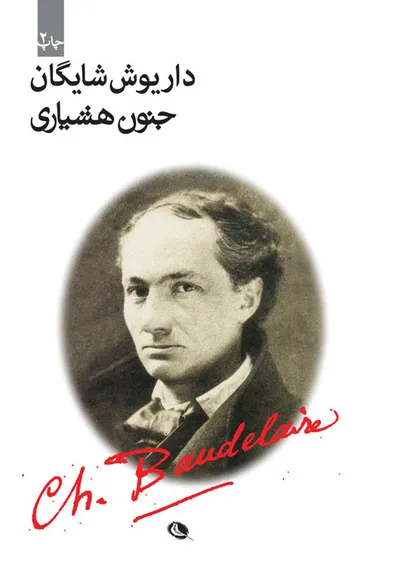
Madness of Awareness is one of Daryush Shayegan’s distinctive works; a book that, rather than focusing directly on comparative philosophy or the problem of Asian cultures, turns to Charles Baudelaire and his place in the emergence of modern poetry. Even so, the book remains closely connected to Shayegan’s central concerns: rupture, modernity, cultural experience, and the relation between literature and historical consciousness.
Shayegan sees Baudelaire as a poet who entered, with full awareness, the dark realms of the psyche, spleen, the modern city, corrupted beauty, and the struggle between good and evil. For him, Baudelaire is not merely a French poet, but a European and global poet who crossed the boundaries of his own language and introduced a new vibration into poetry and art.
The book is structured around chapters on Baudelaire’s place in modern poetry, resemblance and imagination in his poems, Walter Benjamin’s reading of Baudelaire, Baudelaire’s artistic and literary criticism, dandyism, and his relation to Wagner, Nietzsche, Rilke, and Eliot. It ends with a selection from The Flowers of Evil translated by Daryush Shayegan.
This book is useful for readers interested in French literature, modern poetry, aesthetics, philosophy of culture, and the relation between literature and modernity. Madness of Awareness also opens a path for Persian readers to understand Baudelaire; a poet whose depth cannot be reached through translated poems alone without grasping his intellectual world.