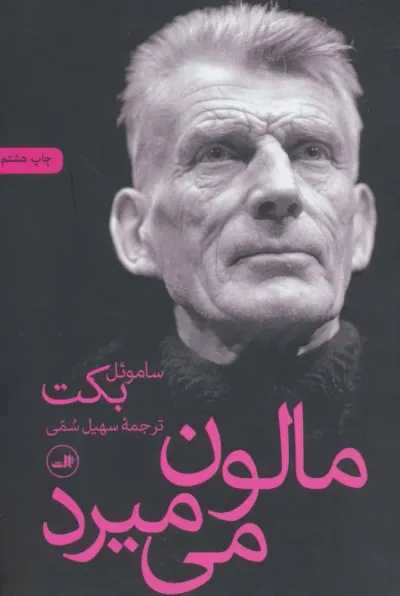
Why this book?
- To experience one of the major modern novels about death, solitude, and decline.
- To see how Beckett turns the breakdown of language and narrative into literary form.
- For readers interested in experimental literature, absurdity, and existential questions.
- To understand the novel’s middle position in the trilogy of “Molloy,” “Malone Dies,” and “The Unnamable.”
- To reflect on how human beings continue narrating even on the threshold of the end.
About the book
Malone Dies comes after Molloy and before The Unnamable in Samuel Beckett's narrative trilogy. The book's narrator, Malone, is in a closed room, in a state of incapacity and facing death, filling the remaining time by writing notes, inventing stories, and cataloguing his meager possessions.
The novel's structure does not proceed based on linear, event-driven narrative. What matters is the narrator's mental flow, the successive failures of language, the interruption of stories, the return of fantasies, and the futile attempt to impose order on a world that is falling apart. In this book, Beckett shows that even at the end of incapacity, the human being is still engaged in narrating, naming, and making meaning.
The place of Malone Dies in Beckett's oeuvre is very significant, as it reveals his transition from the conventional novel to more radical forms of writing. In this work, bitter humor, silence, repetition, the exhaustion of the body, and the collapse of the subject are transformed into literary language; a language that is both simple and difficult, both laughable and profoundly sorrowful.