Why this book?
- To understand one of MacIntyre’s important concepts at the intersection of knowledge, narrative, and tradition.
- To become familiar with the role of narrative in moving through intellectual and philosophical crises.
- To read a short but influential text in philosophy of science and epistemology.
- For readers interested in moral philosophy, philosophy of science, and the critique of modernity.
About the book
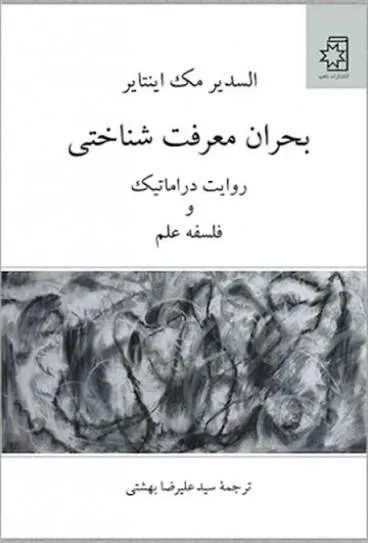
Epistemological Crisis is a work by Alasdair MacIntyre that addresses one of philosophy’s important questions: when our conceptual scheme can no longer explain our experiences and conflicts, how can we move beyond the crisis? MacIntyre calls this situation an epistemological crisis: a moment in which not only the answers, but the very way of asking and understanding, becomes problematic.
Narrative has a central role in this book. MacIntyre shows that human beings understand epistemic crises through stories, traditions, and historical reconstructions. Narrative allows us to interpret the past, understand the failure of earlier frameworks, and imagine new possibilities for the future. In this sense, narrative is not decorative; it is part of human rationality and understanding.
The place of this work in MacIntyre’s thought is tied to his larger project on tradition, rationality, and the critique of modern moral philosophy. MacIntyre argues that ideas do not arise in a vacuum, and that rational judgment is not possible without understanding history and intellectual traditions. The book is suitable for readers interested in epistemology, philosophy of science, narrative, tradition, and modern intellectual crises.