Why this book?
- To understand one of literature’s most enduring images of totalitarianism.
- To see how language and propaganda can shape political reality.
- To read a novel that remains alive in debates about freedom, truth, and power.
- To become familiar with a classic of twentieth-century political literature.
About the book
1984 is George Orwell’s best-known novel and a classic of dystopian literature. The story is set in a world where the ruling Party empties human beings of independent judgment through constant surveillance, the rewriting of history, control of language, and the repression of thought and feeling. The protagonist, Winston Smith, tries to preserve truth, memory, and the possibility of individual resistance within this suffocating order.
The novel’s significance lies not only in its portrait of a repressive regime. Orwell shows how political power can manipulate language and memory until the boundary between truth and falsehood collapses. Concepts such as “Big Brother,” “Thought Police,” and “Newspeak” entered modern political language through this novel and are still used to understand propaganda, censorship, and surveillance.
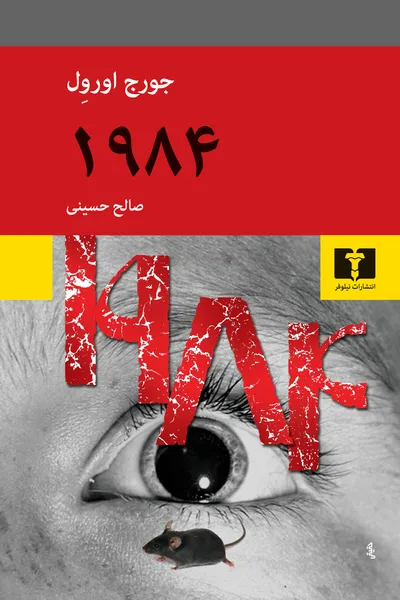
Saleh Hosseini’s Persian translation, published by Niloofar, is one of the well-known Persian versions of the novel. The book is suited to readers interested in political literature, the critique of totalitarianism, freedom, and the relation between language and power.