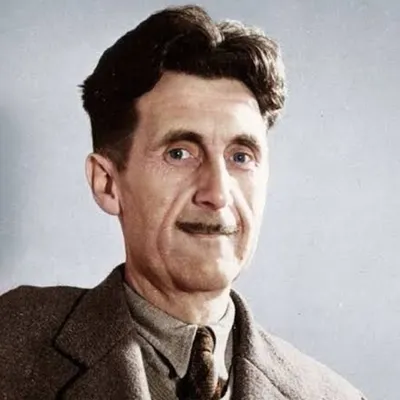
Foreign thinker
George Orwell
George OrwellLiterature and Political ThoughtBritish1903–1950
In a time of universal deceit, telling the truth is a revolutionary act.
In their times
Open in the Timeline of ThoughtLife and Thought
George Orwell (1903–1950), born Eric Arthur Blair, was a British writer, essayist, and journalist who, with his novels Animal Farm and Nineteen Eighty-Four, became one of the most influential critics of totalitarianism in the twentieth century. Through clear, committed prose, he exposed political lies, the corruption of power, and the danger of propaganda. His works remain a central reference in discussions of freedom, truth, and state surveillance.
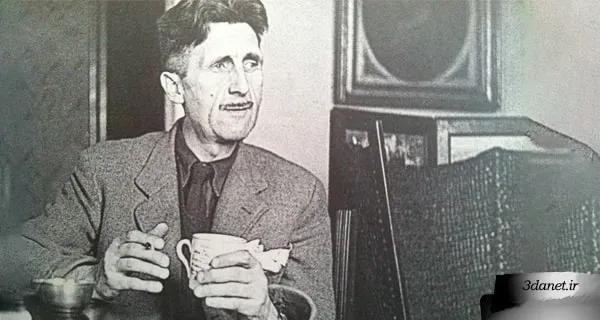
Eric Arthur Blair was born on 25 June 1903 in Motihari, British India. He spent his childhood in England and was educated at Eton College. After serving in the Imperial Police in Burma, he turned to writing and adopted the pen name 'George Orwell'. His experiences of poverty in Paris and London, the Spanish Civil War, and his direct observation of fascism and Stalinism formed the foundations of his political thought.
Orwell was a democratic socialist but a fierce opponent of all forms of totalitarianism, whether of the right or the left. The novel Animal Farm (1945) is a sharp allegory of the Russian Revolution and the rise of Stalinism, while Nineteen Eighty-Four (1949) presents a dark vision of a society under total surveillance, the distortion of truth, and the destruction of individuality. Concepts such as 'Big Brother', 'Newspeak', and 'thoughtcrime' have entered the world's political lexicon from this work.
He was also a distinguished essayist, and in works such as 'Politics and the English Language' he emphasised the link between the corruption of language and the corruption of thought. Orwell died of tuberculosis in London on 21 January 1950. His legacy is a relentless defence of truth, freedom of expression, and an awareness of the mechanisms of power.

.webp)
.webp)