Philosophy
Boredom and Open Horizons, Arash Naraghi
Boredom in a world of speed is an inescapable fate; Arash Naraghi examines the roots of the world's boredom-inducing nature from the perspectives of Muslim mystics and modern humanity, asking whether a transcendent dimension can be found within it and whether memory and imagination can carry us beyond the narrowness of the world.
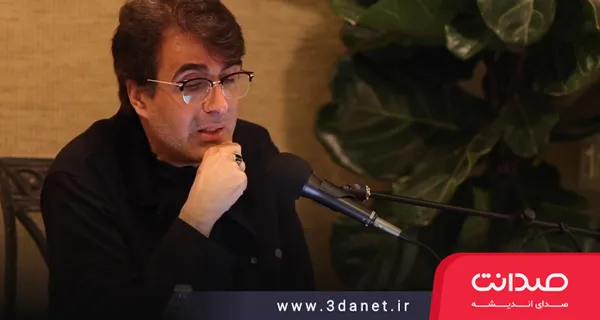
Arash Naraghi: The experience of boredom is an important aspect of our lives as human beings in this world. Especially in the world of speed, that is, the fast-paced world where its novelties quickly take on the color of obsolescence, the experience of boredom seems an inevitable fate. In this article, I would like to make some points about three main questions:
(First) What have been the roots of the world's boredom-inducing nature and the methods of dispelling boredom from human life from the perspective of Muslim mystics? (Second) What transformations has the modern human's perception and experience of the existential state of boredom undergone? (Third) What are the methods of dispelling boredom in the new world? And can a transcendent aspect be found in the experience of boredom?
At the very outset, I make it clear that the present discussion, rather than being a comprehensive examination of the above questions, is the presentation of some more or less scattered reflections on these topics.
(1)
In the mystical view, the human being is a traveler in this world, and their existence is a journey that begins with the experience of separation and the pain of parting. "The pain of parting" or "the anxiety arising from being severed from the origin" is the starting point of spiritual life, and its fire makes the human soul restless in this world. But the fire of parting does not only burn; it can also sometimes bestow light and warmth, that is, it arouses the longing for reunion, and from the heart of a negative and destructive emotion, it brings forth a positive and transcendent motive. The longing for reunion can stir the spiritual traveler to pack their bags and, in an odyssey-like journey, set out in search of their origin, and by joining that origin, recover their authentic existence. Therefore, the life of the wayfaring mystic in this world is intertwined with two profound existential emotions: the pain of parting and the longing for reunion. And it is between that pain and this longing that their spiritual journey takes shape. But the concept of "journey" is correlated with the concept of "homeland" or "home." "Home" transforms the experience of wandering into a journey—into a directed movement toward a meaning-giving destination. "Home" is a distinct space; that is, among all places, it is home that grants the individual security and peace, and transforms the terror of alienation from cold and anxiety-inducing spaces into a sense of oneness with a warm and secure space. The human being who has fallen away from their origin finds themselves alien in the world and alienated from the world. And it is within this strangeness that they find the world empty of meaning—the walls of the world are a threat that constricts them in its narrowness and weighs heavily upon their chest. The prospect of "home" on the horizon gives the individual hope that the terror of the desert will come to an end. In the mystic's experience, "home" is the moment when the sacred makes the dry line of time and space pregnant, and gives volume to the one-dimensional plane of their life. The physical translation of the sacred presence is "heterogeneity"—space warps, time bulges—and the tedious surface of existence suddenly becomes pregnant. The curvature around that presence turns space into a "sanctuary" (mihrab), and the curvature of time at the moment of that presence's manifestation turns time into "the moment" (waqt) and the instant into "the now" (ān). The experience of the heterogeneity of space and time at the moment of the sacred's manifestation is a familiar phenomenon within the context of religious life: Moses sees the dance of a flame in the heart of the desert's darkness and hastens toward it, perhaps to find a path in its light, but suddenly finds the space around that burning bush different from other spaces. The space that was previously a part of the desert and like any other point within it, suddenly becomes distinct and distinguished. The space before him was pregnant with a sacred presence, and it was in reaction to that heterogeneous space that Moses removed the sandals from his feet. At the intersection of "the moment" (pregnant time) and "the sanctuary" (pregnant place), he experienced "the Event." Therefore, although the mystic is far from their origin in this world, they live in a world where "the Event" is possible—that is, God sometimes reveals Himself in the curvature of the dry line of time and space—He casts a glance so that the darkness of despair does not swallow the wayfarer's soul. The weary and exhausted wayfarer rests for a while in the heart of these safe houses along the way, catches their breath, and takes up the provision of hope so they can complete the path. In the heart of the "house of the Event," they see the eastern face of the world. That is, the world suddenly becomes a sign that points to its beyond. The muteness of the world becomes eloquent, and what previously seemed dark, ambiguous, and incomprehensible suddenly receives illumination and becomes a melodious lyric. But the wayfarer is not always in the illuminated half of the world. Sometimes on this journey, their passage falls toward the western side of the world—a terrifying black abyss that suddenly opens its mouth and swallows all particles of hope and meaning. And suddenly, the world becomes a desert of terror that reaches into darkness on every side. The individual suddenly finds themselves abandoned; space and time become homogeneous—no point differs from any other. If no home awaits on the horizon, what difference is there between this path and that path? On a purposeless road, "journey" turns into "wandering." On the western side of the world, "home" becomes "prison." The windows of the world, which sometimes opened onto the illuminated garden of the beyond, are plastered over with mud, and the individual finds themselves abandoned in darkness and constriction. Within the windowless four walls of the world, the wayfarer's soul suddenly experiences boredom in its deepest form. Boredom is the experience of constriction and finitude.
(2)
It seems that the human being is the only creature for whom the world becomes constricting. It is as if there is something in the structure of human existence that makes one more expansive than the surrounding world—to the point where the walls of the world feel tight. But what characteristics grant human existence such expansiveness? I believe there are at least three features in the structure of human existence that extend and give volume to one's being:
The first feature is memory. The human being is among the creatures that possess a strong memory, and can, through memory, re-experience times that have been lost. Memory brings the past event into the individual's present, and allows the human being to relive past experiences. Memory links an existence confined within the prison of the present to past horizons, and thus extends one's being backward along the timeline.
The second feature is the power of analysis and inference. This power allows the human being to see and predict future horizons to some extent based on the past and present, and thus to project one's being toward future horizons and re-experience the time that has not yet come in the present (at least to some degree). Here, the future consists of seeing in advance that which has not occurred but is coming toward us. The power of analysis and inference places several probable futures before our eyes and brings them into our present existence.
The third feature is the faculty of imagination. The faculty of imagination takes us beyond the realm of reality and connects us to the horizons of possibility. The scientist's mind discovers and predicts the horizons of possibility in the future based on the laws of nature and initial conditions, but the mind of a creative artist creates new possibilities through the faculty of imagination. The artist distances themselves further from the horizons of reality and soars at a higher altitude. Most beings in this world are captive to reality, but the human being is probably the only creature that also dwells in the realm of possibility—that is, not only in the actual world (the world as it is), but also, above it, lives in possible worlds (that is, the world as it could be). And a head that rises above the clouds of reality inevitably beholds more open horizons, and its inner world gains greater spaciousness.
In mystical culture and literature, God is infinite, meaning His existence and presence transcend the boundaries of reality and possibility. The manifestation of the infinite in finite loci of disclosure gives another dimension to the experience of human being in this world. The experience of the sacred means the contact of the sacred with the familiar time and space that shape the structure of humanly experienceable reality. The experience of the sacred entails the contact of the sacred with the framework that makes experience possible for the human being—this framework is the combination of time and space. It is within the frame of time and space that the experienceable is born. But the entry of the infinite into the frame of time and space curves the frame, warps the framework—in Rumi's expression, it is like a camel entering a henhouse—even if the house is not ruined, its foundations at least tremble, and it warps under the heavy load. The contact of the sacred with the framework of time and space suddenly stirs a wave in the waveless realm of human experiences—the moment suddenly swells, and space becomes curved. And the gravity of this curvature suddenly, for an instant, draws everything toward itself. Space and time become heterogeneous in that moment. The "event" strikes like a thunderbolt—its flash suddenly opens up vistas of horizons that pass beyond the limit of the "two-bows'-length" frame of the imaginal world. The event is the "future," but not of the kind that the analytical intellect calculates or the creative imagination conceives. The event is an unpredictable "future." It is a rebellious future that is not tamed by intellect or imagination. It strikes like a thunderbolt, unawares, dazzles, and is gone in the blink of an eye—the phantasmal shadow of a gazelle has fled into the dark thicket of the forest. The "event," for the mystic, is the opening of finitude onto the realm of the infinite. The mystic's world has a back, is embraced by the Unseen. And it is this openness to the world of the Unseen that dispels boredom from their existence, and renews their day.
(3)
Therefore, the experience of boredom is the discovery of human finitude in this world, the touching of walls that press tightly upon one's being. It is the existential condition of a person whose windows in the wall of existence have been sealed—as if trapped in a windowless prison. The enclosed space quickly loses its novelties, its newness becomes old, and its distinctive features erode. In a space where everything has become uniform and homogeneous, no direction is preferable to another. Going in any direction is ultimately like going in any other. It is as if life becomes directionless, and the individual, lost in deserts, remains bewildered. Boredom is the human psyche's reaction to this uniformity of directions and the directionlessness of life. For the wayfarer who sees this world as embraced by the Unseen, boredom is a transient state, an existential condition arising from the (temporary) closing of the world's windows toward the Unseen. But for the person whose world is only what appears within the confines of familiar reality, there are no windows in the walls of the world—beyond the veil, there is a wall. Boredom, which is his fate, is not a transient state but a permanent station.
It is for this reason that the modern human's experience of boredom is fundamentally different from the experience of the mystical wayfarer. The modern human lives in a more or less disenchanted world where the possibility of an "event" occurring has faded—space bends less and time becomes less blessed. The modern world is, to a large extent, an eventless world—as if God has gone into eclipse within it, drawn a veil over His face, and hidden Himself from humankind. It is in this world that boredom becomes the human fate. Schopenhauer considered the condition of modern humanity to be a pendulum-like oscillation between suffering and boredom: as long as our needs are unmet, we are in suffering, and as soon as our needs are met, we become bored.
Of course, one must distinguish between two types of "boredom": situational boredom and existential boredom. "Situational boredom" arises from the longing for a specific desired object that is not currently available, but one can hope to attain it with a change of place and the passage of time. Situational boredom has a physical translation, meaning it manifests itself in the human body. For example, imagine someone sitting in a tedious lecture. This person constantly fidgets in their seat and looks at their watch. Their entire hope is to leave this specific situation as soon as possible and enter another—for instance, to go outside the lecture hall and breathe fresh air. Their boredom stems from this specific situation, and they know that if they leave this space and go outside, the new situation will dispel their boredom—because their desired object (i.e., being freed from this boring lecture and breathing fresh air) is an attainable desire that comes about with a change of situation. But "existential boredom" is of a different kind. Existential boredom is not the longing for a specific desired object; it is a longing born of desirelessness—nothing arouses the individual's enthusiasm; all the options before them are equally tedious. The bored individual, in this situation, is not idle, but on the contrary, is often very busy. Yet none of the things they do, and none of the real or possible options before them, has any meaningful superiority over another—all options are equally undesirable and lack the power to motivate. It is for this reason that existential boredom finds no physical translation—there is no escape from this situation, meaning a change of situation does not lead to a change in the state of affairs. When all paths are the same, and none is meant to lead anywhere, the individual stays in place—losing the desire to go. Existential boredom is concomitant with lethargy.
«ملال وجودی» تقدیر انسان مدرن است- انسانی که «غایت» از تصوّر او از عالم رخت بربسته است، و کاروان هستیاش به سوی خاصی نمی رود. سفری درکار نیست، فرد در جای خود رسوب می کند، یا در بهترین حالت، بیهدف در بیراههها پرسه می زند. از همین روست، که تجربه وجودی ملال با پرسش از معنای زندگی پیوند می یابد. یکی از مهمترین ویژگیهای اندیشه علمی مدرن، مطابق تحلیل تاریخ نگاران علم، فرو نهادن مفهوم «علّت غایی» در مقام فهم و تفسیر جهان بود. علم جدید نگاه به جهان از منظر «علّت فاعلی» را بر نگاه مبتنی بر «علّت غایی» برگزید. اما با رخت بربستن «علّت غایی»، بشر با بحران بیمعنایی روبرو شد. «معنا» به یک معنا همان «غایت» است. برای مثال، فرض کنید که کسی برای دیگری دست تکان می دهد، و شما از «معنای» آن عمل می پرسید. در این حالت، اگر فرد غایت آن فعل را روشن کند، در واقع معنای آن را توضیح داده است. مثلاً ممکن است بگوید که آن فرد «برای» آن دست تکان داد که از دوستش خداحافظی کند. آن غایت معنای آن فعل است. اگر فعلی بیغایت باشد، فاقد معناست. نگاه علمی به جهان، در کنار ثمرات درخشان و ارزندهای که برای بشر به همراه داشت، جهان را از غایت و به تبع از معنای ملازم با آن تهی کرد. در جهان بیغایت همه راهها به هم می ماند، جهان یکباره همگن می شود، و این همگنی به بحران بیمعنایی دامن می زند.
علاوه بر آن، ملال تجربه آهستگی و سنگینی زمان است. در وضعیت ملال وجودی زمان آهسته می شود. و فرد سنگینی بار آن را بر دوش احساس می کند. اما چرا آهستگی زمان به سنگینی آن می انجامد؟ یک دلیل آن این است که آهستگی مقام تأمل است. در زندگی پر شتاب، فرد لاجرم باید مدام اطراف خود را بپاید، سرعت نگاه فرد را از درون به بیرون می کشاند. در سرعت بالا اگر فرد از بیرون غافل شود، چه بسا جان خود را درببازد. سرعت فرد را برون گرا می کند، و به معنای عمیقی او را از خود غافل می کند. اما در تجربه ملال زمان یکباره آهسته می شود، و فرد مجال و امنیتی می یابد که نگاه از بیرون برگیرد، و به درون بدوزد. فرد در موقعیت تأمل واقع می شود- فرصت می یابد که از خود و زندگی هرروزینهاش فاصله بگیرد و آن را از بیرون بنگرد. و در اینجاست که تجربه ملال برای بسیاری از ما مایه هراس می شود- بسیاری از ما وقتی که از فاصله و از بیرون و بالا به زندگی خود می نگریم، و لاجرم به ارزیابی آن می نشینیم، زندگی زیسته خود را چندان ارزشمند نمی یابیم. درک شهودی این تهی مایگی یا کم مایگی فرد را به وحشت می افکند. همین است که بیشتر ما از ملال می گریزیم، چرا که تاب نمی آوریم خود را آنچنان که هستیم ببینیم. هراس از ملال هراس از خود است، گریز از ملال گریز از خود است. برای همین است که در روزگار مدرن مردم چنان از ملال می گریزند که از مرگ.
(۴)
اما بشر جدید چگونه می کوشد تا از ملال بگریزد؟ به کدام شیوهها می کوشد تا از زندگی خود ملال زدایی کند مبادا چشم در چشم خود بدوزد؟
یکی از مهمترین شیوههای ملال زدایی در زندگی مدرن سرعت است. میان حافظه انسان و سرعت رابطهای معکوس برقرار است. هرجا که آهستگی است، حافظه با قوّت تمام کار می کند. آهستگی غالباً دشمن فراموشی است. اما هرجا که سرعت است، حافظه ناتوان می شود، و فراموشی جا باز می کند. صنعت «سرگرمی» در جهان جدید که می کوشد از طریق ستبر کردن پردههای غفلت، «کشید بار تن» را برای انسان مدرن تحمّل پذیر کند، عمدتاً بر سه رکن، سکس، خشونت، و سرعت استوار است. هر سه عامل عواطف تند و سرکش انسان را برمی انگیزد، و حافظه او را مه آلود می کند، و او را در خلسه فراموشی فرو می برد. در خلسه فراموشی فرد چندان مخمور می شود که دیگر نمی تواند جزئیات امور را ببیند، به خاطر بسپارد، و دربارهشان تأمل کند. سرعت و نیز شدّت بخشیدن به عواطف تند و سرکش از جمله راههای ملال زدایی در زندگی بشر مدرن است.
Another way of dispelling boredom is immersion in occupation. Work in the new world has a dual character: on the one hand, work, especially in its modern sense, is one of the most important roots of boredom in human life; and on the other hand, it is one of the most important methods of dispelling boredom. In the modern era, the human relationship with work is complex and critical. In many cases, an individual's job, rather than arising from their passion, results from the imposition of life's necessities. Most people do not have a deep attachment to their job, and spend most of their lives doing work that is not exciting for them. A passionless job silences the individual's creative mind, and the individual gradually learns to perform their tasks automatically and without creative reflection. On the other hand, the product of many people's work does not play an important role in their own lives and the lives of their relatives and loved ones—the product of their work is like a child who, as soon as it is born, is given away to another family. Alienation from work leads to alienation from oneself. The individual finds an uncreative and inert distance from themselves. "Inert distance" differs from "creative distance." Creative distance is a position of reflection; by distancing themselves from themselves, the individual finds an opportunity for self-reflection, and this second-order awareness of the self can be a source of creativity and meaning-making. But inert distance is the silencing of the active mind's engine. The individual moves forward in neutral gear—drowsy and half-asleep, they surrender themselves to the flow of everydayness. Their distance from themselves arises from a trance of oblivion. The drowsiness of self-forgetfulness delivers the individual from the terror of confronting themselves. And it is in this process that the individual gradually becomes "the other," that is, they are emptied of themselves and filled with the gaze of others, meaning they become what the gaze of others demands of them, and among other things, they adopt the very values produced in the factory of "others." By losing themselves and conforming to others, they flee from the terror of boredom—although sometimes, in rare moments of self-awareness, they brush against the cold skin of the black hole within.
Work and entertainment prune the branches of boredom, but leave its root in place. Forgetting is a passive way of confronting the experience of boredom. But boredom can be a privileged position for transcending life. As I mentioned earlier, in the experience of boredom, time slows down, and this slowness creates a position for reflection. The intelligent individual, instead of fleeing from this position, can plunge into its heart. That is, instead of dispelling boredom, they can look it in the eye. The individual can use the position of reflection arising from boredom for a deeper self-knowledge. In the slow passage of time, the individual can carefully evaluate the content of their life, measure the worth of their values and actions, and see to what extent their life has arisen from their own free will and creative choice, and to what extent it has been a blind imitation of others. In this case, the experience of boredom can bring the individual one step closer to a reflective and authentic life (that is, the conscious creation of an aesthetic and moral unity from the elements of their life). Instead of denying boredom, the individual can recognize it, and instead of fleeing from it, make good use of the space it has opened up. For the wayfarer on the path, the experience of the world is a gray void empty of Presence, and for modern man, it is the experience of a world whose time and space have taken on an entirely homogeneous structure. But in both situations, boredom is an enlightening position; it acquaints the individual with their limits, and reveals the tragic nature of the world in which they live, not in the form of abstract concepts, but in the form of concrete emotions.
(5)
The modern wayfarer sits by the roadside waiting for Godot—awaiting someone who is coming, someone who is like no one else. At the end of boredom, in anticipation of the "Event," he stares at distant horizons, and tells himself that if he did not come today, then surely he will come tomorrow. The "Event," however, does not come at anyone's command. The modern wayfarer sits on the borders of nothingness and God—in the misty clime of genius and idiocy. If the "Event" occurs, life finds meaning, and if not, it will have been nothing more than a tedious joke. The life of the modern wayfarer passes on the borders of this perilous ambiguity: he is either a hero who, at the end of the road, overcomes the boredom of existence and, in the heart of the Event, recovers his authentic existence, or a paper tiger who, like Don Quixote, goes off to fight windmills. But perhaps it is not the outcome of the battle that distinguishes the hero from the fool. Perhaps the real hero is that very fool who, despite all evidence, does not abandon his hope and ideal, and returns to the roadside tomorrow and sits waiting—waiting for someone who is coming, someone who is like no one else. And perhaps "it is thus that someone dies and someone remains."
.
.
Boredom and Open Horizons, Arash Naraghi
Moravian College, Pennsylvania
*The present article is the edited text of a lecture delivered on November 4, 2011, at the Iranian Cultural Society of America (Shabahang).
.
.





Discussion4 comments
بنام خدا انشاالله اگر خدا بخواهدسحرساحران باطل است ولی باید صدقات سنگین داد ڃون جادوگران به دلیل ناتوانی دربرابر اهل علم ومصلحان برای افراد کلیدی دراول ماه سحرسنگین میبندد وبخصوص اول ماه ممکن دڃار ناامیدی واندوه بی دلیل گردید .گفتمت پیداوپنهان نیز هم.بخوانیم ای قادر برفتنه یا قادر یا قادر...
مطلب بسیار خوبی بود. با تشکر از دکتر نراقی و سایت صدانت. نقد بالا هم عمدتا بی ربط و ناشی از بدفهمی بود.
نقد سخنرانی از خود سخنرانی آقای نراقی مهم تر بود
با سلام به آقای نراقی و پذیرش این که ایشان متفکرند و جویا و پویایند و این که نوشته ایشان دربردارنده نکات و دقایقی "کلی"از واقعیات "زندگی مدرن" است موارد زیر را در عتراض به کلی بافی و کلی گویی ایشان که رسمی و عادتی ایرانی است ـ و به غایت خطاست ـ می نویسم. 1. گفته می شود: "ظاهراً انسان تنها موجودی است که جهان بر او تنگ می شود." نه چنین نیست. افسردگی فعل و انفعال بیوشیمیایی مغز است که می توان آن را به حیوانات نیز تزریق کرد و اثر آن را مورد لحاظ قرار داد. غرض من این که ملال یا افسردگی وضعیتی است که مغز دچار آن می شود. 2. گفته می شود: "گویی چیزی در ساختار وجود انسان است که او را فراخ تر از جهان پیراموناش می کند ..." در این گونه موارد بهتر است گفته شود -: گویی در وجود من یا فلان کس یافلان کسان نوعی فراخی درک می شود که من اکنون در مقام شرح آنم. در غیر این صورت میتوان پرسید: منظور شما کدام انسان است؟ انسان عبارت است از میلیون ها کودک. میلیون ها خردسال. میلیون ها تین ایج. میلیون ها دختر. میلیون ها پسر. میلیون ها مادر. میلیون ها پدر. میلیون ها پیر. میلیون ها جوان. میلیون ها گرسنه. میلیون ها سیر. میلیون ها مهاجر. میلیون ها بیکار و این ها در گرو ه های سنی متفاوت اند و هر گروه سنی را مقتضیاتی است و ... 3. گفته می شود: "ویژگی نخست انسان حافظه است." این حرف کلی است. آلزایمر از جمله بیماری های رایج در "دنیای مدرن" ی است که شمااز جمله در مقام وصف آنید. 4. گفته می شود: "ویژگی دوّم، قدرت تحلیل و استنتاج است." نه چنین نیست. من در جامعه ای زندگی می کنم که آموزش کودکان در دوره کودکستان تا پایان دوره راهنمایی اجباری است و جامعه میلیون ها خرج می کند تا این ویژگی را در عناصر انسانی جامعهخودایجاد یا بیدار و نیز راهنمایی کند. بدون این خرج و مخارج آدمی دارای یک چنین ویژگی نمی شود. 5. گفته می شود: "ویژگی سوّم عبارتست از قوّه تخیّل." مورد چهار شامل این گزاره نیز می شود. اساساً فرق جامعه مدرن و غیر مدرن در این است که همه عناصر جامعه مدرن را ـ اعم از ذی حیات و غیر آن را ـ می سازند. جامعه مدرن یک دادۀ طبیعی نیست و ساختگی است. طراحی می شود و ساخته می شود و مورد رسیدگی و مراقبت قرار می گیرد. 6. گفته می شود: "سرعت فرد را برون گرا می کند". چنین نیست. در جامعه ای که من در ان بسر می برم برون گرا بار آوردن عناصر انسانی این جامعه یک اصل تعلسماتی است و جزو آموزش در کودکستان هاو مدارس است. نظر سنجی اخیر نشان می دهد که برخی انسان ها غیر برون گرای بالطبع اند. 7. گفته می شود: "یکی از مهمترین شیوههای ملال زدایی در زندگی مدرن سرعت است." این زندگی مدرن در کجاست؟ درست این است که گفته شود: من این حرف ها را در جامعه ایکس ملاحظه و جمع بندی کرده ام. در جامعه مدرنی که من ـ راقم این سطور ـ در آن بسر می برم چنین نیست که شما می گویید. 8. گفته می شود: "بشر جدید چگونه می کوشد تا از ملال بگریزد؟" تعریف این "بشر جدید" چیست؟ کجاست؟ در کدام موقعیت سنی ؟ در کدام موقعیت اجتماعی؟ کدام سطح درآمد و ... بهتر نیست بگویید: من به عنوان مهاجر درگیر روحیاتی هستم که دارای چنین مختصاتی است ... و ضمناً این حرف ها شامل همه عرفا هم نیست. شمس تبریزی مصداق کسی است که می گوید: دیگران در راهند اما من رسیده ام. سپهری می گوید: غم اشاره محوی به رد وحدت اشیاست. با احترام وافر نیکو احسان