Religion
Religious Intellectualism: Origins and Future Horizons
The term “religious intellectualism” remains contentious for both secularists and traditionalists. What distinguishes a “new thinker” from an “intellectual”? Tracing the concept’s roots in modernity reveals a “rational, pain-aware sage” who bears social responsibility and works to alleviate human suffering.
According to the esteemed friends at whose kind suggestion this article was written, I was to focus on the subject of "the possibilities and horizons facing religious new-thinking in Iran," a subject whose core conceptual compound is contentious: "religious new-thinking"! Is "new-thinking" the same as "intellectualism" or is it distinct from it? Do these two terms signify two different meanings? If so, what is that difference, and if not, what is the concern of those who draw a distinction and their motive for this separation?
Once, in a circle of friends with religious and intellectual leanings, a bilingual invitation card was to be prepared. The translator had readily rendered the phrase "new-thinking Muslim women" as "Intellectual Muslim Woman." Upon seeing this English equivalent, a discussion ensued: Intellectual is the English equivalent of "roshanfekr" (intellectual), but what English translation should be considered for "now-andish" (new-thinker)?
Introduction
According to the esteemed friends at whose kind suggestion this article was written, I was to focus on the subject of "the possibilities and horizons facing religious new-thinking in Iran," a subject whose core conceptual compound is contentious: "religious new-thinking"! Is "new-thinking" the same as "intellectualism" or is it distinct from it? Do these two terms signify two different meanings? If so, what is that difference, and if not, what is the concern of those who draw a distinction and their motive for this separation?
Once, in a circle of friends with religious and intellectual leanings, a bilingual invitation card was to be prepared. The translator had readily rendered the phrase "new-thinking Muslim women" as "Intellectual Muslim Woman." Upon seeing this English equivalent, a discussion ensued: Intellectual is the English equivalent of "roshanfekr" (intellectual), but what English translation should be considered for "now-andish" (new-thinker)?
It may be possible to consider the two concepts of "new-thinker" and "intellectual" as synonymous, two names for one referent, but some differentiate between them. From the perspective of those who differentiate, it is as if "roshanfekr" (intellectual) is the equivalent of intellectual, and thus a child of Western modernity; but "now-andish" (new-thinker) is an appropriate term for someone whose thought, though rooted in tradition, does not think in an entirely old-fashioned way, who theorizes originally and creatively, and who is, at the same time, not Western. It might seem that the "new-thinker," while possessing a new outlook, is immune to the calamities of modernity!
Regarding the word "roshanfekr" (intellectual), the problem becomes acute when the adjective "religious" is added to it, forming the compound "religious intellectualism." Redoubled opposition has been expressed against this compound: from secular intellectuals, from traditionalist believers, and, in recent years, quite notably, from those who were themselves once listed among the "religious intellectuals." It is as if the term religious intellectual is paradoxical and, as they say, a contradiction in terms.
Given these verbal disputes, before the issue of the horizon facing this current of thought is brought up for discussion, it is fitting to scrutinize the title of the discussion. In this article, by examining the terms intellectualism and new-thinking, and by reviewing the origin of the concept in question, we will try to open a door for further reflection on the main question, namely, the horizons facing this current.
1. A Reflection on the Origin of the Concept of Intellectualism
Who is the intellectual? What distinguishes them from the scientist/professional practitioner of a discipline? What is their relationship to religion on the one hand and modernity on the other? And finally, what is the distinction between "intellectualism" and "new thinking"? Perhaps there is no dispute that the concept of the intellectual is rooted in modernity. One might sporadically find elements of intellectualism in certain individuals from the pre-modern era, but it was distinctly and specifically on the horizon of modernity that the star of the intellectual shone. I believe the intellectual can be defined, in the briefest phrase, as follows: "the pain-aware, reason-believing sage". "Sagacity" distinguishes them from the common people; "pain-awareness" is the feature that distinguishes the intellectual from the scientist whose concern is increasing information and expanding the frontiers of knowledge, not alleviating the pain and suffering of others, whereas the intellectual wants knowledge in the service of securing good for human beings and reducing evil in their lives; and finally, "belief in reason" distinguishes the intellectual from the traditional social reformer, meaning that the ultimate arbiter for the intellectual is "autonomous reason," not something like the intuition of specific individuals.
In the pre-modern era, one could also find a sage who was pale with grief for the destitute, that is, possessing both sagacity and pain-awareness, but since such a person does not view the world and humanity from the perspective of modern man, the judgment of pure, autonomous reason, the laws of nature, and human rights, they are not called an intellectual. It is the possession of such a perspective that places a person among the intellectuals in the precise sense of the word.
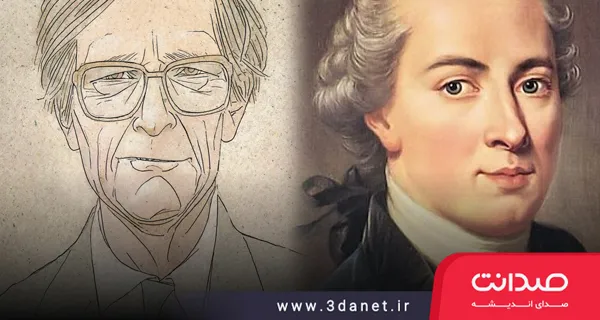
The concept of enlightenment, emerging from the context of European modernity, initially manifested in distinction from "tradition," but gradually other characteristics were added to it. At first, the intellectual was someone who understood the world not in the light of what was called revelation and the commands of the sacred, but in the light of pure reason; but gradually, something like "social responsibility" and "historical mission" was also attached to it, and a distinction emerged between the modern "intellectual" and the modern "scientist." In tradition, the shadow of a sacred understanding of existence was cast everywhere, a sacred understanding that in many cases could be "reason-evasive" and in some cases even "reason-antagonistic." The intellectual was someone who did not want to walk in ambiguity, but to look upon the universe in the light of reason; while acknowledging all the limitations of reason, of course! Seeing this "advantage" and "limitation" of modern autonomous reason simultaneously is very important. The most renowned articulator of the concept of intellectualism (enlightenment) is Immanuel Kant, who wrote both a monumental book like the "Critique of Pure Reason" and an essay on the nature of enlightenment. In the last decades of the eighteenth century, when a German citizen asks about the necessity of religious marriage in the so-called age of enlightenment, a door is opened for reflection on the nature of "enlightenment." Kant's answer to this question is that famous sentence:
"Enlightenment is man's emergence from his self-incurred immaturity; and immaturity is the inability to use one's own understanding without the guidance of another." [Kant, What is Enlightenment?]
This meaning of enlightenment may encompass all modern knowledge, even scientific knowledge; in the sense that the intellectual understands nature, humanity, and the world in the light of new knowledge and learning, not doctrines that are the product of interpreting sacred texts. Up to this point, the scientist and the intellectual are not two separate concepts, but gradually a distinction emerged between the two concepts of “scientist” and “intellectual.” What was added in the second stage of the crystallization of the concept of the intellectual, separating it from the modern “scientist,” was social responsibility and a concern for change in the relations of power and wealth that would affect not only the way humans think, but also the way humans live. In short, the commonality between the two concepts of scientist and intellectual is that both rely on “autonomous reason” and both distance themselves from the dominance of the traditional understanding of the world. But the difference between these two concepts is that the scientist expands the frontiers of knowledge and theorizes in the service of advancing science; whereas the title intellectual is applied to an activist whose subject of activity is the concrete life of human beings. The intellectual is sensitive to discrimination, illegitimate domination, unjust oppression, and injustice, and their theorizing is aimed at expanding freedom and justice. To achieve this goal, they strive to open people’s eyes to the reality of existence and their rights and duties by removing what is called superstition. The product of the intellectual’s activity does not lead to the expansion of the frontiers of scientific knowledge but rather to the generalization of ethics, the reform of humanity’s view of existence, and the reform of social institutions.
A study of the history of intellectual activism in the nineteenth and twentieth centuries in the world indicates that this socio-intellectual current, the further it moves from its point of origin, the more it becomes intertwined with the leftist socialist-Marxist discourse. If the essence of Immanuel Kant’s intellectual thought has a closer affinity with liberal tendencies and is also interwoven with Christian-Protestant moral beliefs, Gramsci, Sartre, and Fanon lean towards the leftist intellectual current and distance themselves more or less from religious tradition.
2. An Overview of Intellectualism in Iran
A century ago, in Iranians’ encounter with the new Western concept of the intellectual, this word was first translated as “monavar-al-fekr” (enlightened thinker) and later as “rowshanfekr” (intellectual). The Iranian intellectual was an individual familiar with the manifestations of the new world. They were aware of new relations and connections, different from the accustomed traditions of the past, and were the herald of a change whose results were not yet clearly apparent to everyone. The intellectual knew of new science and new human, legal, and social systems, and it was unclear whether this was an earthquake whose magnitude and resulting damages had not yet been estimated, or a favorable wind that, it was hoped, would guide the afflicted ship, suffering from poverty, famine, plague, injustice, and despotism, to a shore of salvation! Thus, “monavar-al-fekr” sometimes carried a positive connotation and sometimes a negative label. It was this dual perception that was reflected in the title of a book by Jalal Al-e-Ahmad: “On the Service and Treason of the Intellectuals”!
The Iranian intellectual initially proclaimed “becoming Western from head to toe,” the West in its most general sense; but what was this West? Was it uniformly order, freedom, welfare, science, and progress, or did this coin have another side? Among Iranian thinkers, after the initial call for Westernization, two opposing groups to the West emerged: one from among the seminary scholars belonging to the heritage of tradition, and the other from among university-educated individuals, some of whom had studied in Europe, who, in the confrontation between tradition and modernity, or the duality of East (/Asia) versus West, wanted to abandon the side of the West, reclaim their own self, and, as the saying goes, prevent self-alienation. For the anti-West cleric, being European was synonymous with licentiousness and atheism, and the manifestations of that culture were in no way compatible with Islamic principles; and for a faction of anti-West academics, the word “West” signified something like the sunset of spirituality and the dominance of carnality, and a playground for the capitalist system, which defined its relationship with Eastern societies based on a colonial connection.
In the author's opinion, although the questioning raised by the anti-Westerners regarding certain manifestations of modernity and modernization of the new West was not entirely unfounded, due to a lack of critical perspective and a kind of holistic reductionism, alongside the harmful aspects of Westernization, a neglect of the West's achievements also emerged in this assault on the West. Those achievements included: modern human rights, modern epistemology, methodology, and cosmology, and efficient modern social institutions that opened a path for attaining human ideals, for the progress-seeking Iranian individual desiring a better condition.
Among the clergy, Naini was an exception. Although Naini's thought was rooted in the revelatory heritage and Islamic tradition, and he cannot be considered an intellectual born of modernity, he was among those religious scholars who did not close their eyes to the blessings of the modern world. He sought to reinterpret concepts such as freedom, albeit with the term 'hurriyat,' from within the religious tradition. Perhaps the originators of the term 'religious new-thinking,' considering the distinction between the ideas of figures like Naini, Motahhari, Montazeri, and Kadivar from two other currents, deemed this term to possess a distinct meaning; one being the 'traditionalist' current belonging to the seminaries, which considers only the heritage of the 'righteous predecessors' as valid and does not recognize the exigencies of the new era, and the other being the 'intellectual' current, which seemingly draws from a modernity based on self-founded reason, free from tradition and sacred teachings.
Thus far, we can list four influential currents in the intellectual atmosphere of the early years of the recent century in Iran as follows: First) The traditional current, alien to the manifestations and achievements of modernity; Second) New-thinking religious scholars who are committed to religious foundations but also have an eye on the achievements of modernity and, through expansive hermeneutics, strive to minimize the conflict between religion and modernity, and should a conflict become evident, they will not abandon the side of religion; Third) The current of intellectuals who were heralds of 'becoming Western from head to toe';
Fourth) The current of anti-Western intellectuals who, although firstly familiar with the intellectual foundations of modernity and the manifestations of the modern West, and secondly not offspring of the seminary tradition, nevertheless value a selfhood distinct from modern civilization, and in confronting the West and modernity, adopt a combative stance.
In the author's opinion, the current known as 'religious intellectualism' is a fifth current which, with remarkable dynamism and influence, has arguably been more impactful in Iranian society over the past three decades than the other four currents.
3. Religious Intellectualism
Among the four mentioned currents, thinkers belonging to the non-religious intellectual current, especially in the first half of the path, often fall at two ends of a spectrum in relation to the West: one end being 'infatuation' and embrace, the second end being 'confrontation' and aversion. From Malkam Khan to the leftist intellectuals of the 1330s to 1350s (Solar Hijri), they fit at the two ends of this spectrum. The tradition-minded religious scholars also fundamentally did not know the West and paid insufficient attention to it. The religious thinkers known as new-thinkers, who had not closed their eyes to the achievements of the modern world, also had their epistemological foundations principally nourished by the wellspring of tradition. It does not seem that the efforts of this current bear fruit much beyond the products of 'dynamic jurisprudence.' Thinkers belonging to this current, by resorting to ijtihad, have sought to extract an answer for new questions from within the tradition. It is as if in the repository of religious tradition, a pre-prepared answer potentially exists for the questions of humans in all times and places; it is only necessary for a prominent jurist, masterful in the text and simultaneously familiar with the exigencies of time and place, to set to work and deduce and extract those pre-existing answers.
Of course, the efforts of dynamic jurists deserve appreciation in their place, but the epistemological, cosmological, and social needs of contemporary humans are far too substantial to be answered solely within the framework of jurisprudence, even if dynamic. The acute questions that the aforementioned current does not sufficiently answer are these: If a conflict arises between the explicit teachings of the scripture and the achievements of natural science, human sciences, and modern human rights, which side should be taken? Can all the exigencies of the new world, even with the tool of dynamic ijtihad, be extracted from the bedrock of religious tradition, or, while respecting the contributions of dynamic jurisprudence, do we, beyond the scope of traditional jurisprudence and theology, need a modern understanding of existence and the relations of the new society, and the expansion of matters such as universal ethics?
Religious intellectualism, of course, encompasses a diverse spectrum. Some subsets of this spectrum show greater affinity for tradition and more hope in the dynamism of jurisprudence, while others show less. But what gathers religious intellectuals under one umbrella is that, firstly, they have accepted that modernity is undeniable/inevitable, and secondly, that despite a fundamental distinction between tradition and modernity, no towering wall has been erected between them. A window can be opened between tradition and modernity; one can be modern yet engage in a critical rereading of tradition. Just as the heritage of modernity, in its own place, also calls for critical rereading.
But does this dual inclination of religious intellectualism entail a kind of paradox and incompatibility? By virtue of belonging to modernity, the religious intellectual cannot abandon the side of modern science, yet by virtue of the religious descriptor, they must naturally also uphold the sanctity of religion. How can this duality be resolved? What gifts are bestowed through religious intellectualism that justify its preservation?
The most important difference between the religious intellectual and the modernist religious scholar is that, for the religious intellectual, modern reason is not something that can be eliminated or disregarded. The most important difference between the religious intellectual and the non-religious intellectual is that the religious intellectual, despite accepting certain conflicts between religion and modern science, and despite considering modern knowledge inevitable, finds in the core and essence of religious teachings gifts that they are not readily prepared to relinquish. Within the teachings of religions, pure gems lie hidden, albeit veiled by time-bound accidents. The task of the religious intellectual is to reread religion, extract those gems, and wipe away the dust of those accidents in order to serve humanity today.
Thus, the religious intellectual, while belonging to autonomous modern reason, looks optimistically into the essence of religious teachings and strives to bring these two closer together. This synthetic and innovative perspective is based on a kind of modern epistemology. The religious intellectual understands the fundamental freedoms and rights of human beings as they are manifested in modern human rights. Hence, they strive, by spreading awareness, to realize this aspect of modernity as much as possible, but simultaneously realize that for living well and attaining happiness, the human being also needs a "meaning system" to regulate their relationship with existence as well as their social and moral relations. In the view of religious intellectuals, to respond to this aspect of modern human needs, a rereading of the religious tradition is opportune and necessary.
The religious intellectual holds the searchlight of modern reason. They acknowledge that without this searchlight, the world cannot be seen as it is, but this acknowledgment also entails two fundamental points: first, that this searchlight, while inevitable, has limitations and is not without flaws, but what can be done, as there is no alternative to it and there is no remedy but constant critique and striving for its gradual perfection. The second fundamental point is that this searchlight is an instrument for surveying and viewing, but viewing requires an object, and the object of this viewing, if in one realm it is "nature," in another realm it is "culture," and religions are the inevitable repositories of human culture.
The religious intellectual is an intellectual because they have realized that from the perspective of Newtonian, Keplerian, Einsteinian, and Pasteurian astronomy, physics, and medicine, nature can be better understood than from the viewpoint of Empedoclean, Hippocratic, Galenic, and Ptolemaic perspectives, and subsequently the medicine and physics of Avicenna, Biruni, and Razi. Yet at the same time, they realize that in the core of the message of Moses, Jesus, Buddha, and Muhammad, there is a message for living blissfully, avoidance of which is a lack of taste and entails enduring deprivation. Similarly, Kantian epistemology and anthropology, Wittgensteinian linguistics, and the Rawlsian understanding of justice and economics, with all the criticizability of these schools, open a window for the intellectual in looking at existence, humanity, and the relations of human societies that cannot be understood and simultaneously ignored. But also, resorting to this view does not necessitate that the purest messages of justice and tolerance in sermons 206 and 216 of Nahj al-Balagha be neglected, that the teachings of Ali's letter to Malik not be considered opportune, and that one can close one's eyes to the subtleties of Ferdowsi's epic composition and the romances of Nizami and Saadi, and abandon the mystical poetry of Attar and Rumi.
Establishing a creative dialogue between modern epistemology and the pure cultural reserves bequeathed by tradition requires the knowledge and skills of a critical reading of the heritage of both tradition and modernity, and this task is within the competence of those who, astrolabe of modernity in hand, find the celestial bodies of the spiritual firmament worthy of observation beyond terrestrial heights. These are called religious intellectuals.
4. A Window onto Future Questions and Horizons
If, based on what has been said, “religious intellectualism” can be exempted from internal inconsistency and considered an expression that conveys a specific meaning and is effective in conveying its intent, then another question now confronts it: Has this school of thought reached its end? Some believe that religious intellectualism possessed a capacity and a mission that it has fulfilled and has thus come to an end; in the words of one thinker who once belonged to this school, and who, in my belief, still falls under this heading: “The success of religious intellectualism in practice leads to the negation and erasure of religious intellectualism.”[1] Examining this statement requires an appropriate occasion, and its elaboration cannot be contained here. In our view, the tradition of religious intellectualism, with its multiple waves and discourses, from the thoughts of Sayyid Jamal al-Din al-Afghani to the views of later and our contemporary thinkers, despite all the criticisms leveled against them, is still alive and possesses considerable capacity to answer numerous questions.
The dialogue between tradition and modernity is not a project that can be brought to completion so easily. Within tradition, there are pure aspects that must be extracted, as well as harmful aspects that must be sifted out or reconstructed. Modernist religious scholars, sometimes referred to as religious revivalists, make their own contribution and assist in extracting the desirable and latent aspects of the religious tradition, but this does not negate the mission of religious intellectuals, for the reason that modern epistemology and methods of reason are a necessary condition for this kind of innovative rereading. When the modernist thinker Hassan Hanafi (b. 1935 – Professor of Philosophy at Cairo University), with the aim of reviving what he calls the “Islamic Left,” deems recourse to the ideas of Sayyid Jamal not only opportune but inevitable, it speaks to the capacity of this school.[2] In answering the grand questions concerning the relationship between “religion and modernity,” “humanity’s expectations of religion,” and “the meaningfulness and possibility of realizing what is called indigenous (Iranian-Islamic) modernity,” it does not seem possible to set aside the views of religious intellectuals.
Examples of contemporary questions that, in our view, require an approach grounded in religious intellectualism are as follows:
- Legal relations and social order; the issue of insurance, blood money, inheritance. Those familiar with the issues in these fields attest that the complexities of these areas cannot be resolved without a deep understanding of fundamental human rights. Should the blood money for a victim killed in a road accident truly differ depending on whether it occurred in a month deemed sacred or a non-sacred month? Upon which rational principle is this rule based? Does violating it entail violating the sacred text? Should the life insurance entitlement of a road accident victim truly differ simply because they are not a Muslim or not a man, compared to a Muslim man? Is this difference not an instance of discrimination? Without the combined efforts of specialists in modern human rights on the one hand, and the efforts of religious scholars concerned with justice and the elimination of discrimination on the other, this dispute will not be resolvable. If, for a completely secular society, resolving this dispute is entrusted solely to expertise in legal science, and for a traditional-religious society, religious scholars alone are sufficient to address this need, then for a society with a religious culture that simultaneously lives in today’s world, those two specializations alone are not enough. The first aspect of solving the problem falls to intellectuals who, while mastering modern anthropology and human rights, also have regard for religious teachings, and the second aspect of the problem falls to innovative and modernist religious scholars.
- Power Relations and the Political Sphere; If the Taliban and ISIS resort to violence by citing scripture, the beneficial response is not to say, with a clear conscience, that these groups have not the faintest scent of Islam and that the true Islam is not what they propagate. The solution is to carefully re-examine the foundations of political Islam and to articulate its relationship with the exigencies of the modern world, democracy, the equal right of all people to participate in determining their destiny, and the right to choose a lifestyle. This task is impossible without a “painfully-aware, reason-based wisdom” and, at the same time, familiarity with the foundations of Islamic teachings. One who possesses such a dual awareness is called a religious intellectual.
- Applied Ethics (ethics and fields such as biotechnology, medicine, economics, the environment, engineering); Modern humanity is seriously confronted with ethical dilemmas and conflicts in specific situations. To navigate these conflicts, there exist both secular rational techniques and religious ones. For a society with a religious culture, a combination of modern-religious strategies is beneficial, and religious intellectuals are the qualified candidates equipped with these strategies.
The horizon facing religious intellectualism is the horizon facing a society that wants—or is compelled—to be modern while simultaneously benefiting from the yields of religious tradition. Overcoming religious extremism, respecting the other, and preserving the environment require a dialogue between tradition and modernity, and a dialogue between yesterday and today. This crucial matter is contingent upon mastery of the possibilities of critical reason and, at the same time, sufficient familiarity with religious tradition, and this is a mission upon the shoulders of religious intellectualism, a mission that does not seem likely to end anytime soon.
[1] . Arash Naraghi, Rah-e No Journal, No. 9, 1998; now republished in: Tradition and Open Horizons, Negah-e Moaser, Tehran, 2016, p. 81.
[2] . Refer to the book: Critique of Religious Discourse, Nasr Hamid Abu Zayd, translated by Hasan Yousefi Eshkevari and Mohammad Javaherkalam, Yad-Avaran, 2004, p. 184.
.
.
Religious Intellectualism: Origins, Future Horizons
Ardeshir Mansouri - December 2016
.
.

Discussion0 comments
No comments yet; let yours be the first voice.