Psychology
Citizen Anxiety and the Loss of Urban Identity
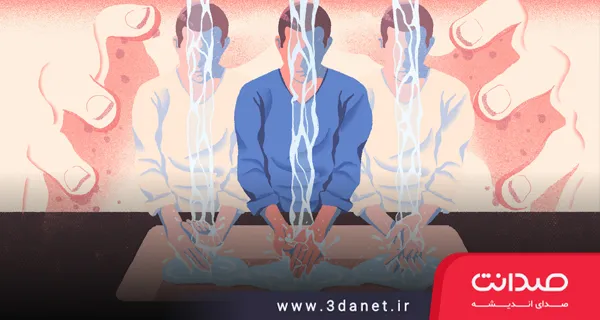
Anxiety disorders among Tehran's residents have grown exponentially, driven primarily by the city's loss of identity, economic hardship, and the pace of modern life. Specialists argue that treating root causes rather than symptoms is the key to reducing these disorders.

The prevalence of psychological symptoms among Iranians, and particularly among the citizens of Tehran, is growing exponentially; to the extent that some statistics claim that in the last 10 years, the prevalence of mental disorders, including anxiety, has been 39.5 percent, and the consumption of anti-anxiety medication in Tehran has reached a warning stage. Persistent worry and concern, unpredictable conditions, violations of dignity, economic problems, lack of life satisfaction, unsafe driving, the spread of immorality, lawlessness, and a lack of a sense of security are among the factors that can exacerbate anxiety disorders in citizens. Experts believe that one of the main reasons for Tehranis' anxiety is the pace of life and the conditions of modern life in the capital, and they even joke that anti-anxiety medication should be poured into the capital's water supply; because anxiety and worry have now become a normal matter among citizens.
The Roots of Anxiety
Regarding the roots and sources of anxiety in individuals, Hayrar Danelian believes: "When pressure is exerted on individuals, the human psyche responds in two different ways; that is, mental activity either increases or slows down. So it can be said that the psychological symptoms of anxiety encompass two phases and are bidirectional. In this way, a person suffering from anxiety may become hyperphagic or lose their appetite, their energy may increase or decrease, and so on."
Symptoms and Signs of Anxiety
He continued regarding the physical and apparent symptoms of anxiety: "Important symptoms of anxiety include heart palpitations, rapid breathing, a sense of sudden or even continuous dread, headaches, stomach aches, and heart palpitations, and until the cause of these symptoms is identified, they cannot be treated. In fact, anxiety is not treated; rather, the causes must be treated, and these anxiety-causing causes differ in each individual. A person who has anxiety must first have their physical health checked and it must be ensured that the individual does not have physical problems such as thyroid diseases and goiter, heart ailments, blood concentration, or high blood pressure; because some signs of these illnesses are identical to the signs of anxiety disorder. When the individual suffers from none of these physical ailments, one must look for psychological problems in them. These causes can be internal, such as the individual's conflicts with worldly or spiritual matters, as well as external causes like social, economic, marital problems, dissatisfaction with society, job, and so on.
Environmental Anxieties
This counselor and psychologist believes that anxiety becomes chronic when the individual cannot dominate and control the factors influencing and causing the anxiety. The environmental anxieties that people are grappling with today include material issues and mental preoccupation with, for example, high prices, inflation, traffic, polluted air, and so on, and because the individual cannot change or supervise them, they experience a feeling like a lack of control and their anxiety rises, which ultimately leaves negative effects on the individual's body and soul. Hayrar Danelian believes: "Anxiety is a symptom; if we show disregard for it and do not find its causes, or if the factor creating it is very severe, that is when anxiety turns into a disorder, slowing down the individual's life efficiency and affecting their daily social functioning, and it is said that the individual has developed an anxiety disorder. A case that is quite common today and is clearly observed in society." In response to whether more individuals in our society are involved in anxiety disorders or depression, he says: "These two disorders are very close to each other and cannot be completely separated with a clear demarcation. Anxiety is the product of the century of wars, and depression is the product of the present century, and the symptoms of both are close to each other. When a person comes to us and says they have anxiety, we also look for patterns of depression in them; because the symptoms of anxiety and depression are very similar, and consequently, an accurate diagnosis is also very difficult."
Anxiety Arising from Living in an Identity-less Tehran
Given that, according to some statistics, 40 percent of Tehran's citizens suffer from anxiety disorders, this counselor says about the matter: "One of the greatest problems of Tehran is that, in a while, perhaps Iran will be reduced to Tehran. Immigration, overcrowding, congestion, traffic, and a feeling of insecurity are among the manifestations evident in Tehran. Tehran is a city that has no real urban identity, and because of this lack of identity, you will encounter every kind of behavior from people. In some provincial towns, custom and tradition exist, and their members behave according to custom, but in Tehran, due to its lack of identity and absence of custom, all kinds of behavior are seen. On the other hand, it must be pointed out that Tehran is the political and economic center of Iran, and most changes first occur in this megacity. The spread of a piece of news in a small city may not be very important, but in Tehran, because it is the focal point, it is very significant. Iran's unstable economic changes, and consequently the social, cultural, and political changes that follow, have a greater impact in Tehran and cause changes in people's behavior, both in relation to themselves and in relation to others. For example, when the price of goods changes erratically, this affects the individual and can lead to aggression, anger, and pessimism in them; because the individual's ability to predict the future and their level of hope for the future decreases, and their anxiety rises." This counselor says about the institutions and sectors responsible for the factors influencing this disorder: "In my opinion, control of these factors has gotten out of their hands, and the causes of this must be sought in the complexity of its causes. Of course, some measures have been taken; for example, reducing one day from schools has been among the solutions that officials have implemented so that on the last days of the week, members of society are less distressed, meaning they are less involved with the issue of traffic, costs, and so on."
One of the hot topics these days is that women suffer from disorders more than men. Herair Danelian explains about this: "Many clients come to counseling clinics every day due to anxiety or depression, and the number of female clients is higher. This does not mean that women are more involved with anxiety or other disorders. The issue is that women seek help more because they are help-seeking and interactive and show their state, whereas men are not like this, and due to lacking this spirit, their rate of seeking help is lower. So, one cannot prescribe a single formula in this case. He says that anxiety disorder begins in the third decade of life, and if it is not treated and the disorder becomes chronic, it has very bad effects. In response to when a person suffering from an anxiety disorder should seek help from a counselor, he said: "If anxiety leads to impairment in the individual's functioning, they must definitely seek help from a psychologist, and if its severity is high, medication is necessary. It is better to avoid medication as much as possible; because medication does not eliminate the cause of anxiety and does not change thinking, it only alleviates the symptoms of anxiety and mostly plays the role of a salve and painkiller."
Flexibility and AdaptabilityThis expert believes that individuals' adaptability and flexibility can cause a person to experience less anxiety and be able to adapt to conditions and their environment, instead of struggling with them. This psychologist introduces several strategies by which a person can avoid becoming entangled with anxiety:
1- Anxiety should be considered a sign of poor functioning, not the problem. Having anxiety tells us that there is a problem, so we must look for its cause, and when we find the cause, reduce its effects in our lives.
2- Have a healthy life, free from drugs and alcohol, and as much as possible, cigarettes. 3- Do not forget to get enough rest and have good, constructive social connections and proper nutrition. 4- Although exercising is not a treatment for anxiety, it is considered part of prevention. 5- Sometimes inappropriate thought patterns cause anxiety. For example, the minds of many Iranians are accustomed to catastrophizing, and they make a catastrophe out of the smallest issue, and for this reason, they become anxious.
A Conversation between Herair Danelian, M.A. in Psychology, and Farzaneh Nikrouh Matin





Discussion0 comments
No comments yet; let yours be the first voice.