Sociology
“Corona, the Plague, and a New Renaissance”: a free translation by Mohammad Souri
The Black Death shattered the structure of the Middle Ages and paved the way for the Renaissance; now that the coronavirus has swept the globe, examining the plague's impact on Europe can illuminate the similar changes Covid-19 may bring to the modern world.

When news of the coronavirus outbreak in Wuhan, China, first spread in early winter, I and many of my friends likened it to the start of a zombie apocalypse. Our generation, raised on zombies in literature, games, and cinema, always harbors a particular mix of dread and fascination toward pandemics and viral diseases somewhere in the back of its mind. But the reality is that the fear of contagious diseases is as old as human civilization and is inscribed somewhere in our collective memory. In the following text, which is a blend of an article from the Unherd website and the translator's additions, we examine the effects the Black Death had on medieval Europe and compare these effects with the coronavirus and its impact on our present moment.
During that feverish and inflamed year, anxiety and subsequent terror gripped the London-based Italians. Rumors were heard of a new contagious disease that had engulfed their homeland since early spring. Horrifying tales of people collapsing and dying in the middle of the street, families whose very fabric was torn asunder and whose members vanished one by one from the realm of existence, fathers and sons abandoning each other to die, and a sickness that had targeted the depths of the social fabric of Florence and Sicily, rendering normal relations utterly meaningless.
By the year 1348, the London-based Italians had been firmly established in English society for half a century and had carved out a place for themselves. It was King Edward I who had granted them citizenship as representatives of the capitalist houses of Florence. The kings of England and France depended on the large loans they received from the 'Bardi' and 'Peruzzi' to finance their costly wars. And these—as the English called them—'Lombards' had become so powerful that one of London's main streets was named after them.
By mid-year, the stories of the contagious disease had become more terrifying and widespread. Merchants and sailors recounted that the deadly disease had swept through Marseille and then Paris. There was no doubt whatsoever that London's turn would come; and finally, on the 23rd of June 1348, on the eve of the Feast of Saint John—a traditional summer festival where young girls had one last chance to dance, flirt, tease, and drink before being ensnared in the bonds of matrimony and dangerous successive childbirths—a ship docked at Melcombe Regis in Dorset. It had likely set sail from Calais. Its cargo was death and annihilation. No one knew it yet, but inside were rats infected with 'Yersinia pestis,' the bubonic plague, the Black Death, the Great Mortality, Lucifer's kiss, the trace of Azrael's wing, the wrath of Thanatos, the Great Plague!
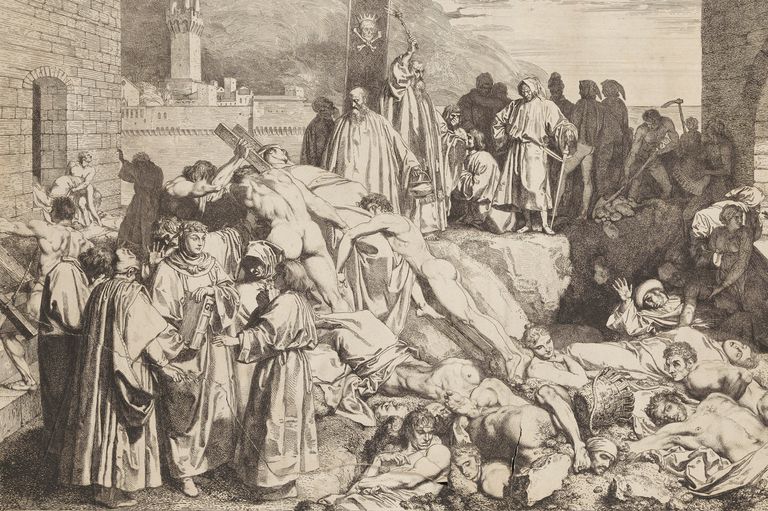
The name of the Black Death has left its mark on the delusions and imaginations of Europeans even to this day. The Black Death changed European culture, subjected the backward and unstable institutions of the Middle Ages to a severe test, marked the beginning of the end of the Dark Ages, and laid the foundation for the start of the Renaissance and the Industrial Revolution. And now, as Europeans anxiously await the coronavirus—once again via Italy—as China and South Korea are embroiled in it, as it is on the verge of shutting down the Tokyo Olympics, as it has influenced the 2020 US election politics, and has confined us in Iran to our homes, it is worth taking a look at the calamity the plague brought upon Europe, the changes it wrought in the geopolitics of the Western world, and the similar changes that COVID-19 will impose on the world.
Epidemics have existed since the dawn of civilizations. The root of the word plague is the Greek word Plaga, meaning a blow or strike. Plaga swept through Athens in the fifth century BC and paralyzed ancient Greece. We have harrowing accounts of this disease from the historian Thucydides, who himself nursed some of the sick. Later, between 165 and 180 AD, the Antonine Plague, which historical accounts suggest may have been smallpox or measles, claimed the lives of five million Roman citizens at the height of the Roman Empire's glory. Even more deadly was the Plague of Justinian, which spread in the sixth century, killing nearly 25 million people and completely depopulating large areas of the Eastern Roman (Byzantine) Empire. It was only in this twenty-first century that researchers finally proved that this horrific disease was the very same one that would return eight centuries later: the bubonic plague!
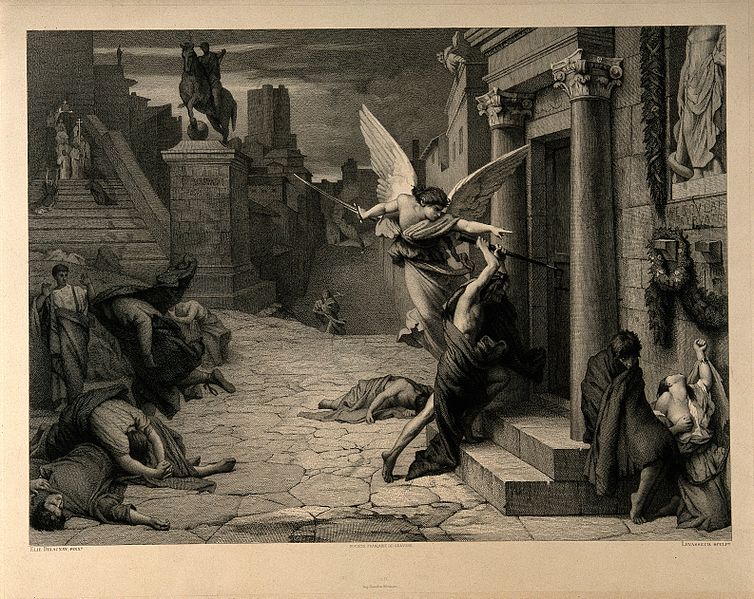
Empires were more affected by these terrifying epidemics than primitive societies, because empires are a form of globalization. It is empires that bring people from far and near, and more dangerously, other mammals that are carriers of diseases, into direct contact with one another. Another danger is climate change, which can make previously known viruses more dangerous or force animals that carry diseases to migrate.
Such events occurred in the catastrophe of the fourteenth century. The empire involved had itself spread across the world like a contagious disease: the Mongol Empire! Although today we mostly know Genghis Khan for his pyramids of skulls, rivers of blood, and the burning of libraries, the reality is that the empire he founded, like all other empires in history, also brought useful fruits and benefits to the world. Mongol rule had opened trade routes from Central Asia to Western Asia and Europe. Globalization, whether created by trade agreements or by the force of the sword, always introduces new and novel things to the world: new goods, new cultures, new ideas, new languages, and yes, new pathogens and diseases.
"Yersinia pestis" lived in Central Asia within the bodies of gerbils and other rodents, but unstable climatic conditions in the 1330s caused the disease to jump onto rat fleas. By 1339, it had been transmitted to humans and was taking their lives, and by the mid-1340s, Christians had heard news of a strange disease that was ravaging the Islamic world. Some of them interpreted the disease as a divine intervention of the Holy Spirit in retribution for the Crusades and were not particularly saddened by the death of Muslims. After all, less than two centuries had passed since the Siege of Acre and its capture by the Mamluks, and the bitter memory of the loss of the Levant and the defeat of the Crusaders was still alive in the memory of Christian believers.
Nevertheless, hatred between East and West was not universal. Throughout all these conflicts, Italian merchants and traders, despite the wrath of the Church, regularly conducted economic dealings with Muslims. But this trade route, which once brought peace and prosperity, had now become a passage of death. The plague crossed the Black Sea and reached a Genoese colony called Caffa. But Italy's grim fate was sealed when, in October 1347, four ships that had left the sick city arrived in Sicily.
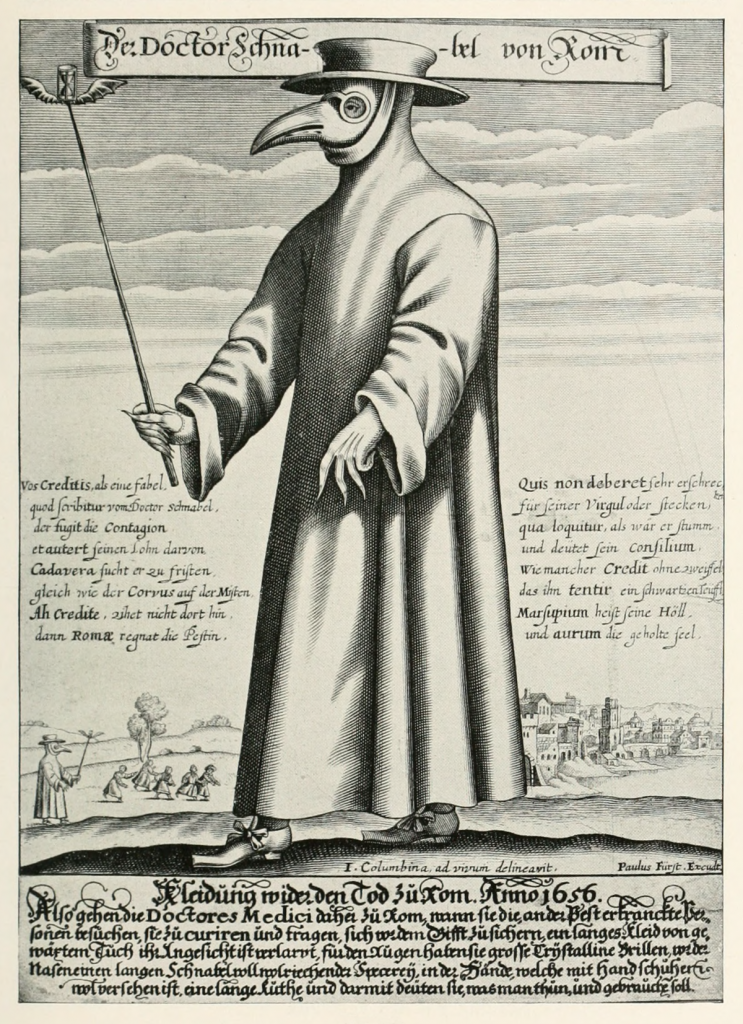
The first sign of the dreadful disease was a foul odor from the mouth. Sufferers would then become dizzy and feel pain in the groin and abdomen, and after that came the terrifying appearance of bubonic blisters. Swellings and inflammations the size of an apple would appear on the neck, thigh, or under the arms of the patients, and when the illness reached this stage, they would vomit blood. Six out of every ten afflicted individuals perished.
Corpses were piled atop one another in mass graves. Sometimes among the bodies, victims who were still breathing could be seen, stirring and struggling for their last breaths before being buried alive. These were patients whom no one had remained to care for. If, by chance, they still had a living family, there was no doubt they had fled.
As the disease spread throughout Italy, every city tried to keep the inhabitants of neighboring cities at bay. Yet there seemed to be no escape from the plague's arrival. Some became believers in fatalism and concluded that the disease must be welcomed with open arms. Seven members of the city council of Orvieto decided to ignore the incoming news of the imminent plague, lest it cause panic and chaos among the residents. Very soon, six of them died from contracting the plague. In Ragusa, the local government concluded that the only thing within its power was to order everyone to draw up a will.
It was late 1348 when the disease reached England, advancing at a rate of one mile per day. The mortality rate was apocalyptic. Eighty percent of the inhabitants of Jarrow in County Durham were killed. At this point, two hundred people were dying daily in London, which, relative to the current population, is equivalent to twenty thousand deaths today. London had become like a ghost town. Its state was not unlike the film "28 Days Later." It was as if it were an abandoned, uninhabited land.
Almost all of Europe suffered a mortality rate of between one-third and one-half of the population, although small areas in Poland and Bohemia survived unscathed. Italy likely suffered the highest death toll, losing sixty percent of its people. In Venice, nearly three-quarters of the inhabitants died.
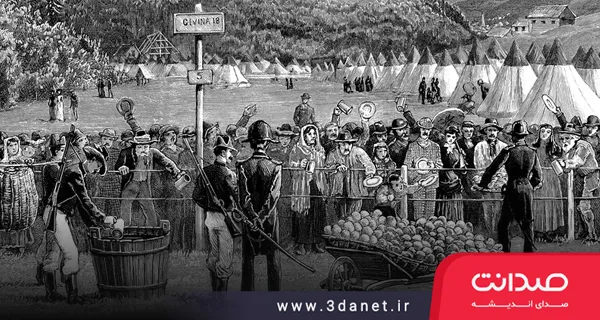
In contrast, Milan had far fewer casualties. Perhaps because its leaders, the despotic and ruthless Visconti family, had ordered that any house where the plague was found be sealed, and its inhabitants left inside to starve to death. Later, in the city of Dubrovnik, now located in Croatia, a law was enacted requiring all ships dropping anchor to remain in the harbor for 40 days before disembarking passengers and cargo. This policy—quaranta, quarantine—which was established with consideration for the probable length of the incubation period, proved to be very rational and useful.
Nevertheless, no one really had a clue what was going on. In October 1348, the King of France asked the leading thinkers of the University of Paris to launch an investigation to find the cause of the disease. The gentlemen's best guess was that the cause of the illness was "the triple conjunction of Saturn, Mars, and Jupiter in the 40th degree of Aquarius." In other words, they didn't know jack. Despite this, many blamed the lax morals of their societies. Some considered people's provocative and revealing clothing to be the cause of the scourge. Many countries enacted strict laws against gambling, prostitution, and sexual intercourse. King Philip VI of France ordered the upper lip of atheists and blasphemers to be cut off. People and governments were looking for scapegoats to blame and get rid of. So they first went after the lepers, and then, with greater violence, after the Jews. An apparatus of inquisition and persecution was set up throughout France and England.
Eventually, the bodies of all survivors became immune to the plague, but another outbreak recurred in 1361 CE. This one was dubbed “the mortality of children,” because it mostly killed children and younger people whose immune systems had never encountered the previous plague to become immune. The plague returned every so often. But it was ultimately eradicated in Europe. The Marseille outbreak of 1722 was probably the last mass affliction of the plague. Most likely, the black rats carrying the plague were wiped out by their cousins, the brown rats.
There have been other pandemics throughout history. The worst was smallpox, which killed hundreds of millions and, even in the twentieth century, claimed more lives than all the devastating wars of that century. And then we have influenza, which was first named in the fourteenth century but became a major problem from the sixteenth century onward. For instance, in the 1889 pandemic that began in Russia, many prominent figures, including Prince Albert Victor, lost their lives.
The most recent example was the Spanish flu in 1919, which claimed the lives of one hundred million people. Nevertheless, like the contagious diseases before it, it did not leave a great impact on the world’s intersubjective memory, perhaps because its memories were washed away and disappeared by the two great world wars.
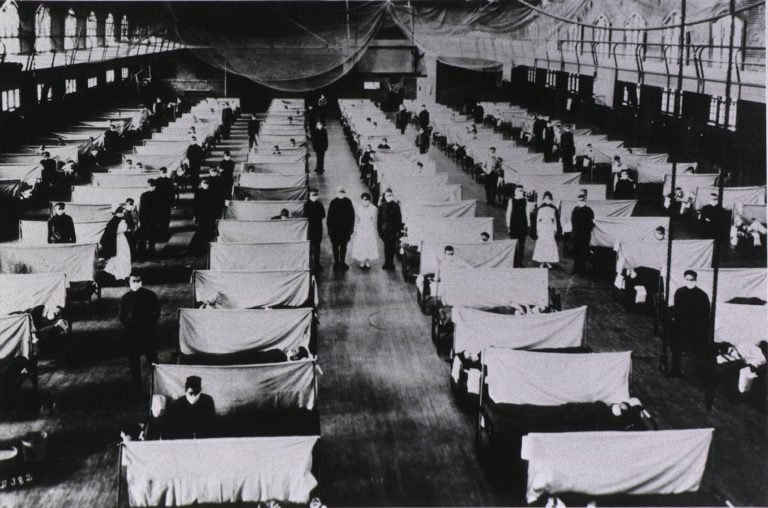
It was only the Black Death that had such a tremendous impact on the collective memory of the West, perhaps because of the many political and social changes it caused. In Florence, gravediggers known as the “Becchini” terrorized people, shamelessly drinking and stealing, their slogan being “Whoever lives in fear dies.” In Venice, criminals, thieves, and prisoners roamed the streets because their jailers and guards had died. Everywhere, crime rates and pregnancies had increased.
The mass outbreak also directed much anger toward authorities and the powerful. The Church in particular, which had already faced much criticism for its boundless wealth, found itself the target of public wrath. On the other hand, the clergy had the highest number of victims among different social strata, because they had to perform the rites of confession and last rites for the sick and thus contracted the disease themselves. Those who survived were usually not the best and most diligent among them, and those who replaced the deceased priests were not the best possible choices either. Often, widowers, adolescents, and even petty criminals volunteered to join the Church, and in this way, the authority of the Church gradually collapsed.
Newly emerged anarchist religious sects rose up. The most notorious of them were called the “Brothers of the Cross” or the “Flagellants.” Zealots who traveled from village to village, formed circles, confessed their sins, and then, in religious rituals, beat their shoulders and backs with whips woven from blades, needles, and nails. Before long, these brothers revolted against the Jews and then against the authorities. And of course, there were the “Brethren of the Free Spirit,” who believed they had entered the highest realms of grace and proximity to God and, therefore, it was perfectly fine to steal freely and engage in sexual intercourse without a troubled conscience.
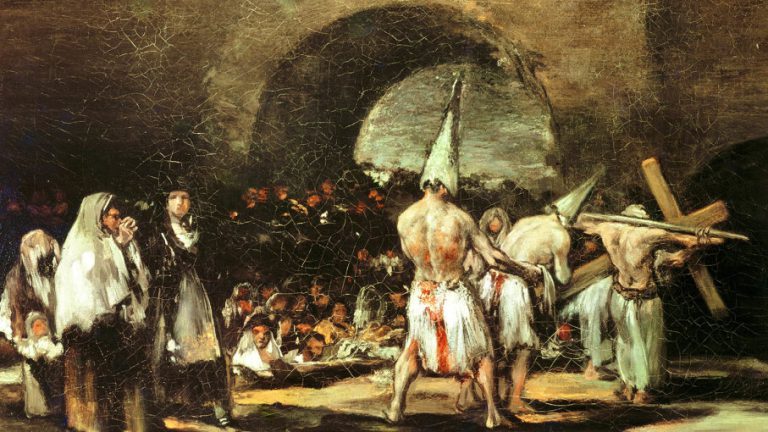
The plague had destroyed all conventional social norms and barriers. It had even disrupted the power structure in areas where aristocrats had fled. The nobility and government officials, who, unlike the peasantry and villagers, were allowed to flee the contaminated cities and villages, experienced a much lower death rate. Only a quarter of the bureaucrats died from the plague, while between a third and half of the peasant community lost their lives. The result of this demographic shift and the disruption of the supply-and-demand balance in the market was that, in 1350, the wage of a simple English plowman had risen from 2 shillings in 1300 to 10 shillings. The wages of craftsmen and artisans had also tripled in this interval.
Government officials and authorities tried their best to control this market situation. For example, many laws were enacted to set a maximum wage for manual labor, but these laws were simply ignored. In the 1370s, over seventy percent of formal and legal jobs in Britain consisted of manual and laboring work. The authorities in Gloucestershire even decided to build cages and storehouses in which to imprison offenders who took more than the legal wage. But to build these very cages, they were forced to pay carpenters twice the legal limit.
Due to the labor shortage, lords were compelled to moderate their grueling demands on workers and serfs. The result was the gradual dismantling of the manorial system. Before this dismantling, however, the crown's added pressure on villagers and serfs who had stepped beyond their bounds led to uprisings in Essex and Kent. On the other hand, the severe shortage of manpower caused creativity and funding to flow toward new industrial and engineering initiatives to compensate for this deficit. Perhaps this very chain of reasons was what led to the invention of the printing press by Gutenberg and the start of the Industrial Revolution.
The coronavirus may not bring about the zombie-like, 28 Days Later scenario of the plague on Earth, but make no mistake that it is going to be a simple cold. Corona will change the earth and the world. The changes have already begun. In America, it has cast its shadow over the electoral race between Bernie Sanders and Joe Biden for the Democratic Party nomination and has brought the urgent need for universal healthcare—especially given that a coronavirus test could result in crippling medical bills—further to the fore in American domestic politics. The Chinese government will likely see greater pressure for fundamental and structural reforms due to the high coronavirus death toll, especially as the Hong Kong protests continue. The global economy, whose condition is already not very good, will head toward collapse with greater speed. With the borders of many countries closing, the wave of nationalism that has swept the world—from France and England to India and Turkey—will become more powerful than before. The coronavirus itself probably does not know what social and political effects it will have on the Middle East and the countries involved.
On the other hand, infectious diseases always turn public anger toward minorities. Even now, reports of violence against East Asians have been published in Italy. We probably will not witness the inquisitions and genocides of the Middle Ages, mostly because children are less affected by the disease and humanity's worst fear is losing a child. But in any case, pandemics expose the most primitive, darkest corners of human nature. There are theories that claim the primary root of xenophobia and racism, from an evolutionary perspective, has been pathogens: the likelihood that an outsider from outside the tribe is infected with a deadly disease and will infect everyone is less than that of individuals within the group being infected, and as a result, tribes that repelled outsiders from their inner circle were more successful in survival and gene transmission.
Since the coronavirus disproportionately targets the elderly population, the virus's long-term effect will likely be a rejuvenation of countries' populations, which will itself have unforeseen economic, social, and even political consequences. For instance, perhaps just as the death of a large number of serfs and farmers during the Black Death led to an increase in their social standing and overthrew the manorial system, the coronavirus might also change the public view of the elderly.
It should also be borne in mind that the coronavirus outbreak will likely draw global attention to the danger of pandemics and deadly viruses more than ever before. Already, many bacteria have become resistant through our own overuse of antibiotics. God knows what viruses are stored in the frozen polar ice that will be released as it melts due to climate change and will plague the world. Conspiracy theories about the coronavirus being created by humans in a biological laboratory in Wuhan, China, are circulating—even making their way onto South Korean television—and even if these rumors are all denied and prove untrue, they will nonetheless increase pressure on such research facilities. The outcome of all these developments may, like the Black Death, be positive. Perhaps, just as the plague set the wheels of industry in motion, the coronavirus and similar potential pandemics that certainly await us in the future will spark revolutions in the fields of biotechnology, bioinformatics, cellular biology, and computer science, yielding fruits far more significant for human civilization than merely treating viruses.
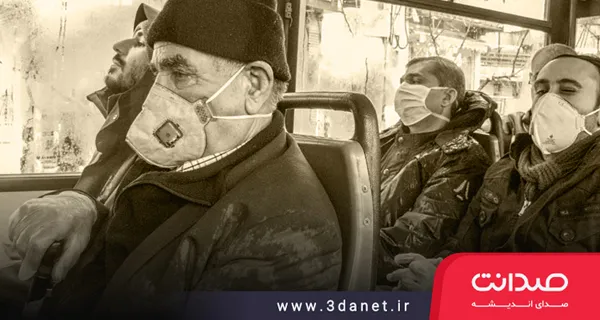
In any case, whatever happens, make no mistake: the coronavirus is not just a simple virus that shouldn't be exaggerated and that we are simply going to get through. Such interpretations, for something that has long quarantined many people around the world in their homes, are foolish and simplistic. The coronavirus is changing the world. It might make it better or worse, but change is certain and inevitable. An article in The Atlantic, citing epidemiologists, claimed that the coronavirus, or at least this strain known as COVID-19, might become a new seasonal illness, and if so, we will live with it forever, like the common cold and the flu. But even if the virus is completely eradicated within the next month, it has already left its mark on the world, and after passing through this experience, we will be living in a new reality.
.
.
Corona, the Plague, and a New Renaissance
What the Plague Did to the Middle Ages and What Corona Is Doing to Us
This text was a free translation of an article by Ed West in UnHerd, with additions and omissions by the translator (Mohammad Souri), first published on the White Magazine website.
.
.




Discussion2 comments
آقای سوری دستتان درد نکند. باور کنید اگر همان خطوط اندیشه خودتان را با نام خودتان می گفتید هم برای شما بهتر بود و هم برای ما آموزنده تر. نیازی نیست حتما از سخن دیگران وام بگیریم تا سخنی گفته باشیم.
درود و ادب چهقدر مطلب خوبی بود و من چقدر ممنونم از شما بهخاطر انتشار چنین مطالبی