Philosophy
Entry on Speciesism from the series “Philosophy in a Thousand Words: Introductory Concepts”
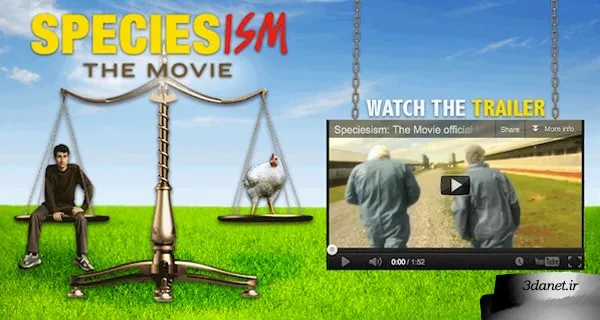
Speciesism is the prioritization of the interests of one's own species, which some consider akin to racism; an examination of its forms and flaws shows that species membership is not a suitable criterion for moral status, and that the primary criterion may be the capacity to suffer.
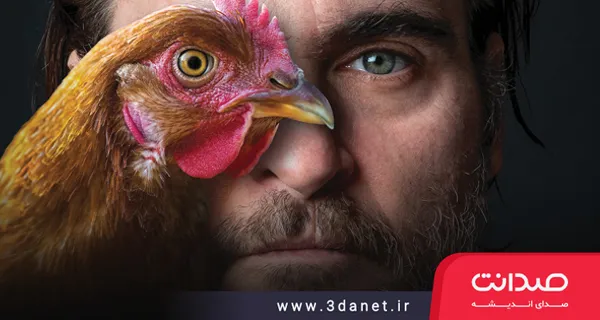

Dan Lowe
AuthorEntry on Speciesism from the series “Philosophy in a Thousand Words: Introductory Concepts”
Author: Dan Lowe, Professor of Philosophy at the University of Michigan
Translator: Ali Baniasad
Human beings use non-human animals in various ways: for scientific experiments, clothing, and food. Such uses typically cause harm to animals, and harming is often wrong. The question arises as to what characteristic animals have—if any—that might justify this infliction of harm.
One answer could simply be that they are animals. This is the attitude of speciesism. According to this claim, the type of treatment of beings is determined (wholly or partly) based on their membership in their animal species.[1] Speciesism is tied to prioritizing the interests of one's own species over other species: because animals do not belong to our species, we can do to them what we would never permit to be done to humans.
It seems most people accept speciesism. However, a number of philosophers argue that speciesism reflects a biased discrimination in favor of our own group—similar to racism and sexism. In this essay, we will look at the different types of speciesism and the objections raised against it.[2]
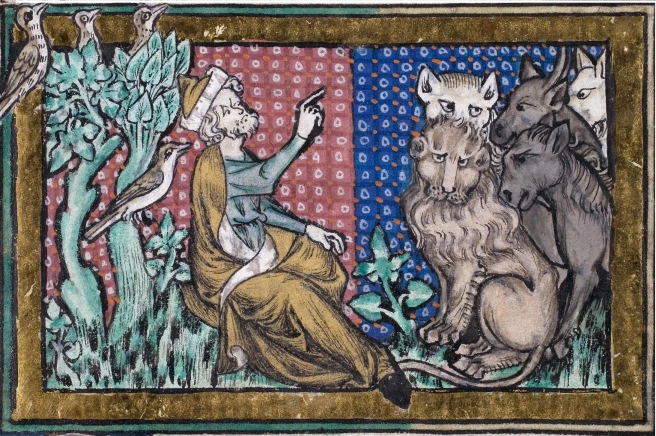
1- Mere Group Membership
What does membership in a particular species, like Homo sapiens, mean? It means membership in a biological group; there is a specific DNA structure that makes us a member of the human species.[3]
It is from here that an objection against speciesism arises: our DNA structure merely recounts a point about the type of molecular arrangement of our cells, which seems irrelevant to morality. If you found out your DNA had an unusual structure (without any effect on your health or abilities), it seems unlikely that your moral status would undergo any change.
This objection clarifies why some philosophers believe speciesism operates similarly to racism or sexism.[4] Racists consider one race superior to other races. But an individual's belonging to a race (or gender) does not change that individual's moral status. Similarly, speciesists give moral weight to something that has no moral relevance in itself.
2- Distinctively Human Capacities
One might respond to this objection by saying that humans have very different mental capacities compared to animals. Humans have complex language, can entertain sophisticated thoughts, and live according to moral ideals. Perhaps these capacities provide us with a justification for giving preference to our own species.
Here, what is fundamentally considered morally important is the possession of the typical mental and cognitive capacities of our own species, not our biological status.[5]
But this position runs into trouble when faced with the argument from species overlap[6] . For instance, it is possible that children or those with severe mental disabilities lack any of the above capacities; yet, it would be deeply wrong to use them in the same ways we use animals—for example, raising children, like animals, for their skin.
This version may also bear similarities to racism and sexism. In racism and sexism, a person has an arbitrary preference for their own race and gender. Likewise, the preference we hold for these capacities is simply because they are our own; we are human and value language, but if we were bats, we would probably value echolocation instead.
3- Combining the Two Capacity-Oriented and Membership-Oriented Positions
Perhaps these problems can be overcome by combining the previous views. In this view, the moral status of beings is determined on this basis: whether or not they are members of a species whose members typically possess important capacities.[7]
This version of speciesism does not rely on the attitude that membership in an animal species, in itself, entails moral status. Nor does it claim that children or the mentally disabled have lower moral status; even if they lack these capacities, they still belong to a species whose members usually have such capacities. Thus, this version of speciesism overcomes the argument from species overlap.
However, such a view is built upon a questionable combination of ideas:
Possessing certain capacities (such as rationality) is important for having another characteristic (e.g., moral status).
But
[According to this position] some individuals may completely lack those capacities yet still possess that other characteristic—simply because most members of that particular group (e.g., an animal species) have those capacities.
To clarify this problem, consider an analogy.[8] If a story's plot is engaging and its characterization is favorable, it possesses the characteristics of a good story. Suppose most Sherlock Holmes stories are like this, except for “The Adventure of the Naval Treaty.” It would be a mistake to say that while “The Naval Treaty” has none of the qualities of a good story, it is still a good story because the other stories in this collection usually have such quality.
Similarly, it would be a mistake to say that beings have moral status because the members of their animal species typically have special characteristics. Membership in a particular group does not mean that the individual possesses all, or even most, of the characteristics of the other members of that group.[9]
This version of speciesism also bears similarities to racism and sexism. Consider a racist who believes that most members of their own race have special characteristics. Even if they are right, it still does not justify considering all members of that race as special, though this is precisely the racist's mindset. Likewise, appealing to the typical characteristics of a species' members does not warrant granting all members of that species a special moral status.[10]
Conclusion
If membership in an animal species is irrelevant to the moral status of beings, then just as we oppose racism and sexism, we must also oppose speciesism. But if membership in an animal species is not a criterion for moral status, where should we find this criterion?
In this essay, one of the answers we considered was: possessing or lacking certain capacities. The philosopher Jeremy Bentham famously stated that animals have always possessed the most important capacity necessary for acknowledging moral status: “The question is not, ‘Can they reason?’ nor, ‘Can they talk?’ but ‘Can they suffer?’.”[11] However, our treatment of some animals, such as puppies, differs greatly compared to other animals, like pigs—even though puppies and pigs likely possess similar morally important capacities.[12]
If we have moral duties toward animals, what are these duties? Apparently, one cannot answer this question simply by pointing to the fact that animals and humans belong to two different species.
This essay was an entry from “Philosophy in a Thousand Words: Introductory Concepts.”
.
.
Notes:
[1] . It was Peter Singer who established the concept of speciesism. He defines speciesism as: “a prejudice or attitude of bias in favor of the interests of members of one’s own species and against those of members of other species.” The formulation used in this essay differs in two respects.
First, it is more neutral: it does not assume speciesism is a form of discrimination or bias. Otherwise, speciesism would be deemed wrong and unjustified by definition, which precludes the possibility of its being morally justified. Here I follow Jacquet (2019), who argues that the term’s function in the debate requires it to be understood only descriptively [and not evaluatively]. [In Iran, the term ‘گونهپرستی’ (species-worship) is more established, but in the present translation, due to the author’s approach and to avoid conveying the negative connotation of this equivalent, the rendering ‘گونهگرایی’ (speciesism) was chosen. —M]
Second, it is broader: it relates membership in an animal species to moral status, but does not insist that an individual must necessarily favor their own species. Singer is right that speciesism usually functions this way, but such a characteristic is not intrinsic to the view. For example, speciesism might take a hierarchical form regarding species, dividing different non-human species into superior and inferior categories (e.g., considering cats superior to cows, dogs to pigs, and vertebrates to insects). Such a hierarchy can be speciesist without involving discrimination in favor of one’s own species.
[2] . Carl Cohen, Tibor Machan, and David Schmidtz are among the philosophers who favor speciesism, and its opponents include Peter Singer, Tom Regan, and Lori Gruen.
[3] . The existence of species, or the nature of this existence, is a controversial topic: should animal species be considered natural kinds or objective, natural categories? Or are they artificial categories, unrelated to any deeper reality? The debate over the existence or non-existence of a category called animal species and the nature of their being is similar to the debate that questions the existence of something called race and its nature. (For an overview of this issue, see:
The Ontology of Race by Abiral Chitrakar Phnuyal.
But if a speciesist wants to say that membership in an animal species carries moral weight, then they must at least believe that animal species are something more than fabricated fictions).
[4]. Peter Singer, Animal Liberation; Tom Regan, “The Case for Animal Rights.”
[5] . Such a view has an interesting implication: if members of another species, such as intelligent extraterrestrials, possessed the same capacities, they would also enjoy equal moral status.
[6] . This argument was formerly titled “The Argument from Marginal Cases”; for example, see:
Babies and Beasts: The Argument from Marginal Cases
اما دیگر با این نام شناخته نمیشود چون «حاشیهای» خواندنِ بعضی انسانها ممکن است به دور از ادب و بیاحترامانه باشد. عنوان فعلی این استدلال بر این تأکید دارد که مشخصاتِ اخلاقاً مرتبط در افرادِ گونههای مختلف همپوشانی دارد یا مشترک است.
[7]. Nathan Nobis, “Carl Cohen’s ‘Kind’ Arguments For Animal Rights and Against Animal Rights”; and Jeff McMahan, The Ethics of Killing: Problems at the Margins of Life.
[8]. Nathan Nobis, “Carl Cohen’s ‘Kind’ Arguments For Animal Rights and Against Animal Rights”; and Jeff McMahan, The Ethics of Killing: Problems at the Margins of Life.
[9] . Such a view also seems to entail that human embryos and individuals with brain death also possess full moral status and, consequently, have precisely the same rights that fully developed, ordinary humans enjoy. Thus, such a view, at the very least, carries implications for abortion and euthanasia. For an introduction to these debates, see the entries “The Ethics of Abortion” and “Euthanasia, or Mercy Killing,” both by Nathan Nobis.
[10]. Lori Gruen, Ethics and Animals: An Introduction, 53-55 .
[11]. Jeremy Bentham, Introduction to the Principles of Morals and Legislation, Chapter 37, §1, IV, n. 1 . Emphasis in original.
[12]. Alastair Norcross, “Puppies, Pigs, and People: Eating Meat and Marginal Cases.”
.
.
References
Bentham, Jeremy. Introduction to the Principles of Morals and Legislation. Clarendon Press, 1879.
Cohen, Carl. “The Case for the Use of Animals in Biomedical Research,” October 2, 1986, New England Journal of Medicine; 315:865-870
Dombrowski, Daniel. Babies and Beasts: The Argument from Marginal Cases. University of Illinois Press, 1997.
Gruen, Lori. Ethics and Animals: An Introduction. Cambridge University Press, 2011.
Jaquet, François. “Is Speciesism Wrong by Definition?” Journal of Agricultural and Environmental Ethics. 2019. https://doi.org/10.1007/s10806-019-09784-1
Machan, Tibor. Putting Humans First: Why We Are Nature’s Favorite. Rowman & Littlefield, 2004.
McMahan, Jeff. The Ethics of Killing: Problems at the Margins of Life. Oxford University Press, 2002.
Nobis, Nathan. “Carl Cohen’s ‘Kind’ Arguments For Animal Rights and Against Animal Rights.” Journal of Applied Philosophy, Vol. 21., No. 1, 2004.
Norcross, Alastair. “Puppies, Pigs, and People: Eating Meat and Marginal Cases” in The Ethical Life: Fundamental Readings in Ethics and Moral Problems, 2nd edition, ed. Russ Shafer-Landau. Oxford University Press, 2012.
Regan, Tom. “The Case for Animal Rights” in In Defense of Animals, ed. Peter Singer. Basil Blackwell, 1985.
Schmidtz, David. “Are All Species Equal?” in The Oxford Handbook of Animal Ethics, eds. R.G. Frey and Tom Beauchamp. Oxford University Press, 2011.
Singer, Peter. Animal Liberation. 1975. Updated Edition, HarperCollins Publishers, 2009.
.
.



Discussion1 comments
« بشر از حیواناتِ غیرانسان به اَشکال مختلفی استفاده میکند: برای آزمایشهای علمی، پوشاک، و خوراک. چنین استفادههایی معمولاً به حیوانات آزار میرساند و آزردن هم اغلب اشتباه است.» گویا ریشه مشکل این است که ما برای بقاء به خوراک نیاز داریم و خوراک ما هم معمولاً جانداران دیگرند .افزون بر این جانداران دیگری هستند که ما یا مواد لازم برای بقای ما را می خورند ؛ پس برای بقای خود باید آنان را بکشیم یا از خود دور کنیم . می شود چنین نکرد ؟؟؟!