Religion
Farhad Shafti's article “A Qur'an in Order of Revelation and the Narrative of Itmam al-Hujjah”
The current arrangement of surahs by length in the mushaf obscures the narrative of the ultimatum and the progression of the Prophet's warning. Reading the Quran in the order of revelation reveals the book's narrative logic and illuminates the formation of the monotheistic community over time.
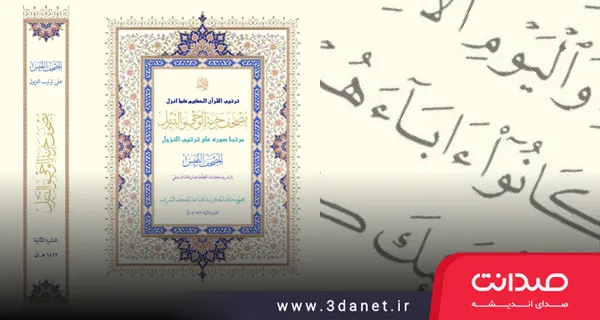
A Qur'an in Order of Revelation and the Narrative of Itmam al-Hujjah
Farhad Shafti
A few years ago, I was searching online for a version of the Qur'an arranged according to the order of revelation. The result of this search was finding a version of the Qur'an compiled by Abdullah al-Alawi al-Fatimi. Based on his analysis of certain narrations regarding the order and occasions of revelation, this Qur'anic researcher has attempted to arrange the surahs of the Qur'an in the order of their revelation. At the beginning of this year's Ramadan, I shared this version of the Qur'an with friends on my Telegram channel, emphasizing that this is the compiler's personal understanding of the probable order of the surahs. The friends at the Sedanet website asked me to write a piece about reading the Qur'an in the order of revelation, so that this version of the Qur'an could be made available to those interested on this site. I hope the following short article fulfills this request:
The order of surahs in the Qur'an available to everyone is a volumetric order. With the exception of Surah al-Fatihah, the rest of the surahs are arranged roughly from largest to smallest. There is disagreement over whether this order is tawqifi (by the Prophet's command) or ijtihadi (by the Companions), although the prevailing view among Qur'anic scholars seems to be that the order of surahs is ijtihadi.[1]
Regardless of whether the current order of the Qur'an's surahs is tawqifi, ijtihadi, or a combination of both, reflecting on the impact of this order, or any other order, is beneficial for the reader of the Qur'an. Undoubtedly, for many, the beginning of the Qur'an (after Surah al-Fatihah) with the phrase "This is the Book ..." (dhalika al-kitab ...) in Surah al-Baqarah is spiritually uplifting. In my belief and experience, the two surahs of al-Baqarah and Al-e-Imran encompass all the foundational concepts of the Qur'an and, in a way, prepare the reader for contemplation on the rest of the Qur'an. Among contemporary exegetes, Amin Ahsan Islahi (d. 1376 AH) in his commentary, Tadabbur-e-Qur'an, strongly emphasizes the meaningfulness and utility of the current order of the Qur'an's surahs. Based on this very order, he divides the Qur'an's surahs into seven groups and introduces a specific theme as the central topic for each group. Islahi argues that in each group, the Medinan surahs demonstrate the practical outcome of the topics discussed in the Meccan surahs of that group.[2] There is no room in this short article to critique this theory, but the point is that there are exegetes who believe the order of the Qur'an's surahs is tawqifi, who see an explicable and contemplatable logic in this order, and indeed base their interpretation of the Qur'an on this very logic.
Nevertheless, it is undeniable that the lack of a time-based foundation in the order of surahs affects the narrative logic of this book, which was primarily revealed over 23 years based on events and the needs of the time. The history of early Islam tells us that the volume and scope of emerging social and political issues after the Hijra were far greater than before it. Although the entire Qur'an is intended for the warning and guidance of its audience, this point naturally leads to a noticeable difference between the discourse and concerns of the verses before and after the Hijra. Reading these surahs in the existing order dumps a diverse and extensive volume of concepts and topics onto the non-specialist reader of the Qur'an without any tangible connection or categorization along a timeline.
Those who consider the Islam of Medina to be a natural continuation of the Islam of Mecca naturally see the laws and concepts introduced in the Medinan surahs as more up-to-date compared to the Meccan surahs. Conversely, those inclined to the view that the original Islam was what was revealed in Mecca see the Meccan surahs as containing the core concepts of Islam, and consider the Medinan surahs to be more inclined towards addressing the governmental and political issues afflicting the land of revelation.[3] My guess is that the followers of both theories share a common belief: neither of them finds the intermingling of Meccan and Medinan surahs in the existing Qur'an useful for the practical application of their theory.
Beyond the above points, from my perspective, one of the most significant problems with the current order of the Qur'an is the obscuring of the narrative of Itmam al-Hujjah (the completion of proof) in the Qur'an. I will try to provide a summary of the discussion of Itmam al-Hujjah in the following few lines to clarify my meaning:
According to the Qur'an, the Prophet was commanded to warn the inhabitants of Mecca and its surroundings (the Arabian Peninsula).[4] Based on that divine tradition in sending prophets which the Qur'an depicts, when a prophet is sent to a community, the process of itmam al-hujjah (completing the proof) begins with the direct addressees of the divine message.[5] Itmam al-hujjah here means clarifying and making plain the truth of the divine message for the addressees, in such a way that no excuse, such as not being convinced, remains, and rejecting the divine message is solely out of arrogance and obstinacy. Based on this divine tradition, the direct addressees of this message are warned that after the completion of the proof, if they persist in stubbornness and enmity toward this message, they will see its punishment not only in the Hereafter but also in this world.[6] The nature of this punishment differs for various groups among the direct addressees of a prophet. Another function of the process of itmam al-hujjah is to separate the believers from this group and form a monotheistic community (ummah).[7]
The Qur'an, from a time-oriented perspective, is in fact the narrator of the stages of this warning for the Prophet's addressees. This narrative can be depicted as follows:
One - The initial warning to the polytheists, especially the Quraysh: the opening surahs of the Qur'an
Two - A more intense warning to the polytheists, with greater emphasis on the promise of worldly and otherworldly punishment, and on the narrative of the worldly punishments of previous communities: surahs revealed around the time of the Prophet's migration
Three - Warning the People of the Book residing in Medina alongside warning the polytheists, and the broader communication of the religious ordinances of the new monotheistic community: the initial surahs revealed after the migration, including al-Baqarah and Al 'Imran
Four – The declaration and command to begin the process of worldly punishment for the disbelievers, and the continuation of communicating the religious ordinances of the new monotheistic community: Surah al-Tawbah[8] and the surahs revealed after it
It is conceivable that these four stages and their details are a matter of differing opinions.[9] Exegetes and Qur'anic researchers may
depict and explain the process of the Prophet's warning in another way, but I believe all or most of them agree that this process (whatever it may be) aligns with the chronological order of the Qur'an's revelation.
The problem is that when reading the Qur'an in the volume-based order of the existing codices, this process of warning, itmam al-hujjah, and the formation of the new monotheistic community is hardly apparent. In the current codex, the relatively long Medinan surahs of al-Baqarah, Al 'Imran, al-Nisa', and al-Ma'idah occupy the first seven juz' (i.e., more than a quarter of the book). These are surahs that were revealed in the final stages of the warning process. After these surahs, Meccan and Medinan surahs—that is, surahs revealed at different stages of the warning process—appear alongside one another, and at the end of the codex, alongside some short Medinan surahs, are the short Meccan surahs revealed in the first few years of the Prophetic mission, i.e., the initial stages of the warning process. Such dispersion and intermingling in the arrangement of surahs has completely disrupted the logic of the process of warning and itmam al-hujjah in the current codex. The warning narrative of the Qur'an is a story whose ending, in the current version, comes at the beginning and whose beginning comes at the end, and in the middle, the various chapters of this story are intermingled. We know that understanding the connection between the verses of the Qur'an, even within a single surah, is not easily accessible to everyone; this disorder in the order of surahs is an additional cause. Although the question of whether the placement of some verses of the Qur'an is based on independent reasoning (ijtihad) or divine decree (tawqifi) is also debatable, it seems that the order of surahs plays a greater role in portraying the process of warning in the Qur'an.[10]
The question is not whether using the Qur'an is possible or impossible. Every reading of the Qur'an can have a different purpose. For a Muslim who reads the Qur'an for the remembrance of God, spiritual enjoyment, or lexical or thematic research, the order of the surahs is generally not very important, or is less so. However, for the inquisitive mind that repeatedly reads in the Qur'an that this book has come as a warning, if they desire a reading of the Qur'an that helps them understand the nature of this warning, the current arrangement of the Qur'an will not be of much use. This deficiency in understanding the nature of the warning can have other epistemological consequences as well, including the failure to distinguish the fundamentals from the branches of the Qur'an, the inability to differentiate between the Qur'an's specific application for its direct addressees and its general application for others, and also perceiving contradictions in the Qur'an's message. This itself can lead to a vague and confused understanding of some important Qur'anic concepts such as jihad, salvation, and disbelief. My claim is not that understanding the warning and other Qur'anic concepts is only possible by reading the Qur'an in the order of revelation. The point is that in a contemplative, though not necessarily scholarly, reading, the revelational order of the Qur'an's surahs paves the way for contemplation far more effectively than the order based on length.
My suggestion to those interested in Qur'anic knowledge is to read the Qur'an once in an order close to the sequence of revelation. I write "close" because, unfortunately, we have no definitive evidence regarding the actual order of revelation of the Qur'an's surahs. Every order that has been proposed is merely the result of the compiler's deliberation on a selection of solitary reports, which are sometimes contradictory.[11] The version attached to this writing is also a compilation of this kind. The reason for choosing this version is very simple: I could not find another version of the Qur'an in the order of revelation online!
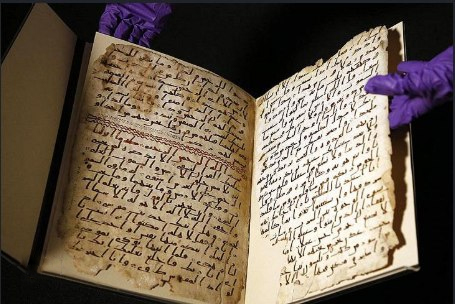
The compiler of this version, Abdullah al-Alawi al-Fatimi, the author of books on grammar and on pilgrimage (ziyarat), does not provide the reader with complete information about the criteria for the order of surahs in this version. At the beginning of the book, only one sentence is seen, stating that this order is based on the words of the Treasurers of Revelation (the Prophet and the Imams, peace be upon them). At the end of the book, the compiler repeats the same. It seems that the arrangement of some surahs is based on less well-known narrations. For example, Surah al-Tawhid is listed as the first Medinan surah, whereas narrations of the occasion of revelation more often attest to the surah being Meccan; or Surah al-Najm is listed as the last revealed surah, while the context of the verses is more compatible with the surah being Meccan, and indeed belonging to the early times of the revelation.
Nevertheless, the compilation of this version is a commendable effort, and despite not conforming to some more famous narrations, it generally presents an illuminating picture of the course of the Qur'an's revelation. The beautiful calligraphy of Uthman Taha and the soft background color give the book's pages a beautiful and pleasant appearance.
This version of the Qur'an is accessible here or here.
.
.
[1] For a summary of the opinions for and against and the reasons of each group, see: "The Order of the Qur'an's Surahs", Jafar Taban, in Kayhan-e Andisheh, No. 47, 1372 [1993/1994].
[2] Islahi, A.A., 2007. Pondering over the Qur’an. Translated from Urdu to English by M. S. Kayani. Kuala Lumpur: IBT
[3] Reza Babaei. "The Islam of Mecca; The Islam of Medina". Din Online. 17 Mordad 1394 [August 8, 2015].
[4] Al-An'am:92, Ash-Shura:7
[5] Al-Muddaththir: 1-2, An-Nisa':163-165
[6] Yunus:47, al-‘Ankabut:40, Hud:89, al-Tawbah:1-14
[7] al-Nur:55, al-Baqarah:134
[8] It is interesting that regarding Surah al-Tawbah’s lack of a basmalah, alongside the well-known view in our time that attributes this to God’s wrath, another opinion is put forward, which al-Razi expressed in his al-Tafsir al-Kabir (15:522) at the beginning of the discussion of this surah. According to this view, which is based on certain narrations, there was a difference of opinion among the Companions as to whether Surah al-Tawbah was an independent surah or a part of Surah al-Anfal. Ultimately, the two sides agreed to separate Surah al-Tawbah from al-Anfal but not to place a basmalah at its beginning, so that the opinion of each group would be satisfied in some way. The shortness of Surah al-Anfal relative to its position in the order of length, as well as the close connection between the last verses of this surah and the first verses of Surah al-Tawbah, even in terms of the rhyme of the final verses, increase the likelihood of this second opinion being correct. In al-Mizan, ‘Allamah Tabataba’i also prefers this same opinion, which is also found in narrations within Shi‘i sources. If this opinion is correct, then the Qur’an would have 113 surahs, not 114.
[9] For a relatively detailed, though certainly criticizable, narration of the process of prophetic warning, see:
Ghamidi, J.A., 2010. Islam a comprehensive introduction. Translated from Urdu to English by S. Saleem. Lahore: Al-Mawrid. pp: 500-7
[10] It seems there is no strong transmitted or rational evidence to claim that the placement and order of all the verses of the Qur’an are divinely ordained (tawqifi). Some narrations suggest the possibility of verses being displaced from their original positions, but it appears this displacement was not extensive. Some researchers consider the seemingly disordered appearance of long surahs and the jumping from one subject to another as evidence of widespread displacement of verses. In contrast, other researchers view this non-linear appearance as related to the style of the Qur’an, a style based on the art of oratory and rhetoric among the Qur’an’s initial audience. There are Muslim and non-Muslim researchers who have seen order in a long surah like al-Baqarah. See “An Examination of Narrations on the Order of Verse Arrangement in the Surahs of the Holy Qur’an” (Seyyed Mahmoud Tayyeb Hosseini, Hamed Sharifi Nasab) and “Re-reading the Coherence of the Qur’anic Text in Light of the Theory of Symmetrical Order” (Mahmoud Makvand, Mohammad Kazem Shaker).
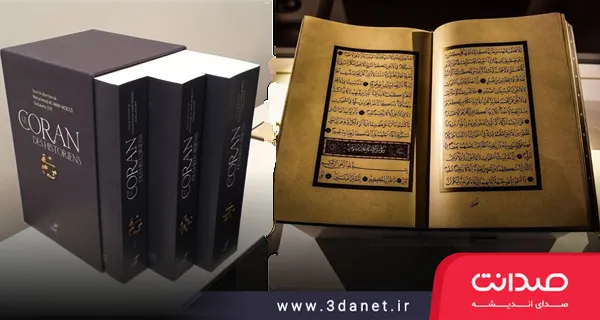
[11] On this webpage, Mohammad Hadi Ma‘refat has arranged the order of the surahs based on the narration of Ibn ‘Abbas and the narration of Jabir ibn Zayd, and then examined the surahs over which there is disagreement. The purpose of this article is not to review the various studies in this field, but it is also fitting to mention the different research work of Mehdi Bazargan. In this work, published under the title The Course of the Qur’an’s Evolution, the main criterion for determining the order of revelation of the surahs is not reports, but a mathematical model. Based on this arrangement, many surahs have been segmented in terms of their time of revelation. Bazargan then, on this basis, presents an interpretation of a portion of the Qur’an’s surahs entitled Step by Step with Revelation. Mansour Pahlevan and colleagues in “A Statistical Method for Dating the Qur’an” (Qur’anic Doctrines, Winter 2017, No. 24) and Abdolkarim Behjatpour in In Step with Revelation are among the researchers who have fundamental methodological and technical criticisms of this research. In Step with Revelation (several volumes of which have been published so far) is also an interpretation based on the order of revelation of the surahs. Behjatpour’s criterion for determining the order of revelation is a combination of consulting reports and their chains of transmission, and examining the context of the verses within the surahs.
.
.
A Qur’an in Order of Revelation and the Narrative of Itmam al-Hujjah
Author: Farhad Shafti (PhD in Theology from the University of Edinburgh)
.
.

Discussion7 comments
سلام کتاب یا جزوه ای هست که ترتیب آیات قرآن بر اساس نزول باشد؟
همان سوره اول قرآن مجید از کوتاه ترین سوره های قرآن است که در همان ابتدای قرآن آمده است و موضع شما را بهم می زند. دوم، برای ادعای دیگر خود مبنی بر بهم خوردن درک مذکور هیچ شاهدی ارائه نکرده اید. فقط فرموده اید این گونه است. با یک خط موضع گیری سپس به نتیجه رسیده اید.
سلام،بعیدمیدانم نویسنده یامترجم ازکتاب مجموعه سه جلدی سیرتحول قرآن که توسط مهندس بازرگان نوشته شده بیخبرباشند،کتابی که بقول دکترشریعتی،هم سنگ کشف جاذبه نیوتن معرفی شده،بعدازکشف ترتیب آیات وسوره هابترتیب نزول،واستخراج دههانکته بکروحیرت آورازدل قرآنی که توانسته بترتیب سالهای وحی،هرسال راجداگانه بدست آورد،عدم اشاره باین مجموعه بزرگ ایرانی،ازبی اطلاعی است؟یادلیل دیگری دارد؟
سلام نویسنده محترم کامنت شما را دیدند و توضیحاتی را در پانوشت 11 اضافه کردند.
البته سوره های قرآن یک مرتبه نازل نشده اند و برای تحقیق در مورد روند رشد تاریخی قرآن بهتر است ترتیب نزول آیات به جای سوره ها مد نظر قرار بگیرد. مهندس مهدی بازرگان در کتاب سیر تحول قرآن، به علت اهمیت این موضوع سعی داشت برای آیات قرآن ترتیبی پیدا کند که با سختی های خود مواجه است.
دانلود نشد! لینک را اصلاح کنید
لینک سالم بود اما در سرور دیگری نیز آپلود شد.