Religion
Farhad Shafti's Article: 'The Qur'an: Exclusivist or Pluralist?'
The Qur'an does not align with religious exclusivism; by analyzing five exclusivist propositions and concepts such as tasbih and tahmid, Farhad Shafti argues that humanity's inability to comprehend the exclusivity of the Transcendent affirms a pluralistic narrative.
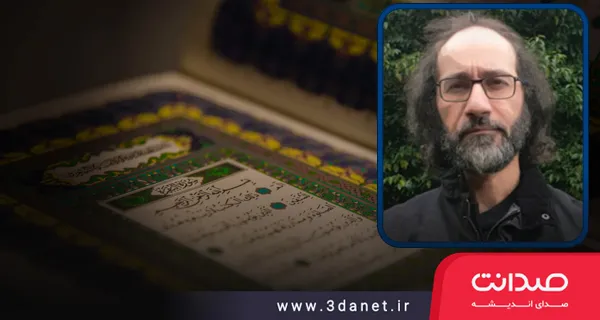
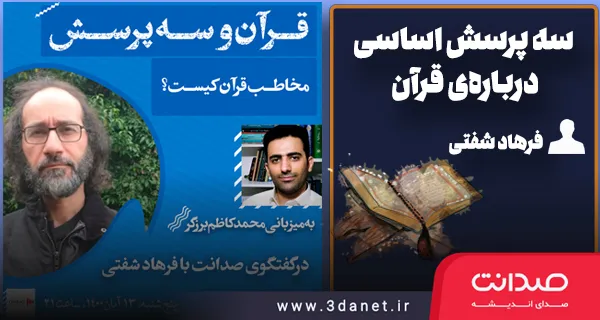
The Qur'an: Exclusivist or Pluralist?
Farhad Shafti
In a previous piece I wrote on religious pluralism [1], while critiquing religious exclusivism, I attempted to provide theoretical (rational) responses to theoretical (rational) critiques of pluralism. In that writing, I promised to address, at another opportunity, the question of whether the Qur'an is exclusivist or pluralist. The present article deals with this subject and is thus, in a way, another defense of pluralism, this time based on more transmitted reasons for those who, like the author, are followers of and devoted to the Qur'an in their religious wayfaring.
In this article, I present five propositions as exclusivist religious propositions to the Qur'an and analyze the degree of alignment of each with the Qur'an. I then briefly examine the scope and boundaries of pluralism in the Qur'an, and finally, as a summary of the discussion, I propose a reading of the Qur'an's narrative of pluralism based on the presented verses. Over one hundred verses of the Qur'an are cited in this discussion. Bringing all these verses would have lengthened the discussion and taken it out of the usual format of such writings. For this reason, in most cases, I have sufficed with the address of the verses in the form of "verse number: surah number," although, where relevant, the key words of many of the verses used are also mentioned. I have also tried, within the framework and scope of this article, to present and briefly critique different readings of some of the mentioned verses.
Before beginning the main discussion, I find it necessary to share a point with the readers of this article. Undoubtedly, whether we know it or not, our thinking is influenced by past and contemporary thinkers, and in this respect, we are all indebted to them. In the discussion of religious pluralism, however, I consider myself indebted above all to the Qur'an. What acquainted me with pluralism and then made me devoted to it was not the works of religious writers and researchers, but the Qur'an. As a researcher of the Qur'an, I first found pluralism in this book, with this book I explored pluralism, and from this book I learned the scope and boundaries of pluralism. It was only much later that, thanks to some writings of religious new-thinkers, I became acquainted with the views of thinkers like John Hick on pluralism. This article is not an attempt to interpret the verses of the Qur'an in alignment with the pluralism theory of religious new-thinkers, but rather an analytical account of my journey, as a researcher of the Qur'an, of becoming acquainted with pluralism within the pavilion of the Qur'an.
Examining the degree of alignment of five foundational exclusivist propositions with the Qur'an:
To clarify what this discussion means by pluralism, I repeat here this sentence from my previous writing: "If we hold that only one religion can lead a person to salvation or the highest degrees of salvation, then we believe in religious exclusivism, and if we accept that two or more religions can do so, then we have stepped into the realm of pluralism. … Here I have used the word 'religion' in its broadest sense, which includes any kind of spiritualist disposition, from followers of official Abrahamic and non-Abrahamic religions who believe in a personal God, to followers of official religions who believe in an impersonal God, and also followers of any spiritual path that does not belong to an official and recognized group." [2]
I argue that this pragmatic definition of pluralism relieves us of the need to discuss the theoretical dimension of pluralism, which is the acceptance of different understandings of the Transcendent[3]. If we accept pluralism in its practical dimension, based on the above definition, then pluralism in its theoretical dimension also becomes acceptable, or at least practically loses its importance. Nevertheless, propositions one and five of these five propositions relate to the theoretical dimension of pluralism.
Propositions two, three, and four focus on the practical dimension of pluralism and are therefore closely related and interdependent. I have presented the propositions separately so that for each proposition I can bring the specific verses related to it and invite the reader to due contemplation on each of them. During the discussion and in the section on the narrative of pluralism in the Qur'an, I have tried to clarify the connection between these propositions.
The Exclusivist (Theoretical) Proposition One: The Transcendent is comprehensible to the earthly human to an exclusifiable degree.
The starting point of the pluralist view is the acknowledgment of the earthly human's inability to exclusifiably comprehend the Transcendent. Comprehension here means knowing and understanding, not feeling and interaction. The belief in the possible truth of differing beliefs about the Transcendent flows from this very source.[4] In contrast, the exclusivist view finds humans more capable in comprehending the Transcendent, so capable that it permits only one set of religious beliefs to be considered true. To clarify the matter, I offer a simple example of the two concepts of gravity and the soul. Gravity is comprehensible to humans to an exclusifiable degree. For this reason, a specific and accepted definition of gravity is available. Any other definition is either incorrect, incomplete, or the same correct and complete definition but in different words. The soul, however, at least at the time of writing this piece, is not comprehensible to an exclusifiable degree. Hence, there are different definitions of the soul among believers in this concept. One definition of the soul may be more correct than another, but no definition can be presented as the only correct definition of the soul.
The narrative of pluralism is the narrative of "I do not know and you do not know," in contrast, the narrative of exclusivism is the narrative of "I know and you do not know." On the spectrum drawn from "I do not know" to "I know," the closer we get to "I do not know," the more we embrace pluralism, and conversely, the closer we get to "I know," the more we favor exclusivism. The discussion in this section concerns where the Qur'an sees humans on this spectrum. Is the Qur'an's mode of address to its followers closer to "you know" or "you do not know"? Paying attention to the way the concepts of tasbih (glorification) and tahmid (praise) are used in the Qur'an is illuminating in this regard:
In the Qur'an, the two terms hamd (praise) and tasbih (glorification) are frequently used to express the servitude of the creation before the Creator. Tasbih is declaring God transcendent and free from defect, and hamd is eulogy and praise based on virtue and knowledge of Him.[5] In other words, tasbih is a negative (apophatic) prayer, and hamd is an affirmative (kataphatic) prayer.
Allamah Tabatabai, in explaining the phrase "al-hamdu lillah" (Praise be to God), writes (translation):
"Hamd is description, and God, the Glorified, has declared Himself transcendent from the description of describers among His servants ... The creature, in whatever manner it praises Him, has, to that same extent, encompassed Him and His attributes, and has limited Him to the bounds of those attributes and measured Him by that estimation, whereas God, the Exalted, is not limited by any limit, neither His Essence, nor His attributes and names, nor the beauty and perfection of His actions ... Therefore, if we wish to praise Him correctly and without flaw, we must first declare Him transcendent from our own limitation and estimation."[6]
Allamah Tabatabai explains that, except in a few instances, God everywhere declares Himself transcendent from the praise of the praisers, and even "al-hamdu lillah" at the beginning of Surah al-Fatihah does not go beyond teaching and permitting a matter that is beyond the servant's worthiness.[7] The Qur'an explicitly states that God cannot be contained within human knowledge (... wa la yuhituna bihi 'ilma, 20:110).
In numerous verses of the Qur’an,[8] the glorification (tasbīḥ) of God is attributed to various beings and to all beings (including 7:206, 21:20, 24:41, 38:18, 57:1), and apart from a few instances I will mention, wherever praise (ḥamd) is attributed to a creature, even if that creature is among the angels, it is qualified by glorification (such as 13:13, 17:44, 42:5). By comparison, aside from the opening of Sūrat al-Fātiḥa, in only seven instances is praise alone, without being confined within glorification, reported as a statement from a creature.[9] In verse 43 of Sūrat al-Aʿrāf, the inhabitants of Paradise praise God for the guidance they found; in verse 10 of Sūrat Yūnus, the praise of the inhabitants of Paradise is reported once more. In verse 39 of Sūrat Ibrāhīm, Abraham praises God for Ishmael and Isaac. In verse 15 of Sūrat al-Naml, David and Solomon praise God for the excellence He has bestowed upon them. Verse 34 of Sūrat Fāṭir relates the praise of the inhabitants of Paradise for the removal of their sorrow. In verse 74 of Sūrat al-Zumar, the inhabitants of Paradise praise God for the truth of His promise and for bequeathing the earth (or the land of Paradise) to them, and verse 75 of the same sūra again speaks of the praise of the inhabitants of Paradise.
Three points emerge from reviewing the above verses. First, compared to the numerous verses on glorification, only a handful of Qur’anic verses report praise alone from a creature. Second, in these few reports, the speaker of the praise is among God’s special servants, namely the divine prophets or the people of Paradise. Third, even in these instances, unlike the cases where the glorification of beings is reported, the praise is not absolute but is offered for a specific, particular blessing or grace (guidance, offspring, excellence, removal of sorrow, and the granting of Paradise). The upshot is that, unlike the report of glorification in the Qur’an, the report of servants’ praise is a handful of instances, selective, and constrained.
This story of “you do not know” in the Qur’an is further accentuated by the phenomenon known as the ambiguous verses (al-āyāt al-mutashābihāt). Verse 7 of Sūrat Āl ʿImrān, with the expression hunna umm al-kitāb wa ukhar mutashābihāt, rules out the possibility of expressing certain matters pertaining to the Transcendent in human language (even if it be clear Arabic). Fakhr al-Dīn al-Rāzī, in his discussion of this verse, writes that the ambiguous verses are formed on the basis of the imaginings and fancies of the time and place of revelation (mā yunāsib mā yatawahhamūnahu wa yatakhayyalūnahu).[10]
At the end of this verse, mention is made of those firmly grounded in knowledge, who profess faith in the ambiguous verses and regard all the verses as being from God. There is a difference of opinion among exegetes as to whether “those firmly grounded in knowledge” are conjoined to “God” regarding the knowledge of the interpretation of the ambiguous verses or not. It seems to me that the reading which holds the knowledge of the interpretation of the ambiguous verses to be exclusive to God is more consistent with the context of the verses.
This reading is also supported by a narration from Imam ʿAlī (peace be upon him) that appears in the famous sermon known as al-Ashbāḥ, where it is stated:
“And know that those who are firmly grounded in religious knowledge are they whom the confession of ignorance has sufficed, so that they do not rashly intervene, nor do they take lightly the understanding of what is hidden behind the veils of the Unseen. Consequently, they confess their ignorance in comprehending those concealed meanings, and God has praised this confession of theirs to their inability to attain what they do not know, and has called their refraining from delving deeply into what they are not obligated to understand, being firmly grounded in knowledge.”[11]
The numerous verses that rule out knowledge of the Unseen for everyone, including the Noble Prophet (6:50, 7:188, 11:31, 27:65), are also in harmony with this reading. Nevertheless, whether or not those firmly grounded in knowledge are included in the exception mentioned in this verse does not affect the point under consideration in this discussion,[12] which is that human language, even if it be revealed scripture, is incapable of expressing the Transcendent fully and completely. This itself stems from the human inability to comprehend the Transcendent in an exclusivizable manner (at least as long as one is fettered by the body).
The conclusion of the discussion of the first proposition: The generality of tasbīḥ and the particularity of taḥmīd in the Qur'an establish the cornerstone of this scripture on the incapacity of earthly beings to comprehend an exclusivizable understanding of the Transcendent. The ambiguous verses (mutashābihāt) are a sign of the impossibility of expressing truths concerning the Transcendent in human language. From this perspective, all the verses of the Qur'an rest upon a foundation of "you do not know."[13] The result is that the first exclusivist proposition, which is based on a belief in an exclusivizable understanding of the Transcendent, is not aligned with the Qur'an. Like the example of love at the beginning of the discussion of this proposition, one can also have multiple understandings of the Transcendent. Not all of these understandings will be correct, but none are adequate either; rather, each is an apprehension of that unbounded truth.
The (practical) exclusivist proposition two: The criterion for human salvation is less general and more specific.
Among the requirements of exclusivism, indeed what leads to an exclusivist outlook in religion, is the supposition that the criterion for salvation is, in a sense, specialized. This means that the conditions for salvation are so detailed and restricted to a specific form that they can only be contained within the framework of one particular understanding of the Transcendent. In contrast, the pluralist view sees the criterion for salvation as more general and, consequently, capable of being contained within diverse frameworks arising from different understandings of the Transcendent.
A cursory and non-systematic look at the verses of the Qur'an may initially lead to the perception of apparently different criteria for human salvation. In such a view, it seems that sometimes the criterion for salvation is defined so specifically that it includes only Muslims, while in other verses, this criterion is defined so generally that it could be more encompassing than this. A systematic look at the Qur'an, however, will seek to understand the relationship between these seemingly incompatible verses and, in this process, benefits from attention to the context of each verse.
I argue that the criterion for salvation in the Qur'an is generalized and specified based on the general and specific audience. When the addressee is humankind in general, the criterion for salvation is expressed in a single word, and that is "purification" (tazkiya) (He has succeeded who purifies it, 91:9). What concepts tazkiya encompasses in the Qur'an is another topic requiring a separate occasion, but the preceding verse in the same Surah al-Shams (verse 8: and inspired it [with discernment of] its wickedness and its righteousness) deprives the reader of any possibility of restricting the concept of tazkiya to a specific religion, because it considers the necessity of tazkiya, which is distinguishing wickedness from righteousness, to be accessible and, indeed, part of human primordial nature (fiṭra).[14] Morteza Motahhari, in "The Philosophy of Ethics," referring to these verses, writes: "The Qur'an has not been silent on the matter of human beings being equipped with a set of innate inspirations." He then quotes a narration from Muḥajjat al-Bayḍāʾ to the effect that when a man asked the Prophet about the nature of birr (righteousness), taqwā (God-consciousness), ithm (sin), and ʿudwān (transgression) in verse 5:2, the Prophet pointed to his chest and said three times, "Seek a verdict from your heart." Motahhari writes, "That is, God has inspired this knowledge into the heart of every human being in the form of inspiration."[15]
In no verse of the Qur'an is the possibility of tazkiya restricted to the followers of a specific religion. According to the Qur'an, the true religion also guides towards this same human primordial nature (... the fiṭra of Allah upon which He has created mankind ..., 30:30). In the words of Allameh Tabatabai (translation): "Religion, meaning submission to God in what He wants from us, is the innate nature of our own selves."[16] And in the words of the contemporary Indian/Pakistani exegete, Amin Ahsan Islahi, who is somewhat similar in his approach to the Qur'an, for its adherents, the precepts of religion are like "the voice of the heart."[17]
This same general criterion of tazkiya, however, when expressed for the believers in, or those invited to, the God of the Abrahamic religions, is specified as "faith and righteous deeds." This expression appears more than 50 times in the Qur'an. For this group of the Qur'an's addressees, given their background, faith in God (and, following that, faith in the Last Day) and the righteous deeds that arise from this faith are the most accessible and best path towards tazkiya.
For Muslims in particular, this very command to faith and righteous deeds takes on a more specific form. For this group of the Qur'an's addressees, this criterion is particularized to the extent of performing prayer (which in Qur'anic usage usually refers to the canonical daily prayers), giving zakat (which in many verses carries the same meaning of canonical alms), and, in general, being bound[18] to the religious injunctions communicated to Muslims. In other words, for those who have entered the Muhammadan Sharia, adherence to this Sharia will be among the self-evident requirements of faith and righteous deeds.
The important point here is that these different criteria are not parallel to one another but are in a hierarchical, sequential relationship. Self-purification is the criterion for the salvation of all human beings. For the followers of Abrahamic religions, faith in a personal God and the righteous deeds arising from this faith are the evident path to purification. For a Muslim who follows the Muhammadan Sharia, performing the canonical obligations[19], especially prayer and zakat, is among the requisites of faith and righteous deeds.
The conclusion of the discussion on the second proposition: The Qur'an has defined the criterion for salvation in such a way that, while having a specific meaning for Muslims, it also includes all other human beings and intellectual groups. This is among the characteristics of a pluralist religion. An exclusivist religion, however, either completely closes the door of salvation to those who are not its followers, or, by confining supreme salvation[20] to its followers, leaves this door half-open or, so to speak, "ajar" for others. In a word, the second proposition is also not aligned with the Qur'an.
The conclusion of the discussion on proposition two will be further completed in the discussion of propositions three and four.
The Exclusivist (Practical) Proposition Three: Salvation has been promised only to the followers of one religion.
In the previous proposition, I pointed out that faith (in God) and righteous deeds are the condition for self-purification for the followers of Abrahamic religions. It is not a false claim to say that this expression appears in the Qur'an mostly for Muslims, but verses 2:62 (al-Baqarah) and 5:69 (al-Ma'idah) introduce this very criterion as the common criterion for salvation among the Abrahamic religions existing at the time and place of revelation, namely the Sabians, Jews, and Christians. These verses, like other verses that refer to faith and righteous deeds, deem those who are established upon this criterion to be free from any fear or grief. According to these verses, belonging to a specific group is not a condition for salvation or for a degree of salvation; rather, the criterion is faith in God and, consequently, the Last Day, and righteous deeds.
The Pragmatist God of the Qur'an:
Paying close attention to verses 2:62 and 5:69 opens another chapter in this discussion. In these verses, Christians (Nasara) and Sabians are mentioned. Based on the Qur'an, we know that Jesus (PBUH) did not come to bring a new religion, but rather came to reform the Jewish nation (the Children of Israel) religiously and to adjust some of their laws as appropriate (3:50, 43:63). There is much difference of opinion regarding the Sabians in these verses. Contemplation of the various views indicates that they were originally a monotheistic people. According to one relatively well-known view, this group, as a people, were remnants from very distant pasts who, over time, underwent fundamental transformations in belief and ritual. According to another well-known view, the religion of this people was a combination of other religions. These two views can also be reconciled.[21]
So in these verses (2:62 and 5:69), we encounter two groups who, from the perspective of Qur'anic theology, either should not exist, or have strayed very far from what their original religion was, or both. The Qur'an's approach to all these groups and to Muslims, however, is the same. When it comes to salvation, the God of the Qur'an—the same God who rebukes the Jews for not accepting Jesus (PBUH) and rebukes the Christians for holding the belief in the Trinity,[22] the same God who, throughout the entire Qur'an, mentions the Sabians only three times, and even then only in passing—wisely demonstrates His pragmatism to His servants, so that His servants do not allow the beguilements of theoretical discussions to make them heedless of action.
Thus, the Qur'an does not confine the criterion for salvation, or the highest level of salvation, to the followers of any specific religion; beyond this, the Qur'an does not tolerate exclusivism in the understanding of salvation. Verse 135 of Surah Al-Baqarah rejects the link between being Jewish or Christian and salvation. Verses 123 to 125 of Surah An-Nisa', with a different expression but in the same vein, deem the wishes of Muslims, Jews, and Christians regarding salvation to be misplaced (لَيْسَ بِأَمانِيِّكُمْ وَ لا أَمانِيِّ أَهْلِ الْكِتاب) and introduces faith and righteous deeds as the sole criterion for salvation for the followers of the Abrahamic religions (... وَ اتَّبَعَ مِلَّةَ إِبْراهيمَ حَنيفا). Nowhere in the Qur'an is it stated that the followers of the Prophet of Islam have a greater chance of salvation or the highest level of salvation. The Qur'an separates the criterion for salvation from the religious identity of individuals.
In line with the verses mentioned, other verses also give glad tidings of salvation to the followers of different religions, without becoming Muslim being a condition for this salvation. In Surah Al-Imran, verse 110, while introducing the majority of the People of the Book (residing in Arabia, especially Medina, at the time of revelation) as transgressors, considers some of them to be believers (مِنْهُمُ الْمُؤْمِنُون), and in verses 113 to 115 of the same Surah, after criticizing the People of the Book in the preceding verses, it separates the good and the bad among the People of the Book (لَيْسُوا سَواءً) and links the good among them to the lofty titles of the righteous and the pious. What separates the good People of the Book from the bad among them, based on this verse, is steadfastness, recitation of divine verses and worship, faith in God and the Last Day, enjoining good and forbidding evil, and hastening in good deeds.
Many commentators, based on certain narrations, consider the addressees of verses 113 to 115 of Al-Imran to be People of the Book who had become Muslim. This is only one opinion among the opinions of the commentators. Fakhr al-Din al-Razi, in his Great Commentary, refers to another opinion as follows (translation):
"And it has been said that since God Almighty mentioned the People of the Book with reprehensible attributes in the previous verse, He brought this verse to clarify that not all of the People of the Book are like that; rather, among them are those who possess praiseworthy attributes and commendable qualities."[23]
The important point here is that in the verses themselves giving glad tidings to the People of the Book, there is no mention or even any indication for the claim that the reason for praising this group of the People of the Book is their becoming Muslim and their following the Muhammadan law. The context of the verses does not tolerate such a monumental transformation, and the text of the verses does not inform of it. Also, in the terminology of the Qur'an and Hadith, a Person of the Book who becomes Muslim is no longer addressed by the title "People of the Book." Fundamentally, in none of the verses praising the People of the Book is abandoning the law they were upon and entering the Muhammadan law mentioned as a criterion for salvation. I will examine this point further in the fourth proposition.
Among other verses of the Qur'an that give glad tidings to some of the People of the Book are verses 82 to 85 of Surah Al-Ma'idah. Verse 82 describes the Christians (Nasara) of Arabia at the time of revelation as more affectionate than the Jews and polytheists in that land. The reason for this relative affection is also explicitly stated in verses 82 to 84: among the Christians are monastic scholars (Qissisun) and monks, and the Christians (as a whole) are not arrogant, and they are affected by hearing the Qur'an and bear witness to their faith in what has been revealed.
This interpretation that the verses praising the People of the Book are specific to those among them who became Muslim encounters a problem, particularly in these verses (5:82-85). Here, the title "People of the Book" is no longer used; instead, the title of a Christian denomination (Nasara) is used, and the verse explicitly states that those among them who are of the virtuous and are saved still call themselves Nasara (الَّذينَ قالُوا إِنَّا نَصارى).
In this sense, the Qur'an presents a highly pragmatic image of God. A God who, in the position of judgment, does not give the slightest glance at which religious denomination you belong to, but rather values the firmness of your faith and the practical impact of this faith on your conduct.[24] A God who advises the Jews and Christians to have faith, and gives the same advice to Muslims (يا أَيُّهَا الَّذينَ آمَنُوا آمِنُوا ... – O you who have believed, believe ... 4:136). A God who, regardless of the religious group to which you are affiliated, demands faith and righteous deeds from you (2:62, 5:69), explicitly tells Muslims and other followers of monotheistic religions that the criterion for salvation is not according to their desires (لَيْسَ بِأَمانِيِّكُمْ وَ لا أَمانِيِ أَهْلِ الْكِتاب ... , 4:123), and concerning the differences among these religious groups and others, does not say that what Muslims say is the truth, but rather promises the clarification of the truth in the Hereafter (... إِنَّ اللَّهَ يَفْصِلُ بَيْنَهُمْ يَوْمَ الْقِيامَة ... , 22:17).
The Meaning of the People of the Book Believing in the Prophet of Islam:
An important point worthy of attention is the Qur'an's reference to the People of the Book believing in the Prophet in verse 83 of Surah Al-Ma'idah, or the command and recommendation to believe in the Prophet in other verses such as verse 110 of Surah Aal-e-Imran. Believing in a prophet, in the Qur'anic expression, does not necessarily mean entering into the religious law of that prophet. In this same verse 83, those who confess to believing in the verses of the Qur'an still call themselves Christians. Verse 136 of Surah Al-Baqarah considers Muslims to be believers in what was revealed to the previous prophets. In verse 2 of Surah Al-Jinn, the confession of belief in the Qur'an is narrated from the Jinn, while the Jinn are neither followers of the Muhammadan law, nor, based on the Qur'an, can the Prophet of Islam (PBUH) or any human being[25] be considered a prophet for the Jinn. Similarly, in verse 157 of Surah Al-A'raf, although it calls the People of the Book (in Arabia at the time of revelation) to believe in, support, and follow the Prophet (PBUH), it introduces him not as the bringer of a new law for them, but as an opportunity for relief from what weighed heavily upon them.
In the same vein, in verse 5:19, the People of the Book are told that after a long interval, a prophet, a bearer of glad tidings and a warner, has come to them. Just four verses earlier (5:15), it is stated what benefit the People of the Book can derive from the Prophet: to clarify for them much of what they conceal from their own Holy Scripture (... يُبَيِّنُ لَكُمْ كَثيراً مِمَّا كُنْتُمْ تُخْفُونَ مِنَ الْكِتابِ … ). The discussion is not about changing religious law and becoming Muslim; it is about better understanding their own Holy Scripture in order to act upon it. In verse 5:17, one of these very points that, according to the Qur'anic expression, is concealed by the People of the Book (here, Christian scholars) is mentioned: namely, the humanity (and not divinity) of Christ. In our time, many Muslim Bible scholars who professionally engage in debates with Christian scholars base their argument on the premise that the existing Gospels negate the divinity of Christ.[26] In other words, this function of the Qur'an for the People of the Book (clarifying what is in the Torah and the Gospel) continues after the Prophet as well.
The story is this: a prophet has been sent in Arabia for the Arabs. In this land, followers of previous Abrahamic religions are also present. Of course, they are expected, instead of enmity and false accusation, to believe in this prophet, learn from him, benefit from him, and support him. The Qur'an's expectation of the People of the Book in this regard is completely clear and indisputable.[27] However, from this position to the position of accepting the Muhammadan law and, so to speak, becoming Muslim, there is a long path, and the Qur'an has never commanded the People of the Book to take steps on this path; rather, as I will mention in the fourth proposition, it has commanded them to follow their own religious law.
The Meaning of Islam in the Qur'an:
One of the verses commonly used to portray the Qur'an as exclusivist is the verse stating that no religion other than Islam is acceptable to God (3:85, and with a different phrasing, 3:19). I argue that this verse is, in fact, pluralist and not exclusivist. "Islam" and "Muslim" in the Qur'an are not used in their conventional sense, i.e., the followers of the religious law of Prophet Muhammad (PBUH), but are always used in their literal sense: submission and one who submits (to God). The Qur'an considers Islam to be the original religion of those who were given the Book (Jews and Christians) (3:19) and calls the past prophets and their true followers "Muslims" (2:128, 132, 133, 136, 3:52, 5:111). This is the same true religion mentioned in verses 9:33, 48:28, and 61:9 as the religion that will prevail over all other religions (لِيُظْهِرَهُ عَلَى الدِّينِ كُلِّه). The religions over which Islam was to prevail were the creeds of the polytheists of the Arabian Peninsula at the time of revelation, as indicated at the end of verses 9:33 and 61:9 (وَ لَوْ كَرِهَ الْمُشْرِكُون).
This true religion is the same one introduced in verse 30:30 as being in accordance with the primordial nature (fitrah). Furthermore, when the Qur'an asks its audience in amazement whether they seek a religion other than Islam (أَفَغَيْرَ دينِ اللَّهِ يَبْغُون), it reminds them that all beings in the universe, willingly or unwillingly, have submitted to the Truth (... وَ لَهُ أَسْلَمَ مَنْ فِي السَّماواتِ وَ الْأَرْضِ طَوْعاً وَ كَرْها ...، 3:83). From this perspective, the Islam mentioned by the Qur'an is a trans-confessional, pluralist disposition.
Conclusion of the discussion of the third proposition: In line with what was discussed regarding the second proposition, the Qur'an does not consider adherence to a specific religion a condition for salvation and gives the followers of all Abrahamic faiths,[28] under certain conditions, the glad tidings of salvation, indeed, salvation of the highest degree. In the fourth proposition, this conclusion is pursued by focusing on the discussion of the diversity of religious laws among faiths.
The Exclusivist (Practical) Proposition Four: Only one religious law (shari'ah) is valid.
This proposition is, in fact, a complement and a requisite of the two previous propositions. The meaning of shari'ah here is the Qur'anic and literal sense of the word, which is the religious path, encompassing the jurisprudential/conventional meaning of the term, i.e., religious laws and rulings.[29] In an exclusivist view of religion, the form of that religion—that is, the specific path, method, and laws of a particular religion—is the only way or the best way to salvation. Accordingly, one would expect an exclusivist Qur'an to call upon the followers of other religions to abandon the shari'ah of those religions and follow the shari'ah of the Qur'an.
Not only has the Qur'an never given such a command to the People of the Book, but it also reproaches them for asking the Holy Prophet (PBUH) for religious rulings despite having a shari'ah in their own book. In verse 43 of Surah Al-Ma'idah, the Qur'an rebukes the Jews who had asked the Prophet a legal question and addresses the Prophet, saying: how do they come to you for judgment while they have the Torah, which contains God's command (كَيْفَ يُحَكِّمُونَكَ وَ عِنْدَهُمُ التَّوْراةُ فيها حُكْمُ اللَّه). The occasion of revelation, which indicates the impure intention of the Jews in this matter, does not negate the principle the verse conveys. If the Jews were supposed to abandon their shari'ah and accept the Muhammadan shari'ah, then it would not have been unexpected for the verse, instead of reproaching the Jews for asking the Prophet and referring them to the Torah, to only reproach their intention but still refer them to the Prophet. To leave no doubt about the generality of this command and not to consider it a specific case, looking at verse 47 of the same Surah is instructive. In this verse, the same command to refer to their own shari'ah is given to the Christians (وَ لْيَحْكُمْ أَهْلُ الْإِنْجيلِ بِما أَنْزَلَ اللَّهُ فيه ...، 5:47).
Verse 48 of the same Surah, in terms of its explicitness in considering other shari'ahs valid despite the existence of the Muhammadan shari'ah, settles the matter. This verse is so clear on this point that I would like to present the exact verse and Hossein Ansarian's translation of it here:
And We have sent down to you the Book in truth, confirming what was before it of the Scripture and as a guardian over it. So judge between them by what Allah has sent down, and do not follow their inclinations away from what has come to you of the truth. For each of you We have made a law and a clear way. And if Allah had willed, He would have made you one community, but [He intended] to test you in what He has given you; so race to [all that is] good. To Allah is your return all together, and He will [then] inform you concerning that over which you used to differ. (5:48)
"And We have sent down this Book [the Qur'an] to you in truth and righteousness, confirming the Books that came before it and as a guardian and witness over [the truth of] all of them; so judge between them according to what God has sent down, and do not follow their vain desires by turning away from the truth that has come to you. For each of you We have appointed a law and a clear path. And if God had willed, He would have made you all one community, but He wishes to test you in what He has given you; so vie with one another in good deeds. To God is the return of you all; then He will inform you about that over which you used to differ."[30]
This verse, which follows verses 43 and 47, in fact clarifies the basis for the commands in those verses. The second part of the verse states that for every community a path and a way specific to that community has been appointed. God did not will that communities become one and have a single path and way. Each of them should vie with one another in good deeds within their own path and way.
The last part of the verse, "so race to [all that is] good," is similar to and in line with verse 148 of Surah al-Baqarah (For each [community] is a direction toward which it turns. So race to [all that is] good), which implies that having a specific qibla of their own is not a strange matter for Muslims, for every community has a qibla; so instead of preoccupying yourselves with these differences, vie in good deeds. In line with this same acceptance of different laws, verse 18 of Surah al-Jathiyah (after referring to the laws of past communities in the preceding verses) tells the Prophet, "Then We put you on a law from this matter [religion]" (ثُمَّ جَعَلْناكَ عَلى شَريعَةٍ مِنَ الْأَمْر), and does not say, "Then We gave you the final law, replacing other laws."
Verses 66 and 68 of this same surah (al-Ma'idah) explicitly call upon the People of the Book to uphold the Torah and the Gospel and what has been sent down to them. In exegetical works, two views have been expressed regarding "what has been sent down to them": first, that it refers to the Qur'an; second, that it refers to other books sent down to the Children of Israel. 'Allamah Tabataba'i, in al-Mizan, considers the first possibility unlikely and argues that this possibility is incompatible with the expression "uphold" in these verses (the first possibility also does not align with verses 43, 47, and 48 of this surah). 'Allamah Tabataba'i certainly believed in religious exclusivism and the abrogation of the Torah and the Gospel by the Qur'an; nevertheless, in explaining verse 66 of Surah al-Ma'idah, he states that this verse calls upon the Children of Israel to follow and act upon their own sacred scriptures (the Torah, the Gospel, and other books of the Children of Israel, such as the Psalms of David).[31]
Surah al-Ma'idah, which contains the main verses referred to in this section, is, according to the well-known view, among the last surahs to be revealed. The fact that such a surah, at such a juncture of the prophetic mission, still calls upon the People of the Book to return to their own books and law, and emphasizes that every community has its own path and way and that if God had willed, He would have made all communities uniform (but He did not will it), is highly worthy of reflection. The commentary of most exegetes on this verse has focused more on explaining the words, and the main message of the verse has been less discussed.[32]
As I see it, verse 48 of Surah al-Ma'idah is one of the most explicit and clearest verses of the Qur'an in affirming pluralism and rejecting religious exclusivism. Being aware of the justifications that have been offered regarding this verse, I am amazed how it is possible to read this verse and still consider the Qur'an an exclusivist text.
The conclusion of the discussion of the fourth proposition is that not only does the Qur'an not present a specific religious law as the only acceptable one, but it has also accepted the difference of religious laws, and in fact, by stating that God did not want all communities to be one, it has deemed the difference of religious laws necessary.[33] The discussion of the fifth proposition opens the way for further thought on the necessity of the difference of religious laws.
Exclusivist (Theoretical) Proposition Five: The domain of the mission and concern of a religion's sacred scripture is all the human beings of the world.
Undoubtedly, any religion, whether pluralist or exclusivist, can address all the human beings of the world and be beneficial for humankind, regardless of culture and race. In this context, however, a religion that is exclusivist will naturally have a universal mission, because such a religion believes that the salvation, or at least the supreme salvation, of all human beings depends on the narrow path that accepting and committing to this religion opens for them. The sacred scripture of an exclusivist religion will declare its mission to be universal, its audience to be all the human beings of the world, and its concern to be the issues afflicting all human beings, at least in the era of the revelation, and in conveying the message, it will not content itself with the cultural components of the locale of the revelation. In contrast, a pluralist religion has less of a universal concern, because such a religion believes that the path to salvation or supreme salvation is not confined solely to this religion, and the followers of other religions can also embark on this highway.
If there is only one religious law (religious path) for the salvation or supreme salvation of human beings, then the wisdom, knowledge, and justice of God dictate that He make this religious law available to the people of the world. If we hold that His tradition of guidance is to send a book to a specific people through a prophet, then it is not a strange expectation that such a book, in defining the domain of its mission and in its address and concern, would not be limited to the locale of the revelation and would have a universal horizon. In other words, for a person who believes in a wise, all-knowing, and just God (the attributes of the God of the Abrahamic religions), there is a link between exclusivism and universality, and likewise between pluralism and locality. This part of the discussion seeks to determine whether, in choosing its audience and the content of its address, the Qur'an shows the concerns of an exclusivist and universal religion or a pluralist and local one.
In introducing the audience and the domain of the Prophet's responsibility, the Qur'an is very explicit: لِتُنْذِرَ أُمَّ الْقُرى وَ مَنْ حَوْلَها – that you may warn the Mother of Cities and those around it (6:92, 42:7). Almost all commentators agree that the Mother of Cities is Mecca. Regarding "وَ مَنْ حَوْلَها - those around it," although some commentators have interpreted it as "the rest of the world," this does not accord with the meaning of the phrase "مَنْ حَوْلَها " (those around it – i.e., Mecca), and as Allameh Tabatabai has stated, it becomes clear, especially from the emphasis on the Arabic nature of the Qur'an (وَ كَذلِكَ أَوْحَيْنا إِلَيْكَ قُرْآناً عَرَبِيًّا لِتُنْذِرَ أُمَّ الْقُرى وَ مَنْ حَوْلَها) in verse 42:7, that what is meant by "مَنْ حَوْلَها " are the inhabitants outside Mecca in the same Arabian Peninsula.[34] In agreement with this meaning, verses 6:155-157, 28:46, 32:3, and 36:6 emphasize that this Qur'an was revealed for that people who had not had a warner before, i.e., the Arab people, and verse 43:44 also states that the Qur'an is a reminder for the Prophet and for the Prophet's people (وَ إِنَّهُ لَذِكْرٌ لَكَ وَ لِقَوْمِكَ).
These verses clearly state the reason for the revelation of the Qur'an: to give warning and reminder to the inhabitants of the Arabian Peninsula, and especially to the Arabs, at the time of the revelation. In this way, the Qur'an specifies its audience. This, of course, does not mean that other human beings and peoples cannot place themselves within the circle of the Qur'an's audience; yes, they can, and they have, and they have done so very well, but placing oneself among the audience of a speech does not mean that the speech was originally intended for that audience.
The aforementioned verses are so firm, explicit, and clear that they easily particularize and subsume within their own framework the verses that opponents of this view cite as evidence for the universality of the Qur'an's mission. For example, the argument based on verse 25:1 (Blessed is He who sent down the Criterion upon His Servant that he may be a warner to the worlds) or verse 7:158 (Say, [O Muhammad], "O mankind, indeed I am the Messenger of Allah to you all…") rests on the assumption that "the worlds" (ʿālamīn) and "mankind" (nās) in the Qur'an always mean the people of the entire world, whereas prominent Qur'anic exegetes have clearly pointed out in their commentaries the instances where the meaning of such terms is limited based on the context and occasion of the verses, just as in most languages, terms used for a broad collective have a more restricted meaning when the context of the discourse is limited.[35]
It is this very emphasis on the limited scope of the mission that makes the Qur'an's primary subject the ultimatum for its initial audience of revelation.[36] It is also for this reason that many verses of the Qur'an have occasions of revelation (shaʾn al-nuzūl) and address one of the concerns of the initial audience. All of these concerns seek to resolve entirely local problems. Attention to the context and occasion of the verses shows that in many cases, the main groups named in the Qur'an (those who have believed, the People of the Book, the Jews, the Christians, the polytheists, the disbelievers, the hypocrites) are the bearers of these titles at the time and place of revelation. ʿAllāma Ṭabāṭabāʾī writes in this regard (translation):
"Wherever in the Qur'an the expression 'those who disbelieve' (alladhīna kafarū) appears, it refers to the disbelievers of Mecca, who opposed the religious call in the early days of the Prophetic mission, unless there is an indication in the discourse that conveys otherwise. This is similar to the expression 'those who have believed' (alladhīna āmanū), about which we will soon say: wherever it appears in the Qur'an absolutely and without an indication, it refers to the Muslims of Mecca, that is, the first group of Muslims, who were distinguished by such an honorific address, unless an indication in the discourse proves otherwise."[37]
This limitation of the mission's scope in the Qur'an is not a strange discussion. The Qur'an, on the whole, has not presented the mission of any of the revealed books as universal, and it explicitly considers the purpose of the two main books prior to the Qur'an to be local as well (i.e., only for the Children of Israel) (for example: 17:2, 3:48-49).
The local nature of the Qur'an's mission's scope is itself based on another Qur'anic principle that has a direct relationship with pluralism, which is that God has sent to every people a guide from among themselves and in their own language, so that there is a common frequency between speaker and listener. The Qur'an strongly emphasizes that every community has a guide and a warner[38] (10:47, 13:7, 16:36, 35:24), and stresses the importance of the congruence between the message and the messenger with the recipient of the message (2:151, 9:128, 12:2, 14:4, 19:97, 39:28, 43:3, 44:58), and the audience having an excuse if this congruence is absent (26:198-199, 41:44). The picture these verses paint of the scope of the prophets' missions is a local one, not a universal one.
This congruence between the message and the message's audience is not only in linguistic commonality but also encompasses the cultural language and the mental framework of the audience. Muḥammad ʿAlī Ayāzī writes in The Qur'an and the Culture of the Time:
"What is meant by the language of the people is not only what initially comes to mind from the term 'the lexicon of the people' – for the most obvious point of propagation is understanding and mutual comprehension through vocabulary – rather, what is meant by the language of the people is words, along with the semantic and cultural load that facilitates verbal communication with others. Therefore, the language of the people includes both vocabulary and the language that conveys intentions to others. ... A language that possesses the social identity and the scientific, cultural, geographical, and psychological characteristics of their era and expresses words within this orbit."[39]
This is just one example of contemporary researchers' attention to this eye-opening point. In some of these writings, traces of the discussion of the Qur'an's cultural language have also been noted in some works of past scholars such as Ibn Rushd (d. 595 AH), al-Zamakhsharī (d. 538 AH), Fakhr al-Dīn al-Rāzī (d. 606 AH), and al-Bayḍāwī (approx. 685 AH).[40]
This discussion brings us back to the promise I made at the end of proposition four: “The discussion of proposition five opens the way for further reflection on the necessity of the diversity of religious laws.” In light of the discussion on the localized nature of the prophets’ missions and the cultural language of revelation, I hold that the diversity of religious laws arises from the diversity of their audiences. The Sharia (religious path) could not and cannot be the same for everyone, because peoples and nations differ. Based on verse 48 of Surah Al-Ma’idah, God did not seek to disrupt this richly patterned equation but rather made it a ground for competition in good deeds (khayrāt).
Conclusion of the discussion of proposition five: At the beginning of the discussion of this proposition, I raised the point that an exclusivist religion is universal, while a pluralist religion is local. From the perspective of the scope of its mission and its concern for its audience, the Qur’an does not resemble a universal book engaged in acquainting the people of the world with the sole path to salvation. It is entirely understandable that the language of revelation must be the language of its initial audience, and that guiding that initial audience must be the first concern of revelation. The discussion, however, hinges on this very word “first.” It does not appear that the Qur’an went beyond this “first” concern, which is a local concern—not because it could not, but because it did not will to. The local nature of the Qur’an here refers to the characteristics discussed under this proposition, which include the following: limiting the scope of the mission to the place of revelation, limiting the goal of revelation to warning and the final presentation of proof for the people of this very land, focusing on the concerns of these very people, and using the cultural language of these people. To this may be added: the absence of cultural, social, and religious references to regions outside the land of revelation, and the lack of clear instructions or strategies for conveying the religion to other peoples living in lands other than the place of revelation in order to guide them to salvation.[41]
Here it is necessary to distance myself from several potential misunderstandings and absolve myself of them:
I do not claim that the Qur’an has no message or guidance for all of humanity and for all times. I do not claim that none of the verses with a specific audience can be generalized. I do not claim that other peoples, apart from the Ummiyyūn, should not become Muslims or should not have become Muslims (how could such a claim be made when the majority of Muslims are not only not of the lineage of the Ummiyyūn but are non-Arab, and the majority of Islamic scholars throughout history have also not been of the lineage of the Ummiyyūn; rather, the foundations of the Islamic sciences were largely laid by originally non-Arab Muslims, especially Iranians). Accepting the local nature of the Qur’an’s mission scope means neither deeming the conversion of other nations to Islam as incorrect, nor denying the possibility of universalizing the Qur’an’s message by scholars of the Qur’an. The discussion is not about who should or should not use the Qur’an. The point is that the Qur’an has introduced a specific geographical area as the domain of its mission. The question is which direction the Qur’an leans towards in the dichotomy of exclusivism and pluralism. Based on the verses and points I have enumerated, I see the Qur’an, in terms of its audience, subject matter, and concern, on the path of pluralism.
The Scope and Limits of Pluralism in the Qur’an:
- Regarding the scope of pluralism in the Qur’an, a look at the verses cited in this writing shows that these verses generally encompass the Abrahamic religions. The pertinent question is whether the Qur’anic pluralism argued for in this writing accepts only the Abrahamic religions?
I believe that the discussion presented in the fifth proposition provides a window for answering this question. The Qur'an's concern is more local than global. The Qur'an neither rejects nor denies non-Abrahamic religions; it does not bring them into the discussion because non-Abrahamic religions were not a concern of the Qur'an's audience. Throughout the entire Qur'an, only in verse 22:17 is there a passing, informative reference to a non-Abrahamic religion, namely the Magians, which according to one view includes Zoroastrians, but this very verse is also among those referred to as a pluralist verse in the discussions above, in proposition three. By referring to the discussion of the local scope of the Qur'an's mission, I argue that the Qur'an's pluralism, under the conditions I will address in the discussion of the boundaries of the Qur'an's pluralism, also encompasses non-Abrahamic religions. The results obtained from the discussion of the five propositions above are so fundamental that they also apply to non-Abrahamic religions. God's pragmatism holds true there as well. The essence of the criterion for salvation, namely self-purification (91:9), encompasses all human beings, and the same principle that separates religious identity from the criterion of salvation in verses 2:62, 4:123, and 5:69 applies here too. For non-Abrahamic[42] religions, the faith mentioned in these verses is not necessarily faith according to the same definition and the same image that Abrahamic religions present of God and the Hereafter, but it is the same faith whose natural result is the righteous deeds mentioned in these verses.[43] As verse 22:17 says, it is only in a world beyond this confined earthly world, and as Khayyam says, when the veil falls, that the truth of the differences in perceptions of the Divine Essence and that transcendent matter will be revealed.
- Regarding the boundary of pluralism in the Qur'an, I first return to what I wrote in "Pluralism or Investigative Exclusivism?"[44] Pluralism can have a ceiling, just as exclusivism can have a floor. The claim I have sought to prove in this discussion is that the Qur'an is pluralist. The Qur'an's pluralism, however, is not absolute and does not mean that followers of the Qur'an can be receptive to all other religions and religious traditions. The Qur'an's pluralism also has a ceiling. Here, I will briefly address where the ceiling of the Qur'an's pluralism is established.
By contemplating the Qur'an, many points can be identified as the boundary of pluralism in the Qur'an, but to achieve a structured view, this narrative can be formulated as follows:
The Qur'an, like many other spirituality-oriented texts, has addressed human ethics in three relationships: 1. Ethics in the human being's relationship with their surrounding environment (especially other human beings, and then animals, plants, and inanimate objects), 2. Ethics in the human being's relationship with themselves, and 3. Ethics in the human being's relationship with their perception of the Divine Essence (which in Abrahamic and similar religions is referred to as God). Throughout the Qur'an, the self-aware human being is guided toward good character in these three relationships and is warned against wrongdoing (ẓulm) in these three relationships. Wrongdoing in the human being's relationship with their surrounding environment, especially other human beings, is what is commonly known in everyday speech as bad character, misconduct, unfairness, and similar expressions. Wrongdoing in the human being's relationship with themselves is usually referred to by terms such as self-indulgence, lustfulness, and futility, and wrongdoing in the human being's relationship with the Divine Essence is interacting with Him in a manner unbefitting His dignity, the worst form of which is polytheism (shirk) (Indeed, polytheism is a tremendous wrongdoing - 31:13). These three relationships are, of course, not isolated from one another and are interconnected.
Based on this formulation, I interpret the boundary of pluralism in the Qur'an as follows: Any religion, tradition, or creed that encourages its followers toward bad character in one or more of the three relationships mentioned above has no place within the breadth of the Qur'an's pluralism. Such a belief has crossed the boundary of the Qur'an's pluralism and is rejected from the Qur'an's perspective. In other words, a pluralist Muslim who follows the Qur'an, if they discern that in a religion or tradition, bad character in one of these three relationships is praised, recommended, or commanded, considers that religion or tradition to be false and misguided, despite being a pluralist.
The Narrative of Pluralism in the Qur'an:
In this discussion, I examined five propositions inclined toward religious exclusivism in the measure of the Qur'an and explained why, from my perspective, all five propositions are rejected based on the Qur'an. I then proceeded to discuss the scope and boundaries of the Qur'an's pluralism. The narrative of the Qur'an's pluralism becomes apparent through reflection on the propositions contrary to those five and the discussion of the scope and boundaries of the Qur'an's pluralism. On this basis, I express my understanding of the narrative of the Qur'an's pluralism as follows:
Based on the verses of the Qur'an, comprehension of the Transcendent is not possible for the earthly human. To establish some form of connection, humans are compelled to conceptualize the Transcendent. Hence, every group of spirituality-seeking humans interacts with the Transcendent in a different way. For the followers of Abrahamic religions, this interaction occurs through divine prophets. The divine prophets who brought a law (shari'ah) to the Abrahamic communities (the Children of Israel and the Ummiyyun) presented a relatively similar conception of the Transcendent; however, each of them had a local mission to introduce a way and method of religion to their community appropriate to the audience and to address their specific concerns. More than insisting on a particular understanding of the Transcendent, the Qur'an emphasizes righteous action based on firm faith in the Transcendent and, in a word, introduces self-purification (tazkiyah) as the universal criterion for salvation. The Qur'an calls submission to God, which itself depends on individuals' understanding of the Transcendent, 'Islam' and introduces it as the only acceptable religion, and considers the diversity of religious rites to be God's will and beneficial. Although the Qur'an expects the People of the Book at the time of the Prophet in Arabia to appreciate the Prophet of the Ummiyyun, to support him, and to benefit from him, it still commands them to act according to the law of their own religion and promises the best among them the highest salvation. The criterion of salvation in the Qur'an and the Qur'an's emphasis on God's pragmatism extends the scope of the Qur'an's pluralism beyond the Abrahamic religions. The Qur'an's pluralism, however, is not absolute, and this divine book certainly does not endorse all beliefs and religious rites. In a word, it can be said that any rite that encourages its followers toward immorality in their relationship with themselves, in their relationship with their surrounding environment, and in their relationship with their perception of the Divine Presence falls outside the scope of the Qur'an's pluralism and is unacceptable to a follower of the Qur'an.
In this article, I have tried to show how the numerous referenced and reasoned verses became systematically interwoven, considering the context of the verses, and formed the cornerstone of this narrative. I believe what makes this narrative worthy of reflection is not only the more than one hundred cited verses but also the interconnection of these verses with one another and their coherence and harmony. A story that, if read correctly, makes the Qur'an, despite its local language, a familiar, inspiring, and pleasant message for all the world. This was the story of my becoming acquainted with pluralism within the pavilion of the Qur'an.
فَکُونُوا مِنْ حَرَثَتِهِ وَ أَتْبَاعِهِ وَ اسْتَدِلُّوهُ عَلَی رَبِّکُمْ. وَ اسْتَنْصِحُوهُ عَلَی أَنْفُسِکُمْ، وَ اتَّهِمُوا عَلَیْهِ آرَاءَکُمْ، وَ اسْتَغِشُّوا فِیهِ أَهْوَاءَکُمْ.
"So be among the cultivators of the Qur'an and its followers, and take the Qur'an as a guide to knowing your Lord, and consider it a counselor to yourselves, and deem your opinions—that are incompatible with the Qur'an—suspect, and regard your selfish desires as treacherous."[45]
.
.
[1] "Pluralism or Scholarly Exclusivism? A Critique of Arash Naraghi's View"
[2] Ibid. In that article, I also referred to three pillars of the concept of pluralism in question:
Belief in the existence of a Transcendent that lies at the heart of different religions
Belief that different religions each partake of the truth of that Transcendent
Belief that the Transcendent interacts with the audience in a manner suited to their capacity and mental and cultural framework
[3] By the Transcendent I mean: that suprahuman and supramaterial reality in which the religious believe, encompassing the concept of God (personal or impersonal) and related concepts such as the afterlife, the realm of the unseen, and that which lies beyond matter.
[4] For an explanation of how differing beliefs about the Transcendent can possibly be true, see the first part of the article referenced in footnote 1.
[5] Gholamreza Khosravi Hosseini, Translation and Study of Mufradāt Alfāẓ al-Qurʾān with a Lexical and Literary Exegesis of the Qurʾān - Rāghib Isfahānī (Tehran: Mortazavi Publications, 1990), vol. 1, 540, vol. 2, 174.
[6] Mohammad Hossein Tabatabai, Translation of Tafsir al-Mizan, trans. Mohammad Bagher Mousavi (Qom: Islamic Publications Office, 1995), vol. 1, 32-33.
[7] Translation of Tafsir al-Mizan, vol. 1, 32-33
[8] 25 verses, not counting verses that mention praise (ḥamd) alongside glorification (tasbīḥ) or those that command glorification.
[9] In six verses, the praise of creation appears not as a declarative statement but as an imperative with the command "Say" (qul): 17:111, 23:28, 27:59, 27:93, 29:63, 31:25.
[10] Mohammad ibn Omar Fakhr Razi, Al-Tafsir al-Kabir - Mafātīḥ al-Ghayb (Beirut: Dar Ihya al-Turath al-Arabi, 1420 AH), vol. 7, 142.
[11] Know that those firmly rooted in knowledge are those who have been spared from storming the barriers set before the unseen mysteries by acknowledging the entirety of the hidden, veiled unseen whose interpretation they do not know. Thus God, exalted is He, praised their confession of inability to grasp what they have not encompassed in knowledge, and He called their refraining from delving deeply into that whose essence He has not charged them to investigate 'being firmly rooted.' Nahj al-Balagha, trans. Seyyed Jafar Shahidi (Tehran: Islamic Revolution Publications and Education, 1992), Sermon 91. Abdullah al-Zahra al-Husseini al-Khatib, in the second volume of his book Maṣādir Nahj al-Balāgha wa Asānīduhu, published by Dar al-Adwa, Beirut, pages 168 and 169, provides a detailed explanation of the authenticity and provenance of this sermon, and refers to Ibn Tawus's remark in Faraj al-Mahmum that the text of the sermon renders it independent of the need for multiple chains of transmission. The text of this sermon, before the compilation of Nahj al-Balagha by Seyyed Razi, appears in the Kitab al-Tawhid of Sheikh Saduq, Chapter on Tawhid and the Negation of Anthropomorphism, Hadith number 13.
[12] Makarem Shirazi, in his book "Payam-e Amir al-Mu'minin," has attempted to reconcile these statements in the Sermon of the Apparitions (Khutbat al-Ashbah) with other hadiths that consider those firmly rooted in knowledge to be aware of the interpretation of ambiguous verses. See volume 4, part three (Tehran: Dar al-Kutub al-Islamiyya, 1996).
[13] Yaser Mirdamadi, in an interview, while preferring apophatic theology, sees the Qur'an as more inclined toward cataphatic theology. I have no interest in framing this discussion within the apophatic/cataphatic dichotomy, but I believe the criterion for distinguishing an apophatic or cataphatic perspective is not individual verses but the foundational basis the Qur'an provides. The foundation of the Qur'an, as explained, is the negation of any exclusive grasp of the Transcendent; however, this does not prevent the book from using cataphatic expressions to communicate with its audience and influence them. The best example of this are the ambiguous (mutashābih) verses, which outwardly have a cataphatic appearance but are inwardly entirely apophatic.
[14] For a summary of discussions on inspiration in the Qur'an, see: Ali Asadi, "The Emergence and Development of the Theory of Inspiration with Emphasis on Qur'anic Verses," Ma'rifat, no. 107 (2006).
[15] Morteza Motahhari, Philosophy of Ethics (Tehran: Sadra Publications, 1990), 60, 59.
[16] Translation of Tafsir al-Mizan, vol. 20, 501.
[17] Amin Ahsan Islahi, Tadabbur-e-Quran, (Lahore: Faran Foundation Publications, 2007), vol. 6, 94.
[18] I used the expression 'being bound' to encompass different interpretations of the application of these commands. Both the belief in adhering to the literal wording of the commands and the belief in a conceptual interpretation of the commands are included in this expression.
[19] The question of what constitutes a religious obligation and whether all religious obligations in Abrahamic religions, including Islam, are independent of time and place is another matter that cannot be contained in this article.
[20] Referring to the hybrid model of salvation presented by Arash Naraghi in the article "Investigative Exclusivism in the Realm of Religion"
[21] For a review of different opinions about the Sabians, see: Davoud Elhami, "The Sabians in the Quran," Islamic Theology, no. 25 (1377).
[22] In verse 5:119, the Quran explicitly promises Paradise and the great salvation (al-Fawz al-‘Azim) to those Christians who believed in the divinity of Jesus (a) and Mary (s) but were sincere in this belief. The meaning of the verse becomes clear by carefully examining verses 116 to 119.
[23] And it is said: When God Almighty described the People of the Book in the preceding verse with blameworthy attributes, He mentioned this verse to clarify that not all of the People of the Book are like that; rather, among them are those characterized by praiseworthy attributes and pleasing qualities. Fakhr al-Din al-Razi 8:331.
[24] In most of the Quran's accounts of the polytheists of the Prophet's time and other polytheistic peoples, the problem of polytheism is not the only thing mentioned; the reprehensible deeds of these peoples are also recounted.
[25] 'O company of jinn and mankind, did there not come to you messengers from among you, relating to you My verses and warning you of the meeting of this Day of yours?' 6:130 and other verses such as 14:4 and 17:95
[26] Such as Ahmed Deedat, Zakir Naik, and Shabir Ally, whose book title refuting the divinity of Christ is telling: "Is Jesus God? The Bible Says No!" (Shabir Ally, Is Jesus God? the Bible says No!, (Toronto: al-Attique Publications, 1998).
[27] Let us imagine that we did not hold the belief that Prophet Muhammad (pbuh) is the last prophet, and today a prophet was sent specifically – for instance – to the people of Latin America. If we believed that he is a divine prophet and that the same God who sent Muhammad sent him, would we, as God-believing Muslims, not be eager to meet this prophet? Would we not take the Quran to him so that he could clarify some of its difficult verses for us with the help of revelation? Would we not bring our sectarian disputes to him for resolution? If we did not do so, would we be sincere Muslims? Would we not be blameworthy? And if we did so, is this not believing in this Latin American prophet while still being Muslims and adhering to the Sharia of Muhammad (pbuh)?
[28] I will explain later that the Quran's sufficing with the Abrahamic religions does not mean considering other religions as invalid.
[29] Muhammad Husayn Tabatabai, Al-Mizan fi Tafsir al-Quran (Beirut: Al-A'lami Foundation for Publications, 1390 AH), vol. 5, 350.
[30] Hossein Ansarian, Translation of the Quran, (Tehran: Talavat Publishing, 1393), translation of verse 5:48.
[31] Al-Mizan, 6:52. I have not found a convincing explanation from Allamah for reconciling these two views (the abrogation of previous scriptures by the Qur'an, versus the Qur'an's recommendation to the People of the Book to uphold the Torah, the Gospel, and their other books).
[32] In his commentary on this verse, Allamah Tabatabai interprets the word muhaymin as encompassing dominion, including the meaning of alteration (tasarruf), and concludes that the verse does not mean the Qur'an does not abrogate the rulings and laws of the Torah and the Gospel. I have not found the meaning of alteration (tasarruf) for muhaymin in the available lexicons. In Majma' al-Bahrayn (6:329) we read: "a witness over it, and it is said: a guardian, and it is said: a trustee," and in Zamakhshari's Kashshaf (1:640) we read: "a guardian over all other books, because it testifies to their soundness and permanence." Even assuming muhaymin can mean alteration, I see no argument in his statement proving that the word carries this meaning here. Moreover, such an interpretation is inconsistent with the continuation of this verse, nor with verses 43 and 47 of this Surah, which Allamah himself believes command the People of the Book to uphold the rulings of their own books. Furthermore, alteration (tasarruf) does not necessarily mean abrogation; it could mean separating the authentic from the inauthentic in the previous scriptures (see Majma' al-Bayan, 3:313).
[33] On this basis, I believe the claim (by some scholars of Islam) of a shift in the Qur'an's approach to the People of the Book from an inclusivist approach to an exclusivist one is inconsistent with the Qur'anic verses. First, the verses mentioned in this section and previous sections go beyond inclusivism and are pluralist. Second, the verses revealed in the final years of revelation (in Surah Al-Ma'idah) not only show no shift in approach but are among the most pluralist verses of the Qur'an.
[34] Al-Mizan, 18:18. Allamah Tabatabai then refers to other Qur'anic verses to argue that this does not mean the Qur'an was sent only to warn the inhabitants of Mecca and the Peninsula, but that this was merely a stage of the warning. In the continuation of this section and in the footnote below, there is a brief reference to these verses and their meaning.
[35] Another noteworthy point is that, based on narrations, Surahs Al-An'am and Ash-Shura, in which the verses containing "Umm al-Qura" appear (6:92, 42:7), were revealed after Surahs Al-Furqan and Al-A'raf, which contain the two verses mentioned above (25:1, 7:158). Therefore, the justification that verses 6:92 and 42:7 pertain to the first stage of the mission and verses 25:1 and 7:158 to the second stage is not very effective. Moreover, such a justification contradicts the previously mentioned verses that emphasize the Arabic language, the Arab Prophet, and a people who had not previously had a warner.
Other verses cited to argue for the universality of the Qur'an's message include 2:143, 6:19, 21:107, 22:78, and 81:27. Discussing all these verses would prolong the discussion and detract from the focus of the subject. For an examination and analysis of these verses, see:
Shafti, F. , (2018), The True Meaning of Universality of the Qur’an, pp. 29-39
[36] In the following article on Sedanet, I have briefly but coherently explained the concept of itmam al-hujjah (the completion of proof) in the Qur'an: "قرآنی به ترتیب نزول و روایت اتمام حجت".
[37] Tafsir al-Mizan, translation, 1:83
[38] A discussion of who the guides or warners for different communities throughout history have been is beyond the scope of this discussion and requires another occasion. I will briefly mention that, as I have understood it, the word ummah in the Qur'an refers to the chosen communities within the Abrahamic faiths, not to peoples and nations worldwide. Also, based on the Qur'an, I do not consider the sending of a prophet with revelation to be the only path of divine guidance, but rather I see the sending of prophets as one of many paths of divine guidance.
[39] Mohammad Ali Ayazi, The Qur'an and the Culture of the Time (Tehran: Ketab-e Mobin Publications, 2001), 80, 67.
[40] The book The Qur'an and the Culture of the Time, mentioned above, provides an extensive discussion on this matter. The author examines three types of views regarding the Qur'an and the culture of the time and Arab culture, which he respectively terms the theory of the language of the people, the theory of reflecting the culture of the time, and the theory of being influenced by the culture of the time. Ayazi defends the first theory and, by critiquing the other two, rejects them. Although I do not agree with some of the author's critiques, his very theory of the language of the Qur'an suffices to explain and argue for what I have presented in this proposition. Other Persian-language research writings on the influence of language and culture on the Qur'an include:
Maghsoud Farasatkhah, "The Qur'an, Diverse Opinions and Expectations," Daneshgah-e Enghelab, no. 110 (1997). Baha'oddin Khorramshahi, "The Reflection of the Culture of the Time in the Holy Qur'an," Bayyenat, no. 5 (1995). Alireza Zakavati Qaragozlu, "The Language of the Qur'an," Bayyenat, no. 5 (1995). Hedayat Jalili, "Revelation in Speaking with Humanity and in the Tongue of the People," Kian Quarterly, no. 23 (1994). Heydar Ali Rostami, "The Qur'an and the Culture of the Time," Faslnameh-ye Motale'at-e Tafsiri, no. 4 (2010), which, with a critical view of some of the aforementioned writings, while considering the connection of the Qur'an with the culture of the time undeniable, presents a minimalist view regarding this connection.
[41] I imagine that in the mind of the researching reader, this question might arise: do not the narrations of the letters attributed to the Prophet, inviting the leaders of neighboring countries to Islam, indicate the universality of the Prophet's mission? The subject of this writing is exclusivism and pluralism in the Qur'an, and the discussion of the letters is outside this subject. Here, however, I will suffice to say that alongside research into the historical authenticity of these letters and their content and intent, one fundamental question must be addressed: why, in a Qur'an that guided the Prophet step by step in his mission and in this path even included some secondary and minor matters, is there not even a hint, let alone a command, regarding the very important and strategic matter of inviting the leaders of neighboring countries?
[42] I remind that religion (and religions) in this writing is used in its broad sense, which includes any kind of spiritualist disposition, including followers of any spiritual path who do not belong to an official and recognized group.
[43] What the concept of faith in God is in the Qur'an is another Qur'anic discussion and requires another occasion. For a short piece on the basis of different perceptions of the Transcendent in the Qur'an, see: "We and the Mysterious God of the Qur'an" on DinOnline, 25 May 2020.
[44] https://3danet.net/shafti-naraghi-criticism
[45] Nahj al-Balagha, Sermon 176, translated by Seyyed Ja'far Shahidi.
.
.


Discussion7 comments
خدای کینه ای به چه دردی میخورد ؟ خداییکه به زور ادمیان را ایجاد نماید ودر دنیا کلی رنج ومشقت به انها تحمیل کند بعد انها را در جهانی دیگر در کورههای ادم سوزی بیاندازد به چه دردی میخورد ؟ چنین خدایی ایا لایق پرستش است ؟ اگر جهانی دیگر وجود داشته باشد به نظرم تنها حق الناس میتواند توجیه سوال وجواب وعقاب باشد این وسط خدا وحق الله نقشی ندارد ونمیتواند داشته باشد
مثل اعلای تفسیر به رای نویسنده در فهم قرآن بسیار ضعیف است و تصور کرده با گزاره بندی ضعف محتوایی اش قابل پوشاندن است و آشکارا تمام تلاشش بستن نظریه اش بر قرآن است. آخر کسی که فرق اسلام تشریعی و تکوینی را نداند دیگر حرف هایش چه ارزش نقد کردن دارد؟ قطعا و یقینا حق مطلق با اسلام محمدی است و اگر چنین نباشد اساسا هیچ ضرورتی بر نزول قرآن نبوده است و تمام مدعیات اصلی قرآنی نقض خواهد شد.البته پیروان ادیان ابراهیمی دیگر در زمان پس از نزول قرآن به شرط توحید و عدم الحاد در پذیرفتن اسلام بهره هایی از سعادت خواهند داشت. کاملا مشخص هست که نویسنده به طور ارجاعی المیزان خوانده وگرنه جرات رفرنس به علامه طباطبایی را برای اثبات این موضوع به خود نمیداد. میتوان به جرات گفت این متن را کسی نوشته که اصلا قرآن را کلیت خودش هم نفهمیده، آخر با این نظریه دیگر نور و قول فصل بودن و هدایت از طریق قرآن چه معنایی دارد وقتی از سایر ادیان هم میتوان به همین میزان به سعادت رسید؟! اصلا این نظریه اشکال صریح منطقی تحصیل حاصل برای قرآن پدید میآورد و واقعا از کسی که خود را پیرو قرآن می بیند شگفت انگیز است
به دوست گرامی، جناب آقای شفتی و تمام دوستان گرامیای که پژوهشهای موسع و مطول در بارهی متن مقدس انجام میدهند: چه نیازی به درازهگویی و پرگوییهای فرعی و حواسپرتکن در بارهی متنی که صریحا در سورهی مبارکه بقره، آیهی شریفهی ۲۲ میفرماید: فان لم تفعلوا و لن تفعلوا؛ فاتقوا النار التی وقودها الناس والحجاره، اعدت للکافرین. داستان از این قرار بوده که عدهای به تمسخر، میگفتهاند ما هم میتوانیم از این جملات بسازیم. آیهی شریفهی قبل تر میفرماید: اگر در شکاید به این کلمات، اگر راست میگویید خودتان مثل این ها را بیاورید و گواهانی از غیر "الله" بیاورید. " و اگر نکردید و هرگز نخواهید کرد، پس بترسید از آتشی که هیزماش انسانها و سنگهایی هستند که برای کافرین آماده شده." انسانی که خودش تبدیل به هیزم سرخشده میشود، تا انسانی دیگر را که فقط تردید کردهاست و حداکثر مسخره کرده است بسوزاند. این تعابیر شما را به یاد چه رخدادی در قرن گذشته میاندازد؟ دوست گرامی و دوستان گرامی، لطفا راجع به این آیهی شریفه و صدها آیهي شریفهی دیگر بحث کنید، مثلا در بارهی آیهی شریفهي ۱۴ سورهی مبارکهی توبه پژوهش کنید که میفرماید: "با آنان کارزار کنید تا خداوند آنان را به دست شما عذاب کند و خوار و رسوایشان سازد و شما را بر ایشان پیروز گرداند و دل اهل ایمان را خنک کند. بله، در بارهی اللهی صحبت کنید که شک و تردید به کلماتاش کورهی آدمسوزی را بهدنبال میآورد و کینهی بندگان کوچولوی عاصیاش را در دل دارد و میخواهد آنها را به دست طرفداران خودش خوار و رسوا کند و به این ترتیب هم دلِ طرفدارانِ خودش را خنک کند. دوست و دوستان گرامی، با توجه به نکات بالا، از این پس هر گونه توجیهی اگر بکنید، فقط فرار از مسئله و پناهبردن به شبهمسئلههاست، موفق باشید.
متاسفانه در تفسیر و تبیین متون مقدس عمداً افراد دچار (مغالطه خلط انگیزه و انگیخته) می شوند و شروع به "تفسیر به رأی " می کنند. مثلاً: اگر من بگویم که فلسفهی هگل جز پاره های مهملات بی معنا چیزی نیست. چراكه هگل در یک طبقه مرفه زندگی میکرده و دائما در عیش و خوشی و در اوهام خود سیر می کرده و هرگز با متن زندگی و کار ارتباطی نداشته است. نتیجه اش این شده است که در دفتر کارش نشسته تا فلسفه بنویسد،واین خیالات موهوم ومهمل را سرهم کرده است. در اینجا من در مورد هگل و فلسفه اش دچار( مغالطه خلط انگیزه و انگیخته) شده ام.. تفسیر متون مقدس مخصوصاً قرآن کریم چنانچه( تفسیر به رأی) شود ,, آن تفسیر باطل است. این جمله جنابعالی ""انسانی که خودش تبدیل به هیزم سرخشده میشود، تا انسانی دیگر را که فقط تردید کردهاست و حداکثر مسخره کرده است بسوزاند"" مغالطه (خلط انگیزه و انگیخته) است. ودر انتها نیز نتیجه گیری کرده اید که"" از این پس هر گونه توجیهی اگر بکنید، فقط فرار از مسئله و پناهبردن به شبهمسئلههاست،""؟! آیا این نتیجه گیری جنابعالی از سخنان خودتان خودش" توجیهی" برای سخن خودتان نیست؟
با توجه کنترل مقاومت درونی ام ناشی از اعتقاداتم عرض می کنم برداشت این بود که کل متن بر منطق خوبی استوار بود کن کاش تا این حد در آیات شگفت انگیزه در بخشی کوچکی مشاهده کردم نویسنده با توجه به گرایشش به اثبات فرضیه، کمی تفسیر به رای کرده که جای خود قابل بحث است. کمی با موضوع و نام گذاری آن بر روی بحث نقد داشتم، به نظرم بحث کثرت گرایی نیست بحث انحصار گرایی است. فکر می کنم اگر کثرت گرایی را متضاد انحصار گرایی نگیریم بهتر است. من هم اعتقاد به انحصار گرایی ندارم، اما کثرت گرایی را هم قبول ندارم. چرا الان میگم، خدا که از روز اول یکی بوده نه چنتا رسولان هم تنها پیام رسان وحی بودند، پس هم منشا یکی بوده و هم مسیر بدون تغییر و دست کاری، پس ما چندتا دین نداریم، ما نسخه هایی از تکامل دین داریم. من اگر انرروید ۱۰ بیاید گوشی موبایلمن رو به ۱۰ بروز رسانی می کنم، دین حضرت رسول هم کامل ترین و آخرین نسخه دین هست همین. نه ادیان دیگری وجود دارد و نه اسلام دین دیگری است. در عالم یک دین داریم که از روز اول و دوم بوده تا روز اخر هم همینه. اخرین نسخه دین چیز جدیدی از قبلی ها نیست. البته در گزاره چهارم بحثی در خصوص کثرت شریعت بیان شده که دوست دارم به تفاوت شرعت و دین توجه شود. همچنین ما آیاتی زیادی داریم که خداوند تثلیث مسیحیت را به صراحت رد کرده، برای مسیحیت پرداخت هزینه زندگی تعیین کرده به نام جزیه که به حکومت اسلامی بدن و حتی رفتار روحانیون یهودیت را مادی پرستی و دنیا پرستی لقب داده است. البته این به دان معنا نیست که در اسلام این موارد نیست بلکه خداوند ادیان دیگر را رد نمی کند اما به انحرافات این ادیان خرده گرفته و شاید دعوت به ارتقا شریعت کرده اند ( من اگر خدا بود، که به اسم و رسم دین کسی کار نداشتم میدیم اون ادم چقدر انسان بوده و چقدر به انسانیت نرسیده در قالب هر دینی) نکته دیگری که نوسینده تکرار کرده کاربرد خاص آیات در شبه جزیره عربستان می باشد که جای یحث دارد. در جایی از بحث می نویسد کاربرد برخی از آیات کاملا محلی است! در جایی بیان می کند که قرآن محلی است چون به زبان عربی و در مکان خاص است. بعد هم اشاره به آیه ای شده که می فرماید خداوند برای هر امتی پیامبر از جنس خودشان اورده و برای هر ملتی پیامبر خاص خودش ... . به نظر این حقیر هم این نگاه خیلی عمیق و با استدلال قوی نمی باشد. ما شریعت های مختلف را در طول زمان می بینیم که از وحی نازل می شود. لذا بعد زمان در تکمیل شریعت ممکن است تاثیر گذار باشد. الان گروه پژوهشگران در دنیا با هم در ارتباط نیستند، آیا اگر پژوهشی عربی بود نباید از یافته های آن استفاده نمود... خلاصه بگم این سطح از استدلال سطح نوشته را تنزل داده. تازه اگر رسالت اسلام در شبه جزیره عربستان بوده مس چرا حضرت محمد ص به چند کشور همسایه از جمله روم و ایران دعوت نامه اسلام فرستادن؟! والسلام علیکم و من ا... توفیق
قران خودش بصراحت اعلام میکند که برای قوم عرب است وخداوند برای هرقوم پیامبری جداگانه فرستاده است برای اینکه احکام الهی را برای مردم تبیین نمایند خدا با مردمان هرقوم با زبان خودشان باانها صحبت کرده تا بتوانند انرا فهم نمایند این گفته قران است اما اینکه چرا حضرت محمد به کشورهای دیگرنامه فرستاده تا اسلام بیاورند برای اینکه اسلام قدرت گرفته بوده ومحمد اماده گسترش اسلام میشده است درقران تناقضات بسیاری هست واینهم یکی از تناقضات ان در گفتار وعمل است همان قرانی که میگوید از مسیحیان ویهودیان جزیه بگیرید همانجا میگوید با انها قتال کنید وانها را بکشید تا مجبور شوند با خواری وذلت به شما جزیه بپردازند ! بعد در سوره ای دیگر میگوید به کافرانیکه با شما سر جنگ ندارند کاری نداشته باشید ! همین مسیحیان ویهودیانیکه قران دستور قتال باانها را میدهد سر جنگ با مسلمین نداشتند بلکه فقط بدلیل اعتقادشان قران دستور قتال واجبار انها پس از تسلیم شدن به جزیه دادن را میدهد! ایات قران فقط برای اعراب انهم در همان زمان ومکان خاص است امروزه قران حتی برای اعراب هم کاربردی ندارد پیامبر انسان مدرن عقل است واحکامش قوانین حقوق بشر که رعایت ان حتما جهان جایی برای بهتر زیستن مینماید
آشنایی همزمان با فلسفه و متون دینی باعث میشه این متن دلنشین باشه ممنونم از نویسنده محترم بابت وقتی که گذاشتند