Religion
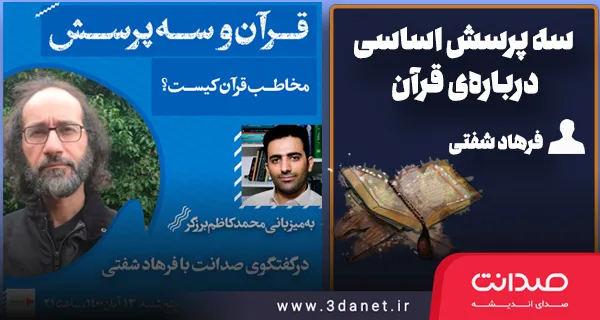
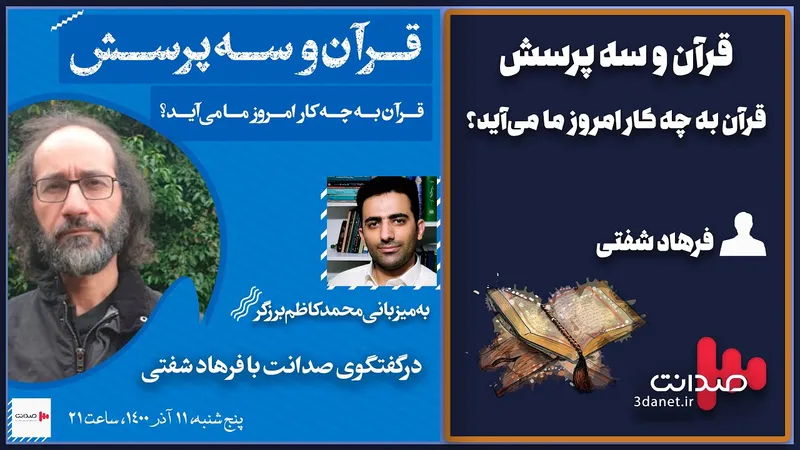
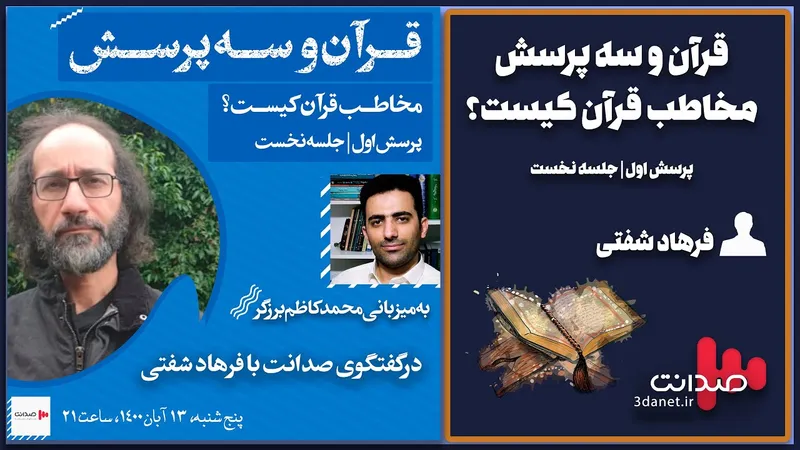
Farhad Shafti's Lecture Series "The Qur'an and Religious Pluralism"
The lecture series "The Qur'an and Religious Pluralism," presented by Farhad Shafti, examines whether the Qur'an contains signs of an acceptance of religious plurality and of the possibility of diverse ways for human beings to relate to God. While critiquing exclusivist and inclusivist views, the series addresses the Qur'anic foundations of pluralism, its limits, and the theoretical and practical consequences of this outlook for understanding religion and engaging with followers of other faiths.
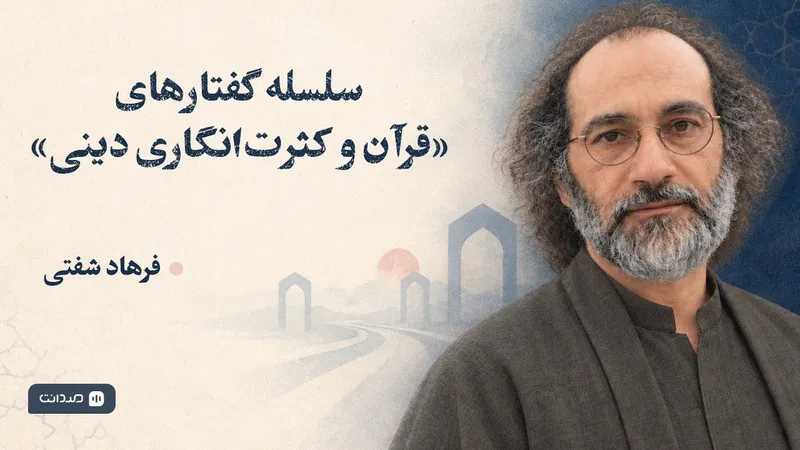
Farhad Shafti
مدرسDoes the Qur'an, in confronting the plurality of religions, take an exclusivist or an inclusivist stance, and can one speak of a kind of religious pluralism within it? Are there diverse paths by which human beings may relate to God and attain salvation? Can one affirm the truthfulness of differing beliefs without falling into the abyss of relativism? If the answer is yes, where do the limits of this pluralism lie? What place do the People of the Book, non-Abrahamic religions, and other spiritual traditions and schools have in such a view? What theoretical and practical consequences does accepting pluralism have for the understanding of religion and truth, for religiosity, and for engagement with followers of other religions?
Over the past years, Farhad Shafti has addressed these questions, especially from the Qur'anic perspective, in numerous writings and talks. His two principal essays on the subject, "Pluralism or Scholarly Exclusivism" and "The Qur'an: Exclusivist or Pluralist?", were previously published on Sedanet.
His claim in this debate is clear:
On the question of the plurality of religions, he sees nothing in the Qur'an but pluralism.
He also holds that:
Pluralism not only does not lead to laxity in religion, but can give religious practice greater depth and steadfastness.
More than five years after the publication of those two essays, Shafti returned to the subject in the lecture series "The Qur'an and Religious Pluralism," this time in greater detail, focusing on the Qur'anic foundations of the discussion, a critique of rival views, an account of the limits of pluralism, and an examination of its theoretical and practical consequences.
This lecture series offered an opportunity to elaborate and formulate his position more precisely. The conversations and critiques raised during the sessions also helped clarify the various dimensions and angles of the discussion, and laid the groundwork for further reflection and for the composition of these arguments.
The sessions were not one-directional; dialogue and exchange of views between the presenter and the host played a part in advancing the discussion, and the questions, critiques and views of the attending audience were also part of this process.
The lecture series "The Qur'an and Religious Pluralism", presented by Farhad Shafti, holder of a doctorate in Islamic studies, with the support of Sedanet and hosted by Shahrokh Molaei, holder of a master's degree in Qur'anic sciences, was held in nine weekly sessions online via Google Meet.
Sessions
1. Introduction One: Framing the Subject and the Approach — 25 Shahrivar 1405
2. Introduction Two: A Critical Survey of Religious Exclusivism and Inclusivism from the Perspective of Islamic Theology and the Philosophy of Religion — 1 Mehr 1405
3. Introduction Three: What the Qur'an Is from an Intra-Religious Perspective — 8 Mehr
4. The Narrative of Pluralism in the Qur'an, One: God's Way in Sending Prophets — 15 Mehr 1405
5. The Narrative of Pluralism in the Qur'an, Two: The Criterion of Salvation; the Pragmatist God, Truthfulness and Ethics — 22 Mehr 1405
6. The Narrative of Pluralism in the Qur'an, Three: The People of the Book and Sharia; A Look at the Verses Used by Exclusivists — 29 Mehr 1405
7. Pluralism of Truth at the Threshold of the Qur'an: Qur'anic Theology, Non-Abrahamic Religions and Spiritual Schools — 5 Aban 1405
8. Pluralism of Salvation at the Threshold of the Qur'an, Final Formulation, the Limit of Pluralism — 12 Aban 1405
9. Conclusion, Theoretical and Practical Consequences, Questions and Answers, and Exchange of Views — 19 Aban 1405

Discussion0 comments
No comments yet; let yours be the first voice.