Political Science
Four Major Mistakes of the Democratic Campaign
The Democrats lost the 2016 election to themselves, not to Trump. Selecting Clinton as the symbol of the established order and attacking the third-party candidate were strategic blunders that channeled the protest vote straight into the Republican ballot box.
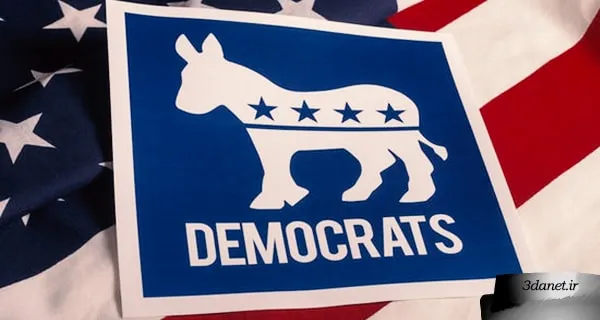
The Democrats lost the 2016 U.S. presidential election to themselves, not to Trump. The Republican victory was the result of an "own goal" by the Democrats and several major mistakes in their election campaign, not a remarkable success by the Republicans. Most analyses of the election results focus on the reasons for the Trump campaign's success, whereas Trump actually received slightly fewer votes in this election than Mitt Romney, the losing Republican candidate in 2012. In contrast, Hillary Clinton had a striking failure compared to previous Democratic Party candidates. Despite an increase in eligible voters, she received nine million fewer votes than Obama in 2008 and five million fewer than Obama in 2012. Numerous factors contributed to Hillary's defeat, but in my view, four major mistakes by the Democratic Party leadership, which I will outline below, played a more significant role. If even one of these mistakes had been avoided, Trump's disastrous victory would very likely have been preventable.
1. Selecting Clinton
Hillary was, in many respects, the wrong candidate to run against Trump. Electing a president (unlike other political representatives) is more akin to choosing a friend than selecting a colleague. A candidate's personal appeal, trustworthiness, honesty, affability, and likability play a large part in the success of a presidential campaign. A candidate not being likable and appealing (at least in the eyes of a segment of society) cannot be compensated for by any other electoral doping; especially in a national election with a diverse mix of education levels and voter demands. Today, presidential campaigning has become television-centric, and people spend dozens of hours over a relatively long period engaging with their candidate through advertisements, debates, news, and television comedy shows, making the candidate's personal appeal even more important. Other factors such as effective and believable campaign slogans, well-considered plans for expanding the common good and responding to voters' demands, support from experts and intellectuals, top-tier campaign management, a large body of organized campaigners, creative advertising, utilization of new technologies and people-centered campaigning, campaign financial resources, and support from major media and popular music and cinema celebrities (in all of which Hillary's campaign was very strong and professional, and Trump's campaign very weak) are all like zeros that, if placed before the number one of a likable presidential candidate's personality, become valuable and effective, and if placed before the zero of an unpopular personality like Hillary's, find little value or impact.
Polls from a year before the election showed that trust in Hillary and her honesty was even lower than for Trump. The percentage of Americans who disliked Trump was also very high (around 60 percent), but the Democrats put forward the only candidate who was as unpopular as he was – Hillary – to run against him. For over two decades (since her years as First Lady), Hillary has annually been among the most unpopular political figures in America in polls. To the extent that today, 70 percent of Americans consider her dishonest and untrustworthy. According to polls, negative voting against Clinton was even 12 percent higher than negative voting against Trump. During the campaign period, Hillary also largely failed to establish an effective personal and emotional connection with citizens. The widespread unpopularity and distrust of political figures who have been subject to public judgment for decades cannot be remedied in the short term. The fact that Hillary was not likable, did not warm any hearts, and a large part of society did not consider her very sound morally and economically, also affected the motivation and energy of her supporters for door-to-door, telephone, and social media campaigning. Exactly the opposite of Sanders or Obama, whose supporters deeply liked and accepted them and were motivated and full of hope and enthusiasm for field campaigning on their behalf.
On the other hand, it had been clear for about a year before the election that the more popular Republican candidates were campaigning on harsh anti-establishment slogans, and that the segment of American society whose vote would be decisive in this election was deeply dissatisfied and angry. 72 percent of voters believed the prevailing economy was organized to the detriment of the lower classes and to the benefit of the upper classes. 68 percent also believed the major parties were not concerned with ordinary people. In such a context of accumulated discontent with the ruling elites, placing a “symbol of the existing order” against a candidate who is anti-establishment was a colossal mistake. Against the Trumps and Ahmadinejads who protest the ruling establishment and ride the waves of discontent, one should not put forward the Hashemis and Clintons, who are the most famous symbols of the established state of affairs in public opinion. Figures like Bernie Sanders, Joe Biden, and Elizabeth Warren, who were more popular, were considered more honest and trustworthy, and were not symbols of the established order, could have defeated Trump in this very election. It would have been enough for turnout (which was 4 percent lower this cycle than in 2008) to increase by just half a percent with a more popular and trustworthy candidate for us not to witness the great catastrophe of Trump’s victory. The outcome of this election was changed by Americans who had voted for Obama in 2012 and whose dislike of Hillary this time caused them not to participate in the election or to vote for Trump.
2. Destroying Johnson
About three months ago, the third-party candidates were more popular. Supporters of Gary Johnson, the candidate of the right-wing Libertarian Party, constituted about 10 percent, and supporters of Jill Stein, the candidate of the left-wing Green Party, constituted roughly four percent of voters. But suddenly, Hillary’s campaign and the liberal media launched a heavy attack against Johnson and the third parties, under the mistaken assumption that the votes shed by Johnson and Stein would add to Hillary’s tally more than they would fall into Trump’s basket. They overlooked the fact that, firstly, the right-wing Johnson had about three times the votes of the left-wing Stein, and secondly, this year the main axes of Johnson’s campaign were “the economy” and lower taxes and a “non-interventionist foreign policy” (and not cultural and social freedoms). It was predictable that destroying and attacking Johnson would end up benefiting Trump more (who was closer to Johnson’s supporters in terms of tax policies and whose foreign policy was less interventionist than Clinton’s). Subsequent developments also showed how costly this attack and the erosion of Johnson’s votes became for Hillary’s campaign. Immediately after the start of the attack by Hillary’s campaign and the liberal and mainstream media against Johnson personally and the third parties, Johnson’s votes sharply declined and, rather than being added to Hillary’s votes, were more or less added to Trump’s votes.
An analysis of the changes in the candidates’ polling curves shows that Hillary likely absorbed only about one percent of Johnson’s vote, while Trump absorbed about four percent of his votes. One might even say, with some license, that Hillary’s roughly two percent growth in votes came almost entirely from the two percent erosion of Stein’s votes toward her, and not so much from the undecided or Johnson’s supporters. The smarter strategy would have been for the Democrats to actually strengthen Johnson so he would peel more votes away from Trump’s base on the right. It would have been enough for just one percent of the at least four percent who previously supported Johnson and were later absorbed by Trump not to vote for him for Hillary to win. The widespread destruction of Johnson was a “bear’s friendship” from the Democratic campaign for Hillary and was likely the cause of defeat.
3. Lack of an Effective Emotional Core in the Election Advertisements
Contrary to popular belief and based on numerous empirical studies in electoral research, the vote of a large segment of society is more an "emotional" choice than a "rational" one. Voters do not choose solely with reasoning "reason"; what their "heart" desires is also decisive. The "feeling" of voters sometimes plays an even greater role in determining their vote than their "calculations." The increase in television advertising and the influence of performative elements of politicking in the new communicative world have also added to the importance and impact of the emotional elements of a campaign message. As the philosophy of emotions, new neurocognitive psychology, and the sociology of electoral movements teach us, we fundamentally experience values through emotions, and decision-making, the will to act (including electoral action), and social mobilization are impossible without the mediation of emotions. Emotions influence our assessment of a candidate's character, our estimation of the risk and value of their policies, our selection among their programs and our attention to their details, and our motivation to campaign on their behalf. For instance, empirical studies show that angry citizens are more willing to accept high-risk and confrontational policies than citizens who feel anxiety and fear.
In addition to the influence of positive emotions toward the likable and charismatic personality of an electoral candidate (which, as I explained under the first mistake, Hillary lacked), campaigns that succeed in creating electoral movements and remarkable victories formulate and present their programs and advertising messages around one or more powerful and motivating positive or negative emotions. For example, Obama's "change-oriented" campaign placed special emphasis on "enthusiasm" and "hope," and Rouhani's "prudence-oriented" campaign on "hope" and "anxiety"; Sanders' "justice-oriented" campaign stirred the emotions of "solidarity" and "anger" more, and Trump's campaign rode on the effective negative emotion of "anger" and the positive emotion of "pride." But Hillary's campaign did not center on a motivating negative or positive emotion, and for this reason, it had limited social mobilization capacity. We saw the result in the low voter turnout percentage and Hillary's final vote tally. In addition to the "emotional poverty" of the Democratic campaign, the central message and slogan of Hillary's campaign ("Hillary for America" and "I'm with her") also, compared to Trump's effective slogan ("Make America Great Again"), did not tug at the heartstrings and did not inspire enthusiasm or movement. Fundamentally, Hillary's personality (relative to Bernie Sanders or Barack Obama) did not have much capacity to utilize positive emotions, slogans, and motivating messages.
4- Humiliating and Belittling Trump Supporters
To analyze Hillary's defeat, one must look at the map of America and not the national polls. In the final weeks, Trump attracted the vote of a segment of the less-educated and formerly Democratic population in the industrial states of the northern United States (Wisconsin, Pennsylvania, and Michigan). But Hillary's core advertising offered no hope to the discontented who were the losers of deindustrialization and globalization in these states. The Democratic campaign and their media not only made no effective effort to win back these decisive votes, but with the constant humiliation and mockery of Trump supporters, they made them more steadfast in their support for Trump. Hillary not only failed to pay effective attention to the real issues of a portion of Trump's supporters who were persuadable, but by calling half of them a "basket of deplorables," she repelled them instead of attracting them and gave them more motivation to campaign for Trump. At Trump supporter rallies, on social media, and on popular political satire shows on television networks, Clinton supporters, instead of compassionately persuading Trump supporters, often belittled and humiliated them. The result was that, according to New York Times election day polls, the percentage of Democrats who voted for Trump was higher than the percentage of Republicans who voted for Hillary. It would have been enough if, in four decisive states, just one out of every 100 people who voted for Trump had voted for Hillary to subtract 75 electoral votes from Trump, add them to Hillary, and make her win by a margin of 76 electoral votes. Or if Hillary had attracted just 60,000 of Trump's formerly Democratic supporters in Wisconsin, Pennsylvania, and Michigan, the Democrats would have won. Interestingly, Trump held his final campaign speech at one o'clock in the morning on election day in Michigan and won Michigan on election day by a margin of less than three-tenths of a percent.
In this election, the decisive contest was less over cultural and religious issues (including racism, abortion, and the rights of sexual minorities) and more over the “economy,” and the Democrats lost this contest. Trump’s vote, like that of Erdoğan, Ahmadinejad, Putin, and Brexit, was drawn mostly from small towns and rural areas, and a portion of this vote (perhaps small but decisive) was winnable. The American Democrats in 2016, like the Iranian reformists in 2005 and the main British parties in the 2016 Brexit referendum, failed to gain the trust of a segment of their society’s economic underclass, to take their problems seriously, to become their voice, and to earn their representation. In contrast, Trump succeeded in attracting and mobilizing the undecided among a segment of less-educated, low-income white people in the American Midwest and North who felt unseen and unheard and had previously voted for Obama or had not voted at all. Hillary’s focus in the final weeks was on “criticizing the character” of Trump, while from this perspective Hillary herself was not considered an appealing alternative in public opinion. It would have been better for the Democratic campaign, instead of focusing on Trump’s character, to concentrate on “criticizing Trump’s economic policies” (which end up harming these very lower classes), the demands of the discontented undecided, and persuading a larger portion of the people of color who had voted for her husband and Obama.
----
Other factors, such as the unjust disenfranchisement of six million Americans due to felony records (most of whom live in areas supporting Democrats); the eighteenth-century electoral system based on states’ electoral votes and the rule that the winner of each state takes all of that state’s electoral votes (under which Hillary in 2016 and Al Gore in 2004 lost, despite receiving more votes from Americans); the Democratic Party’s greater dependence on the large capital of Super PACs, Wall Street, and big financial institutions and its distancing from small grassroots donations and labor unions; the sabotage and biases of the Democratic Party leadership (including Debbie Wasserman, chair of the Democratic National Committee) against Bernie Sanders (which became an obstacle to his victory in the primaries); the interference of the FBI and WikiLeaks in Hillary’s email scandals; the fact that American society usually does not give the White House to one party for more than two consecutive terms; Americans’ fatigue with the dynastic presidencies of the Bushes and Clintons; the extensive coverage of Trump by liberal and mainstream media during the primary stage (which WikiLeaks revealed was done consciously at the request of Hillary’s campaign managers); the fear of a segment of American society at the speed of egalitarian and progressive cultural and social changes during the Obama era; the costs of modern globalized services and trade for old industries and the unskilled, less-educated population; the choice of an inappropriate time to release Trump’s scandalous bus video (if, for example, it had been released a week before the election, it likely would not have allowed Trump the opportunity to revive); the selection of Tim Kaine as Hillary’s running mate, which did not add much to her vote (unlike the selection of Mike Pence, which to some extent compensated for Trump’s weaknesses and added to his vote); and the skillful showmanship and demagoguery of Trump himself, all contributed to the Democrats’ defeat. But in my opinion, despite all these factors, if the Democratic campaign management had not committed the four aforementioned mistakes, the Democrats would have won.
If one or more of the four mentioned mistakes had been avoided, it is highly likely that Trump (the most unqualified presidential candidate in American history) would not have become president. Minorities, tens of millions of poor people, and 11 million undocumented immigrants in America would also suffer less in the four years ahead, the environment and the planet would sustain less damage, and other nations (including Iranians) would be more at ease from Trump and his administration. The Democrats’ success in the 2018 Senate elections and preventing Trump from serving two terms requires serious reforms in attitude and method within the American Democratic Party and the participation, intervention, and organized pressure of a larger segment of America’s progressive forces for these party reforms.
.
.
Four Major Mistakes of the Democratic Campaign
(Published in Shargh Daily – 14 November 2016)
Author: Mohammad Reza Jalaeipour (Sociology researcher at Harvard University and political campaign analyst)
.
.






Discussion0 comments
No comments yet; let yours be the first voice.