Sociology
Mohammad Reza Jalaeipour: A Response to the “What Is He to Do?” Challenge
Echoing a despairing citizen's message, Mohammad Fazeli asked the elites, 'What is to be done?' In response, Mohammad Reza Jalaeipour proposes that we become 'progressive Stoics'—combining serenity in the face of the unchangeable with effort to improve collective life—for the sake of individual resilience and collective intervention to expand the common good.
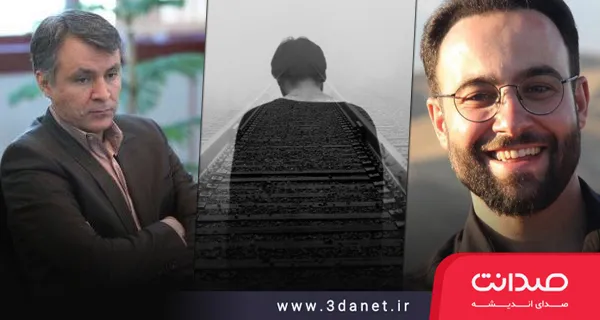
Mohammad Fazeli (faculty member at Shahid Beheshti University): Some time ago, a follower of the Iran's Concern channel sent me the following text:
"Dear Doctor, the Iran's Concern and A Better Tomorrow channels are my most important socio-political channels, and I used to 'read' every single one of their posts. But for a while now, I either don't read them or just skim through them. The reason is exactly what you mentioned in your note on Deafness and Blindness. I (as an ordinary citizen, somewhat aware and sensitive to society and the country) believe that what the elites of society, including the Fazelis, say is, frankly, beating a dead horse. It only raises my social awareness and nothing more. At the end of this tunnel, I and millions of Iranians see nooo light, and the matter is clear. The matter is the last two minutes of the audio file The Myth of the Elephant and the Pride. ...
These are the words and thoughts of someone who has a good income in Tehran, wears good clothes, takes good trips, has a good work environment, enjoys good welfare, eats well, has savings, buys nice gifts for his wife, can suddenly spend two tomans on something, and perhaps, in that sense, has no financial worries. Undoubtedly, this situation is even more catastrophic among the lower classes, a fortiori.
I have only one question for all socio-political elites, and that is, what should we do? In this state, what should we do so that history does not repeat itself and at least my next generation can have a better life in their homeland? What about this homeland should we hope for that keeps us here?
Personally, the lamp of my tank of hope has been lit for a very long time. No seemingly hopeful news fills even one cc of my tank of hope. My state is Shajarian's 'It is winter.'"
For a week now, this text has been tormenting me like a spiritual leprosy. I had heard many murmurs of this kind, but someone has spoken frankly and asked bluntly: what should we do? He was a regular reader of my texts, so my answers are not sufficient for him and are not satisfying. I challenge the rest of the great thinkers, writers, politicians, artists, etc., with #What_Is_He_to_Do. He is not one person; he is millions of Iranians.
I have written what I have known and will continue to think in order to answer him (millions of Iranians), but I also invite others to this challenge: #Mohsen_Renani, #Ali_Motahari, #Javad_Kashi, #Mohammad_Reza_Tajik, #Amir_Mohebbian, #Ali_Rabiei, #Hossein_Dehbashi, #Mehdi_Nasiri, #Asghar_Farhadi, #Ebrahim_Hatamikia, #Amir_Nazemi, #Mohammad_Reza_Kolahi, #Mahmoud_Sariolghalam, #Saeed_Laylaz, #Mohammad_Quchani, #Masoud_Pezeshkian, #Nematollah_Fazeli, #Mohammad_Reza_Jalaeipour, #Abbas_Abdi, #Gholam_Ali_Haddad_Adel, #Tahmineh_Milani, #Mohammad_Reza_Zaeri, #Yaser_Arab, #Farshad_Momeni, #Hossein_Raghfar, #Saeed_Zibakalam, #Sadegh_Zibakalam, #Ahmad_Meidari, #Hassan_Rahimpour_Azghadi, #Emad_Afrough and ... #What_Is_He_to_Do?
.
.
"Progressive Stoicism"
Mohammad Reza Jalaeipour
My dear friend, Dr. Mohammad Fazeli, has also asked me this formidable question: #What_Is_He_to_Do? An effective answer to this question requires a more complete understanding of the specific characteristics and conditions of "him," which I do not have, but if I am to give an answer that can be implemented by more people in more diverse and even more difficult circumstances, I will tell "him": Be a "Progressive Stoic."
At first glance, "Stoicism" and "Progressivism" may seem unrelated, but I believe that the combination of the two, in the sense I will briefly explain, is a good guide to action for people like me and "him" in the current conditions of Iran.
The virtue-ethics philosophy of “Stoicism” took shape from the 3rd century BCE to the 3rd century CE through a number of Greek and Roman philosophers, notably Zeno, Epictetus, Seneca, and Aurelius, in response to life’s challenges. In the last two decades, “modern Stoicism,” by revising/setting aside ancient Stoic metaphysics and drawing on modern cognitive-behavioral psychotherapy, has helped reconstruct and popularize practical Stoic techniques for a more fulfilling life, greater tranquility, better mental control, more effective meditation and observation, becoming more easygoing, seizing the day, mortality awareness, and reducing anxiety, tension, suffering, and resistance to unchangeable realities.
If we employ Stoic techniques, the adverse impact of the environment and political, economic, and social developments on us lessens; in a sense, we become more resilient and less vulnerable to environmental conditions, and with greater mental health and vitality we can strive to improve collective life. Stoicism, alongside a better and more skillful enjoyment of nature, friendship, love, meaningful work, benevolence, spirituality, literature, and art, can significantly help make our lives more pleasurable, more beneficent, and more meaningful. Among the sources translated into Persian, the book A Guide to the Good Life by William B. Irvine, translated by Mahmoud Moqaddasi (Goman Publications), which is available in all three paper, electronic, and audio editions, is a good introduction to “modern Stoicism.” The “Modern Stoicism” website and the “Practical Stoicism” podcast are also good resources for beginning to learn practical Stoic techniques.
But Stoicism is not enough. The well-known Stoicism, like psychologism (including “success psychology,” “Malekian’s rationality and spirituality,” and new spiritualisms) and most mystical schools, is largely individual-centered and seems to regard salvation as individual. Salvation, however, is collective. What I call “progressive Stoicism” does not content itself with increasing resilience and contentment at the individual level, and by drawing on the psychological ability and vitality arising from Stoic techniques, it undertakes “collective and organized intervention” toward expanding the common good.
In Stoic philosophy, great emphasis is placed on distinguishing between “what is under the individual’s control” and “what is not under the individual’s control,” and it is suggested that we deeply accept what we have no control over and devote our energy to changing what is under our control. In other words, to be at peace with unchangeable undesirables (even if they are part of our body, family, country, and many unsuitable environmental conditions) and, by focusing more on the undesirables we can change, to change them. It seems to me that in “progressive Stoicism,” a third category can be added to this dichotomy: “what is not under our individual control, but is under our collective control.”
The “progressive Stoic,” while maximizing their contentment and mental health at the individual level, acts and intervenes to change what is under our collective control and to expand the common good and public interest in various collective, organized, and institutional formats, and is a “meliorist,” meaning they believe that if they make an institutionalized effort to improve collective life, the situation will be better than if they do not, regardless of how desirable or undesirable the social, economic, and political conditions in which they live are (for more on meliorism in this sense, see the article “Culturalism in Conflict with the Politics of Hope,” Mohammad Mehdi Mojahedi, in the book Social Hope, Tehran, Institute for Social Studies, May 2019).
Progressivism, which I have placed within the composite concept of “progressive Stoicism,” is a political philosophy that advocates for political and social reform. From the European Enlightenment to the present day, it has served as the basis for many collective interventions aimed at improving collective living conditions. It particularly believes in the possibility and desirability of reducing various forms of systematic discrimination and inequality, and expanding democracy and justice through the improvement of “public policy” and the “organized civic activity of citizens.” It has especially been an intellectual foundation for social democratic forces, and many of humanity’s significant achievements in making citizens’ lives more just (including universal health insurance and free education, and the reduction of war, poverty, corruption, discrimination, and environmental degradation) have been among its fruits. In today’s Iran, too, we need more “progressive Stoics” who, in these very circumstances (and even in conditions where authoritarianism and poverty increase), possess greater resilience and psychological vitality, and dedicate an ever-greater share of their income and time to strengthening organized activities, unions, parties, NGOs, and social campaigns that work effectively for the expansion of the common good.
In other words, the “progressive Stoic” takes altruistic politics in the broadest sense of the word (striving for the expansion of the common good) seriously, and dedicates a significant portion of their time, attention, income, and resources to increasing the problem-solving capacities of governance and civic institutions and empowering these institutions. Many of the good citizens I know are either focused solely on well-being at the individual level (including through Stoicism) or are so concerned about Iran, Iranians, and the world that their mental health is threatened and their resilience diminishes. We need progressive Stoics who are both healthy and content at the individual level and, at the civic level, are committed to organized, collective, justice-expanding efforts.
For example, in the current conditions of Iran today, a “progressive Stoic,” in addition to having greater health and vitality at the individual level, can become a member of a democracy-seeking and justice-seeking party (for instance, the Ettehad-e Mellat Party) and work towards reforming and empowering that party and strengthening its social base and institutional arms—which are prerequisites for its greater success in legal and substantive structural reforms within the political system—and/or contribute more of their time or income to one of the active charities and NGOs (for instance, the Darolekram Institute) for the educational scholarships of children deprived of education, and/or, through voluntary activity in advocacy institutions such as “Transparency for Iran” and “Jahd,” help expand transparency, which is a requisite for reducing corruption, and/or help “Dayaran” to improve the situation of vulnerable immigrants in Iran, and/or, with a number of like-minded and similarly-concerned citizens, establish a new advocacy institution/NGO/media outlet to assist one of the groups subjected to discrimination and greater vulnerability or to improve governance in a specific area.
The path is not always smooth, but even in these conditions, with collective perseverance and political and civic creativity, a degree of positive impact in all these areas is attainable. If we do not extract today’s Iran from its historical and geographical context and compare it with Iran’s past and peer societies in the region, despite all existing obstacles and crises, our image of the current situation, the quiet progress of society, and our hope for the impact of our small and large collective altruistic activities will be moderated. The more progressive Stoic Iranians intervene in an organized and collective manner, with a belief in improvement, for the structural and non-structural reform of the current political, economic, and social situation, the fewer Iranians will grapple with the difficult question posed by this dear individual.





Discussion3 comments
با سلام 1. ممنونم از محمدرضا جلایی پورِ دغدغه دار از اینکه از پاسخی که به نظرش موجب بهبود وضعیت امثال این پرسشگر می شود را دریغ نکرد. 2. عضو یک حزب دموکراسیخواه و عدالتجو در ایران امروز؟ 3. اما... به نظرم باید چند ماه حقوق دریافت نکنی و در تامینِ نه تجملات و دلخواهی ها که درمانده ی تامین نیازهای حیاتی خانواده ات بسوزی تا ثابت شود که کنار گود نشسته ای و می گویی:"لنگش کن". سَل المَصانِعَ رَکباً تَهـیـمُ فی الفَلواتِ تو قدر آب چه دانی که در کنار فراتی [رنجنامه] سعدی عجب که در تو نگیرد و ان شَکـَوتُ الی الطیر ِنُحنَ فِی الوکرات
آقای جلایی پور نخبه گرامی؟ به این راه حل شما میگن راه حل تنبلانه.رواقیگری تنبلانه ترین راه حل است.التماس تفکر
تو ایران جمهوری اسلامی دنبال سعادت فردی و جمعی هستی آخه؟ نه تلاش فردی مونده (سرکوب آزادی فردی و غم همیشگی نان) و فعالیت جمعی (تلاش در جهت ضربه به امنیت ملی و نظام) فرزندان نیک اصلاحات پس از مکیدن بیست و چند ساله خون مردم تحت لوای اصلاحات و ناامیدی تمام و کمال مردم چه رویی دارن برای پیشنهاد دادن. تو بنویس رواقی گری پیشرو من می خونم اصلاحات واپس گرای شکست خورده.