Political Science
Government by NGOs
The future belongs to civil-society organisations, because development is ‘the process of transferring authority from government to civil society’. Today, communication technologies allow developing societies to leapfrog straight to civic networks and attain civil authority faster.
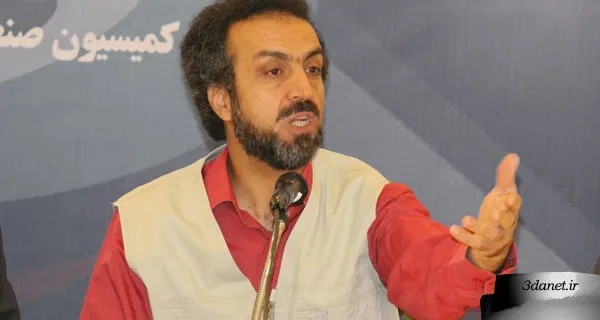
Greetings to the friends participating in the conference on “Voluntary Work in Non-Governmental Organizations.” I am delighted to be able to join you in this way and to discuss the future of governance in the world and in Iran with the participation of “Non-Governmental Organizations” (NGOs). The title of my talk is “Government by NGOs,” and its message is that the future belongs to NGOs.
In a brief formulation, development can be defined as: “the process of transferring authority from the government to civil society.” And authority is “the power to exercise power without exercising violence.” When Trump was elected, we all became concerned about the “dysfunctions” of democracy. The “public choice” theory in economics has focused on the dysfunctions of democracy for about fifty years and has revealed many of its errors and inefficiencies. But immediately when a U.S. federal court judge struck down Trump’s executive order banning the entry of citizens from seven countries, we became more familiar with the concept of the “self-correcting” nature of democratic systems and realized that democracy is something more than the existence of an electoral mechanism in a country. Elections are merely one method of selection within a democracy.
But even if the U.S. federal judge had not overturned Trump’s order, civil society in America was strong enough to neutralize some of the negative consequences of this order regarding immigrants. The solidarity shown in America with Iranians and other banned immigrants after Trump’s order was a form of neutralizing the social consequences of the order. Civil society had enough power to show its opposition to this order in various ways and to express sympathy and solidarity with those restricted.
Historical experience tells us that in the process of transition from underdevelopment to development, civic institutions gain power and sometimes acquire authority that can rival the authority of governments. But this is an experience that has occurred in developed European and American countries and through a gradual historical process. Can the power of civic institutions be rapidly enhanced, and then this power be transformed into authority, without the need for a very slow and erosive historical process?
This is precisely the process that has begun since the start of the twenty-first century and has accelerated with the advancement and proliferation of communication and information technologies. Many societies are now experiencing the stage of transition from “civic institutions” to “civic networks.” In the new world, a novel phenomenon called “civic networks” is taking shape, which concentrates the power of civic institutions and makes their sphere of influence far more pervasive, and this is what rapidly leads to “civic authority.”
Now, an opportunity has emerged for the societies of all developing countries whose governments are not moving toward development at an appropriate pace to compensate for some of the historically lost opportunities in their development process by leapfrogging to the stage of civic networks, without gradually passing through the historical stages of the evolution of civic institutions.
The important difference between civic networks and civic institutions lies in their “pervasiveness,” “speed of information circulation,” and “self-monitoring power.” Something that is absent in traditional civic institutions, and for this reason, their process of change and evolution is very slow.
Fortunately, several historical events are accelerating this process in Iran. The existence of a young population, the rapid increase in the proportion of the population with higher education, the growing presence of women in universities and other social arenas, and the spread of communication and information technologies have prepared the social conditions for strengthening the power of civic institutions and the formation of civic networks. Also, several factors have come together to rapidly drive the authority of the state and government toward decline, including...
Continue reading in this file.
.
Message from Mohsen Renani to the conference on “Voluntary Work in Non-Governmental Organizations: Examining Opportunities and Challenges” / 15 February 2017
.



Discussion0 comments
No comments yet; let yours be the first voice.