Sociology
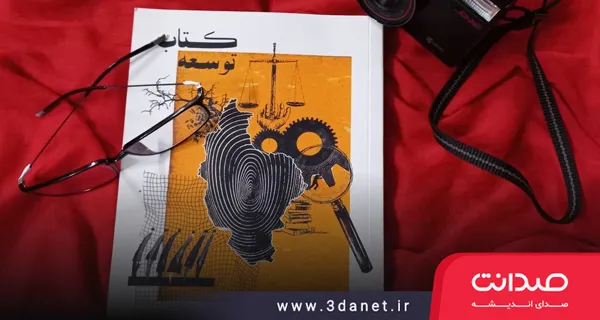
The Development Book
Despite seven decades of planning, Iran still lacks a 'national theory of development,' and the country's resources have been depleted without documentation. The 'Development Thought Initiative' tracks the path of development and exposes deviations by publishing the 'Development Book' and quantitative indicators.
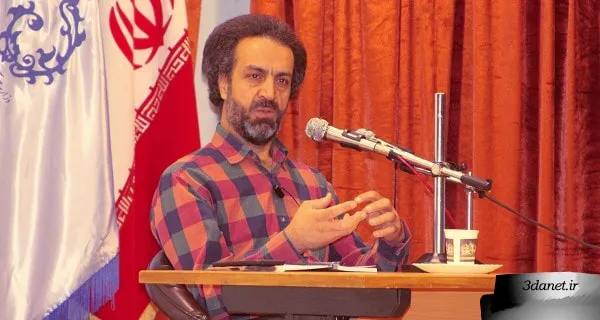
Mohsen Renani: Since 1948, when the Plan and Budget Organization was established, we have had over seven decades of development planning. Yet we still do not have a “national theory of development” and we still do not have a “National Development Book.” That is, governments would send development plans to the parliament as documents or books in which the wishful thinking of the country’s senior officials was recorded, and they would also expend the country’s resources to realize those unrealistic aspirations, or at least aspirations inconsistent with the country’s institutional and economic structure. And to this day, we have drained most of the country’s resources, while we are still miles away from reaching the threshold conditions of development (not development itself).
By one description, development occurs when a society acquires the ability to convert its experiences and tacit knowledge into explicit knowledge, as well as the skill to convert experiences into sustainable, long-term institutions and processes. It is said that when oil was nationalized in 1951, the reason we were able to operate the Abadan refinery ourselves with domestic experts was that the British had documented and recorded all the information and experience related to running the refinery. For example, in a certain part of a certain section of distillation tower number one, screw number 12 must be turned so many times to the right to be tightened to the appropriate degree.
Now, we have spent the bulk of the country’s resources in the name of development plans, but we do not know which plan achieved how much of its goals, how much it did not, why it did not, and where the flaw lay; nor can we compare the performance of the plans with one another. The reason is that we have not even documented the country’s most expensive development activities. Of course, the Plan and Budget Organization (or the former Management and Planning Organization), whose job was theorizing, formulating, and supervising the implementation of development plans, either could not attend to its main task due to the intervention of high-ranking officials, or in certain periods it was merely reduced to budget management, or the “national accountant.” In the end, all the human capital that had been accumulated in this organization over several decades was, by a miracle, turned to smoke by His Excellency Mahmoud, may God’s mercy be upon him, with the order to dissolve the organization.
In any case, safeguarding the processes of national development requires regular observation and monitoring of these activities, and without the regular production of indicators that compare this process over time, year by year, and through which the performance of different governments can even be compared, a proper assessment of the country’s development path cannot be made. As it is now, three decades after development planning began in the post-revolution years, the indicators show what great deviations we have had and did not realize in time, and thus developmental imbalances have gradually engulfed all economic and non-economic sectors.
The “Development Intellectual Endeavor,” which began its activities in 2018 with the aim of promoting development concepts and monitoring national development processes, established the “Development Observatory” and published the first “Development Book” in 2020 as a “preliminary version,” in which 13 macro-indicators, 124 sub-indicators, and 734 development indicators were used to construct aggregate and composite development indices for the country and compare them with other countries of the world. For example, by constructing the “Development Ladder” index, it has been shown that if, given the current state of development in the world, we consider the development ladder to have one hundred rungs, Iran is now on rung 39, and if it were to move at the speed it has had over the past ten years, it would take nearly 80 years to reach the position that Switzerland holds today (Switzerland being the country with the highest overall development ranking in the world). Of course, Iran has made progress in the overall development indices over the past decade, but this progress has been so slow that Iran’s ranking has been worsening.
This year as well, the “Development Intellectual Endeavor,” by enhancing the quality of the aggregate and composite development indices, is compiling the Development Book Zero (Development 1400), which will be unveiled on the 16th of Ordibehesht next year (National Development Day and the Spring Equinox). In subsequent years, Development Books One, Two, Three... (for the years 1401, 1402, etc.) will also be published regularly.
Those who wish to participate in the book's compilation process, as well as private sector institutions, organizations, and companies that wish to support the regular, annual publication of the "Development Book" as part of their social mission, can contact the Secretariat of the Development Intellectual Initiative (here).
See the summary of the "Development Book 1399" at this link.
Download the complete, full-color PDF file of the "Development Book 1399" here or here.
Mohsen Renani / 10 March 2022


Discussion0 comments
No comments yet; let yours be the first voice.