Sociology
An Analysis of the Role of Symbolic Capital in Development: From the Girls of Shinabad to the Leaders of the Green Movement
Turning a cave in Thailand into a museum exemplifies symbolic capital for development; yet Iran, despite its economic and human capital, lags behind due to its neglect of social and symbolic capital, leaving its economy in crisis.
There was only one fatality. One of the divers who had gone to rescue the children lost consciousness on the way back and died. But the 12 teenage footballers and their coach, who had been trapped at the end of the cave for two weeks due to flooding and water accumulation in the cave's path, were saved. For a week, rescue operations in a cave in Thailand had been at the top of world news; major global news agencies were covering the cave news moment by moment. Now, within a week and with a simple incident, the name of this cave has gained worldwide fame, and what better opportunity than this for Thai authorities—for whom tourism is one of the country's most important sources of income—to effortlessly create a new tourist attraction with global renown in their country? Now, you who are reading this piece and heard the news of the 12 trapped Thai teenage footballers from various news agencies two weeks ago, do you remember the name of this cave? Probably not. Yes, I am talking about the "Tham Luang Nang Non" cave. Well, what does it matter? It was an incident in a cave that ended and passed with the rescue of the teenagers. But if a country's authorities are concerned with development and worried about improving the standing of their national economy, they will not let any opportunity for discovering and creating development opportunities slip away.
Yes, just one day—note, "just one day"—after the end of the rescue operation, Thai government officials announced that the "Tham Luang Nang Non" cave would be turned into a museum. The news was very brief, but it indicated the farsighted and development-seeking vision of that country's policymakers. Now the name of the "Tham Luang Nang Non" cave will remain in minds. From the very day after the officials' announcement, the influx of tourists to see this cave began. Very simply, Thai politicians had the art of taking advantage of the opportunity created by an incident and turning an obscure cave in their country into a global tourist destination, creating a new source of income for all future generations of their country, as a result of which hundreds of direct and indirect jobs will be created for the country. As simple as that. This is called a great stride towards development, meaning the creation of symbolic capital from a random incident. In fact, they turned an unknown and obscure cave into something like an endless oil well that will generate income for their country through attracting foreign tourists for hundreds of years to come.
Symbolic capital is one of the four capitals that form the four main pillars of any country's economic and social system: economic capital, human capital, social capital, and symbolic capital. Throughout the seventy years of our country's planning system activity, we have emphasized economic capital; that is, bringing in industry, building dams, constructing factories, implementing infrastructure projects, and modernizing all economic and social spheres by introducing new technologies. After the revolution (in fact, after the war), although we were still focused on economic investments (for example, while our population had doubled after the revolution, we had built thirty times more dams than the previous regime!), we simultaneously also embarked on the mass production of human capital. Human capital means investing in cultivating specialized and educated forces. In this area, we have advanced so much that, for example, the number of our civil engineers has increased fortyfold since the revolution; or in terms of the number of graduates in all engineering fields, we have even surpassed Japan and South Korea. The growth of graduates in the humanities is even more remarkable. But despite all these efforts, we are still struggling in pre-development conditions. We have grown, and in some cases we have even progressed, but we have not yet even entered the threshold conditions of development (or year zero of development).
Why? Because we have forgotten or destroyed two other important forms of capital, and for this reason our economic and social system could not stand on two legs and walk, while we expected it to leap. In fact, social capital and symbolic capital were something we never understood what they were, how important they are, and how we should protect them. Without these two forms of capital, not only does development fail to take shape, but even the economy no longer functions properly and cost-effectively. Is our country not now brimming with economic and human capital? So why is our economy in crisis? Precisely because our reserves of social and symbolic capital have run dry. This is something that has been overlooked in all development plans before and after the revolution. You see no trace of the discussion of social capital and symbolic capital in any of those plans. Even in the Fourth Plan, where a clause concerning social capital was included through the efforts of the late Dr. Hossein Azimi (the economist), it was never taken seriously, and no one ever asked what became of that clause.
Social capital means people's trust in one another, people's trust in the government, the government's trust in the people, respect for the law by the rulers, observance of the law by the people, rational and sustained cooperation and participation of people in social activities, empathy and compassion among people in social life, hope for the future among the youth, joyful and vibrant behaviors among the people, and anything of this sort which, when we all possess together, makes our lives flow with less tension, more calmly, more securely, less expensively, and more joyfully in all social, economic, and political spheres. When we trust each other, we transact more easily, partner with one another more readily, and make joint investments; when we have compassion for one another, we honk less and inflict less stress; when everyone observes the law, there is no longer a need for the municipality to collect taxes from us to install speed bumps in the street and ruin our mood while driving; when social hope is high, we cooperate more seriously with one another to work in a civil institution or a political party; and so on. These are precisely the things of which, at least until the end of the war, we possessed an enormous volume, and then their production gradually ceased, and in the last two decades, with the spread of destructive competition among politicians, political instabilities, and pressures from economic turmoil, we have rapidly destroyed them. Today we are very impatient, very hasty, very hopeless, very worried about the future, very distrustful of one another, we inflict a great deal of stress on each other, we trample on each other's rights a lot, we lie a lot, we make many jokes about our politicians, and so on; all of this means that social capital in our society has run dry.
So, economic capital has been seriously considered by governments since before the revolution. Of course, human capital was also considered before the revolution, but not to the extent of economic capital. It was after the imposed war that human capital was seriously considered by post-revolution governments. But our social capital, which was relatively good even before the revolution, rose higher with the revolution, and reached its peak during the imposed war, unfortunately began to decline from the late 1370s SH for numerous reasons, and then its serious destruction began in the ninth and tenth administrations and is still being destroyed now. How can the head of one branch of government call the head of another branch a thief, and the latter call the former a murderer, and one expose the other, and the other expose the one, and then social capital not be destroyed? Alas, out of ignorance or malice, they did what they should not have done.
But the important point here is that we destroyed symbolic capital from the very first day of the revolution's victory and never understood what it is and how it can be protected, and we continue to destroy it; all of us together. In earlier times, the government with its national broadcasting, and these days, the people with their Telegram, have joined hands to destroy the remnants of our symbolic capital.
What is symbolic capital? Anything that was previously capital (of the economic, human, social, natural, cultural, etc. type) and has now become famous, and people respect it or it is the focus of attention of a multitude of people, and people want to see it and take pictures with it, is symbolic capital. Sometimes an economic capital, like a residential house, reaches the threshold of fame and prestige and becomes symbolic capital (like the Borujerdi House in Kashan); sometimes a human being who possesses a special value or capability—that is, possesses human capital—becomes symbolic capital, like a footballer, an artist, a civic activist, a politician, a scientist, or even an ordinary person who has become famous due to an incident. Before his death, Morteza Pashaei had released only one official album; but the rush of people from every stratum and group at the artist's funeral procession showed that he had become symbolic capital for the people because, at the height of his cancer and while undergoing chemotherapy, he did not stop singing for the people, held concerts, did not suspend his artistry, and did not lose hope in life.
Sometimes collective action and public participation, which is a sign of a type of social capital (like Ashura mourning or Nowruz ceremonies), becomes a symbolic capital for society. Other assets of a nation, such as natural capital (mountains, rivers, etc.), cultural capital (the Shahnameh, the Masnavi, traditional music, local dance, local clothing, etc.), or historical capital (like the Khaju Bridge, Naqsh-e Jahan Square, or Persepolis), may also become symbolic capital.
But what is the use of these symbolic capitals? They are the connecting links of society to one another. In fact, they are the social pillars and anchors around which social elements and members of society gather, and around which they cooperate, participate, engage in activism, and create transformation with one another. Social organization and collective identity formation rely precisely on these symbolic capitals. A society lacking symbolic capitals is a gelatinous society that easily trembles and errs in the face of events. In a society lacking symbolic capitals, the possibility of deception in politics, the likelihood of violence in society, and the potential for turbulence in the economy increase.
When a building becomes symbolic capital, everyone tries to invest around it or build a building similar to it. When an individual becomes symbolic capital, everyone tries to gather around them and cooperate with them. For example, when a physician becomes symbolic capital, many try to gather around them and support them to build a modern hospital. When a Marja' becomes symbolic capital, many citizens try to accompany them in humanitarian actions (such as building a nursing home, an orphanage, or a hospital). When a symbolic footballer takes action to help earthquake victims, tens of thousands of people accompany and participate with them, and so on.
In fact, symbolic capitals create hope and generate cohesion; they become models and produce models; in instability, they become a factor of unity, stability, and solidarity; they take the lead in seeking transformation and change; wherever they are, others bring their capitals and capabilities to that very place. In a very ordinary state, symbolic capitals are tourist attractions and lead to the attraction of capital and income, like the "Tham Luang Nang Non" cave in Thailand, which became symbolic through an incident and is now a tourist attraction. These days, many tourists who come to Isfahan inquire about group singing under the Khaju Bridge. That is, the Khaju Bridge, which itself was an economic capital in the past and later became symbolic capital and gained global fame, has now caused the group singing of the people of Isfahan—which is considered a social capital—under this bridge, to become symbolic capital and gain global fame (I wish the Law Enforcement Force understood the concept of symbolic capital and did not disturb the people's singing under the Khaju Bridge. But let's move on).
The most important symbolic capitals of a society are the living human beings who, for whatever reason (their art, their knowledge, their courage, their wealth, their statesmanship, their self-sacrifice, etc.), have become symbolic capital. Symbolic capitals that are dead (like Ferdowsi) or take the form of places and buildings (like Taq-e Bostan) mostly come to our aid in stable conditions, so that we can gather together and create something (for instance, launch a festival, make a joint investment, etc.). But the key advantage of living symbolic capitals is that in conditions of instability, crisis, tension, anxiety, and despair, they come to society's aid, control the situation, and calm and give hope to the people. During the Indian Revolution, when people resorted to violence and killed some Englishmen, Gandhi went on a hunger strike, stayed at home, and declared that the Indian people were not yet ready for independence. This caused the violence to cease. Likewise, when Hindu tribes clashed with one another, Gandhi would go on a hunger strike, and then the tribal chiefs would sit down and reach an understanding. Mandela played the same role in South Africa when, after the collapse of the apartheid regime, Black people sought revenge against racist White people; through his resistance and his speeches, he prevented the formation of a revenge movement against Whites. During the oil nationalization movement, when Iran's oil sales dropped to zero due to Western sanctions, the late Dr. Mosaddegh declared a resistance economy and then began issuing national bonds. The public rush to buy the national bonds was unprecedented, and these bonds gained such credibility that they became known as 'Mosaddegh money,' and merchants used them as currency in their transactions. Therefore, a president who wants to assure people in his speech not to worry about the currency market and not to rush to the markets must first have become a symbolic capital so that people believe him, and then, with the help of his symbolic capital, reassure the people and alleviate their concerns.
Mr. Hashemi Rafsanjani shifted and tacked a great deal in the political arena (and with each shift, of course, imposed a cost) until he gradually understood how he had to move in order to play the role of a symbolic capital in the country. The fact that people from every spectrum and faction, and from various strata of society—religious and non-religious, modern and traditional, pro-government and non-government, those with 'good hijab' and those in chadors, rich and poor, uptown and downtown, etc.—participated in Mr. Hashemi's funeral shows that, towards the end of his life, he had truly become a national symbolic capital.
Mr. Ahmadinejad, because of the critical decisions he made quickly and the seriousness with which he implemented them (regardless of the correctness or incorrectness of those decisions), was approaching the threshold of becoming a symbol, but neither did he protect his own capital, nor was the faction that brought him to power mindful of it, nor did the young generation equipped with information technology allow it; and so, everyone joined hands to prevent this symbolic capital from taking shape. Mr. Khatami is now a full-fledged symbolic capital. The very fact that a video message from him during an election creates a wave of hope means that he is a symbolic capital. But unfortunately, now that we are in the thick of events and need his serious presence in the political and social arena, out of conservatism and concern that his symbolic capital might be damaged, he does nothing. Apparently, the government has banned his activities, but let us not forget that symbolic capital cannot be banned; symbolic capital can be active even in prison and play its symbolic role. Khatami is the polar opposite of Ahmadinejad. Ahmadinejad destroys himself with his recklessness, and Khatami has wrapped his symbolic capital in cotton wool with his excessive caution. Alas, alas, how alone we are, we the Iranian nation!
And our current lamentable experience is also the experience of Rouhani. Before the revolution, he was a "political activist"; after the revolution, by taking on political responsibilities, he became a "political figure." With his election to the presidency, Rouhani became "political capital." When the Iranian nation voted for him again for a second presidential term, and with certain promises he made during the elections, everything was set for Rouhani to become symbolic capital. But unfortunately, neither did he take care, nor did his rivals allow it, nor was the political system inclined, and now society has taken up the axe to destroy whatever remained that could have become symbolic. At this present moment, I do not consider the turmoil in the currency market and the collapse of the national currency's value to be an economic issue. There is no doubt that our economic policymakers in previous and current governments have made grave errors, but the currency market turmoil of these past one or two months does not have economic roots; rather, it has social roots and stems from society's distrust. The reason that, no matter how much officials plead to convince society that the situation is good and not to worry, society does not believe them, is that we have no symbolic capital among statesmen to speak to the people and have them believe his words.
And I always lament why a society must expend so much to bring a figure to the threshold of becoming symbolic and then swiftly destroy him; and this has been the perpetual tale of our society. We had great figures like Mohammad Ali Foroughi and Qavam al-Saltaneh before the revolution, and many politicians after the revolution, who reached the threshold of becoming symbolic and were then destroyed by other elites, the government, or ordinary people. In just these past one or two years, Kaveh Madani was becoming a symbolic capital in the field of the environment, which, had it happened, could have been a factor in attracting hundreds of Iranian elites from abroad, but they did not allow it; I do not know if they were fools or bore enmity toward this country.
Our society is an exemplary society in destroying its symbolic capitals. Neither our government nor our people yet know that when they destroy a source of emulation, or a prominent politician, or an artist, or a footballer, it is as if they are destroying one of the pillars of Persepolis.
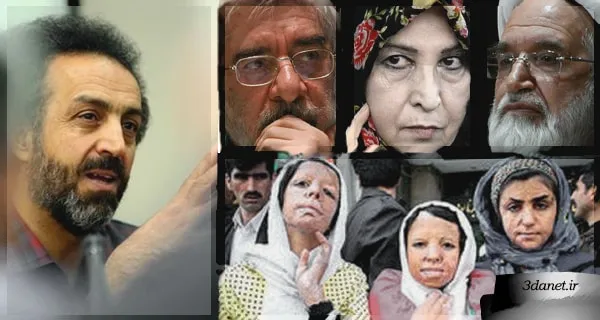
We specialize in destroying symbolic capital or preventing its formation. We tear down our footballers because of their hairstyle or the way they speak; we tear down our artists because of their political stances; we tear down our world-class politician simply because we do not like him; we turn Khosrow Parviz’s hunting ground in the heart of Kermanshah, which could have become a tourist attraction, into a seminary out of ignorance, ignoring its power of attraction for millions of Persian speakers in neighboring countries; we install the massive concrete bases of the Isfahan cable car pylons on the remaining walls and foundations of Shah Dezh, the Sassanid-era military fortress, on Mount Soffeh; we turn the historic Tahdid Caravanserai in the heart of Isfahan into the concrete Jahannama Tower; we demolish the Khosrow Agha Bathhouse in Isfahan overnight to build a street; we lose and bury the body of Reza Shah; we leave Vesta Ghader, who could have been a symbol of Iran’s victimhood in the chemical attacks during the imposed war, abandoned in obscurity and solitude; we hastily and shoddily rebuild the city of Bam, which we could have preserved in its post-earthquake ruined state and turned into the world’s only historical “city-museum” for earthquakes; we forgot the red-faced girls of Shinabad, whom we could have introduced as a symbol for paying attention to school safety and renovation and as Iran’s ambassadors to attract global cooperation for school renovation, so that now they are forced to stage a sit-in to complete their treatment; we did not turn Amir Entezam, who passed away last month after a lifetime of patience, into a symbol of general amnesty and national reconciliation because of the great forgiveness he showed in pardoning his judge and jailer; we did not turn Tehran’s Grand Mosalla and the Jame Razavi Courtyard, with all the enormous costs we incurred for them, into a national architectural symbol that would be exemplary in the world; we did not turn the Qadamgah of Imam Reza in Nishapur into a venue for an annual reenactment of the Imam’s caravan journey to attract Shiites from all over the world; we abandoned the Armenian-inhabited villages in Buin va Miandasht, which have tourist attractions and could have drawn many of the Christian tourists entering Iran, and we did not build schools for them so that families would not be forced to leave; we did not restore the tomb of Harun al-Rashid in Mashhad to turn it into a tourist attraction for the entire Islamic world; in many of the chambers around Isfahan’s Naqsh-e Jahan Square, Safavid kings and princes are laid to rest, whom we could have turned into a chain of tourist attractions, and we did not.
And above all, my heart burns for Maryam Mirzakhani, who, when she received the world’s greatest mathematics prize (the Fields Medal) in 2014 as the first woman and the first Iranian, could have become a symbolic figure for the youth of our country, whose value would have surpassed many of our nation’s historical monuments; yet, simply because she did not wear a headscarf, we hid her and did not introduce her to our country’s youth, and our national broadcaster fell silent, and no university invited her to the country, and we did not allow her to become known in the country; it is as if we closed the Chehel Sotoun Palace because of the images of scantily clad women on its walls. That is, we are doing to our living people, who could become symbolic, exactly what the Qajars did to the walls of Chehel Sotoun Palace when they plastered over the Safavid-era paintings. Now, tell me, doesn’t a society like this deserve to have the American Lady Gaga become a role model for its daughters?

We are incapable of building symbolic capital. Our society is incapable of turning scientific, artistic, political, and cultural figures into symbolic capital. Unfortunately, our government also deliberately prevents the formation of non-governmental symbolic capital in the religious, political, and artistic spheres. And of course, such a government deserves that a fearless girl can, with her beautiful dance on social networks, become an attraction and a role model for the new generation. Yes, a government that is incapable of building symbolic capital in the political sphere and, whenever a politician approaches the threshold of becoming symbolic, tries to destroy and push them off the stage, deserves that a young person with no experience in politics takes on the leadership of the street protests in Dey. The government must know that if it sidelines and destroys experienced but critical politicians, then in the next protests, unknown but impassioned figures will take over the leadership of the protests and become the symbolic capital of the new generation. Figures whose behavior is no longer predictable and who will probably not be open to negotiation. Truly, does a government that destroys, weakens, and bans a noble politician like Khatami not deserve that a television showman takes over the leadership of its opponents and critics?
For any long-term rational movement, and for safely navigating social and political crises, and for attracting economic capital, and for forming a creative and dynamic society, and for preserving the country's stability and security, we need the mass production of symbolic capital. Syria collapsed because it lacked national symbolic capital, and therefore a young man emerged from every neighborhood and took over the leadership of the protests, and thus dozens of opposition groups in Syria attacked the government and society, and what should not have happened, happened. The opponents of the Syrian government have still, to this day, not reached a consensus and collective cooperation on a single leadership. Why? Because Syria lacked prominent symbolic politicians, and all figures, in the shadow of the authoritarian government of the Assads, father and son, either remained stunted or were destroyed.
Among the voters for Engineer Mousavi in '88, I was perhaps the only one who, when Mrs. Rahnavard and Messrs. Mousavi and Karroubi were placed under house arrest in Esfand '89, was very pleased. Because I knew that if they remained outside, their political capital would be depleted. Had they not been placed under house arrest, they would naturally have continued their protest, albeit with a declining trajectory. Thus, they would gradually lose the social energy behind them; because when their protest remained fruitless, their supporters would become disappointed and passive, and their opponents would probably attribute all the failures of the tenth government to the instability resulting from their political activities. And if they reduced their protest activities and abandoned their claim of election fraud, they would naturally turn into unprincipled, compromising politicians without principles and lose their credibility. But confining them turned those political capitals into national symbolic capital. The fact that people feel there is still a politician in this country who has integrity, whose word can be trusted, and who can be believed, is a tremendous capital that must be preserved for the future interests of the country.
Undoubtedly, protecting them is now the responsibility of all of us, both the government and society. We need them for the rainy days of this country—which may be near. If our economic, social, and environmental crises lead to political tensions, we will need people whom the people believe in, are willing to rally behind, and consider their representatives in political and social interactions. Otherwise, we will very simply enter an era of widespread chaos and blind, leaderless revolts.
Let us remember that in the new Iran, where the generation of educated teenage girls has become the vanguard and leader of its social transformations, we are in great need of a female symbolic capital. Undoubtedly, the future of this country lies in the hands of educated women and girls (whether for construction or destruction), and this vast population of women with higher education needs a trust-inspiring symbolic figure. Now, for the first time in Iran's history since the Constitutional Revolution, a female political figure has attained a symbolic position, not because of being in power, but because of being out of power, and this is no small blessing. That is to say, Mrs. Rahnavard is now the sole national, non-governmental female symbolic capital in our society—a society whose immense transformative force in the future will be women. Of course, we have many great women in this country who participate in the country's developments, but they operate at the level of civil activists, political figures, or even political or civic capital. The only national female symbolic capital in this country that might be able to channel the political and social excitements of the country's transformation-seeking women in the future and guide them onto a rational path is Mrs. Rahnavard.
Yes, the story of the house arrest of the Green Movement leaders is the only instance where the government has unintentionally succeeded in producing three national symbolic capitals for the country. Today, we are grateful to whoever issued the order for the house arrest. The service they have unintentionally rendered to this country is unparalleled. In an era when all our national symbolic capitals were being destroyed one by one or losing their credibility, our society now has three symbolic capitals stored away under house arrest, which it can trust to navigate the crises ahead.
So, long live the house arrest. O dear jailers, we kiss your hands. Please take care of our symbolic capitals under house arrest. Please look after them well. Please give them healthy food. Please tell them to exercise every day so they remain fresh and strong. Please allow them access to virtual networks so they become familiar with the language of the new generation. The things they were saying during the '88 elections are now outdated. They must become familiar with the language, vocabulary, and needs of the young generation; they must recognize the new faces of the young generation; and they must become aware of the loves and hatreds of this generation so that, on the day of reckoning, they can speak to them in the language of this very generation.
So, take care of the health of our confined symbolic capitals. Because soon, for controlling and managing various national crises, we will need their agency and trust-inspiring presence. In these difficult times that lie ahead, and for controlling the excitements of a generation whose anger and resentment grows day by day, Persepolis is of no use to us, the oil wells can no longer do anything, our hope is pinned on these few symbolic capitals that have not yet been discredited. Send them our greetings.
.
.
Long Live the House Arrest
(An Analysis of the Role of Symbolic Capital in Development: From the Girls of Shinabad to the Leaders of the Green Movement)
Mohsen Renani / 27 July 2018
.
.

Discussion6 comments
احمدی نژاد در مناظرات رسم بدی را به پا کرد و با تبر بگم بگم ریشه اعتماد به هم را نابود کرد وطرحی شوم در انداخت. و در مناظرات سالهای بعد این رسم شوم تکرار شد. خدا به شما خیر بدهد که زبان به حق گشودید اکنون که دشمن بی شرمانه رجز خوانده و مبارز میطلبد باید برای حفظ کیان کشور در زیر پرچم واحد بپاخیزیم یکبار هم شده به نقش سرمایه های نمادین خود توجه کرده و با وحدت و همدلی به مقابله با ترامپ بپردازیم
مقاله جالبی بود ولی در انتها چنان خانوم رهنورد و اقای موسوی رو بزرگ کردین که من فکر کردم دارید از گاندی حرف می زنید. همچین امید واهی ای به نظرم نداشته باشید اینها سرمایه ملی نیستند لاقل برای من و جوانانی که میشناسم!
احتمالا من خیلی بدبین و نومیدانه نظر می دهم زیرا معتقدم ما ایرانیان دیگر داریم به آخر خط می رسیم به آخر سرنوشت تمدن منحطِ خود! تاریخ و سرنوشت غمبارِ ما احتمالا در سایر کشورها و توسط مردمان داناتر بررسی و تحلیل خواهد شد کتابهای بیشتری در مورد علل و عوامل فروپاشی و نابودیِ این ملت نوشته خواهد شد و فرجامِ ما چون آینه عبرت در مقابل دیدگان جهانیان قرار خواهد گرفت.
کسانی که در روزهای اشغال کشور ، امید از کف نداده و با ایثار جان و تن ، با میل به همدلی و بهره گیری از داشته های اندکتر و رو به کاهش ، با سرودن از مرز پر گهر .... بر جا ماندند و از نو روییدن را سبب شدند ؛ اگر مانند شما فکر می کردند ؛ قرن ها پیش ایران نابود می شد . شاید منحط شمایید که از داشته ها و برساخته ها غافلید : شما بدبین نیستید ، خودبینید و انحطاط خود را به همه نسبت می دهید . ما نه برترین ملت روی زمینیم و نه بدترین .
زنان و دختران تحصیل کرده سازندگان و اینده داران این کشور هستند. واقعا که اوج بدفهمی است. جامعه ای که بخواهد دچار وادادگی در مقابل دختران و زنان بشود مستقیما به درون انحطاط فرو میغلطد. یاد سخن نیچه افتادم که-مرد را باید برای جنگ اماده ساخت و زن را برای تفریح مرد جنگی مابقی همه حماقت است. این که برای نمادسازی التماس هر کسی را بکنیم به شدت خطرناک است.گیریم که جامعه یا کثیری از مردم به یک شبه هنرمند مثل پاشایی علاقه مند شدند خوب باید یک همچین موجودی که هیچ خلاقیت هنری ندارد به عنوان نماد به خورد مردم بدهیم؟
آقای حسین اوج بدفهمی، نظر شما وامثالِ شماست، این جامعه با هر چه بیشتر پایمال کردنِ حقوقِ انسانیِ زنان و مردانش هم اینک جزء منحط ترین ملت هاست و در آستانه نابودی