Political Science
Who Killed Benita: The Government or the Kidnappers?
The root of murders like Benita's should be sought not in the actions of her abductors, but in the government's misguided and simplistic laws—laws grounded in a jurisprudential outlook that inherently criminalizes society. The government must stand trial before anyone else.
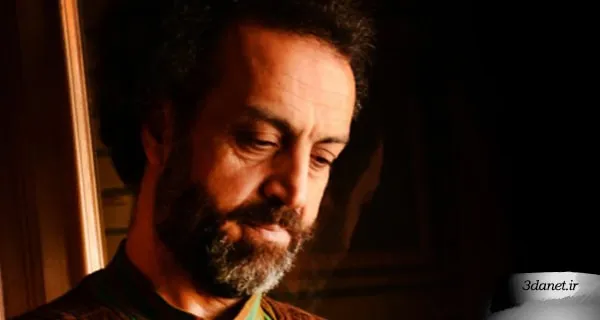
This series of articles by Mohsen Renani, titled “Who Killed Benita: The Government or the Kidnappers?”, began on August 10, 2017, and continued gradually...
Part One: A Discourse on the Moral Consequences of Jurisprudential Governments
In the 1980s, when I was a student, I would sometimes ride my bicycle to a small room in my father’s garden to study. Each time on the way to the garden, I would pass by a large pothole in the middle of the street and say to myself, “Eventually, this pothole will cause a disaster.” A few months later, I saw that the pothole had been filled with asphalt. I said, “Finally, the municipality filled this pothole!” Someone heard me and said, “Yes, after a motorcyclist hit this pothole at night last week and was killed, the municipality filled it.” That is, our society must pay a cost equal to a human life to fill a pothole.
Who was at fault in this incident? The municipality, which lacked a monitoring system and did not fill the pothole in time? Me, who saw this pothole for months and did not inform the municipality? The motorcyclist, who was probably speeding at night? The families of motorcyclists who had been killed in previous accidents but had not sued the municipality so that mayors would become sensitive and accountable regarding street safety? The government, which had not created an efficient monitoring and evaluation system for the performance of municipalities (at that time, city and village councils did not yet exist), and so on?
I suppose all those mentioned were, to varying degrees, negligent or at fault in the killing of the aforementioned motorcyclist. But perhaps in this case, the motorcyclist himself and the municipality can be considered the main culprits. In fact, that incident was fundamentally caused by the motorcyclist’s violation (speeding) and the municipality’s violation (not filling the pothole). That is, in that incident, the government is not specifically at fault (if we consider the municipality a non-governmental public institution); that is, the government did not specifically cause that incident through erroneous and irrational legislation. Rather, the enforcers of the law (the motorcyclist and the municipality) were at fault during the execution of the law. So, the cause of the motorcyclist’s death was not the inappropriateness or error of the law, but an error in the enforcement of the law.
But regarding the killing of Benita, I believe the main culprit is the government and the legislative system. That is, the killings of Benita, Atena, and Tabassum, which occurred in the last month, and countless other similar killings, many of which are also not made public by the family or the police, stem from the erroneous and irrational laws enacted by the government, which in turn are rooted in a jurisprudential view of the issue of social management. Fundamentally, the jurisprudential approach governing the management of our society is an approach that inherently creates crime and has nothing to do with this society or that society. If this approach is employed in any society—even current developed societies—in the long run, it will fill the society with crime and criminality. In a word: jurisprudential governments are “crime-minded,” and in the long run, they yield no result other than the emergence of a “crime-generating” society.
Specifically, in the tragedy of Benita’s killing, it is clear that there are many who are negligent and at fault, from the car thieves who, after stealing the car, did not take action to protect the child’s life, to Benita’s family, who were careless, and to the police force and the national broadcasting authority, who did not issue a public alert and did not mobilize the people to find the child.
But the difficult claim I am making is that the main culprit is the government (or the crime-minded jurisprudential legislators). Because the primary root of this crime must be sought in the completely erroneous and simplistic laws that the government has enacted without having a systemic and social view of society and based solely on simple jurisprudential interpretations. Laws that rely on the interpretations of jurists and whose goal is not the “management of abnormalities,” but the “fight against abnormalities.” The dominance of this view is the beginning of an erroneous process that began nearly four decades ago and has, in practice, led to the “mass production of crime” in our society.
Therefore, in this tragic incident, the government, before anyone else, must be put on trial, and I, out of the social responsibility I bear, wish to now lay the groundwork for this trial in the public conscience. Perhaps this civil trial will serve as a prelude to reforming laws that have, until now, silently claimed the lives of hundreds of other Benitas. It is hoped that by reforming the prevailing jurisprudential view in the government, crime-producing laws will be transformed into crime-reducing laws, and our children will have greater security in the future than the current generation.
Part Two: Water Rationing and the Killing of Children
In the first part, the summary of the argument was that in an incident like the murder of Benita, although various culprits can be identified, the "main culprit" is the government. And it was claimed that because jurisprudential governments are "criminalizers," their mode of governance yields no result other than "crime production." Now, to continue the discussion:
To unpack this argument precisely, I deliberately draw on an inelegant but simple and tangible example:
Imagine a time when water scarcity reaches such a point that the government is forced to ration water, giving each person a specific quota only sufficient to meet the body's vital needs, and by law, no one is given extra water. For washing and hygiene, people use other methods such as various gels, powders, and wet wipes.
Now suppose water is rationed, and for this reason, the general level of hygiene has also declined, and therefore bacteria and viruses are scattered everywhere, leading to the outbreak of various types of diarrhea in society. We know that someone who has contracted diarrhea must drink several times (sometimes up to five times) the amount of water a normal person drinks daily; otherwise, their body fluid volume rapidly decreases, they first become weak, then if it continues, they fall into a coma, and eventually, they will die. In chronic diarrhea, an individual may sometimes be afflicted with this illness for three weeks or more.
Now, under conditions of water rationing, what should an individual suffering from chronic diarrhea do? For the first two or three days, they might consume some of the water ration of their relatives. But this is not sufficient. They have no choice but to buy the extra water they need from those whose water consumption is lower. Given the large number of people with diarrhea, a "free, unofficial market," yet open and accessible to all, gradually forms along the streets for buying and selling water; some households bring their surplus water to this market, and individuals with diarrhea buy the extra water they need from this market.
Now, what happens if the government also bans the buying and selling of water? A "hidden black market" for water transactions forms, and consequently, water smuggling becomes rampant. Now, not everyone with surplus water enters this market; only those who are more risk-tolerant sell their extra water on the black market. Naturally, the price of water will rise, because both the supply of water in the market has decreased and the risk of operating in this market has increased. Therefore, the individual with diarrhea is now forced to buy the extra water they need at a higher price from the black market.
Now, what happens if the government deploys secret police and arrests and punishes anyone who buys or sells water on the black market? The black market becomes unsafe, the price of water skyrockets, and smugglers only sell water to those they know and trust. The fear of arrest and lack of trust forces smugglers to create a network among themselves for the security of their work and to only admit trustworthy individuals into this network. In this case, the costs of intermediation and water smuggling rise, and therefore the price of water will increase even further.
Under these conditions, those who have diarrhea and have a severe need for extra water, if they cannot buy the very expensive water from smugglers or cannot gain the trust of the smuggling network, find only one way: to steal water. Thus, our patient with diarrhea is now forced to lie in wait and, wherever they see a water bottle whose owner is distracted, steal it.
Now our patient, who no longer has any strength left due to dehydration, has come out into the alley to steal some water. Suddenly he sees a child holding a water bottle, standing at the threshold of a house. Upon seeing the child, he is tempted and tries to snatch the child's water bottle. But the child resists; the thief, who is also extremely frightened, throws the child into a corner in order to grab the water bottle. In the process, the child's head strikes the sharp edge of a wall with great force, causing a cerebral hemorrhage. The thief grabs the water bottle and flees. The mother reaches her child, and upon noticing the bleeding, rushes him to the hospital, but unfortunately, the child dies a few hours later.
Now, in your opinion, who is at fault in this incident? The child? The mother? The thief? Or the government?
Part Three: Unnatural Governments
In the previous section, we recounted the story of water rationing and the example of a patient who, due to an extreme need for water and the illegality of buying and selling water, was forced to steal water and, during the theft, unintentionally killed a child; and we asked who was at fault in this incident. And now, the continuation of the discussion:
What, then, should be said regarding who is to blame for this death? Is the sick individual, who is facing death from lack of water and, because the buying and selling of water is prohibited, resorted to stealing water and, in the process, happened to kill a child, at fault? Are the parents, who allowed their child to stand alone at the door with a water bottle, at fault? Or is the government at fault, which, by enacting an "egalitarian law," has rationed water equally and has not recognized the additional need of an individual with diarrhea? And what's more, it has also banned the "free market for water" and, using police force, severely controls and suppresses the "black market"?
Very simply, if the government had declared that, with a doctor's confirmation, anyone with diarrhea could receive two or several times the water ration of others, the theft and the child's death would have been prevented. Even if the government had not prohibited the buying and selling of water, our patient with diarrhea would not have been driven to snatch water from a child's hand and cause his death. But the government, albeit well-intentionedly, has closed off all avenues and left our patient with diarrhea no option but to steal water.
It is natural that the patient with diarrhea in our story, in that severe psychological state, facing death from thirst and suddenly confronted with a child holding a water bottle, cannot have mental calm or focus, and therefore cannot foresee the various possible consequences of his theft. For this reason, his behavior will be impulsive and emotional, not rational or moral. He thinks he will snatch the water bottle, run away, and that will be the end of it. So he commits the theft and creates a tragedy.
But conversely, the government, when enacting the water rationing law, had ample time to seek help from experts in various sciences, deeply examine the different aspects of the issue, consider the experiences of other countries, and formulate the law in such a way that it would not push certain citizens with special conditions toward pressures and hardships leading to criminal behavior. The government should have understood that, in the case of water, imposing an "egalitarian law" is an "unjust" measure. The government should have understood that "the unnatural condition of some citizens" (such as having a diarrheal illness) is natural. Therefore, it could very simply have given a larger ration to those who, for medical reasons, need to consume more water. The government should have understood that organizing all aspects of people's lives by itself is not possible; therefore, it should have left the buying and selling of water free so that citizens could meet each other's mutual needs through free exchange. Thus, the water theft and the crime of killing the child were the result of the legislator's simplistic thinking, and in reality, it was the government that created the conditions which left our patient desperate and ultimately forced to steal, and during the theft, accidentally killed a child.
Such a government, which still does not know that "a little unnaturalness is natural" for society and has not yet accepted that "a little abnormality is normal," is an "unnatural" and unusual government that brings about unnatural and unusual consequences for society as well.
Now, in the recent tragic death of innocent Benita, we are faced with exactly such a situation. Mohammad, Benita's kidnapper, has been addicted to the drug "crystal meth" for 13 years. In an agitated state caused by withdrawal, he was on the street looking to obtain drugs when he encountered Benita's father's light-colored car. He made a simple calculation in his head: I'll steal the car, sell some of its parts, and get drugs. Then I'll abandon the car so the police can find it and return it to its owner. That is, Mohammad's intention from the start was a hundred-thousand-toman theft (taking car parts) to obtain drugs. He steals the car, unaware that a child is inside. After realizing a child is in the car, out of fear of arrest and probably due to his haste to sell the car parts and obtain drugs, he was fundamentally unable to properly consider the consequences of his actions and abandoned the child along with the car and left. Under this mental pressure, he exhibited precisely emotional and impulsive behavior.
Perhaps Mohammad also assumed that the country's management is so strong that through tracking cameras, aerial patrols, and public announcements on state radio and television, the police would quickly find the car and rescue the child. And perhaps he said to himself, "Why should I worry about the death of a child in a society that treats addicts with utter cruelty and, instead of considering them sick and helping them get treatment, counts them as criminals, ignores them, fines them, imprisons them, and torments them?"
Yes, the outcome of a "crime-minded" and "criminalizing" governance system will be that society must bear a cost equivalent to the life of an innocent child to supply an addict's drugs. Or for the needs of a sexual deviant to be met, the life of another child (Atena) is taken. Was there no less costly way?
To practice, let us replace the diarrhea patient and his intense need for water in the previous example with an addict and his intense need for drugs; or a poor, unemployed, single young man and his intense need for a spouse, and review and analyze the same story to understand how those few seemingly small errors by the government during legislation lead to such great crimes in society.
One reader wrote to me that such crimes exist in all countries of the world; why, when they happen here, do you blame it on jurisprudential management? I will, of course, explain in detail in subsequent writings why I blame these problems on the system of jurisprudential management. But for now, my answer to that esteemed reader is this: You are right, such crimes are natural and exist all over the world. But we thought that the establishment of a jurisprudential system would lead to a healthier and purer society than other countries. Yet now, after four decades of jurisprudential rule, these questions confront us:
• Why does Iran rank first in opium consumption in the world?
• Why does Iran rank second in the number of executions in the world (the first rank for executions belongs to China, while China's population is more than 17 times that of our country)?
• Why is Iran among the ten countries with the highest interest rates in the world?
• Why is post-revolution Iran the only country in world history that, in 35 out of its thirty-seven years, has had double-digit inflation?
• Why has Iran's population roughly doubled (2.2 times) from 1976 to 2016, but our number of prisoners has increased 22-fold? That is, the growth rate of the number of prisoners has been ten times the population growth rate.
• Why, with 24 million households, must our country have 16 million cases in the judiciary?
• Why is the number of criminal cases filed (as an indicator of the occurrence of crime and felony in the country) per one hundred thousand population, 612 cases for a developed country like Norway, 500 cases for a developing country like Ukraine, 3,094 cases for an Islamic country like Turkey, and 7,787 cases for our country? (All statistics are from 2012).
• Why does the highest death rate from traffic accidents (relative to population) belong to our country?
• And why ....? And why ....? And why ....?
And now the serious question has arisen for us: where does the fault lie? And I believe the fault lies in the introduction of jurisprudence (not faith, nor ethics) into the management of society, which I intend to examine more closely in these writings. The entry of jurisprudence into the sphere of governance over these four decades has brought with it numerous policy errors that have led to the destruction of the moral and rational foundations of our society, and I will strive, to the best of my ability, in these writings to gradually reveal some aspects of this destruction.
One of the errors that jurisprudence inflicted upon the body of the country's administrative system, and which has now gripped the nation's management like a disease and is worsening day by day, is the "error of criminalizing illness and sin." It is only an "unnatural government" that declares certain illnesses to be crimes and also counts sin as a crime. A natural government only criminalizes what is considered a crime in the custom of society, in the custom of legal systems, and in the custom of global communities.
In the next writing, I will speak about the error of "criminalizing illness and sin," which is abundantly found in the jurisprudential outlook of our government, and the damages resulting from this outlook.
To be continued . . .
.
.
Who Killed Benita: The Government or the Kidnappers?
Author: Mohsen Renani / August 2017
Source: Mohsen Renani's Telegram Channel
Please send your critiques and points about this writing to this email:
renaniassistant@gmail.com
.
.




Discussion1 comments
من این مسائل رو تقصیر فقط حکومت های فقهی نمی دونم . هر حکومتی که مرغش یک پا داشته باشه و نسبت به افق های تازه و نظرات دگراندیشان بسته باشه به این آفات مبتلا میشه . شما بهره ی بانکی رو اشاره کردید. وجود بازار سیاه تسهیلات بانکی ، ضعیف شدن بانک ها ، تمایل مردم به خریدن کالاهای سرمایه ای به جای سرمایه گذاری ، ایجاد تورم ، ایجاد رانت و فساد های دولتی در ارتباط با اعطای تسهیلات و هزار و یک جور فساد و مساله ی دیگه همه به خاطر اینه که بعضیا پاشونو توی یک کفش کردن که بهره ی بانکی همون ربا هست و در فلان حدیث داریم که کسی که این کارو بکنه با مادر خودش زنا کرده و ... یکی اگه مفاسد ناشی از طرز فکر این ها رو بره به خودشون نشون بده می بینن که اگه قرار باشه دقیقا طبق نظر این ها مملکت اداره بشه نظام دو هفته ای نابود میشه. و متاسفانه مسئولین به جای توضیح دادن عواقب تفکرات بعضی از آقایون بهشون ، اومدن یک سیاست یکی به نعل و یکی به میخ زدن در پیش گرفتن که هیچ طرفی بهش راضی نیست . البته شاید هم براشون توضیح دادن و همون که عرض کردم نرود میخ آهنی در سنگ :(