Literature
How Intellectuals and Governments Mislead Each Other
Intellectuals and governments mislead one another in a false dichotomy; thoroughgoing criticism is met with a show of force. The way out is to define a threshold of legitimacy so that acknowledging positive points does not amount to endorsing an illegitimate government.

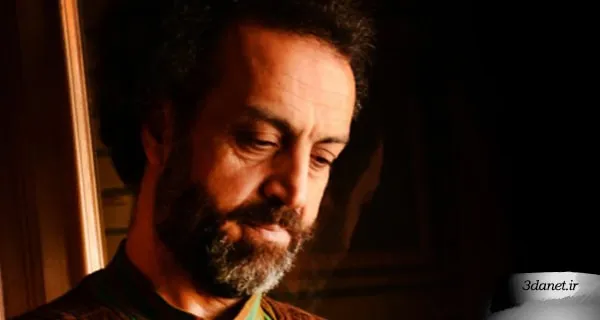
Faryad Naseri
AuthorAbout what are they asking one another?—About the great news,—that over which they are ever in dispute.—Nay, [it is not as they suppose], soon they will know—the Day when the disbeliever will say: Would that I were dust. Surah An-Naba'—translation by Bahrampour
1. Throughout the holiday, and even before it, I had Mokhtari's poetry collection "On the Shoulder of the Plateau" in hand. Apart from Mokhtari's poetic power and his sorrowful fate, I was trying to confront the world he constructs and inhabits. The world of Mokhtari's poems is full of darkness, terror, and ruin. If, following the method of Mohammad Hoquqi in "Poems of the Time," we were to tally the statistics and repetition of words, we would have a tablet of the most sorrow-laden vocabulary.
But this is not the whole story; these words participate in relationships and construct a space and a world that is even more sorrowful and darker.
One might ask: Why is Mokhtari's poetic and literary world so dark and gloomy, and "the decay of man blows from his dust"?
A world in which hands suddenly snatch people away and the seed rots in the soil?
Has the poet, in his spiritual developments, at some stage of ontology, been afflicted with existential anxieties and remained stuck there?
It is clear to everyone that Mokhtari's life and intellectual world are not of such a nature. He is a poet whose face and gaze are turned more outward—toward society and the collective.
The publication history of the poems also dates back to before the revolution.
So, does this dark world belong to the time of the Pahlavi regime? Even a decade after the collapse of the Pahlavi dynasty, did Mokhtari still view that period as so dark?
Or had the distance afforded by its fall granted him the ability to observe more accurately?
2. In the previous section, by presenting an example of the work and text of a committed intellectual who laid down his life for his commitment, protest, and critique, we raised a question: Was that abyss, darkness, and gloom that Mohammad Mokhtari saw in the Pahlavi era entirely real? That is, was the objective world in which people lived out their lives entirely dark? Or was it Mokhtari's subjective and intellectual world that was drawing a veil over veils? Having witnessed the fall of the Pahlavi monarchy and having also experienced the years of the Islamic Republic's rule, did Mokhtari, after these experiences, still hold the same view as before?
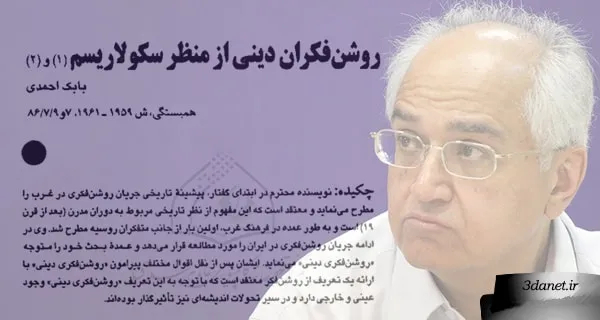
But let us, if only for a reminder, review what duties we recognize for the intellectual: Quoting Edward Said, we consider his duty to be the critique of institutions of power. Quoting Mehrzad Boroujerdi, we read: "Intellectuals take shape within the heart of the middle class, and their service is, on one hand, to challenge intellectual and social traditions, and on the other, to pioneer social transformations. As historical experience testifies, intellectuals are always grappling with the threats and pressures of governments, such that in the least violent of circumstances, they are not recognized by governments." (The End of the Intellectual-Hero, Mehrnameh, Farvardin 1391) Mostafa Malekian believes that: "Problem-identification and distinguishing a problem from a pseudo-problem is the first duty of an intellectual. That is, first to understand what the problems of my society are and to address those very things." (Monophony is Unacceptable) And quoting Umberto Eco: "Vittorini said in 1947: 'The intellectual must not blow into the magic flute of revolution.'" Khaled Sheikhi, in the article "The Intellectual and the Mission of Intellectualism," asks: "Can a student, professor, teacher, journalist, writer, reporter, broadcaster, researcher, publisher, translator, politician, sociologist, etc., be considered an intellectual?" Jalal Al-e-Ahmad holds that: "An intellectual is someone who, free from dogmatism and prejudice and far from obedience, mostly does a kind of mental work, not physical work, and who offers the result of their work to the community less with the intention of seeking material gain." (In the Service and Betrayal of the Intellectuals: 37)
If we look at any text that tries to clarify the meaning of the intellectual, we encounter a range of concepts: wisdom, rationality, cognition, critique, being in power, and so on. In this sense, the intellectual is always like a watchful, sleepless eye that points out wrongs. Wherever and whoever, in whatever form, seeks to cover up the truth and substitute falsehood in its place, the intellectual must expose the matter and reveal the truth. A truth whose concealment is to the detriment of the majority and society, and whose revelation is a great good.
In this context, their greatest confrontation is therefore with institutions of power. And power is not necessarily political. Symbolically, the intellectual gradually comes to stand in a position that always sees the glass as half-empty, especially in undeveloped societies where those in power are not accustomed to transparency. This symbolic position stands against those in power who constantly want to display the half-full glass. This inadvertently splits truth and the field of play into two, creating a duality. On one side, the holders of power who conceal and fabricate a truth: the side of evil, and on the other side, the intellectuals who are the

Discussion2 comments
عیب می همه گفتی هنرش نیز بگوی. بر هنر غیبگویی حافظ قرآن به 14 روایت عیبی وارد نمی توان آورد . کسی که دعوی روشنفکری دارد باید مسائل را همه جانبه بنگرد و در بیان مطلب تمام واقعیت را آشکار سازد.
خود لفظ روشنفکر حاوی کانوتیشن منفی و حقیر دیدن مردم است. شرق نیاز به اندیشه همراه با صداقت ، وجدان اجتماعی، و باور به دیانت معقول تجربی هدایت شده بوسیله نورانیت وحی دارد. روشنفکری و اندیشه ورزی یونانی وصله ناچسب است که در خود زاذگاه شکست خورده و به نسبی گرایی عقب نشینی کرده. روشنفکری اگر راه گشا بود در زادگاه خود به بن بست نمی خورد.