Psychology
Hanif Reza Jaberipour: Let Us Hear the Reopened Wounds and Intergenerational Trauma
Recent events have reopened old wounds and intergenerational trauma among Iranians. Hanif Reza Jaberipour argues that instead of judging people's reactions, we must understand the psychological mechanisms behind this anger and grief, and patiently listen to the voices of our compatriots.
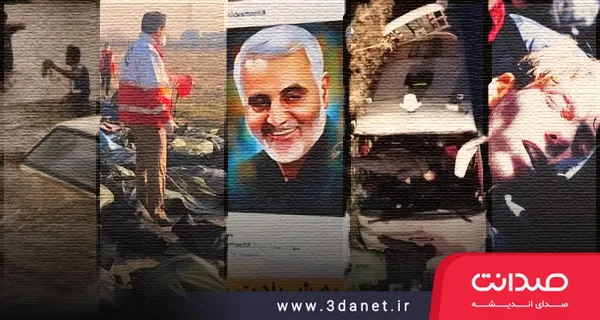
Let Us Hear the Reopened Wounds and Intergenerational Trauma
Author: Hanif Reza Jaberipour (Senior Counselor at the Australian Childhood Foundation and PhD student at the Faculty of Education, Monash University, Melbourne, Australia)
I ask you to either not read this piece, or read it to the end.
The bitter events of recent days that shook the world also shook the hearts of many Iranians in various and, of course, contradictory ways. Neuroscientists today have a better understanding of the brain and neurological processes behind what we refer to as a "wound being reopened." There are mechanisms in our human biology and psyche that cause certain events occurring in the present to connect us to past experiences, feelings, emotions, and resolutions. All of this is the product of major events. Every person connects to it in some way, their being fills with emotion, feeling, thought, and analysis, and they pour these into some vessel.
These days, virtual vessels are overflowing with sorrow, anger, threats, insults, memories, laments, curses, love, and hatred. The flood of sometimes contradictory words and sentences from Iranians over these few days was a perfect mirror of mirror neurons and intergenerational trauma*. Amidst this, three sentences shook my mind and became the motivation for this writing. The first was from a friend who said: "I feel like my father has been martyred again!" The second was Mahmoud Dowlatabadi, who wrote: "Is this the fate of all worthy children of this land, regardless of their thought or inclination? Annihilation?" And the third: "We still do not have accurate information about the plane that crashed into Mount Karkas in the seventies, in which I lost my brother and uncle."
This is truly how it is. Events of great magnitude connect the majority of people who encounter them (regardless of their inclination or type of thought) to sensitive points in their past lives: times when they were harmed or exposed to harm. Modern science tells us that in these conditions, the very same areas of the brain are stimulated that were stimulated at the time of the trauma. And this means "their wound is reopened." The brain's experience is as if that event has recurred.
Although it is very important exactly why the plane crashed and why we were informed of its cause with delay, and although it is very important to know who Soleimani exactly was, what he did, and what his creed was; for this writing, it is more important to know and understand from where and with what background we connect to these events. This is why we see that suddenly, it is as if children were martyred in war again, activists were executed again, youths were buried in unmarked graves again, people's homes were hit by missiles again, Chamran was martyred again, numerous planes suffered technical failure again, deceased pilots were again responsible for a plane crash, homeland soldiers were martyred again, and families lost their loved ones on the streets of protest again. In other words, these events connected each of us to an experience from our past and brought with it all the associated fears and angers, or complexes and hatreds, or sorrows and grief. These emotions and feelings stirred up words that we hurled at each other on virtual pages.
The subject of this writing is not the correctness or incorrectness, or the rightness or wrongness of those words, nor the author's judgment on any of the events of these few days, but rather attention to the mechanism of the reproduction of these threatening, insulting, self-righteous, or excommunicating words and sentences. The recollection of past traumas can be one of the sources from which the opinions of people speaking for or against Soleimani, the missile strikes, the plane crash, and the bus accident erupt.
Moreover, intergenerational traumas are revived under these conditions. Pains that generations have passed down to one another come alive. Intergenerational trauma does to our minds what makes it seem as if the heroes of the Shahnameh are falling to the ground once more, Hamzeh's heart is being torn from his chest again, Abalfazl's hands are being severed again, foreigners are occupying the soil of Iran again, America is staging a coup again, Mosaddegh is being exiled again, the chests of the Golrokhis are being targeted again, and prisons are filling up with freedom-seekers once more. What do these have to do with Soleimani, missiles, and the plane crash? It does not matter to us whether these have a logical connection to the events of the past week; what matters is how and from where you have listened to these happenings, and what traumas have been passed down to you generation after generation and are now being summoned.
Judy Atkinson, a researcher in the field of methods for reducing intergenerational trauma, says that as long as trauma is not allowed to surface and be heard, it will inevitably be transmitted from generation to generation. The question here is, when and in which period of our history have we been heard? I do not think all this anger is the result of what has been concealed or revealed in this one week. This is an accumulated rancor that has been imprisoned and confined for decades, and perhaps centuries. It breaks through every once in a while, but is quickly suppressed again. The sound of this weeping needs to be set free, to rise, to be accompanied by wailing. It needs to be heard empathetically. I mean the weeping that all Iranians do, each for their own reason.
I consider all my compatriots whose grief has been freshly reopened, or the lid of the inherited trauma chest has been opened, and who have these feelings, write, comment, become angry, and even curse, as my fellow countrymen (and here I am not concerned with those who are paid to curse, though they, too, are not entirely outside this circle in a way.)
Although I do not understand, do not approve of, and cannot comprehend many of these sharp, bitter expressions, I know two things. First, that even this judgment of mine is subject to everything I have inherited and is also the result of experiences I have had over four decades of my life, which have consequently shaped my intellectual and emotional apparatus. So I am cautious in judgment. Second, there is one thing I can do for all these compatriots of mine: to patiently listen to their words, to give them the right to speak, to express themselves, and to empty these heavy, full vessels.
Suppose that, in our opinion, some of the speakers and writers these days are biased, treacherous, dependent, mercenary, and agent individuals, and under no circumstances can or should they be given an opportunity to express themselves. Accepted! But you can, and we can, listen to others about whom we do not have such a perception. Hear the rest! Those to whom you can give a chance to express themselves are still very numerous. But if you cannot tolerate hearing anyone who does not think like you, I suggest you take care of yourself! Search and find someone who will hear you. Your vessel is very full! And it is not very much your fault! I am ready with all my being to hear you. There are many like me, and even better listeners than me.
The final word is that our past and contemporary history is no joke. It is accumulated with traumas that, for a thousand reasons, have not had the chance to be heard. These days, the internet and social networks can provide everyone with this opportunity to hear one another. It is enough for us, in mind and heart, and in comments, follows, and likes, to give each other this chance to be heard. Let us listen more and reproach less. No one's words will be etched on my forehead, even if I listen to them fully and patiently.
Brief and detailed explanations regarding trauma, intergenerational trauma, and mirror neurons have been provided on the Telegram channel "Education in a Corner of the World".
.
.
PDF file of this article
.
.


Discussion4 comments
آقای جابری پور ممنون از متن دلنشینتون کاملا با شما موافقم که باید بشنویم هر چند موافق نباشیم.این ایام داغ های خیلی هامون تازه شده و کمترین کمک به هم گوش دادن به نظرات تلخ و دردناک هم هست بدون سرزنش و ملامت متاسفانه ما جماعتی هستیم که همیشه یا خودمون رو سانسور کردیم یا سانسورمون کردن با حرف های زیااادی که قورت دادیمشون.
سلام آقاي جابر ی پور عزیز در متن شما بسیار شنیده شدم... سپاس
اگر انسان، کسی را جز به عمد بکُشد، این خطا کوچکتر از آن است که او را در جستار" زیبایی "و "نیکی و دادگری" و "قانون" فریب دهد. (افلاطون)
جناب آقای دکتر در متن "پیشینه" به اشتباه "بیشینه" ثبت شده است