Sociology
Health and Inequality
Unequal distribution of wealth increases social ills and reduces life expectancy, whereas social equality improves the health of the entire society. Findings show that death rates and mental illness are lower in more equal societies.
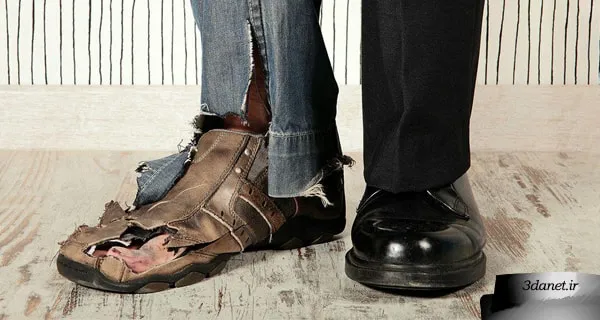
Introduction: By examining the impact of social inequality on community health, the author seeks to demonstrate that not only are wealth and longevity closely linked, but also that the unequal distribution of wealth increases social ills and diseases and reduces "life expectancy," while greater social equality can improve the health of the entire society.[1]
Palm Beach is a narrow island in Florida, about 13 miles long, with a population of slightly more than 10,000. Three bridges connect it to America, but its residents feel and behave as if they live in a large "gated community."[2]
Undoubtedly, this is a gated community that needs no walls or barbed wire. Fortunately, house prices do the job of walls and barbed wire. The few homes currently on the market range in price from $700,000 to $72.5 million. Everyone believes that Palm Beach has the highest concentration of wealth in all of America; every cubic mile is worth millions of dollars more than anywhere else. A common local joke is that if you call a Palm Beach resident a "millionaire," you have actually insulted them. In the boutiques of Worth Avenue, the street where Palm Beach residents buy their clothes, a wool shirt costs a thousand dollars, and a pair of trousers will set you back two thousand dollars. The membership fee for the local country club is $300,000. David Segal estimated in the New York Times that the losses suffered by Palm Beach residents during the recent stock market crash were incomparable to anywhere else in America, which is consistent with the island's unique status. He says: "Recently, the average net worth of a typical Palm Beach resident has fallen more than the average net worth in any other city or county in the country ...". This, perhaps more than any other statistical indicator, confirms Palm Beach's exclusive position at the top of the wealth table in America (and perhaps the planet).
In Palm Beach, there is not a single cemetery, funeral home, or hospital. Although many of the island's residents are in their ninth decade of life, they have almost banished death and illness from their thoughts and minds (though, despite all serious and sincere efforts, death and illness have not been banished from their lives).
In Britain, a group of researchers led by Domenico Pagano of the Birmingham Hospital Trust tracked the fate of about 45,000 patients with an average age of 65 who had undergone heart surgery. They found that the number of deaths following surgery strongly depended on the patients' wealth and increased rapidly as income decreased, meaning that among the poor, a much larger number of patients died. They first looked at the "usual suspects"—smoking, obesity, and diabetes—which are more prevalent among the poor than the wealthy, but to no avail. Even after accounting for their possible impact on mortality statistics, there was still a clear difference in post-surgery survival rates. One could only conclude that if poor patients had a lower chance of survival, the sole cause was poverty ... .
Until quite recently, political leaders of all or nearly all political groups fueled the common notion that the increase in the wealth of the upper class would ultimately benefit the rest of society due to the "trickle-down" of wealth. But now there is no trace of such a "trickle-down" to be seen anywhere; if indeed there ever was one. The link between the increase in elite wealth and the increase in security and health for the whole of society is a product of fantasy and political propaganda. What is more relevant to our subject is that, as Richard Wilkinson and Kate Pickett have clearly demonstrated with extensive documentation in their book The Spirit Level[3], the abstract or average wealth of a country, as measured by gross national product, has little effect on the long list of social ills, but the way this wealth is distributed—in other words, the degree of social inequality—has a profound effect on the spread and severity of these ills. For example, Sweden and Japan are governed in very different ways; Sweden has a large welfare state, whereas in Japan the level of state social security is very low; but the common feature of both countries is the relatively equal distribution of incomes, and therefore the relatively small difference between the living standards of the top twenty percent and the bottom twenty percent of the population; and interestingly, their rate of "social problems" is lower than that of other affluent industrial countries with more unequal distributions of wealth and income. Another example is the two similar neighboring countries, Spain and Portugal, where the indicators of social inequality in the latter are almost double those of the former; both in terms of the number and the severity of "social problems," Portugal brings Spain to its knees!
In the most unequal societies on earth, such as the United States or Britain, the prevalence of mental illness is three times that of societies at the bottom of the inequality table; moreover, their number of prisoners, the number of people suffering from obesity, the rate of teenage pregnancy, and (despite high gross national product) the mortality rate of all social classes, including the wealthiest class, is much higher. While the overall level of health is higher in wealthier countries, in countries with a more even distribution of wealth, the mortality rate decreases in proportion to the increase in social equality. One of the truly interesting and thought-provoking findings is that increased spending on health specifically has almost no effect on average life expectancy, but an increase in the level of inequality has a very negative effect on average life expectancy.
If you ask these researchers the cause of this, they say that in a more unequal society, the fear of losing social status, being humiliated, losing one's dignity, and being socially excluded is much more intense, distressing, and frightening. Such fears create severe anxiety and make people more vulnerable and susceptible to mental disorders and depression; a factor which, in turn, reduces life expectancy; especially among the middle classes, who are not sure of the durability of their successes and the stability of their privileges.
The list of "social diseases" afflicting so-called "developed societies" is long and, despite all real and unreal efforts, is getting longer. In addition to the problems we have enumerated, one can point to things like homicide, infant mortality, and a lack of mutual trust, without which social cohesion and cooperation are impossible. In each of these cases, the further we move from more unequal societies to more equal ones, the better the situation becomes; sometimes the differences are truly astonishing. The United States is at the top of the inequality table and Japan at the bottom. In the United States, for every 100,000 people, there are almost 500 prisoners, and in Japan, for every 100,000 people, there are fewer than 50 prisoners. In the United States, one-third of the population suffers from obesity, while this figure is 10 percent in Japan. In the United States, out of every 1,000 girls aged 15-17, more than 50 are pregnant, while this figure is only three in Japan. In the United States, more than a quarter of the population suffers from mental illness; in Japan, Spain, Italy, and Germany—societies with a relatively more equal distribution of wealth—ten percent of people struggle with mental problems, while in more unequal countries like Britain, Australia, New Zealand, and Canada, this figure is twenty percent.
These are all statistics; averages and their correlations. These statistics tell us little about the causal links behind these correlations. But they stir our imagination and sound the alarm (at least they can alert us to the danger, and they should). These statistics stimulate our conscience and our survival instinct. They challenge our moral indifference and (I hope) awaken us from our pervasive moral slumber; but these statistics also clearly show that pursuing the good life and happiness individually is profoundly misguided and misleading; the hope that one can "do it alone," and like Baron Munchausen[4] miraculously pull oneself out of the swamp by one's own hair, is a fatal mistake that contradicts the goal of self-preservation.
We do not get closer to that goal by distancing ourselves from the problems of others. Only by helping one another can we fight "social diseases"—otherwise we fail.
.
.
Health and Inequality
Translated by: Erfan Sabeti
[1] This article is a translation of the following work:
Zygmunt Bauman (2010) ‘Health and inequality’ in 44 Letters from the Liquid Modern World, Polity, pp. 83-86.
Zygmunt Bauman is a professor emeritus at the University of Leeds in Britain and the theorist of "liquid modernity." Among his works, Liquid Love and Postmodernity and its Discontents have been translated into Persian.
[2] Gated community
[3] The Spirit Level
[4] The name of the main character in the book Baron Munchausen's Narrative of his Marvellous Travels and Campaigns in Russia (1785). The author of the book, in creating this fictional character, was inspired by a real baron named Hieronymus Karl Friedrich Freiherr von Münchhausen (1720–1797).
.
.






Discussion0 comments
No comments yet; let yours be the first voice.